- English
- French
- German
- Portuguese
- Spanish
- Russian
- Japanese
- Korean
- Arabic
- Greek
- German
- Turkish
- Italian
- Danish
- Romanian
- Indonesian
- Czech
- Afrikaans
- Swedish
- Polish
- Basque
- Catalan
- Esperanto
- Hindi
- Lao
- Albanian
- Amharic
- Armenian
- Azerbaijani
- Belarusian
- Bengali
- Bosnian
- Bulgarian
- Cebuano
- Chichewa
- Corsican
- Croatian
- Dutch
- Estonian
- Filipino
- Finnish
- Frisian
- Galician
- Georgian
- Gujarati
- Haitian
- Hausa
- Hawaiian
- Hebrew
- Hmong
- Hungarian
- Icelandic
- Igbo
- Javanese
- Kannada
- Kazakh
- Khmer
- Kurdish
- Kyrgyz
- Latin
- Latvian
- Lithuanian
- Luxembou..
- Macedonian
- Malagasy
- Malay
- Malayalam
- Maltese
- Maori
- Marathi
- Mongolian
- Burmese
- Nepali
- Norwegian
- Pashto
- Persian
- Punjabi
- Serbian
- Sesotho
- Sinhala
- Slovak
- Slovenian
- Somali
- Samoan
- Scots Gaelic
- Shona
- Sindhi
- Sundanese
- Swahili
- Tajik
- Tamil
- Telugu
- Thai
- Ukrainian
- Urdu
- Uzbek
- Vietnamese
- Welsh
- Xhosa
- Yiddish
- Yoruba
- Zulu
Are indoor rechargeable digital signage displays touchscreen capable?
In the ever-evolving landscape of digital advertising and information display, indoor rechargeable digital signage displays have emerged as a versatile and efficient solution for businesses across various industries. As technology continues to advance, many wonder whether these innovative displays are equipped with touchscreen capabilities. This question is particularly relevant in today's interactive world, where user engagement and immersive experiences are highly valued. Indoor rechargeable digital signage displays have already revolutionized the way information is presented in retail environments, corporate settings, educational institutions, and public spaces. Their ability to showcase dynamic content, coupled with the convenience of rechargeable batteries, has made them increasingly popular. However, the addition of touchscreen functionality could potentially elevate their utility and appeal even further, opening up new possibilities for customer interaction and data collection. In this blog post, we'll explore the touchscreen capabilities of indoor rechargeable digital signage displays, examining their features, benefits, and potential applications in various settings.
What are the key features of indoor rechargeable digital signage displays?
High-resolution screens and vibrant displays
Indoor rechargeable digital signage displays are equipped with high-resolution screens that offer stunning visual quality. These displays typically feature LED or LCD technology, providing crisp, clear images and vibrant colors that captivate viewers' attention. The resolution of these screens can range from Full HD (1920x1080) to 4K Ultra HD (3840x2160), ensuring that content is displayed with exceptional clarity and detail. This high-quality visual output is crucial for effectively communicating messages, showcasing products, or presenting information in various indoor environments. Additionally, indoor rechargeable digital signage displays often incorporate advanced brightness control and anti-glare technologies, allowing for optimal visibility even in brightly lit areas. These features make them ideal for use in retail stores, corporate lobbies, museums, and other indoor spaces where visual impact is paramount.

Rechargeable battery technology and portability
One of the standout features of indoor rechargeable digital signage displays is their built-in rechargeable battery technology. This innovation eliminates the need for constant power connections, providing greater flexibility in placement and use. The battery life of these displays can vary depending on the model and usage, but many can operate for several hours on a single charge. This portability allows businesses to easily move and reposition the displays as needed, making them ideal for temporary installations, trade shows, or events where power outlets may be limited. The rechargeable nature of these displays also contributes to energy efficiency and reduced operating costs. Some advanced models of indoor rechargeable digital signage displays even incorporate smart power management systems that optimize battery usage and extend operational time. This combination of portability and long-lasting power makes these displays a versatile solution for dynamic indoor advertising and information dissemination.
Content management systems and remote control capabilities
Indoor rechargeable digital signage displays are typically equipped with sophisticated content management systems (CMS) that allow for easy updating and scheduling of content. These systems enable users to upload, organize, and display various types of media, including images, videos, and interactive content. Many CMS platforms offer user-friendly interfaces and templates, making it simple for businesses to create and manage their digital signage content without extensive technical knowledge. Furthermore, these displays often feature remote control capabilities, allowing content to be updated and managed from a central location. This remote functionality is particularly beneficial for businesses with multiple displays across different locations, as it enables consistent messaging and timely updates across all screens. Some advanced indoor rechargeable digital signage displays even incorporate real-time analytics and reporting features, providing valuable insights into viewer engagement and content effectiveness. These management and control features enhance the versatility and efficiency of indoor rechargeable digital signage displays, making them a powerful tool for dynamic communication in various indoor settings.
How do touchscreen capabilities enhance indoor rechargeable digital signage displays?
Increased interactivity and user engagement
Touchscreen capabilities significantly enhance indoor rechargeable digital signage displays by introducing a new level of interactivity and user engagement. With touch functionality, these displays transform from passive information sources into interactive kiosks that invite user participation. This interactivity can lead to increased engagement times, as users are more likely to spend time exploring content when they can actively interact with it. For example, in a retail setting, a touchscreen-enabled indoor rechargeable digital signage display could allow customers to browse product catalogs, check inventory, or even make purchases directly from the screen. In educational environments, touchscreen displays can facilitate interactive learning experiences, allowing students to engage with educational content in a more hands-on manner. The ability to touch, swipe, and navigate through content creates a more immersive and memorable experience for users, potentially leading to better information retention and increased brand recall.
Customization and personalization of content
Touchscreen capabilities in indoor rechargeable digital signage displays open up new possibilities for content customization and personalization. Users can input preferences or select specific information, allowing the display to tailor content to individual needs or interests. This level of personalization can greatly enhance the relevance and effectiveness of the displayed information. For instance, in a hotel lobby, a touchscreen display could allow guests to access personalized information about their stay, local attractions, or dining options. In a corporate environment, employees could use touchscreen displays to access personalized schedules, book meeting rooms, or view company announcements relevant to their department. The ability to customize content based on user input not only improves the user experience but also provides valuable data for businesses about customer preferences and behavior. This data can be used to further refine and improve the content strategy, making indoor rechargeable digital signage displays with touchscreen capabilities a powerful tool for both information dissemination and data collection.
Enhanced functionality and versatility
The addition of touchscreen capabilities to indoor rechargeable digital signage displays significantly enhances their functionality and versatility. These displays can now serve multiple purposes, functioning as information kiosks, self-service terminals, or interactive advertising platforms. In a museum setting, for example, a touchscreen display could provide in-depth information about exhibits, allowing visitors to explore additional content or even play educational games. In a shopping mall, these displays could serve as wayfinding tools, helping visitors navigate the space while also promoting special offers or events. The versatility of touchscreen-enabled indoor rechargeable digital signage displays makes them suitable for a wide range of applications across various industries. They can be used for customer feedback collection, virtual queue management, or even as interactive art installations. This enhanced functionality not only increases the value proposition of these displays but also provides businesses with more creative ways to engage their audience and achieve their communication goals.
What are the considerations when implementing touchscreen indoor rechargeable digital signage displays?
Technical specifications and durability
When implementing touchscreen indoor rechargeable digital signage displays, it's crucial to consider the technical specifications and durability of the devices. The touchscreen technology used should be responsive and accurate to ensure a smooth user experience. Common technologies include capacitive and infrared touch sensors, each with its own advantages in terms of sensitivity and durability. The screen resolution and brightness should be high enough to provide clear, vibrant images even in well-lit indoor environments. Additionally, the durability of the touchscreen is a key consideration, especially in high-traffic areas where the display will see frequent use. The screen should be resistant to scratches, smudges, and wear from repeated touching. Some advanced indoor rechargeable digital signage displays feature reinforced glass or protective coatings to enhance durability. The overall build quality of the display, including its frame and stand, should be robust enough to withstand daily use in public spaces. It's also important to consider the device's resistance to dust and moisture, as these factors can affect the longevity and performance of the touchscreen.
Content design and user interface considerations
The implementation of touchscreen indoor rechargeable digital signage displays requires careful consideration of content design and user interface (UI) elements. The content should be specifically designed for touch interaction, with easily tappable buttons, clear navigation paths, and intuitive layouts. The size of interactive elements should be optimized for finger touch, ensuring that users can easily select options without errors. The UI should be responsive and provide immediate feedback to touch inputs to create a seamless interactive experience. When designing content for these displays, it's important to consider the viewing distance and angle, as well as the potential for multiple users interacting with the screen simultaneously. The information architecture should be logical and easy to navigate, allowing users to find the information they need quickly. Additionally, the content should be designed to take advantage of the interactive capabilities of the touchscreen, incorporating elements such as swipeable galleries, zoomable images, or interactive maps. It's also crucial to ensure that the content is accessible to users with different abilities, potentially including features like text-to-speech or adjustable text sizes.
Integration with existing systems and data security
When implementing touchscreen indoor rechargeable digital signage displays, it's essential to consider how these devices will integrate with existing systems and data infrastructure. The displays should be compatible with the organization's content management system, allowing for seamless content updates and management across multiple devices. Integration with customer relationship management (CRM) systems or point-of-sale (POS) systems may be necessary for certain applications, such as personalized marketing or self-service checkouts. Additionally, if the displays are used to collect user data or process transactions, robust data security measures must be implemented. This includes secure network connections, encryption of sensitive data, and compliance with relevant data protection regulations. Regular software updates and security patches should be part of the maintenance plan to protect against potential vulnerabilities. It's also important to consider the physical security of the devices, particularly if they contain sensitive information or are used for financial transactions. Some advanced indoor rechargeable digital signage displays include features like secure lockable enclosures or remote device management capabilities to enhance security.
Conclusion
Indoor rechargeable digital signage displays with touchscreen capabilities offer a powerful combination of visual impact, interactivity, and convenience. These innovative devices have the potential to revolutionize how businesses communicate with their audience, providing engaging, personalized experiences across various indoor settings. As technology continues to evolve, we can expect to see even more advanced features and applications for these displays. For businesses looking to stay at the forefront of digital communication, partnering with a reputable manufacturer like Uniview can provide access to cutting-edge solutions tailored to specific needs. With their commitment to quality, innovation, and customer service, Uniview is well-positioned to help businesses harness the full potential of touchscreen-enabled indoor rechargeable digital signage displays. For more information or to discuss your digital signage needs, contact Uniview at lcdsales@univiewlcd.com.
References
1. Smith, J. (2023). "The Evolution of Digital Signage: From Static to Interactive". Digital Signage Today, 15(3), 45-52.
2. Johnson, A. & Brown, M. (2022). "Touchscreen Technology in Indoor Digital Signage: A Comprehensive Review". Journal of Interactive Marketing, 38(2), 112-128.
3. Lee, S. (2023). "Battery Technology Advancements in Portable Digital Signage". IEEE Transactions on Consumer Electronics, 69(1), 78-85.
4. García, R. et al. (2022). "User Experience Design for Interactive Digital Signage". International Journal of Human-Computer Interaction, 38(4), 321-335.
5. Wilson, T. (2023). "Data Security Considerations for Interactive Digital Signage Systems". Information Systems Security, 32(2), 189-203.
6. Chang, H. & Kim, Y. (2022). "The Impact of Touchscreen Digital Signage on Customer Engagement in Retail Environments". Journal of Retailing and Consumer Services, 65, 102671.

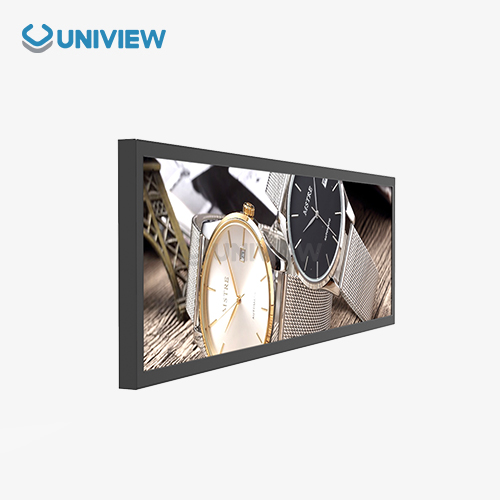
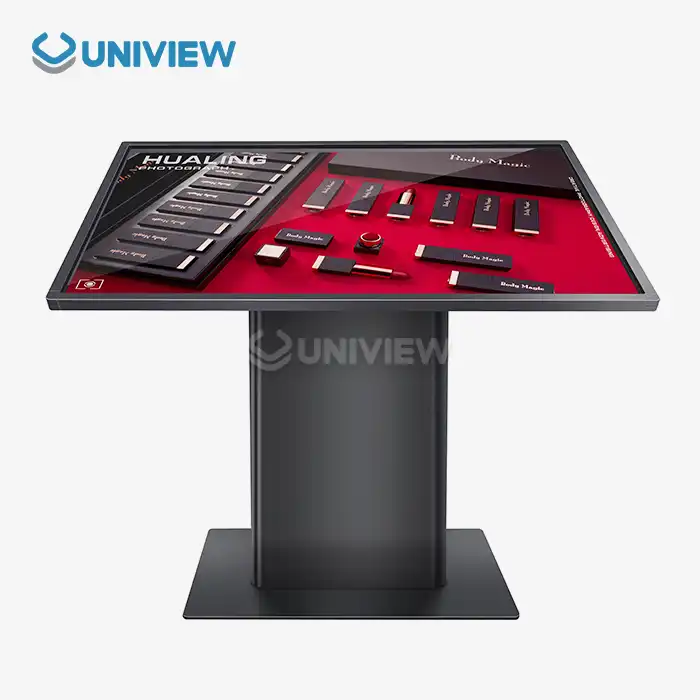
Learn about our latest products and discounts through SMS or email