- English
- French
- German
- Portuguese
- Spanish
- Russian
- Japanese
- Korean
- Arabic
- Greek
- German
- Turkish
- Italian
- Danish
- Romanian
- Indonesian
- Czech
- Afrikaans
- Swedish
- Polish
- Basque
- Catalan
- Esperanto
- Hindi
- Lao
- Albanian
- Amharic
- Armenian
- Azerbaijani
- Belarusian
- Bengali
- Bosnian
- Bulgarian
- Cebuano
- Chichewa
- Corsican
- Croatian
- Dutch
- Estonian
- Filipino
- Finnish
- Frisian
- Galician
- Georgian
- Gujarati
- Haitian
- Hausa
- Hawaiian
- Hebrew
- Hmong
- Hungarian
- Icelandic
- Igbo
- Javanese
- Kannada
- Kazakh
- Khmer
- Kurdish
- Kyrgyz
- Latin
- Latvian
- Lithuanian
- Luxembou..
- Macedonian
- Malagasy
- Malay
- Malayalam
- Maltese
- Maori
- Marathi
- Mongolian
- Burmese
- Nepali
- Norwegian
- Pashto
- Persian
- Punjabi
- Serbian
- Sesotho
- Sinhala
- Slovak
- Slovenian
- Somali
- Samoan
- Scots Gaelic
- Shona
- Sindhi
- Sundanese
- Swahili
- Tajik
- Tamil
- Telugu
- Thai
- Ukrainian
- Urdu
- Uzbek
- Vietnamese
- Welsh
- Xhosa
- Yiddish
- Yoruba
- Zulu
Can a Free Standing Digital Screen Support Remote Content Updates?
Modern free standing digital screen technologies offer remote content upgrades via enhanced connectivity and cloud administration. Digital signage displays today have Wi-Fi, 4G/5G connectivity, and advanced content management software for real-time changes from anywhere. This allows fast content modifications without display unit access, revolutionizing advertising campaign management. Technology now supports scheduled programming, emergency broadcasts, and dynamic content adaptation based on audience analytics or weather.

Introduction
Advertising and communication across industries now use free standing digital screens to present dynamic and visually compelling material. From busy retail spaces to corporate lobbies and transit hubs, these displays attract attention and offer tailored messaging with unprecedented versatility. Digital signage has changed static advertising into dynamic, responsive communication platforms that meet audience needs and company goals.
Remotely updating screen content improves operational agility and saves administrative overhead for global B2B procurement managers and distributors. This allows firms to rapidly respond to market shifts, promotional opportunities, and emergency alerts without physical content revisions. Remote content management changes how companies approach multi-location advertising campaigns and brand consistency.
Understanding remote content updates' technical foundations and practical implementations helps procurement professionals choose digital signage expenditures. Considering network needs, security standards, and integration capabilities makes choosing the proper solution difficult. Modern businesses need solutions that interact with IT infrastructure and perform well in different deployment environments.
Understanding Free Standing Digital Screens and Remote Content Updates
Free standing digital screens are used in retail, corporate, and public spaces to convey targeted messages visually. These self-contained advertising systems use high-resolution displays and integrated processing power to operate without external equipment. Strategic installation in high-traffic areas is possible without architectural alterations or complex mounting systems due to the independent architecture.
Remote content updates use Wi-Fi, cellular, and cloud-based services to centralize content distribution across various locations. Content management systems control the update process from content production to display synchronization. These technologies give B2B clients complete control over their message strategy with real-time updates for urgent communications and scheduled programming for planned campaigns.
Real-Time Content Management Capabilities
Real-time content management allows advertising to adapt to changing business conditions. Marketing teams may start promotions in minutes, respond to competitors, and capitalize on trends without delays. Retailers managing seasonal inventory, hospitality venues offering daily discounts, and transportation agencies conveying schedule changes benefit from this adaptability.
Cloud-based content management tools ease updates for non-technical users with intuitive interfaces. Web-based dashboards let content creators submit images, videos, and interactive elements and instantaneously distribute them to display groups or individual units. Format optimization is done automatically to ensure content looks good across screen sizes and resolutions.
Streamlined Operations and Cost Benefits
By eliminating content update maintenance trips, remote content management improves operations. Traditional digital signage needed personnel to visit each place with updated materials, which interfered with scheduling and raised costs. Remote updates improve campaign timing accuracy and eliminate human mistake risks, lowering these costs.
By maintaining messaging and visual standards across geographic regions, centralized administration improves brand homogeneity. Corporate communications teams can tightly regulate brand portrayal while customizing for regional tastes or regulations. Global enterprises managing varied market situations and cultural concerns need this consistency-flexibility balance.
Technical Features Enabling Remote Content Management
Remote content management relies on multiple interconnected technical components for smooth operation and reliability. Start with sturdy hardware standards for sustained operation and network connectivity. Intelligent system-on-chip technologies handle content processing, network connectivity, and system monitoring without extra computing devices in modern displays.
Content distribution, scheduling, and performance monitoring over display networks are coordinated by advanced content management software, the brain of remote operations. These platforms have sophisticated user interfaces for content creators, campaign managers, IT administrators, and procurement specialists. Software architecture allows scalable deployment, allowing unified control interfaces for a single monitor or hundreds of monitors.
Network Connectivity and Security Protocols
Remote content management relies on internet connectivity and bandwidth allocation. Modern displays enable Wi-Fi, Ethernet, and cellular connections for redundancy and flexibility in various installation scenarios. Automatically selecting suitable connection ways based on availability and performance ensures consistent operation even when primary networks are down.
Communications are encrypted, and access is authenticated to safeguard content and system integrity. VPN support, certificate-based authentication, and role-based restrictions restrict access to authorized users are enterprise-grade security features. Protecting content from unauthorized changes ensures compliance with company IT security policy and industry standards.
Content Workflow and Deployment Process
The end-to-end procedure includes content production, approval, scheduling, and deployment across different display sites. Content makers use conventional design tools to create items and upload them to the management platform for approval. The solution offers collaborative workflows that meet organizational hierarchy and quality control needs, assuring professional presentation across deployments.
Content distribution requires format conversion, bandwidth optimization, and synchronization time, which deployment automation handles. The platform prevents disruption by scheduling updates during low-traffic periods and offering an emergency override for urgent communications. Real-time monitoring solutions notify administrators of deployment concerns before they impair display performance.
Comparing Free Standing Digital Screens with Alternative Digital Signage Solutions
Selecting the proper digital signage solution entails comparing features, adaptability, and total cost of ownership. Wall-mounted displays, projection systems, and LED billboard installations all have pros and cons for different deployment scenarios. Understanding these variations helps procurement experts choose operational and budget-friendly solutions.
Better than wall-mounted digital screens, free-standing ones allow strategic location without architectural changes or complicated installation. This is useful for rental homes, temporary installations, and wall mounting in structurally challenging locations. Portable free-standing units allow seasonal relocations and event-based deployments that fixed installations cannot.
Performance and Visibility Comparisons
Different digital signage systems function differently, affecting audience engagement and message efficacy. In ambient light, free-standing LCD and LED displays are brighter and more accurate than projection systems, ensuring visibility. The steady performance makes these displays suited for indoor and outdoor use without compromising image quality.
Networked displays provide more advanced remote management options than projection systems for content change. Wall-mounted screens can update like freestanding units, although installation limits may limit network connectivity. LED billboards are very visible outdoors but require specific content management systems that may not interact with corporate IT infrastructure.
Cost Analysis and ROI Considerations
Total cost of ownership includes purchase price, installation, maintenance, and content management overhead throughout the display lifecycle. For budget-conscious applications, free standing digital screens cost less to install than wall-mounted or LED billboards. Simplified installation speeds up project schedules, boosting campaign launches and revenue.
Solid-state LCD and LED screens require less maintenance than projection systems with consumable light components. Remote diagnostics provide proactive problem diagnosis and resolution without on-site visits, lowering maintenance costs. The operational advantages increase ROI estimates and business case formulation for procurement approval processes.
Implementing Remote Content Updates in Procurement and Operations
When adding remote content update capabilities to their operations, procurement professionals must consider many things. Beyond basic functionality, the review process includes integration, scalability, and long-term maintenance to ensure deployment and performance. Preventing costly adjustments and compatibility difficulties after installation requires a strategic purchase strategy.
A thorough evaluation of cost, leasing, customisation, and volume purchasing arrangements that maximize budget usage are key buying factor. Many suppliers provide renting, lease-to-own, and bulk purchasing discounts to decrease initial outlay. Understanding these financing choices helps procurement teams choose financing methods that match company's cash flow and budget approval processes.
Installation and Network Requirements
To ensure network setup and security, digital signage suppliers, IT departments, and facilities management teams must work together. To ensure seamless operations, network connectivity verification, content management system integration, and user training are required during installation. Professional installation services include site surveys, network examinations, and performance testing to verify system functionality before acceptance.
Network security includes firewall configuration, access control, and monitoring techniques to prevent illegal access and content tampering. Many enterprise implementations require integration with network management systems and compliance with corporate IT standards on external device connections. Contract negotiations should include unique configuration and technical support needs.
Performance Monitoring and Maintenance Protocols
Performance monitoring solutions that track display functionality, content delivery, and user engagement are essential for operational success. Modern content management solutions include sophisticated analytics dashboards to help operations teams spot issues before they impair display performance. Monitoring allows preemptive maintenance scheduling and data-driven content strategy optimization based on audience reaction trends.
Maintenance practices should include preventive and reactive care to reduce downtime and maintain professional appearance. Service level agreements usually stipulate technical response times, replacement part availability, and critical problem escalation. Understanding these support obligations helps procurement teams assess supplier reliability and plan for business-impacting operational eventualities.
Uniview Commercial: Your Trusted Digital Signage Partner
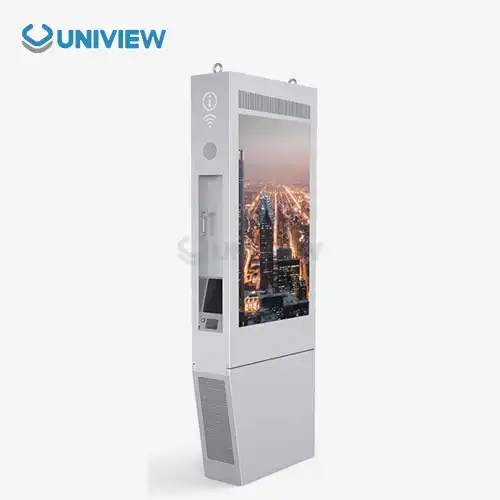
Uniview Commercial offers a wide range of free-standing digital screens with powerful remote content updating options for over 100 countries and regions. Our commitment to innovation and quality has made us a prominent digital signage producer, servicing retail, corporate, hospitality, and transportation markets. We have tailored solutions for procurement professionals' distinct difficulties.
Our 2000–4000 nit LCD displays provide excellent visibility in low-light environments. These displays are durable with IP65 to IP66 water and dust protection, corrosion-resistant surfaces using European treatment technology, and wind resistance ratings up to 16. These criteria ensure dependable outdoor functioning and a professional look throughout long deployments.
Comprehensive Service and Support Framework
For B2B needs, we offer customization, bulk purchase, installation, leasing, and extended warranty services. Our professional account managers collaborate with procurement teams to understand project specs and create technological solutions that maximize budget. Collaboration guarantees project success and builds long-term partnerships.
Our technical support infrastructure offers 24-hour global response and quality coverage from China Pacific Insurance Company and other insurers. Expanding the guarantee from 3 to 5 years shows our confidence in product reliability and customer satisfaction. Procurement experts managing important communication infrastructure investments can relax with this assistance approach.
Advanced heat dissipation systems, environmental simulation, and compliance with European, American, and Japanese standards provide reliable operation in different deployment environments. In noisy outdoor environments, our displays operate at 60 dB, minimizing noise pollution while delivering excellent performance. Our technical proficiency and complete support services demonstrate our dedication to long-term relationships and digital signage technology innovation.
Conclusion
Remote content updates have made free-standing digital screens useful commercial communication tools for real-time responsiveness and operational efficiency across different locations. The technology gives procurement professionals strategic advantages like lower operational expenses, brand consistency, and campaign agility that boost business performance. Making informed judgments about technical needs and implementation helps firms maximize their digital signage investments.
Freestanding digital screens balance capability, flexibility, and cost-effectiveness for most corporate applications, according to the comparison. Advanced remote management, robust hardware specs, and complete support services make digital signage solutions appealing to procurement teams. Success requires careful planning, implementation, and continuous partnerships with B2B-savvy suppliers.
FAQ
What types of content can be updated remotely on free standing digital screens?
Modern displays support comprehensive content types, including high-resolution images, videos, interactive applications, live data feeds, and web-based content. The content management systems handle automatic format conversion and optimization to ensure compatibility across different screen sizes and resolutions. Emergency override capabilities enable immediate content replacement for urgent communications, while scheduled programming supports complex campaign management with multiple content rotation schedules.
How secure are remote content updates for business applications?
Enterprise-grade security protocols protect remote content updates through encrypted communications, certificate-based authentication, and role-based access controls. The systems support VPN connections, firewall integration, and audit logging that meet corporate IT security requirements. Multi-factor authentication and user permission hierarchies prevent unauthorized access while maintaining compliance with industry security standards and data protection regulations.
What network requirements are needed for reliable remote content updates?
Reliable internet connectivity with sufficient bandwidth supports smooth content distribution, typically requiring minimum speeds of 10 Mbps for standard definition content and higher rates for 4K video materials. The systems support multiple connectivity options, including Wi-Fi, Ethernet, and cellular connections with automatic failover capabilities. Network configuration may require firewall adjustments and port configuration to enable proper communication between displays and management servers.
Can remote content updates work with existing IT infrastructure?
Modern content management platforms provide flexible integration options that accommodate existing corporate IT environments through API connections, single sign-on integration, and network policy compliance. The systems support standard protocols and security frameworks that align with enterprise IT requirements. Professional integration services help ensure smooth deployment without disrupting existing network operations or compromising security protocols.
Partner with Uniview Commercial for Advanced Digital Signage Solutions
Uniview Commercial stands ready to support your remote content management requirements with industry-leading free standing digital screen solutions designed specifically for global B2B applications. Our experienced team provides comprehensive consultation services covering technical specifications, network integration, and deployment planning to ensure successful project outcomes. Whether you need single units for pilot programs or bulk orders for nationwide deployments, we offer flexible procurement options that accommodate diverse budget and timing requirements.
Connect with our digital signage specialists at sales@univiewlcdisplay.com to explore customized solutions for your specific application requirements. As a trusted free standing digital screen manufacturer with proven global experience, we provide the technical expertise and support infrastructure necessary for successful digital signage implementation. Our commitment to quality, innovation, and customer satisfaction ensures your investment delivers lasting value and operational excellence across all deployment locations.
References
1. Digital Signage Federation Research Report on Remote Content Management Systems in Enterprise Applications, 2023.
2. International Association of Digital Display Technologies, Standards for Remote Content Update Security Protocols, 2024.
3. Business Technology Research Institute, Total Cost of Ownership Analysis for Digital Signage Solutions, 2023.
4. Global Digital Signage Market Analysis: Remote Management Capabilities and Future Trends, Industry Research Group, 2024.
5. Network Security Guidelines for Digital Signage Deployment in Enterprise Environments, Cybersecurity Standards Organization, 2023.
6. Procurement Best Practices for Digital Signage Technology: A Comprehensive Guide for B2B Buyers, Professional Procurement Association, 2024.


Learn about our latest products and discounts through SMS or email