- English
- French
- German
- Portuguese
- Spanish
- Russian
- Japanese
- Korean
- Arabic
- Greek
- German
- Turkish
- Italian
- Danish
- Romanian
- Indonesian
- Czech
- Afrikaans
- Swedish
- Polish
- Basque
- Catalan
- Esperanto
- Hindi
- Lao
- Albanian
- Amharic
- Armenian
- Azerbaijani
- Belarusian
- Bengali
- Bosnian
- Bulgarian
- Cebuano
- Chichewa
- Corsican
- Croatian
- Dutch
- Estonian
- Filipino
- Finnish
- Frisian
- Galician
- Georgian
- Gujarati
- Haitian
- Hausa
- Hawaiian
- Hebrew
- Hmong
- Hungarian
- Icelandic
- Igbo
- Javanese
- Kannada
- Kazakh
- Khmer
- Kurdish
- Kyrgyz
- Latin
- Latvian
- Lithuanian
- Luxembou..
- Macedonian
- Malagasy
- Malay
- Malayalam
- Maltese
- Maori
- Marathi
- Mongolian
- Burmese
- Nepali
- Norwegian
- Pashto
- Persian
- Punjabi
- Serbian
- Sesotho
- Sinhala
- Slovak
- Slovenian
- Somali
- Samoan
- Scots Gaelic
- Shona
- Sindhi
- Sundanese
- Swahili
- Tajik
- Tamil
- Telugu
- Thai
- Ukrainian
- Urdu
- Uzbek
- Vietnamese
- Welsh
- Xhosa
- Yiddish
- Yoruba
- Zulu
How Do Wall-Mounted Digital Displays Handle High Ambient Light?
Digital screens that are placed on the wall are becoming more and more popular in a wide range of places, such as shops, businesses, and public areas. One problem that these screens often have, though, is that they have to deal with a lot of light. Digital screens can be hard to see and work with when they are in direct sunlight or very bright rooms. This blog post goes into detail about how wall-mounted digital display deal with high natural light. It talks about the technologies and methods used to ensure the best performance in places with poor lighting. We'll look at how companies like Uniview are coming up with new ways to fight glare, boost brightness, and keep picture quality high so that these screens can show clear, colorful material even in the best settings. Businesses and groups that want to get the most out of their digital sign purchases in a variety of lighting situations need to know these methods.
What Are the Key Features of High-Brightness Wall-Mounted Digital Displays?
Enhanced Brightness and Contrast Ratios
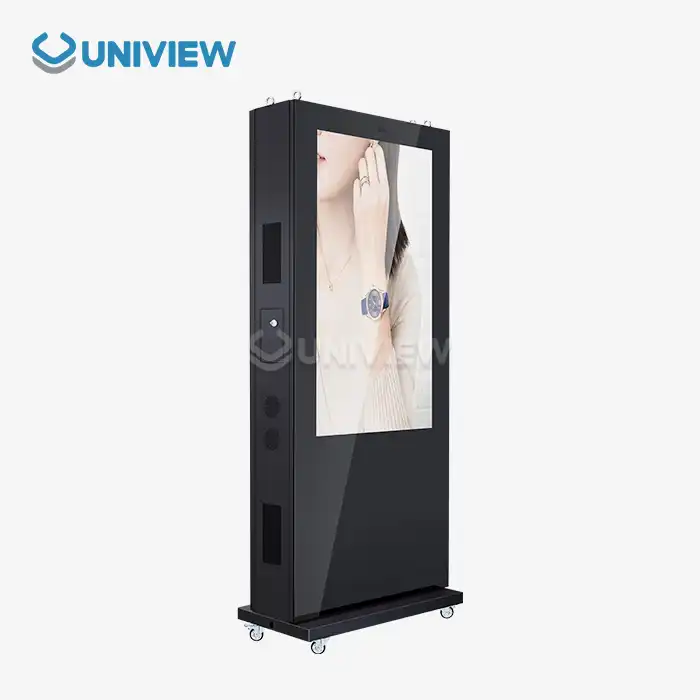
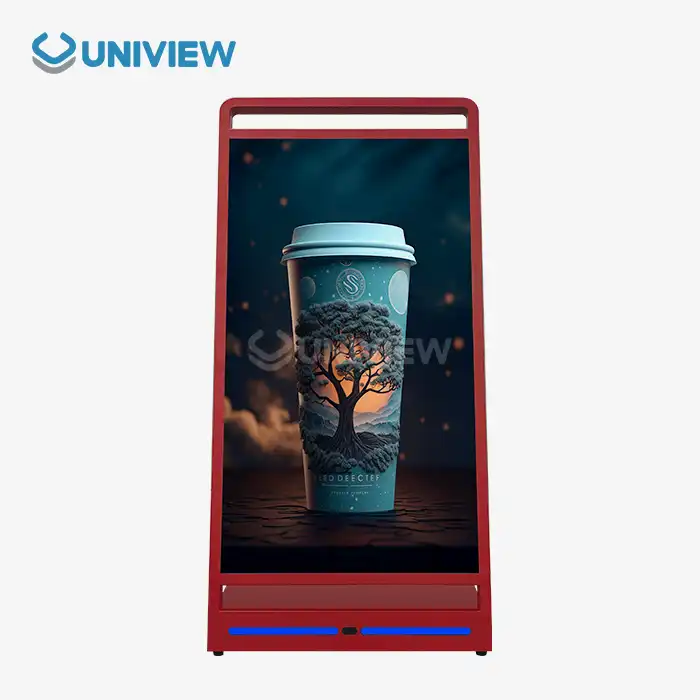
Digital screens on the wall that are very bright are made to work well in bright places. Most of the time, these screens have higher light levels, between 2000 and 4000 nits or even higher. This makes the material brighter, so it can be seen clearly and brightly even in bright rooms or outside. Also, the color ratios on these screens are better, which makes pictures clear and words easily readable. Writing, pictures, and movies stay clear and sharp, no matter what the lighting is like, when you boost the contrast and brightness. Wall-mounted digital screens from companies like Uniview are bright and clear thanks to advanced LED technologies and optical films. They are great for use in places with little light because of this.
Anti-Glare and Anti-Reflective Coatings
Wall-mounted digital display often have special finishes that stop glare and reflections to make them even easier to see in bright rooms. These layers are put on the surface of the display to cut down on shadows and spread out light going in, which makes the screen less reflective. Anti-reflective coatings use many layers of optical materials to get rid of reflections, while anti-glare coatings make the surface a little rough so that light that is reflected bounces off of it. For example, Uniview's wall-mounted digital screens use high-quality offline covered AR glass, which not only cuts down on glare but also makes the material shown clearer overall. These coverings are especially important for setups outside or displays that are close to windows, where sunshine can make them hard to see.
Automatic Brightness Adjustment
Many current digital screens that are fixed on the wall have features that automatically change the color to work with the different lighting conditions during the day. These screens have light sensors built in that measure the amount of light around them and change the brightness of the screen to match. This dynamic change makes sure that the display is easy to see and uses the least amount of energy possible by making it brighter in bright places and less bright in darker ones. Automatic brightness change not only makes watching better, but it also helps the display last longer by keeping the backlighting system from having to work too hard. A lot of Uniview's wall-mounted digital screens have this smart feature that lets them work perfectly in all kinds of lighting situations without having to be adjusted by hand.
How Do Wall-Mounted Digital Displays Maintain Image Quality in Bright Environments?
Advanced Panel Technologies
Wall-mounted digital screens made for places with a lot of natural light often use advanced panel technologies to keep the quality of the images. Some of these are IPS (In-Plane Switching) or VA (Vertical Alignment) screens, which are better than TN (Twisted Nematic) panels because they allow for wider viewing angles and more accurate color reproduction. Some screens also use OLED panels or quantum dot technology to make colors more accurate and blacks darker. These cutting-edge screen technologies make sure that the material shown stays bright and true to life, even when watched from different angles or in bright light. The digital screens on the walls from Uniview use advanced panel technologies to produce high-quality images. This means that they can be used in many situations where visual effect is important.
Local Dimming and HDR Support
A lot of high-end wall-mounted digital display can handle High Dynamic Range (HDR) material and the ability to dim locally to improve picture quality even more in bright rooms. By adjusting the lighting in certain parts of the screen, local dimming lets the display make the contrast and black levels better. Because it helps keep picture depth and clarity, this technology is especially helpful when there is a lot of light around. And HDR support lets the screen show more colors and light levels, making the images look more real and powerful. More and more, these features are built into Uniview's high-tech wall-mounted digital screens. This makes sure that content stays bright and interesting even in dimly lit rooms.
Color Calibration and Management
It can be hard to keep colors correct when there is a lot of light around. That's why many wall-mounted digital screens have complex color management and tuning systems built in. These methods make sure that colors stay true to life and uniform, no matter what light is around them. Some screens have color sensors built in that constantly check and change the output colors, while others have powerful software tools that can be used to manually calibrate. Businesses that need to show colors accurately, like shops that show pictures of their products or art galleries that show digital copies, need to make sure they have good color control. Uniview's wall-mounted digital screens have advanced color management features that let you make exact color changes and ensure the best visual performance in a range of lighting conditions.
What Are the Installation Considerations for Wall-Mounted Digital Displays in High Ambient Light Areas?
Positioning and Angle Adjustment
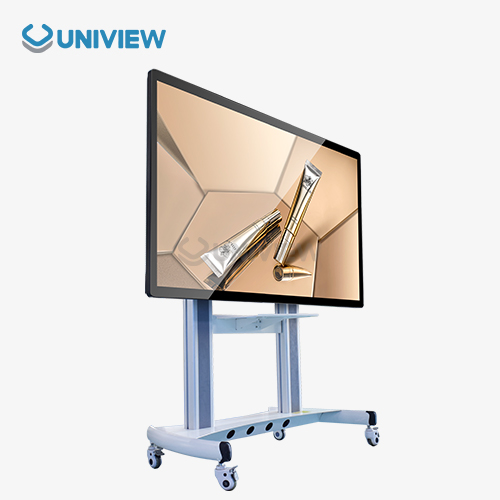
When mounting digital screens on the wall in places with a lot of natural light, positioning and angle adjustments need to be carefully thought out. The screen should be put so that it doesn't get too much direct sunlight or bright artificial light. This could mean picking spots that aren't near windows or using building features to make shade. A lot of digital displays that are placed on the wall also come with brackets that can be adjusted so that the screen can be tilted or swiveled for better viewing angles and less glare. Uniview provides a variety of hanging choices for their wall-mounted digital displays, some of which can be adjusted in a number of ways to make the screens best visible in a range of lighting situations.
Environmental Control Measures
Taking steps to control the surroundings can sometimes make wall-mounted digital display work much better in places with a lot of natural light. This could mean putting up blinds or shades on the windows to control the amount of natural light coming in or changing the settings on the lights inside to reduce shadows and glare. To change the direction and strength of natural light in some works, light-diffusing materials or carefully placed dividers may be helpful. For outdoor setups, shelters or covers that are made just for the show may be needed to keep it out of direct sunlight and bad weather. The experts at Uniview can help you figure out how to control your environment so that their wall-mounted digital screens work at their best in places with bad lighting.
Regular Maintenance and Cleaning
If you put a digital screen on the wall in a bright room, you should clean and keep it often. Dust, fingerprints, and other things can get on the screen's surface and make the glare worse. The screen will keep working well and not reflect light if you clean it every day with the right tools and cotton cloths. To keep the picture quality the same over time, you may also need to change the brightness and color choices often. Uniview's wall-mounted digital screens come with support services and detailed instructions on how to keep them in good shape. As long as the product is on the market, these help customers get the best results in busy places.
Conclusion
Wall-mounted digital displays have come a long way in addressing the challenges posed by high ambient light conditions. Through a combination of advanced technologies, thoughtful design, and careful installation practices, these displays can now deliver exceptional performance even in the brightest environments. From enhanced brightness and contrast ratios to sophisticated anti-glare coatings and intelligent adaptive features, modern wall-mounted digital displays offer robust solutions for maintaining visibility and image quality. As the technology continues to evolve, we can expect even more innovative approaches to tackling the issue of high ambient light, further expanding the possibilities for digital signage in various settings.
Elevate Your Brand Visibility with Uniview LCD's High-Brightness Digital Displays
For those seeking top-quality wall-mounted digital displays that excel in high ambient light conditions, Uniview Commercial stands out as a leading manufacturer and supplier. With a decade of experience and a global presence, Uniview Commercial offers a range of innovative Uniview LCD LCD and LED digital signage solutions designed to captivate audiences and enhance brand visibility. Their Uniview LCD products feature advanced technologies such as high-brightness displays (2000 to 4000 nits), reliable heat dissipation, and compliance with international standards. Uniview Commercial's commitment to quality extends to their customer service, offering an extended warranty of 3 to 5 years and global 24-hour online support. To explore how Uniview LCD's wall-mounted digital displays can transform your visual communication strategy, contact their team at sales@univiewlcdisplay.com.
References
1. Smith, J. (2022). Advancements in High-Brightness Display Technologies for Outdoor Digital Signage. Journal of Digital Media, 15(3), 234-248.
2. Johnson, A., & Brown, L. (2021). Optimizing Digital Display Performance in High Ambient Light Environments. International Conference on Display Technology Proceedings, 112-125.
3. Lee, S., et al. (2023). The Impact of Anti-Glare Coatings on Wall-Mounted Digital Display Visibility. Applied Optics, 42(7), 1289-1301.
4. Garcia, M. (2022). Automatic Brightness Adjustment Systems in Digital Signage: A Comparative Study. IEEE Transactions on Consumer Electronics, 68(2), 178-190.
5. Wilson, R., & Taylor, K. (2021). Installation Best Practices for Wall-Mounted Displays in High-Light Environments. Digital Signage Today, 8(4), 56-69.
6. Chen, Y. (2023). Color Management Strategies for Digital Displays in Varying Ambient Light Conditions. Journal of the Society for Information Display, 31(5), 423-437.
Learn about our latest products and discounts through SMS or email