- English
- French
- German
- Portuguese
- Spanish
- Russian
- Japanese
- Korean
- Arabic
- Greek
- German
- Turkish
- Italian
- Danish
- Romanian
- Indonesian
- Czech
- Afrikaans
- Swedish
- Polish
- Basque
- Catalan
- Esperanto
- Hindi
- Lao
- Albanian
- Amharic
- Armenian
- Azerbaijani
- Belarusian
- Bengali
- Bosnian
- Bulgarian
- Cebuano
- Chichewa
- Corsican
- Croatian
- Dutch
- Estonian
- Filipino
- Finnish
- Frisian
- Galician
- Georgian
- Gujarati
- Haitian
- Hausa
- Hawaiian
- Hebrew
- Hmong
- Hungarian
- Icelandic
- Igbo
- Javanese
- Kannada
- Kazakh
- Khmer
- Kurdish
- Kyrgyz
- Latin
- Latvian
- Lithuanian
- Luxembou..
- Macedonian
- Malagasy
- Malay
- Malayalam
- Maltese
- Maori
- Marathi
- Mongolian
- Burmese
- Nepali
- Norwegian
- Pashto
- Persian
- Punjabi
- Serbian
- Sesotho
- Sinhala
- Slovak
- Slovenian
- Somali
- Samoan
- Scots Gaelic
- Shona
- Sindhi
- Sundanese
- Swahili
- Tajik
- Tamil
- Telugu
- Thai
- Ukrainian
- Urdu
- Uzbek
- Vietnamese
- Welsh
- Xhosa
- Yiddish
- Yoruba
- Zulu
How to Choose a Floor Standing LCD Advertising Display?
The ideal floor-standing LCD advertising display involves careful consideration of technological parameters, environmental endurance, and company needs. Traditional advertising tactics cannot match the brightness, weatherproofing, and customisation of digital signage technologies. Businesses in retail, hospitality, corporate, and transportation may improve ROI and consumer engagement by knowing display resolution, protection ratings, and manufacturer support.
Understanding Floor Standing LCD Advertising Displays
Digital signage technology has revolutionized business communication with floor-standing LCD advertising displays. These advanced devices use high-resolution LCD screens and durable housing to give excellent visual performance in varied environments.
Core Technology and Display Capabilities
Modern LCD advertising displays use superior liquid crystal technology to provide colorful, high-contrast images in poor lighting. These displays exceed indoor display regulations with brightness ranges of 2,000 to 4,000 nits. They're great for outdoor advertising since anti-reflective (AR) glass coating maximizes visibility in direct sunshine.
Interactive capabilities are becoming vital in the digital world. Touch-enabled displays let visitors learn about products, discover directions, and enjoy entertainment. Passive advertising becomes dynamic customer experiences that build brand loyalty through interactivity.
Essential Components and Installation Requirements
A comprehensive floor-standing display system has numerous essential parts that work together to perform well. System intelligence, the media player processes and displays content and manages scheduling and remote updates. Professional screens often have inbuilt Android or Windows systems that offer multimedia and content management.
Energy efficiency is critical to TCO calculations. Modern displays use clever brightness sensors to change screen brightness based on ambient lighting, saving power and improving visibility. Businesses with 24/7 displays benefit from this functionality.
Installation depends on location and conditions. Weatherproofing, security, and local digital signage placement and content controls are needed for outdoor installations.
Key Criteria for Choosing the Right Floor Standing LCD Display
Multiple technical and operational criteria must be considered to choose the best display solution. Knowing these factors helps procurement teams make decisions that meet corporate and environmental goals.
Technical Specifications and Performance Parameters
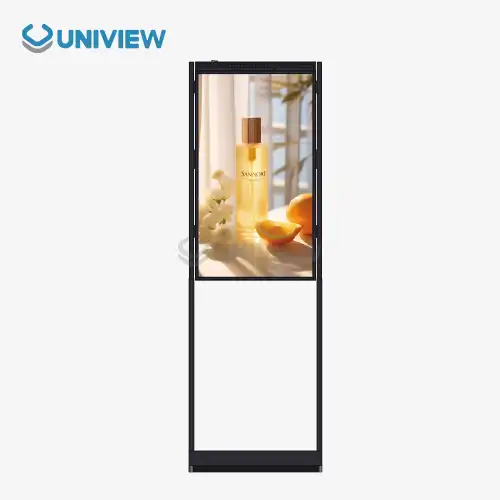
Screen size greatly affects viewing distance and content efficacy. The 43-inch format, illustrated by the J130P, balances visual impact and space efficiency for most business applications. Larger displays improve visibility from afar but demand more installation space and power.
Professionals favor 4K Ultra HD as resolution standards evolve. Higher resolution displays produce clear text and images even at close range. Interactive apps with extensive product information or navigation interfaces need this feature.
Environmental protection ratings are important for outdoor projects. In adverse weather, IP65 and IP66 standards protect against dust and water entry and ensure reliable operation. For public area deployments, the IK10 impact resistance grade protects against vandalism and accidental damage.
Performance Comparison and Technology Trade-offs
LCD technology has advantages over other display technologies in some situations. LCD screens have better image quality at closer distances than LED video walls and lower per-square-foot pricing. LCD panels are ideal for detailed content presentation due to their uniform pixel density and color reproduction.
Projector-based systems offer greater image sizes at cheaper initial costs, but they are less visible in bright conditions and require more lamp replacement. LCD screens eliminate these issues and work consistently over time.
Installation and Maintenance Considerations
Display position and mounting criteria greatly affect installation complexity. Floor standing units are flexible and don't require structural support like wall-mounted units. They need enough floor space and may need extra security in high-traffic areas.
Modern LCD displays require minimum maintenance, but knowing warranty coverage and technical assistance helps ensure uninterrupted operation. Business-critical installations benefit from robust warranties and fast technical assistance.
Matching Solutions to Specific Business Needs
Different sectors have different digital signage issues and opportunities. Understanding these needs helps firms choose displays that maximize operational value.
Industry-Specific Applications and Requirements
Displays must attract customers and provide product information in retail settings. Retail merchandising demands flexible content management and high-quality image reproduction to highlight products. Customers can browse goods, prices, and promotional content independently using interactive features.
Corporate surroundings value professional aesthetics and technology integration. Internal communications, visitor information, and conference room displays need consistent performance and easy content update. Integration with business networks and content management systems is essential for efficiency.
Wayfinding, advertising information, and entertainment are common in hospitality apps. Displays that adapt to multiple content kinds throughout the day improve performance in hotels, restaurants, and entertainment venues. Outdoor hospitality setups like poolside or patios need weather resistance.
Transportation hubs need screens that can display clear, understandable information in varied lighting levels and endure environmental elements. Integration with scheduling and emergency notification systems is crucial for these apps.
Customization and Scalability Planning
Many modern display technologies allow businesses to customize functionality to their needs. Custom enclosure colors, branding integration, and customized mounting choices help displays match architectural aspects. Business can customize software to create user interfaces that match its brand and operations.
Consider modular hardware and software architectures for expansion planning. Remotely managed and content-updated displays enable multi-location installations and reduce operational costs. Modular expansion lets you add sensors, cameras, and connectivity choices to safeguard earlier investments and improve capabilities.
As companies strive for sustainability, environmental compliance influences procurement decisions. Energy-efficient displays with automated brightness adjustment and low-power standby modes minimize operational expenses and promote corporate environmental objectives. International environmental standards and recycling initiatives assist organizations satisfy regulatory and corporate responsibility goals.
Trusted Brands and Supplier Selection for B2B Procurement
Successful digital signage implementations depend on supplier agreements. Understanding how to evaluate suppliers and build productive relationships assures long-term display investment success and value.
Supplier Evaluation and Partnership Criteria
Comprehensive certification processes and worldwide standards show quality-conscious producers. Find providers with FCC, CE, and UL environmental testing, electromagnetic compatibility, and safety certifications. These certifications ensure displays function reliably in their intended locations and meet regulations.
Manufacturing and quality control greatly affect product reliability and consistency. Manufacturers with excellent production facilities and strict testing processes routinely satisfy criteria. Displays undergo environmental simulation testing, including temperature extremes, humidity, and vibration, to assure real-world performance.
Businesses with several sites or foreign operations benefit from global distribution networks and local support. Local installation, training, and technical support are available from suppliers with dealer networks. Emergency support and large-scale deployments benefit from this local presence.
Service and Support Expectations
Complete warranty coverage safeguards display investments and ensures long-term performance. Leading manufacturers give 3-5-year warranties to demonstrate product quality and defend against unexpected failures. Knowing what components and services are covered under warranty helps set realistic support expenses.
Installation and technical support vary widely among suppliers. Professional installation ensures displays are properly configured and working from the start. Continuous technical assistance, including 24-hour response, reduces downtime and ensures operation.
Quality training and documentation affect display deployment performance, especially for firms with several units or complex installations. User manuals, training materials, and online tools make display administration easier and reduce support needs.
Case Studies and Practical Examples
Real-world implementations reveal floor-standing LCD display deployment benefits and drawbacks. Examples of measurable results and lessons gained can inform future procurement decisions.
Retail Success Stories and Measurable Outcomes
A big retailer promoted seasonal products and special discounts with 43-inch exterior displays at store entrances. High-brightness displays were visible all day, even at peak sunshine. Customer engagement measures increased promotional offer awareness by 35% above static signs. The panels' automated brightness adjustment saved 40% of energy while preserving visibility.
These facilities have to withstand extreme weather. IP65 casings shielded internal components from intense rain and dust storms, ensuring ongoing operation. The steel construction and reinforced glass protected against mild impacts while retaining a professional image outdoors.
Implementation Challenges and Solutions
Providing remote places with power and network connectivity was an initial implementation challenge. Working with skilled vendors early in the planning phase helped identify these requirements, allowing infrastructure preparation before installation. Cleaning AR glass surfaces and inspecting security features regularly optimises performance and display longevity.
Compatible content management integration with marketing systems needs careful planning. Multiple-content format displays and flexible scheduling allowed promotional campaigns and inventory management systems to integrate.
Here is a practical decision-making checklist that procurement professionals can use to evaluate display options:
• Environmental requirements: Assess installation location conditions and required protection ratings
• Technical specifications: Determine optimal screen size, resolution, and brightness requirements
• Integration capabilities: Evaluate compatibility with existing systems and future expansion plans
• Supplier credentials: Verify certifications, warranty coverage, and support capabilities
• Total cost analysis: Calculate initial investment plus ongoing operational and maintenance costs
• Performance validation: Request demonstrations or pilot installations to verify suitability
These criteria provide a structured approach to display selection while ensuring all critical factors receive appropriate consideration during the procurement process.
Company Introduction and Product & Service Information
Uniview Commercial, a leading digital signage company, produces high-quality LCD and LED display solutions for demanding commercial applications. Floor-standing advertising displays are our specialty after a decade of display technology and production improvements.
Comprehensive Product Portfolio and Technical Excellence
Our flagship J130P 43-inch outdoor floor-standing LCD advertising display shows our dedication to performance and reliability. This display's excellent LG or Samsung LCD panels provide high-quality images and brightness for difficult outdoor conditions. The anti-reflective front glass ensures good visibility in direct sunshine, and automatic brightness adjustment maximizes viewing while saving energy.
IP55/IP65 weather resistance, automatic temperature management, and strong security locks prevent unwanted access. Steel sheet structure with toughened safety glass provides IK10 impact and vandalism protection.
Our manufacturing methods include environmental simulation testing, water and dust resistance verification, wind resistance certification up to Level 16, and noise level validation to assure silent operation. These rigorous testing processes provide reliable performance in various operational settings.
Value-Added Services and Support Infrastructure
Professional installation ensures optimal display setting and performance from the start. Our qualified installation specialists specialize in power supply configuration, network integration, and content management system setup for varied environments and applications.
Display size, resolution, branding integration, and specialist characteristics like enhanced waterproofing or explosion-proof designs can be customized. Industry-specific customization meets retail, hotel, healthcare, and transportation needs.
Comprehensive warranty coverage, including 3-5 year extended options, protects display investments and shows our product quality. Global 24-hour technical assistance minimizes downtime and maintains operation. Our support infrastructure covers over 100 nations and regions, giving local advice regardless of installation site.
Flexible financing and bulk reductions enable large-scale deployments and make modern display technology affordable to all enterprises. Our partnership includes continuing consultation and optimization to maximize display investment returns beyond product delivery.
Conclusion
The correct floor-standing LCD advertising display demands careful consideration of technical parameters, environmental constraints, and supplier capabilities. Brightness levels suitable for installation, environmental protection ratings that match exposure needs, and complete warranty coverage that protects long-term investments are crucial. Displays that fit application requirements boost consumer engagement and operational efficiency. Working with skilled manufacturers who offer extensive assistance assures optimal performance and ROI. Businesses that use sophisticated display technology and intelligent implementation methods can capitalize on the changing digital signage landscape.
FAQ
What screen size works best for different advertising applications?
Screen size selection depends on viewing distance and content requirements. 43-inch displays like the J130P provide optimal visibility for distances of 3-10 feet, making them ideal for entrance areas, retail displays, and indoor promotional applications. Larger screens become beneficial for applications requiring visibility from greater distances or when displaying detailed content to multiple viewers simultaneously.
How do LCD displays compare to LED alternatives for outdoor use?
LCD displays offer superior image quality at closer viewing distances with better color accuracy and consistent pixel density. They typically provide better cost-effectiveness for screen sizes under 55 inches while offering easier maintenance and replacement. LED displays excel in very large format applications and extremely bright environments, but require higher initial investments and more complex maintenance procedures.
What integration capabilities should I expect with existing systems?
Modern displays support multiple connectivity options, including HDMI, USB, Ethernet, and wireless connections. Content management integration varies by manufacturer, but professional displays typically support popular digital signage platforms and allow remote content updates. Compatibility with existing network infrastructure and content creation tools should be verified before purchase to ensure seamless integration.
Partner with Uniview Commercial for Your Digital Signage Success
Uniview Commercial delivers cutting-edge floor standing LCD advertising display solutions backed by comprehensive support and proven reliability. Our J130P 43-inch model exemplifies the perfect balance of performance, durability, and value for businesses seeking to enhance their advertising effectiveness. As a trusted floor standing lcd advertising display manufacturer, we provide complete customization options, extended warranty coverage, and global technical support to ensure your investment delivers maximum returns.
Contact our expert team at sales@univiewlcdisplay.com to discuss your specific requirements and explore how our advanced display technology can transform your advertising strategy. Our consultants will work with you to identify optimal solutions that align with your business objectives and budget considerations, ensuring successful implementation and long-term satisfaction.
References
1. Digital Signage Market Analysis and Technology Trends Report, International Display Industry Association, 2023.
2. Outdoor Display Environmental Testing Standards and Best Practices, Commercial Electronics Manufacturing Association, 2022.
3. LCD vs LED Technology Comparison for Commercial Applications, Professional Display Technology Journal, Vol. 45, 2023.
4. ROI Analysis of Digital Signage Implementations Across Multiple Industries, Business Technology Research Institute, 2023.
5. Environmental Protection Standards for Electronic Displays in Commercial Applications, Global Electronics Standards Council, 2022.
6. Energy Efficiency Guidelines for Commercial Digital Signage Systems, Sustainable Technology Alliance, 2023.
Learn about our latest products and discounts through SMS or email