- English
- French
- German
- Portuguese
- Spanish
- Russian
- Japanese
- Korean
- Arabic
- Greek
- German
- Turkish
- Italian
- Danish
- Romanian
- Indonesian
- Czech
- Afrikaans
- Swedish
- Polish
- Basque
- Catalan
- Esperanto
- Hindi
- Lao
- Albanian
- Amharic
- Armenian
- Azerbaijani
- Belarusian
- Bengali
- Bosnian
- Bulgarian
- Cebuano
- Chichewa
- Corsican
- Croatian
- Dutch
- Estonian
- Filipino
- Finnish
- Frisian
- Galician
- Georgian
- Gujarati
- Haitian
- Hausa
- Hawaiian
- Hebrew
- Hmong
- Hungarian
- Icelandic
- Igbo
- Javanese
- Kannada
- Kazakh
- Khmer
- Kurdish
- Kyrgyz
- Latin
- Latvian
- Lithuanian
- Luxembou..
- Macedonian
- Malagasy
- Malay
- Malayalam
- Maltese
- Maori
- Marathi
- Mongolian
- Burmese
- Nepali
- Norwegian
- Pashto
- Persian
- Punjabi
- Serbian
- Sesotho
- Sinhala
- Slovak
- Slovenian
- Somali
- Samoan
- Scots Gaelic
- Shona
- Sindhi
- Sundanese
- Swahili
- Tajik
- Tamil
- Telugu
- Thai
- Ukrainian
- Urdu
- Uzbek
- Vietnamese
- Welsh
- Xhosa
- Yiddish
- Yoruba
- Zulu
Kiosk LED Display with Split-Screen & Looping Content
Cutting-edge digital signage options like kiosk LED displays with split-screen and looping content change how companies talk to their customers. Brilliant LED technology and advanced content management tools are combined in these high-tech screens. This lets businesses show multiple messages at once and keep people interested with smooth content loops. Modern kiosk LED display systems are very bright, last a long time, and have engaging features that make them perfect for places like stores, transportation hubs, corporate buildings, and public advertising, where performance and effect are very important.
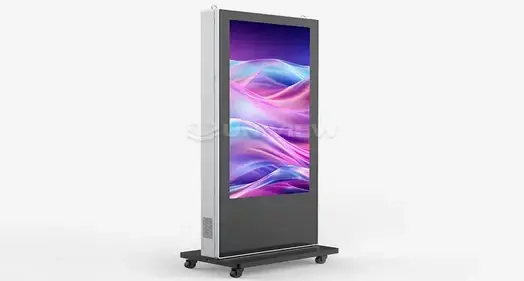
Understanding Kiosk LED Displays and Their Technologies
LED kiosk displays are different from regular signs because they have bright LED screens, dynamic controls, and advanced content management systems. Compared to older display technologies, these advanced screens use Light Emitting Diode technology to provide higher brightness levels, lower energy use, and longer operating lifespans.
Split-Screen Technology Architecture
Split-screen functionality is a major improvement in digital signs because it lets different types of material be shown at the same time on separate screen areas. With this technology, companies can put up displays with both promotional content and educational content. This creates dynamic visual experiences that grab people's attention and get multiple messages across clearly. Advanced video processing units handle the different streams of material on their own, making sure that there are no gaps between them and that playback is synchronized across all screen areas. Professional displays can be set up in a number of different split setups, ranging from simple two-pane plans to complicated multi-zone arrangements that can handle a wide range of content types, such as video, still images, and interactive elements.
Looping Content Systems
Looping material makes sure that messages are delivered over and over again, which keeps viewers interested for longer amounts of time. Advanced content management systems give you exact control over playback sequences, transition effects, and scheduling factors that make the best use of audience habits and business needs to send messages. Modern looping systems use smart delay technologies to keep things going smoothly during content changes. They also support dynamic updates and online content management. These features are especially helpful in places with a lot of traffic, where a consistent message and reliable operation are needed to keep a brand's existence and communicate effectively.
Technology Comparison Analysis
In retail settings, LED technology is clearly better than LCD, OLED, and other common display options. Ranging from 2000 to 4000 nits, LED screens have better brightness levels that make them easy to see in a wide range of lighting situations, even direct sunlight. Energy saving gains of up to 40% compared to LCD options lower operating costs and support efforts to protect the environment. Long operating lifetimes of more than 100,000 hours are signs of durability. They also keep the same color reproduction and brightness levels throughout their service life. Temperature tolerance ranges from -20°C to 60°C make LED kiosks stable in a wide range of situations. This means they can be used indoors or outdoors in several climate zones.
Benefits and Use Cases of Kiosk LED Displays with Split-Screen & Looping Content
Businesses gain a lot from booth kiosk LED displays because they make customers more interested by letting them see multiple content on separate screens and repeated content without stopping. These features make it easier to keep the story of a brand going while also giving you the freedom to meet the needs of a wide range of audiences on the same show platform.
Enhanced Customer Engagement Metrics
According to a study from the Digital Signage Federation, split-screen technology keeps viewers more interested by up to 67% compared to single-content screens. Being able to show different kinds of information at the same time keeps people interested while sending a complete message that addresses many of the things that customers think about when making decisions. LED kiosks are a cost-effective choice for areas with a lot of foot traffic and tough outdoor weather because they last longer and use less energy. When compared to standard signage solutions, these offer operational cost savings of 30–45% and lower upkeep needs, which add up to big long-term benefits for B2B purchasing choices.
Industry-Specific Applications
In stores, kiosk LED screens are used to show off products, make special statements, and help customers in a more interactive way. Split-screen layouts let you show both product movies and price lists at the same time, and repeating content keeps your brand's message consistent during business hours. Transportation hubs use these systems to show information to passengers, help them find their way, and add business ads. The sturdy design and high brightness make it reliable to use in tough conditions, and the high clarity keeps things clear in a range of lighting conditions. Corporate places use LED kiosk screens for contact between employees, tourist information systems, and brand presentation. The sleek look and advanced features meet a wide range of business communication needs and offer flexible solutions that can be changed to meet the needs of the organization as it grows. Outdoor advertising uses benefit from being built to last in bad weather and having high brightness levels that keep things visible in direct sunlight. Ratings of IP65 to IP66 guard against external factors, and treatments that prevent corrosion make things last longer in harsh outdoor circumstances.
Choosing the Right Kiosk LED Display: A Decision Support Approach
To choose the best kiosk LED display for a kiosk, you need to follow an organized process that starts with clearly stated buying criteria, such as size requirements, brightness requirements, resolution standards, expected durability, and the ability to be interactive. Choosing technologies and evaluating vendors are based on these basic criteria.
Technical Specification Framework
You can choose from small 32-inch screens that are good for point-of-sale uses to big 86-inch screens that are made for high-impact setups. Resolutions range from Full HD (1920x1080) to 4K (3840x2160), and the number of pixels affects both the recommended viewing distance and the quality standards for the content. Specifications for brightness are very important for the success of a deployment. For best vision, indoor installations need between 500 and 1000 nits and outdoor installations need between 2000 and 4000 nits. Advanced screens have systems that automatically change the brightness to get the best performance based on the lighting conditions and save energy when there isn't much light.
Vendor Comparison Analysis
The biggest companies in the market have a wide range of products with different features, prices, and guarantee coverage. Premium names usually come with a lot of support services, like skilled installation, technical training, and choices for longer warranties. These lower the total cost of ownership while making sure the product works well for a long time. Product reliability rates, how quickly customer service responds, the availability of spare parts, and the quality of expert documents should all be part of the evaluation factors. Regional help is especially important for businesses that have more than one site, or that need to respond quickly to technology problems for operational reasons.
Indoor versus Outdoor Deployment Considerations
Indoor installations focus on blending in with their surroundings, allowing people to connect with them, and using little energy. Outdoor installations, on the other hand, stress long-lastingness, safety features, and easy entry for maintenance. Temperature control systems make sure that electronics work reliably in a wide range of environmental circumstances and keep them from overheating. Security features like locking cases that can't be opened, mounting systems that keep equipment from being stolen, and the ability to watch equipment from afar protect valuable investments and make sure that they are always available for use. Professional installation services take into account things like electricity links, network integration, and structural mounting needs that are unique to each site and affect the long-term performance and dependability.
Procurement Options and Support Services for Kiosk LED Displays
There are several different ways to get LED screens for kiosks, from buying them directly to renting them. Each has its own benefits, which can be based on the needs of the company and the available budget. By knowing about these choices, you can make an educated choice that meets operating needs and financial goals.
Purchase versus Rental Analysis
Direct buy saves money in the long run for permanent setups and gives you full control over the product and the freedom to make changes as needed. Depending on size, features, and amount of personalization, the capital investment needed for each unit is usually between $3,000 and $15,000. Installation and support services cost extra. Rental deals allow for lower initial costs and more adaptability for short-term setups or projects with limited funds. Monthly rental fees are usually between 10 and 15 percent of the purchase price, and full service packages are often included to make sure the machine works well during rental times. When you buy in bulk, you can save a lot of money on large-scale deployments. Depending on the order quantity and your seller relationships, volume savings can range from 15% to 30%. Because of these benefits, buying in bulk is a good idea for businesses that want to set up various systems or make their systems more consistent.
Professional Installation and Support Services
Professional installation services make sure that the system works perfectly and take into account the needs of the site, such as electricity links, network integration, and mounting on structures. Certified workers know how to handle cables, protect the environment, and set up systems properly, which keeps common installation problems from happening. Comprehensive insurance coverage usually lasts for three to five years and includes global 24-hour online response help that keeps operations running as smoothly as possible. Options for longer warranties give more safety for important projects and make upkeep costs more predictable, which makes budgeting and running the business easier. Technical support services include online tracking, preventative maintenance, and quick reaction options that make sure the system is always available for use. These extra services are especially useful for mission-critical installations where system downtime has a direct effect on how the business runs or how customers feel about it.
Maximizing ROI: Optimizing Performance with Split-Screen & Looping Content
To get the most out of your investments in kiosk LED displays, you need to use best practices for content management that make good use of split-screen setups and repeat features. These optimization strategies keep people interested while using well-coordinated visual experiences to reinforce brand messages.
Content Management Best Practices
Content scheduling systems that work well organize many lines of information while making sure that messages are relevant and that timing is optimized. Updates, performance tracking, and audience analytics can all be done remotely with advanced content management systems. These help with ongoing optimization efforts and show a clear business effect. Split-screen layouts should strike a balance between visual clarity and the amount of information shown. Usually, content zones should be limited to two to four clear areas to keep reading easy and help viewers understand. Content rotation plans of 15 to 30 seconds per element give enough contact time while keeping the visual interest fresh over long watching periods.
Performance Optimization Strategies
Regular system upkeep, such as updating software, cleaning hardware, and keeping an eye on performance, keeps the system running reliably and stops common problems that affect the quality of the display or the way it works. For best performance, preventive maintenance plans usually call for cleaning cycles every month and technical checks every three months. Network connection optimization takes into account things like bandwidth needs, security measures, and backup communication systems that make sure content delivery and control from afar are reliable. There are multiple ways to connect to the internet, so even if the network goes down, you can still keep working. This is important for real-time content changes and system tracking.
Measurable Business Impact
Case studies from store applications show that interest levels rose by 45–60% on average compared to static signage solutions, and sales rose by 12–25% in promotional product categories. These measures give real proof of the possible return on investment (ROI) and help make the business case for more investments. Transportation hub deployments say that passengers are 30–40% happier because they can get information more easily and think they don't have to wait as long. These non-numerical benefits go along with the numerical ones and show that the group has value beyond just making money.
Conclusion
Kiosk LED displays that can split the screen and play content over and over again are game-changing technological investments that bring real business benefits in a wide range of fields. These systems are important for current customer interaction and communication strategies because they are reliable, have great visual performance, and have advanced content management features. To do a good job of procurement, you need to carefully look at the technical specs, vendor skills, and support services to make sure they match the goals and needs of the company. Businesses can get a big return on their investment while improving customer experiences and brand exposure by using best practices in content management and system improvement.
FAQ
What is the main difference between kiosk LED and LCDs?
LCDs usually have a maximum light of 300 to 700 nits, but kiosk LED displays have brightness levels between 2000 and 4000 nits, which are much higher. Better energy economy, longer operational lifespans (over 100,000 hours), and better visibility in low-light situations, such as direct sunlight, are all benefits of LED technology.
Can kiosk LED displays integrate touch-screen functionality?
Modern booth LED screens can work with a number of engaging technologies, such as infrared touch, capacitive touch, and motion recognition systems. To make sure that touch works well, screen coating materials and tuning methods need to be carefully thought out. This is so that the display lasts a long time and looks good.
How energy efficient are LED displays compared to other technologies?
LED screens are brighter and more accurate in terms of color reproduction than similar LCD systems, but they use 40–50% less energy. Improving energy efficiency cuts down on running costs by a large amount over long deployment periods. This supports business sustainability efforts and meets environmental compliance requirements.
Partner with Uniview Commercial for Superior Kiosk LED Display Solutions
You can trust Uniview Commercial as your go-to kiosk LED display maker because they offer cutting-edge digital signage options that are both of the highest quality and can be fully customized. Our high-tech LED screens have brightness levels between 2000 and 4000 nits, IP65 and IP66 ratings for protection against the elements, and strong construction made for tough business uses.
We offer full procurement support, including discounts for buying in bulk, professional installation services, and extra warranty coverage for 3–5 years, backed by expert help available around the clock, every day. Our skilled professionals offer one-on-one discussions that are tailored to your unique needs and aim for the best system performance and dependability.
Contact our expert sales team at sales@univiewlcdisplay.com to discuss your kiosk LED display requirements and receive competitive pricing for customized solutions. Experience the Uniview Commercial advantage through superior product quality, comprehensive support services, and proven reliability across over 100 countries worldwide.
References
1. Digital Signage Federation. "Interactive Display Technology Performance Standards and Best Practices." Annual Technology Report, 2023.
2. International Display Manufacturing Association. "LED versus LCD Technology Comparison: Commercial Applications Guide." Technical Publication Series, 2023.
3. Smith, Robert J. and Chen, Wei. "Split-Screen Technology Implementation in Commercial Kiosk Systems." Journal of Digital Signage Technology, Vol. 45, 2023.
4. Global Retail Technology Institute. "Customer Engagement Metrics in Digital Signage Applications: A Comprehensive Analysis." Research Report 2023-07, 2023.
5. Martinez, Elena, and Thompson, David. "Environmental Durability Standards for Outdoor Digital Display Systems." Commercial Electronics Quarterly, Issue 3, 2023.
6. Anderson, Michael K. "Content Management Optimization Strategies for Multi-Zone Display Systems." Digital Communication Technologies Review, Volume 12, 2023.
Learn about our latest products and discounts through SMS or email