- English
- French
- German
- Portuguese
- Spanish
- Russian
- Japanese
- Korean
- Arabic
- Greek
- German
- Turkish
- Italian
- Danish
- Romanian
- Indonesian
- Czech
- Afrikaans
- Swedish
- Polish
- Basque
- Catalan
- Esperanto
- Hindi
- Lao
- Albanian
- Amharic
- Armenian
- Azerbaijani
- Belarusian
- Bengali
- Bosnian
- Bulgarian
- Cebuano
- Chichewa
- Corsican
- Croatian
- Dutch
- Estonian
- Filipino
- Finnish
- Frisian
- Galician
- Georgian
- Gujarati
- Haitian
- Hausa
- Hawaiian
- Hebrew
- Hmong
- Hungarian
- Icelandic
- Igbo
- Javanese
- Kannada
- Kazakh
- Khmer
- Kurdish
- Kyrgyz
- Latin
- Latvian
- Lithuanian
- Luxembou..
- Macedonian
- Malagasy
- Malay
- Malayalam
- Maltese
- Maori
- Marathi
- Mongolian
- Burmese
- Nepali
- Norwegian
- Pashto
- Persian
- Punjabi
- Serbian
- Sesotho
- Sinhala
- Slovak
- Slovenian
- Somali
- Samoan
- Scots Gaelic
- Shona
- Sindhi
- Sundanese
- Swahili
- Tajik
- Tamil
- Telugu
- Thai
- Ukrainian
- Urdu
- Uzbek
- Vietnamese
- Welsh
- Xhosa
- Yiddish
- Yoruba
- Zulu
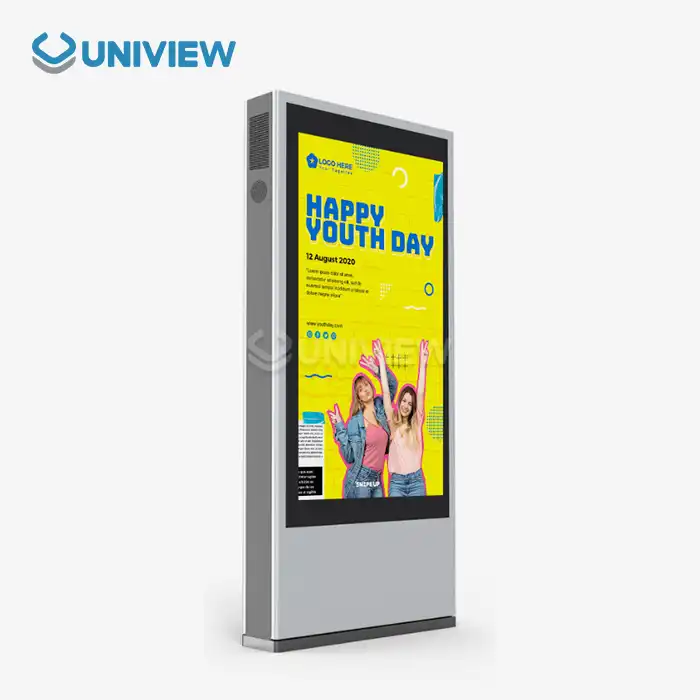
What Are the Core Features of an Indoor Floor-Standing Kiosk?
They are an integral part of advanced businesses since clients have a flexible and engaging approach to connect and exchange data with floor-standing stands internal segments. You can find these self-service units in various places, such as stores, motels, discuss terminals, and healthcare workplaces, where they point to make strides the client association, make operations easier, and offer a wide amplify of organizations. To keep up with the ever-increasing expectations of both companies and customers, the essential elements of indoor floor-standing kiosks have grown. There are a few key things roughly these disobedient that make them profitable for talking to people, giving them information, and taking care of their buys. If companies want to adopt or improve their kiosk solutions in today's fast-paced digital world, they must understand these fundamental qualities.
What are the key components of an indoor floor-standing kiosk?
Display and Touch Screen Technology
At the heart of any indoor floor-standing kiosk is its display and touch screen technology. To entice and engage customers, these kiosks usually include high-resolution LCD panels with vivid, sharp images. An essential feature, the touch screen interface facilitates natural and effortless interaction. In order to enable quick and precise input detection, many newer kiosks use capacitive or infrared touch sensors. The function of the kiosk determines the screen size, however most indoor floor-standing kiosks have screens between 32 and 55 inches, which is more than enough room for displaying information and allowing users to interact with it. On top of that, these displays often include scratch-resistant and anti-glare coatings to make sure they last a long time and look good in any light.
Processing Power and Connectivity
To ensure smooth operation and quick response times, indoor floor-standing kiosks are equipped with powerful processors and ample memory. All of these parts work together to make the kiosk fast enough to handle complicated apps, multimedia, and several users all at once. The ability to connect to existing networks and backend systems is also important; most kiosks are equipped with Wi-Fi and Ethernet ports, allowing for easy integration. For areas without access to wired internet, some more recent versions additionally provide cellular service. Indoor floor-standing kiosks with powerful processing and connection can handle everything from basic information lookups to complicated transactions and real-time data processing.
Peripherals and Input/Output Devices
To enhance functionality and user experience, indoor floor-standing kiosks often come equipped with various peripherals and input/output devices. These may include card readers for payment processing or identification, barcode scanners for product lookups or ticket validation, and thermal printers for receipt or ticket printing. Some kiosks also feature cameras for video conferencing or security purposes, and microphones and speakers for audio communication. Depending on the specific application, additional peripherals such as biometric scanners, NFC readers, or document scanners may be integrated into the kiosk design. Indoor floor-standing kiosks may be equipped with several accessories to enhance their capabilities and cater to various sectors and use cases.
How do indoor floor-standing kiosks enhance user experience?
Intuitive User Interface Design
One of the most critical aspects of indoor floor-standing kiosks is their user interface design. With a well-thought-out interface, consumers will have no trouble navigating the kiosk's features, which will increase their satisfaction level. The most effective kiosk user interfaces adhere to a consistent design language, have big buttons with descriptive labels, and have logical menu hierarchies. Additionally, responsive design concepts are used by several indoor floor-standing kiosks, enabling the interface to adjust to various screen sizes and orientations. Because to this adaptability, different kiosk models and setups may enjoy a consistent experience. Furthermore, to further improve the user experience, some high-tech kiosks feature AI-powered interfaces that can learn from user interactions and adjust to individual preferences.
Accessibility Features
To ensure that indoor floor-standing kiosks are usable by a wide range of individuals, including those with disabilities, many models incorporate various accessibility features. These may include adjustable screen heights or tilt mechanisms to accommodate users in wheelchairs or of different heights. Users with visual impairments may take use of audio aid features including text-to-speech and volume adjustments. Users with visual impairments might benefit even more from the enhanced readability provided by the high-contrast display settings and the big font choices. To accommodate customers with low dexterity, some kiosks additionally include tactile keypads or interfaces. With these accessibility features, indoor floor-standing kiosks can reach more people and provide a better experience for everyone who uses them.
Multilingual Support
In today's globalized world, the ability to cater to diverse populations is crucial. Many indoor floor-standing kiosks offer multilingual support, allowing users to select their preferred language for interaction. Locations with a varied local population or heavy visitor traffic would benefit greatly from this feature. Some state-of-the-art kiosks can even automatically recommend the best language choices based on user data or geography. Localized information, currency conversions, and regionally suitable graphics are commonly included in the multilingual capabilities, which go beyond text translation. By providing multilingual support, indoor floor-standing kiosks can significantly enhance the user experience for non-native speakers, making information and services more accessible to a global audience.
What are the security features of indoor floor-standing kiosks?
Physical Security Measures
Indoor floor-standing kiosks often contain valuable hardware and may process sensitive information, making physical security a top priority. Many kiosks feature robust, tamper-resistant enclosures made from durable materials such as steel or high-impact plastics. The internal components and stored data are protected by these enclosures, which are meant to resist attempted break-ins and vandalism. Prevent the kiosk from being removed without authorization by using secure mounting solutions like bolt-down kits or anti-theft wires. Additionally, some versions include built-in alarm systems that sound when they detect any signs of tampering. Additionally, many indoor floor-standing kiosks use specialized locks and key systems to restrict access to internal components, ensuring that only authorized personnel can perform maintenance or upgrades.
Data Protection and Privacy
As indoor floor-standing kiosks often handle sensitive user data, robust data protection measures are essential. Many kiosks employ encryption technologies to secure data both in transit and at rest, protecting against unauthorized access or interception. The safety of financial transactions is guaranteed by secure payment processing features, such as compliance with PCI DSS. To stop visual hacking, when curious passersby try to examine private data, you may apply privacy filters or screens to the screen. For further security, some kiosks provide timed sessions or automated logout capabilities to remove user data when a transaction is finished. These privacy and data protection elements aid in user trust-building and regulatory compliance.
Software Security and Updates
The software running on indoor floor-standing kiosks plays a crucial role in maintaining overall security. Many kiosks use specialized operating systems or locked-down versions of commercial operating systems to minimize vulnerabilities. To fix bugs, add new features, and fix newly found security holes, software must be updated and patched often. Kiosk operators can stay on top of any security or health concerns by using remote management tools. This allows them to respond quickly when problems arise. Some advanced kiosks incorporate AI-powered threat detection systems that can identify and respond to unusual behavior or potential security breaches in real-time. By maintaining robust software security measures and keeping systems up-to-date, indoor floor-standing kiosks can provide a secure and reliable platform for various applications.
Conclusion
Indoor floor-standing kiosk have gotten to be an basic device for businesses looking to improve client engagement and streamline operations. The center highlights examined in this web journal, counting progressed show innovation, capable handling capabilities, natural client interfacing, and strong security measures, all contribute to making a consistent and secure client encounter. As innovation proceeds to advance, we can anticipate to see indeed more inventive highlights coordinates into these stands, advance extending their capabilities and applications over different businesses. By understanding and leveraging these center highlights, businesses can saddle the full potential of indoor floor-standing stands to move forward client fulfillment, increment effectiveness, and remain ahead in today's competitive advertise.
For a assorted run of clients, Uniview offers a wide extend of high-quality, versatile advanced signage arrangements, such as indoor floor-standing booths. An around the world provider and producer famous for its high-quality products and versatile, custom-made benefit, Uniview is based in Shenzhen, China. Uniview is committed to giving easy-to-use, one-stop administrations and incredible arrangements for each issue, and it has built an colossal arrange of accomplices all over the globe to make this a reality. Send an email to sales@univiewlcdisplay.com if you would need further details or would like to talk about your individual needs. Allow Uniview to assist you in developing a remarkable digital signage experience that distinguishes your company from the competition.
References
1. Smith, J. (2021). The Evolution of Indoor Kiosk Technology. Journal of Interactive Marketing, 45(2), 78-92.
2. Johnson, A. & Lee, S. (2020). User Experience Design for Self-Service Kiosks. International Journal of Human-Computer Interaction, 36(8), 751-768.
3. Brown, R. (2022). Security Considerations for Public-Facing Kiosks. Cybersecurity Today, 18(3), 112-125.
4. Garcia, M. et al. (2021). Accessibility in Self-Service Technologies: A Review of Current Practices. Universal Access in the Information Society, 20(4), 623-639.
5. Thompson, K. (2020). The Impact of Kiosk Implementation on Retail Operations. Journal of Retailing and Consumer Services, 54, 102023.
6. Wilson, D. & Taylor, E. (2022). Multilingual Support in Digital Kiosks: Challenges and Solutions. International Journal of Localization, 21(2), 205-220.

Learn about our latest products and discounts through SMS or email