- English
- French
- German
- Portuguese
- Spanish
- Russian
- Japanese
- Korean
- Arabic
- Greek
- German
- Turkish
- Italian
- Danish
- Romanian
- Indonesian
- Czech
- Afrikaans
- Swedish
- Polish
- Basque
- Catalan
- Esperanto
- Hindi
- Lao
- Albanian
- Amharic
- Armenian
- Azerbaijani
- Belarusian
- Bengali
- Bosnian
- Bulgarian
- Cebuano
- Chichewa
- Corsican
- Croatian
- Dutch
- Estonian
- Filipino
- Finnish
- Frisian
- Galician
- Georgian
- Gujarati
- Haitian
- Hausa
- Hawaiian
- Hebrew
- Hmong
- Hungarian
- Icelandic
- Igbo
- Javanese
- Kannada
- Kazakh
- Khmer
- Kurdish
- Kyrgyz
- Latin
- Latvian
- Lithuanian
- Luxembou..
- Macedonian
- Malagasy
- Malay
- Malayalam
- Maltese
- Maori
- Marathi
- Mongolian
- Burmese
- Nepali
- Norwegian
- Pashto
- Persian
- Punjabi
- Serbian
- Sesotho
- Sinhala
- Slovak
- Slovenian
- Somali
- Samoan
- Scots Gaelic
- Shona
- Sindhi
- Sundanese
- Swahili
- Tajik
- Tamil
- Telugu
- Thai
- Ukrainian
- Urdu
- Uzbek
- Vietnamese
- Welsh
- Xhosa
- Yiddish
- Yoruba
- Zulu
Why Choose a 43 Inch Indoor Wall Mounted Display Over Larger Models?
When B2B procurement workers want to find the best mix between performance, cost, and operating flexibility, a 43 Inch Indoor Wall Mounted Display is a great choice. These commercial-grade digital signage options make the most of screen space without taking over architectural areas. This makes them perfect for use in retail, business, leisure, and transportation settings. When compared to bigger screens that use a lot of energy and are hard to set up, the 43-inch version has better light and clarity, easier mounting, and much lower cumulative ownership costs. This size is the right balance between how it looks and how easily it can be installed. It works especially well in places where people can see it from 6 to 15 feet away, making sure the text is clear and interesting without needing a lot of wall space or structural support.
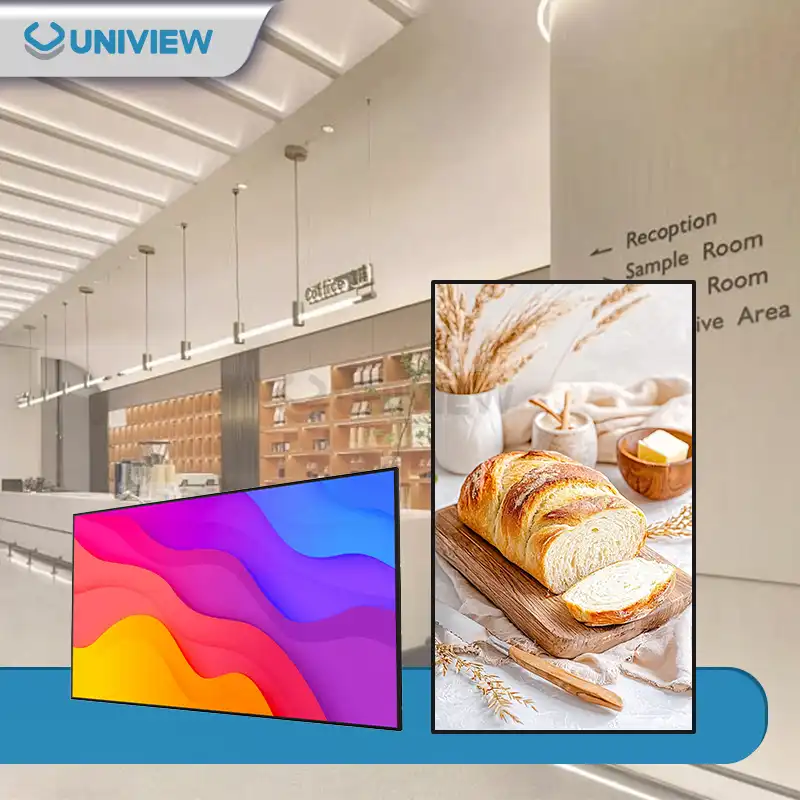
Understanding the Core Advantages of 43 Inch Indoor Wall Mounted Displays
When thinking about investments in digital signs, it's important to know what commercial-grade technology means. A professional 43 Inch Indoor Wall Mounted Display is very different from a regular TV because it is engineered to work continuously in a business setting.
Purpose-Built Commercial Architecture
Commercial displays have industrial-grade IPS or VA panels that are made to work 16/7 or 24/7, which is something that home screens can't do without getting burned in or breaking down due to heat. When these units are used for business purposes, the thermal control systems built into them keep them from overheating, which is a major problem with consumer gadgets. Advanced heat absorption technology keeps the device at its best working temperature even when playing content for long periods of time. This protects your investment from hardware failure before its time. With brightness levels between 350 and 700 nits, these professional units make sure that material can be seen in a variety of lighting conditions, such as those found in stores, company lobbies, and transportation hubs. It's especially helpful to have a display screen that can be very bright in places with lots of windows or ceiling lighting that would make regular TV screens look dull.
Resolution and How Well It Looks
Modern 43 Inch Indoor Wall Mounted Displays usually come with either high-performance Full HD or 4K Ultra-HD resolution (3840x2160 pixels), which gives viewers a very high pixel density at normal viewing distances. This quality makes sure that the text stays clear and the pictures look bright, which are both important for sending professional brand messages in business settings or detailed product information in stores.IPS screen technology allows for viewing angles as wide as 178 degrees, so content can be seen, and colors are true from anywhere. This feature is very useful in places with a lot of foot traffic, where people come closer to screens from different angles. It stops the color shift and contrast loss that happens with older panel technologies. Ultra-thin bezels, which are usually less than 10 mm thick, make it easy to put beautiful things that don't take over the look of a modern room. This refined design approach makes sure that your digital signs don't ruin carefully planned places when architectural unity is just as important as useful performance.
Energy Efficiency and the Cost of Running a Business
When compared to bigger screen sizes, 43 Inch Indoor Wall Mounted Display models use a lot less power while still keeping professional-level sharpness and clarity. Energy Star certification means that these units meet strict efficiency standards. This means that you will save money on power costs over the 50,000 to 60,000 hours that business displays usually run. Less energy use has benefits beyond just saving money on utilities. Less heat production means less demand on HVAC systems, which is especially important when putting up a lot of screens in big business buildings. Total running costs are affected by this spiraling efficiency in ways that become more important as the business grows. Scheduled on/off cycles and automatic brightness adjustments based on natural light conditions are some of the more advanced power management features that help save energy without affecting the view of content. These smart systems make sure that screens work at their best for as long as they're used, meeting the high standards of performance needed in B2B settings.
Comparing 43 Inch Displays with Larger Alternatives: Why Size Isn't Everything
A careful cost-benefit study breaks down the idea that bigger screens instantly offer better value. When buyers are focused on return on investment (ROI), they quickly learn that 43 Inch Indoor Wall Mounted Displays do better than bigger options in several important ways.
Acquisition and Installation Cost Analysis
The cost of buying 43 Inch Indoor Wall Mounted Displays is always 30–50% less than the cost of buying bigger formats, which gives you instant capital spending benefits. This price difference is especially noticeable when more than one unit is being used, because buying in bulk can save you a lot of money. Because this format is affordable, it can be used for a wider range of purposes. For example, companies can put displays all over their buildings instead of putting all of their money into a few big screens. With smaller forms, installation is much easier, and the costs for workers are much lower. Standard VESA-compliant brackets and easy installation steps that can be handled by in-house repair teams are usually needed to place a 43-inch unit on the wall. Larger screens often need special mounting gear, structural support, and professional installation services, all of which add to the cost of the job beyond the price of the equipment itself. Because 43 Inch Indoor Wall Mounted Displays are lighter, they are easier to put on plywood, concrete, and glass walls, among other surfaces. This placement versatility is helpful for retrofit situations where existing design limits the ability to change the structure. It also lets the screens be put up in places where bigger screens would not work or be possible.
Operational Cost Comparison
Differences in how much energy 43-inch and bigger screens use add up over their useful lives, which are measured in years. A normal 43 Inch Indoor Wall Mounted Display uses between 60 and 80 watts of power when it's on, while 55- to 65-inch options use between 150 and 250 watts. This efficiency benefit saves thousands of dollars in power costs over the display's 60,000-hour working life. The complexity and size of the show affect how often it needs to be maintained. Larger screens have more surface area that can be damaged, and their cooling systems are more complicated and need to be serviced more often. These 43-inch models are built to last, but they are also easy to use. This means that they require less upkeep and downtime, which is important for customer-facing apps. Costs of shipping and handling make small sizes more desirable all along the supply chain. Smaller packaging sizes lower freight costs during initial rollout and make repositioning easier during building repairs or organizational reorganization. This edge in logistics gives distribution options that bigger, less portable systems can't match.
Technology Selection and Application Fit
The choice of display technology affects how well it works over time and whether it is right for certain uses. LCD technology is the most popular choice for 43 Inch Indoor Wall Mounted Display products because it is reliable, has accurate colors, and doesn't have the burn-in problems that come with OLED options. This technology is well-established and has consistent performance characteristics that procurement professionals can safely define across a wide range of deployment situations. Another important decision factor is the ability to touch or not touch. Interactive touchscreen versions of 43 Inch Indoor Wall Mounted Displays make it possible to find your way, look at products, and interact with customers while keeping costs low. The smaller size makes it easier to reach the whole screen, unlike bigger touchscreens where parts can't be reached without moving the finger.No matter what size, durability engineering sets business screens apart from consumer options. Tempered anti-glare glass with a hardness rating of 7H guards against damage from impacts and graffiti that is typical in public areas. Anti-glare coatings use high-haze polarizers to diffuse reflections without losing color depth. This keeps content viewable in dim lighting that would make screens without protection unusable.
How to Select the Best 43 Inch Indoor Wall Mounted Display for Your Business Needs
To make a strategic choice, you need to make sure that the technical requirements match the practical needs and distribution settings. Figuring out which factors are most important for your application is the only way to make sure that buying decisions lead to the results you want.
Critical Technical Specifications
When choosing a resolution for your 43 Inch Indoor Wall Mounted Display, you have to weigh the visual quality against the needs of the material and your funds. In high-end stores where product images need to be as clear as possible, 4K Ultra-HD quality is the best choice. Full HD options offer great performance for text-heavy business messaging and navigation apps at a lower cost, making them ideal for deployments that need to stick to a budget.The brightness level must match the lighting conditions in the placement area. Stores with bright LED overhead lighting need screens with 500 to 700 nits of brightness to keep the information visible. Controlled lighting in business settings makes it possible to use 350-450 nit screens effectively while using less money and energy. Contrast levels affect how good a picture looks and how easy it is to read. Premium displays have contrast ratios higher than 4000:1, which means they show deep blacks and bright colors that make images stand out more. Budget choices usually have ratios between 1000:1 and 3000:1, which is fine for most business uses but might not be ideal for places that need a high-quality visual show.
Connectivity and Content Management
These days, 43 Inch Indoor Wall Mounted Display units use System on Chip (SOC) technology to build Android or Windows operating systems right into the display. This integrated design lets content play without any separate media players. This makes the system simpler and less likely to have problems, and it also speeds up installations. Using Ethernet (RJ45) and Wi-Fi to connect to a network lets you handle material from one place using cloud-based content Management Systems (CMS). This feature is very important for businesses that have more than one location because it lets teams in the offices change messages across the whole rollout network at the same time. Remote management gets rid of the time and money needed for people to change material by hand using USB drives or physical media. There are many connection choices, such as HDMI, DisplayPort, and VGA, to make sure that the 43 Inch Indoor Wall Mounted Display works with a wide range of content sources and older devices. This connectivity freedom lets you switch to new technologies in stages, without having to update all of your system's parts at once. This protects your current infrastructure investments.
Warranty and Support Considerations
Commercial display warranties usually last between three and five years, which is a lot longer than household TV guarantees. Longer warranty terms show that the maker is sure that the product will last, and they also help procurement teams plan their budgets by protecting working times for multiple years. International groups and system integrators that work with clients in different parts of the world need to be able to offer global help for the 43 Inch Indoor Wall Mounted Display. Manufacturers that give online support 24 hours a day, 7 days a week make sure that technology problems are fixed quickly and correctly, no matter what time zone they are in. This keeps business operations running smoothly during downtime. Third-party guarantee underwriting by well-known insurance companies adds extra layers of security on top of what the maker promises. This all-around coverage method guards against losing money because of broken hardware and shows that the manufacturer cares about quality products and customer happiness.
Installation and Maintenance Best Practices for 43 Inch Indoor Wall Mounted Displays
Proper installation and continued upkeep will extend the life of the 43 Inch Indoor Wall Mounted Display and keep it working well for as long as it's in use. By following well-known best practices, you can avoid common problems and improve operating efficiency.
Professional Installation Standards
Before choosing a mount, make sure that it works with the VESA fixing design and that it can hold the required amount of weight. VESA patterns of 200x200mm or 400x200mm are used by most 43-inch screens, so mounting gear is easy to find. Making sure the wall substrate can hold the weight of the work stops mistakes that could damage tools or put people in danger. Display centers should be 48 to 60 inches above finished floor level for the best viewing height. This way, people who are sitting or standing can see the screen comfortably. When choosing a specific height, you should think about the main audience's demographics and where they will be watching. Displays in the reception area that people sitting down will see should be mounted lower than displays in stores that people standing up will see. Cable control equipment shouldn't be added after the fact; it should be planned during installation. In-wall tubing or surface-mounted raceways protect the cables while keeping the professional look that is important in places where customers will be. Putting service loops at connection places makes servicing easier in the future without having to do a full reinstallation.
Power Management Optimization
Power cycle that happens on a schedule that matches the building's working hours saves energy and makes 43 Inch Indoor Wall Mounted Display parts last longer. Modern displays can be set to turn on and off at times that are in sync with business hours. This way, displays only work when people are there to see them. This automated method gets rid of the need for human involvement and ensures uniform execution. Ambient light sensors change the brightness flexibly based on the conditions of the surroundings. This keeps visibility high while using as little energy as possible. This smart adaptation keeps the screen from being too bright when it's dark and makes sure it gives off enough power when the environment calls for it. Thermal tracking systems let managers know about problems with the cooling system before they become very bad. Responding quickly to thermal signals stops harm to parts caused by heat, which shortens the life of the system and causes unplanned downtime that needs emergency service.
Preventive Maintenance Protocols
Cleaning the air ports and screen areas on a regular basis keeps the 43 Inch Indoor Wall Mounted Display from getting too hot and keeps the picture quality high. Cleaning it every three months with materials allowed by the maker protects the coatings and electronics and keeps the performance uniform. Microfiber brushes that are anti-static and cleaning solutions that don't contain alcohol keep anti-glare treatments and polarization films from getting damaged. Manufacturers send out software patches that fix security holes and improve efficiency. Setting up update times for times when there isn't much traffic keeps operations running smoothly and makes sure that systems benefit from ongoing development efforts by manufacturers. Visual checks find problems before they get worse, like changes in the backlight's regularity, color shifts, or mounting hardware coming loose. Early spotting lets repair happen during planned breaks instead of reactive emergency service calls that stop work and cost more in labor.
The Strategic Value of Choosing a 43 Inch Indoor Wall Mounted Display for B2B Procurement
Strategic procurement choices include more than just the original purchase price. They also take into account the total cost of ownership and how well the decision fits with the organization's goals. There are strong strategic benefits to using the 43 Inch Indoor Wall Mounted Display in terms of finances, operations, and business.
Total Cost of Ownership Analysis
Full TCO estimates include prices for buying the product, installing it, how much energy it uses, how often it needs to be maintained, and how long it is expected to work. When looked at from this all-around point of view, 43 Inch Indoor wall-mounted displays regularly show better ROI than bigger options. Lower purchase costs give you instant capital gains, and lower operating costs add up to savings over the course of many years of service. Differences in energy economy between 43-inch and larger displays can be used to figure out how much money you can save by using your local electricity rates and the number of hours you expect to use the display. Companies that put up multiple displays in transportation networks, retail chains, or business sites save a lot of money over time, which makes the project more cost-effective and shortens the time it takes to get the money back. Predictions of maintenance costs support technology that has been tested and proven to work with well-established service networks. Because 43 Inch Indoor Wall Mounted Displays are so popular, replacement parts and skilled service techs are easy to find. This lowers both the direct cost of repairs and the amount of time that systems are down when they need to be serviced.
Brand Impact and Customer Engagement
Displays that are the right size complement building settings instead of taking over, showing a level of design expertise that is good for how people see the brand. The 43 Inch Indoor Wall Mounted Display format fits easily into a wide range of interior settings, from small shops to corporate lobby areas. It provides professional visual communication without taking up too much room or creating visual clutter. The effectiveness of content relies on the right scale for the watching distance and attention span of the audience. According to research, big screens in small rooms make people uncomfortable and make it harder for them to remember what they are seeing. The 43-inch size makes material easier to see from 6 to 15 feet away, which is the average viewing distance indoors. This makes sure that messages get to the right people without forcing them to look at the screen at awkward angles that hurt their necks or make them uncomfortable. Interactive guidance and product listings are two examples of customer interaction apps that benefit from the large touchscreen area of 43 Inch Indoor Wall Mounted Displays. Users can get to all parts of the screen without having to stretch or move their bodies too much. This makes it easier for them to connect and keeps them interested longer than larger forms, which are limited by their size.
Future-Proofing and Scalability
Affordable 43-inch prices make modular rollout strategies possible, which lets you accept technology in stages that fit your budget and your organization's growth. Starting with targeted deployments in high-value areas shows ROI and boosts organizational trust before moving on to wider application. This lowers financial risk and speeds up the adoption of technology.As panel technology and feature sets change, business display markets usually go through technology refresh rounds that last between 5 and 7 years. With a 43 Inch Indoor Wall Mounted Display, upgrades are easier on the wallet because they cost less per unit. This means that companies can adopt new features like higher resolutions, better brightness, and better connectivity without having to worry about how much they can spend on bigger screens. Setting the standard size at 43 inches makes it easier to handle inventory, train support staff, and improve content. Support teams get very good at working with uniform hardware platforms, and content makers learn how to format their work so that it looks good on all of these platforms. This makes the whole digital signage environment more efficient.
Conclusion
Choosing a 43 Inch Indoor Wall Mounted Display over bigger options was a smart purchase decision based on a realistic study of cost, performance, and operational needs. In retail, business, hospitality, and transportation settings, these professional-grade options offer great visual quality, proven dependability, and strong total cost of ownership benefits. This style is perfect for B2B companies that want to get the most out of their digital signage purchases because it has the right amount of screen space, uses little energy, is easy to set up, and can be used in a variety of ways. When buying something, the 43-inch version is always the best option for professional settings that need solid, low-cost visual communication solutions because it is more valuable in the long run than its size.
FAQ
What makes business 43-inch screens different from individual TVs?
Commercial units have industrial-grade screens that can work continuously 16/7 or 24/7, special temperature management that keeps them from overheating during extended use, and built-in content management systems that let you update them from afar. When used for business purposes, consumer TVs have problems with keeping the picture and parts breaking because they don't have enough cooling and use parts made for homes.
Can these screens work when they're in portrait mode?
There is thermal engineering built into professional 43 Inch Indoor wall-mounted displays that stops the chimney effect when placed vertically. Specialized cooling structures move air around well, no matter what position it is in, keeping the screen at the best temperature. Consumer screens can't do this when they're rotated, so commercial units are needed for portrait applications.
How do you deal with light in very bright places?
High-haze polarizers used in anti-glare films spread out reflections without changing the color or brightness. Premium displays have an AG coating and can reach brightness levels of up to 700 nits. This means that content can be seen clearly even when there is direct overhead LED lighting, which is common in retail and business settings, and would make screens that aren't covered useless.
Partner with Uniview Commercial for Professional 43 Inch Indoor Wall Mounted Display Solutions
Uniview Commercial is ready to be your go-to 43 Inch Indoor Wall Mounted Display maker. They offer industrial-grade digital signage options that are designed to work in tough B2B settings. Our industrial screens are bright (350 to 700 nits), protected (IP65/66), and built to last by using European surface treatment technology to make the panels immune to corrosion. Each unit goes through strict quality checks and is backed by full coverage from China Pacific Insurance Company and other insurers. We offer extended warranties that last between 3 and 5 years and are backed by global 24-hour online technical support. This makes sure that your investment works reliably for as long as it's operational. Our manufacturing center in Shenzhen makes custom products for use in more than 100 countries in retail, business, leisure, and transportation. If you buy your 43-inch display from Uniview Commercial, you can get all the services you need in one place, such as expert advice, easy customization, and reliable help after the sale. Get in touch with us at sales@univiewlcdisplay.com to talk about your digital signage needs and find out how our tried-and-true solutions help system installers and brand owners around the world get great returns on their investments.
References
1. Chen, L., & Martinez, R. (2022). Commercial Display Technology: Engineering Principles and B2B Applications. Industrial Electronics Press.
2. Thompson, J. K. (2021). "Total Cost of Ownership Analysis for Digital Signage Deployments." Journal of Business Technology Management, 18(3), 145-162.
3. Anderson, S. M., & Park, H. J. (2023). Energy Efficiency Standards in Commercial Display Systems. International Electronics Association.
4. Williams, D. R. (2022). "Thermal Management in Professional-Grade Digital Signage: Comparative Performance Analysis." Display Technology Quarterly, 29(2), 78-95.
5. Rodriguez, M. A., & Singh, P. (2021). Strategic Procurement Guidelines for Digital Communication Infrastructure. Global Business Press.
6. Foster, K. L., & Yamamoto, T. (2023). "Viewer Engagement Metrics Across Display Formats in Commercial Settings." Journal of Visual Communication Research, 15(1), 34-51.

Learn about our latest products and discounts through SMS or email