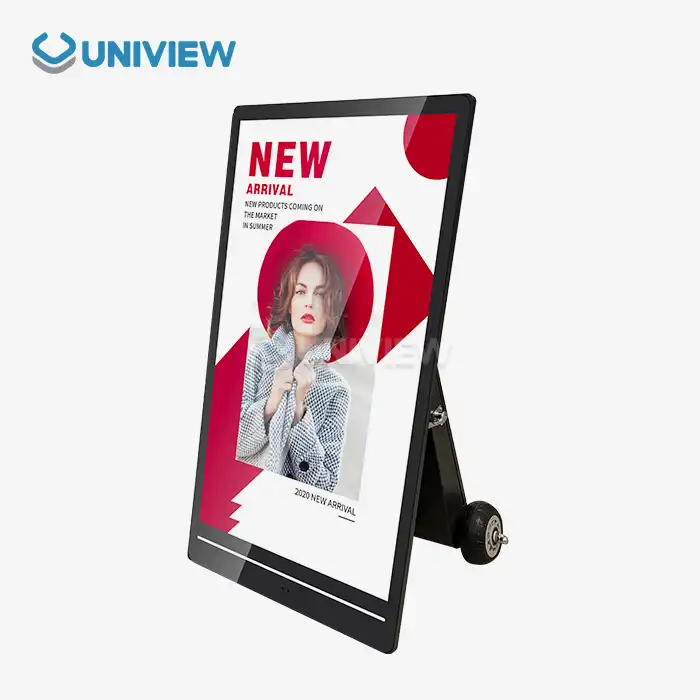
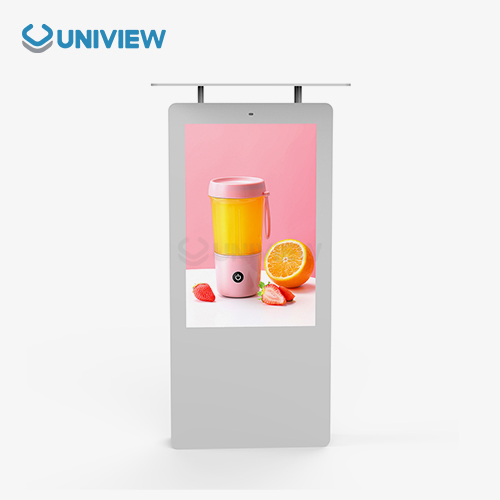
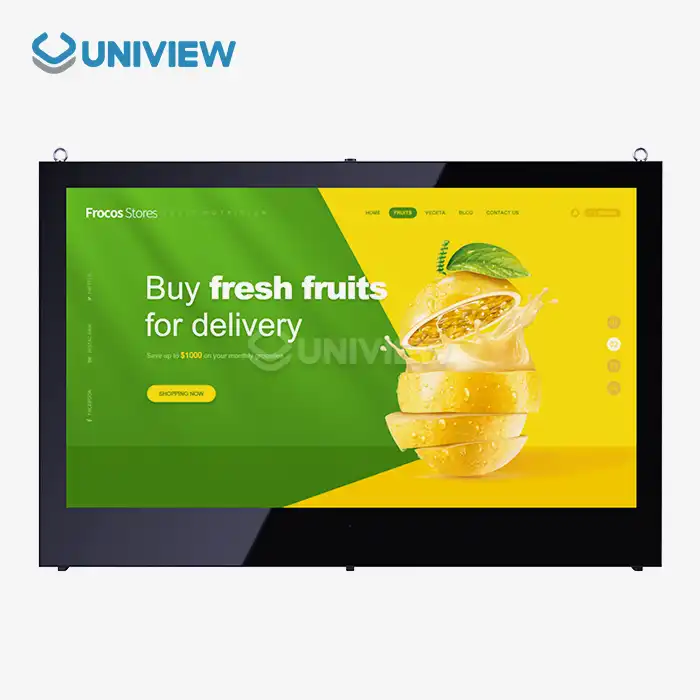
If you want to bring a digital signage kiosk stand from China to Australia, you need to make sure you follow all the rules and buy it from a reputable company. There is a lot of information in this guide that will help you understand the trade terms and deal with customs when you import something. Businesses in Australia can get interactive kiosks and digital display stands that meet international standards and don't cost a lot of money, thanks to China's advanced manufacturing skills and low-cost options.
This is why you should get stands for digital signs from China.
In manufacturing and technology, they are the best.
China is the only country that makes more digital signs than any other. This is because it has the best technology and greatest infrastructure. The country makes more than 60% of the world's commercial display solutions. They do this by using advanced automation and precise engineering. By putting together high-tech touchscreen displays with strong kiosk enclosures, Chinese companies can make full digital signage systems that can compete on a global level.
Spending less without giving up quality
In China, the cost of making things stays low, and the quality stays high. Economies of scale help modern factories make advertising displays and stand-alone kiosks cheaper. Low prices mean that Australian businesses can buy high-end features like 4K screens, weatherproof cases, and the ability to make ads interactive.
Rapid prototyping and the ability to make changes
Customisation is something that Chinese suppliers are very good at, so they can make solutions that are perfect for your needs. For shopping malls and other public places, manufacturers make self-service terminals and wayfinding kiosks in a number of different styles. You can quickly make changes and improvements with rapid prototyping before starting to make a lot of them.
Important technical standards and industry standards
Why do we need display technology?
Digital signs of the modern era need certain technical conditions to work at their best. The brightness level should be between 2000 and 4000 nits when used outside. The brightness level for information kiosks inside should be between 700 and 1500 nits. Standards call for a resolution of at least 1920x1080, and 4K is becoming more and more common for larger commercial kiosks.
Standards for durability and the materials used for the enclosure
The hardware in digital signage kiosk stands needs to be able to work in all kinds of weather. Aluminium and steel that have been powder-coated and are made for marine use don't rust easily. Dust and water can't get in because of the IP65 and IP66 ratings of digital signage kiosk stands. Temperatures should be between -20°C and +70°C for digital signage kiosk stands that are outside.
Putting in interactive tech
Touchscreens work and last for different amounts of time and in different ways. It is more responsive with projected capacitive touch on interactive digital signage, but it costs less with infrared touch on bigger screens. It's better for users to be able to use more than one touch on retail kiosks.
Following the rules that Australia set
The AS/NZS 3820 electrical safety standards say that all digital kiosks that come into the country must meet these standards. EMC compliance makes sure that there isn't too much electromagnetic interference. The right height adjustments and tactile interfaces must be used in inclusive design in order for it to meet accessibility standards.
How to Find Your Way Around Rules and Compliance Needs?
Australian Rules for Importing
The Australian Border Force controls the import of electronic goods by using strict rules to make sure they are followed. Electrical Equipment Safety System (EESS) certification is needed for digital display stands that have electronic parts on them. The RCM (Regulatory Compliance Mark) shows that standards for electromagnetic compatibility have been met.
Classification and Tariff Codes for Customs
Depending on what it does, digital signage equipment is classified under different HS codes. Self-service kiosks that can also do computing use different categories than displays that only show ads. The right classification affects the duty rates and the steps used to process imports.
Needs for Documentation
Commercial invoices, packing lists, bills of lading, and certificates of origin are all types of import documentation. Technical documentation must show that the product meets Australian standards. Test certificates from well-known labs prove that the requirements for electrical safety and electromagnetic compatibility have been met.
Learning the Terms of International Trade
Terms of FOB (Free on Board)
Under FOB terms, the Chinese supplier sends the goods to the port of departure and clears the export customs. Once the goods leave the ship, the buyer takes on the risk. The buyer takes care of international shipping, insurance, and the steps needed to bring the goods into Australia. This arrangement makes costs clear and gives you control over shipping.
Price, Insurance, and Freight (CIF) Deals
CIF terms for digital signage kiosk stands say that the supplier has to set up shipping and at least some insurance to get the goods to the destination port. The seller takes care of all the export paperwork and pays for everything until the digital signage kiosk stands get to Australia. Even though the buyer gets full shipping arrangements, the risk still shifts at the departure port.
Plans for EXW (Ex Works)
EXW means that the seller only has to make the goods available at the supplier's factory. Buyers are responsible for all shipping, exporting, and risks that come with it. This term gives you the most control, but it requires a lot of logistics planning and knowledge of the Chinese market.
Full Breakdown of the Import Process
Initial Questionnaire and Evaluation of Suppliers
Start with detailed product specifications, such as the size of the screen, how it should be mounted, and the conditions of the environment. You should ask for full quotes that include all costs, delivery times, and warranty terms. Check the credibility of the supplier by inspecting the factory, getting certifications, and calling references.
Negotiation and Making a Contract
Talk about prices, payment terms, and delivery times based on how much you promise to buy. Set standards for quality, ways to inspect, and criteria for acceptance. For your own protection, include clauses that say there will be penalties for late payments and poor quality.
Formal Bill and Purchase Agreement
The Proforma Invoice (PI) lists the final prices, specifications, and business terms. This document is what Letters of Credit and production authorisation are built on. Before you approve, make sure that the technical specifications exactly meet your needs.
Quality control and keeping an eye on production
Set up regular updates and milestone inspections as a way to keep an eye on production. Independent checks of manufacturing standards are done by third-party quality control services. Digital menu boards and interactive displays are inspected before they are shipped to make sure they meet the requirements.
Making shipping plans and paperwork
Make shipping arrangements with freight forwarders who know how to move electronic equipment. Make sure that the right packaging keeps fragile touchscreen displays safe while they're being shipped. Get all of the shipping paperwork, like insurance certificates and Bills of Lading.
Clearing customs and delivering the goods
Australian customs brokers are in charge of declaring and paying duties on imports. Show the necessary certifications and proof of compliance to get clearance. Set up the final delivery to your building, making sure that fragile digital signage parts are handled properly.
How to pay and keep your money safe?
Plans for Telegraphic Transfer (T/T)
The most common way to pay for digital display equipment imports is still through T/T. Usually, you have to pay 30% up front and the rest of the 70% before the shipment. This deal strikes a balance between the need for cash flow and the need for supplier security.
Safety Letter for Credit
When you order a lot of commercial kiosks and digital signage solutions, letters of credit protect your order. Banks promise payment as long as the right paperwork is shown. This method keeps everyone safe, but it costs more and is harder to understand.
Strategies for Managing Risk
Trade credit insurance protects you against political risks and suppliers not paying you. Escrow services give first-time supplier relationships extra security. Payment plans that are tied to production milestones and are made over time lower financial risk.
Why Uniview Commercial Stands as Your Ideal Import Partner?
Proven Manufacturing Excellence
Uniview Commercial operates state-of-the-art production facilities in Shenzhen, combining advanced automation with skilled craftsmanship. Our manufacturing processes incorporate rigorous quality control at every stage, ensuring each kiosk mounting stand meets international standards. With over a decade of experience, we've refined our production methods to deliver consistent, reliable results.
Comprehensive Technical Capabilities
Our engineering team develops innovative solutions incorporating the latest display technology and interactive features. We utilise high-quality offline coated AR glass delivering ultra-clear images with brightness ranging from 2000 to 4000 nits. Advanced heat dissipation systems ensure reliable operation in demanding environments, while our products maintain quiet operation at only 60 dB even in outdoor settings.
Global Compliance and Certification
Uniview LCD products comply with international standards from Europe, America, and Japan, simplifying your import process. Our digital signage solutions carry the necessary certifications for Australian market entry. We maintain comprehensive documentation supporting regulatory compliance and customs clearance procedures.
Extended Warranty and Support
We provide industry-leading warranties of 3 to 5 years on all digital kiosk systems, backed by comprehensive quality coverage from China Pacific Insurance Company. Our global 24-hour online response support ensures technical assistance whenever needed. This commitment reduces your total cost of ownership and operational risks.
Supply Chain Reliability and Lead Time Management
Production Scheduling and Capacity Planning
Efficient production planning ensures consistent delivery schedules for your digital signage kiosk stand requirements. Our manufacturing capacity supports both small custom orders and large-scale commercial deployments for digital signage kiosk stands. Advanced planning systems coordinate component procurement, assembly, and quality testing for digital signage kiosk stands to meet committed timeframes.
Logistics Coordination and Shipping Efficiency
Shenzhen's strategic location provides excellent access to major shipping routes serving Australia. Our logistics partners specialise in electronic equipment transportation, ensuring proper handling of sensitive digital signage components. Consolidated shipping options reduce costs for multiple product orders.
Inventory Management and Buffer Stock
Strategic inventory management maintains the availability of popular configurations and components. Buffer stock reduces lead times for standard outdoor digital signage models. Custom orders receive priority scheduling to minimize delays while maintaining quality standards.
Communication Excellence and Business Partnership
Multilingual Support and Cultural Understanding
Our international sales team provides native-level English support throughout the entire import process. Cultural awareness ensures smooth communication and mutual understanding of business requirements. Regular project updates keep you informed of production progress and any potential challenges.
Technical Consultation and Solution Design
Our engineering consultants work closely with your team to optimise digital signage solutions for specific applications. We provide detailed technical drawings, installation guides, and configuration recommendations. This collaborative approach ensures successful deployment and optimal performance.
Long-term Partnership Development
Uniview focuses on building lasting relationships rather than transactional exchanges. We provide ongoing technical support, upgrade recommendations, and expansion planning assistance. Our goal is to become your trusted partner for all interactive advertising and digital signage needs.
Conclusion
Successfully importing digital signage kiosk stands from China to Australia requires careful attention to technical specifications, regulatory compliance, and supplier selection. Understanding trade terms, payment methods, and import procedures ensures smooth transactions and optimal outcomes. China's manufacturing capabilities, combined with experienced suppliers like Uniview Commercial, provide Australian businesses with access to cutting-edge digital signage technology at competitive prices. Proper planning, documentation, and partnership selection create the foundation for successful import operations and long-term business growth in the dynamic digital signage market.
FAQ
Q: What certifications are required for importing digital signage kiosks to Australia?
A: Digital signage equipment requires RCM (Regulatory Compliance Mark) for electromagnetic compatibility and EESS certification for electrical safety. Additionally, products must comply with AS/NZS 3820 standards. Ensure your supplier provides all necessary test certificates and compliance documentation before shipment.
Q: How long does the typical import process take from order to delivery?
A: The complete process typically takes 6-10 weeks, including 2-3 weeks for production, 1 week for quality inspection and shipping preparation, 3-4 weeks for sea freight, and 1-2 weeks for customs clearance and final delivery. Rush orders may qualify for air freight with reduced transit times.
Q: What payment terms are most common for digital signage imports?
A: Most suppliers accept 30% down payment via T/T (Telegraphic Transfer) with 70% balance before shipment. Letters of Credit provide additional security for large orders. Payment schedules can often be customised based on order size and supplier relationships.
Q: How can I verify the quality and reliability of Chinese suppliers?
A: Request factory audit reports, customer references, and certification documents. Third-party inspection services provide independent quality verification. Look for suppliers with international client bases and established export experience. Trade shows and industry exhibitions offer opportunities for direct supplier evaluation.
Q: What warranty coverage should I expect for imported digital signage equipment?
A: Reputable suppliers typically offer 2-5 year warranties covering manufacturing defects and component failures. Ensure warranty terms include local support options and replacement part availability. Some suppliers provide insurance coverage through recognised underwriters for additional protection.
Work with Uniview Commercial to get the best digital signage solutions.
Uniview Commercial is ready to become your go-to digital signage kiosk stand supplier because they offer both excellent manufacturing and unmatched customer service. Our wide range of interactive displays, touchscreen kiosks, and digital advertising options can be used in a variety of business settings, such as retail, hospitality, and corporate. We make the import process easier and give you the best value by following all the rules, having years of experience in international trade, and offering the best warranties in the business.
Our team has a lot of experience and knows how hard it can be to bring commercial display equipment into the country. They will be there for you throughout the whole project. From the first meeting to the final installation, we make sure that everything goes smoothly and that the results are perfect. Are you ready to learn more about how our digital signage solutions can change the way your business works? Email us at sales@univiewlcdisplay.com for more information about our products, custom quotes, and expert advice on how to meet your import needs.
References
1. Australian Border Force. (2023). "Importing Electronic Equipment: Compliance Requirements and Procedures." Department of Home Affairs Publication.
2. Standards Australia. (2022). "AS/NZS 3820:2022 Essential Safety Requirements for Electrical Equipment." Australian Standards Publishing.
3. Digital Signage Federation. (2023). "Global Market Analysis: Commercial Display Technology Trends and Manufacturing Distribution."
4. Australian Chamber of Commerce and Industry. (2023). "Import/Export Guide: Trade Terms and Documentation Requirements for Australian Businesses."
5. International Trade Centre. (2022). "Electronics Import Procedures: Regulatory Frameworks and Compliance Standards for Asia-Pacific Trade."
6. Chen, L. & Wilson, M. (2023). "Supply Chain Management in Digital Signage Manufacturing: Quality Control and International Distribution Strategies." Journal of International Business and Technology.