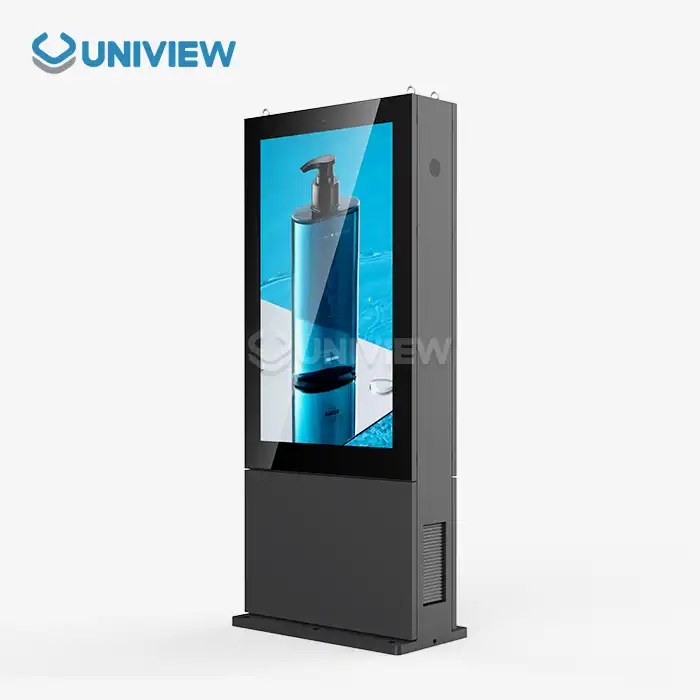
If you want to ship an Outdoor Dual Sided Kiosk from China to Australia, you need to know the trade rules, the technical steps, and how to do it. If you want to know how to find good manufacturers and get your goods through customs, this guide has it all. Weatherproof digital signs that meet Australian standards are easy to buy with this step-by-step guide. It doesn't matter if you run a store, a restaurant, or a company that puts together systems. It will also help you spend your money wisely.
When would it be a good idea to buy a Chinese kiosk that has two sides?
Making things better and coming up with new ideas
China is the best in the world at making digital signs. More than 70% of all interactive screens are made by this company. The country has a great supply chain, which means that companies can get good parts at fair prices. These days, factories use the most up-to-date automation tools to make sure that large orders always get the same quality. China puts a lot of money into research and development, which makes things better at withstanding bad weather and making better systems for controlling heat.
Not giving up quality to spend less
Things made in China are a lot less expensive than things made in Europe or North America. You can save money if you buy in bulk, find cheap raw materials, and make your production process more efficient. But cutting costs doesn't have to mean going for cheap. Major companies make sure their goods meet standards all over the world by putting in place strict quality control systems and getting international certifications. Because the prices are different, businesses can often buy more or add more features without going over budget.
Being able to make changes
China has great manufacturers who can make one-of-a-kind items, such as Outdoor Dual Sided Kiosks, that meet specific needs. They make it easy to change things about the design, like the screens' colours, sizes, and brightness. This gives companies a lot of freedom when they need custom form factors or digital signs with their logo for the outside, including Outdoor Dual-Sided Kiosks. A lot of suppliers have engineering teams that work directly with clients from other countries to make interactive kiosks—like Outdoor Dual Sided Kiosks—that fit their brand and the way they run their businesses.
There are rules for technical and quality data.
What You Need to Know About How Well It Works
In Australia, kiosks outside that have two screens need to meet certain technical requirements in order to work. It needs to be between 2000 and 4000 nits bright for you to see outside in the sun. So that the picture stays clear all day, the technology behind the screen needs to have coatings that don't reflect light and have wide viewing angles. It should be fast enough to play multimedia files and have touch controls that work well. You should be able to work with content management systems even when you're not connected to the internet. You should have enough memory and storage space.
Standards for How Well They Stand Up to the Environment
Australia's outdoor areas need strict rules to keep the weather out. To protect against dust and water, it's important to have an IP65 or IP66 rating. Between -20°C and 60°C should be able to handle big changes in the weather. It can stand up to UV light, so the screen doesn't break and the housing doesn't turn colour over time. Metal parts are kept safe from salt air by coatings and materials that don't rust. For installations near the coast, this is very important.
Wants to stay safe and follow the rules
Australian safety rules say that digital signs, including Outdoor Dual Sided Kiosks, must be able to work with electromagnetic fields when they come in. A CE mark means that something is safe in Europe. If it has the FCC mark, it doesn't mess up radio waves or electricity. When it comes to electrical parts, the Australian RCM (Regulatory Compliance Mark) may need to be used for devices like Outdoor Dual-Sided Kiosks. Rates that show how fire-resistant building materials are keep public places safe. Protections against damage help safeguard both the investment and the people who use Outdoor Dual-Sided Kiosks.
How to Deal with Rules and Compliance
Australian Rules for Importing
The Australian Border Force controls the import of electronics by using classification codes. Imports of outdoor advertising kiosks usually fall under HS code 8528.72, which is for reception equipment. For commercial quantities or specialised parts, import permits may be needed. The Australian Communications and Media Authority (ACMA) is in charge of making sure that electronic devices meet standards for electromagnetic compatibility. Shipments must include compliance paperwork to make clearing customs easier.
Needs for Certification
Certification for electrical safety based on Australian standards AS/NZS 3820 makes sure that operations in business settings are safe. AS/NZS CISPR standards for electromagnetic compatibility testing make sure that other electronic systems don't get messed up. Environmental certifications back up claims that materials are weatherproof and last a long time. Quality management system certifications, such as ISO 9001, show that a company is reliable and consistent in its production.
Labelling and keeping records
Having the right paperwork makes clearing customs and following the rules easier. Invoices for business must correctly list the goods, their amounts, and their values. Certificates of origin show where goods are made and whether they are eligible for trade agreements. Technical specifications and safety standards are confirmed by test reports and compliance certificates. Labels for goods must have government markings, safety warnings, and the name of the manufacturer written in English.
Learning the Terms of International Trade
How to Understand Common Shipping Terms
FOB stands for "Free on Board." This means that the seller sends the goods to the port of departure, and from there, the buyer is responsible for all costs and duties. When buyers agree to FOB terms, they take care of international shipping, insurance, and the import process. CIF stands for "Cost, Insurance, and Freight." It means that the supplier pays for shipping and insurance, and the goods are delivered to the port of destination. When you buy something EXW (Ex Works), you are fully responsible for getting it to the buyer. They pick up the goods from the supplier's location and make all the transportation arrangements.
Points where risk is moved
Figuring out when the buyer becomes responsible for something stops disputes and makes liability clear. In FOB terms, the risk shifts when the goods cross the ship's rail at the loading port. Even though the supplier pays for shipping and insurance, CIF still transfers risk at the same point. DDP stands for "Delivered Duty Paid." This means that the supplier is responsible for the goods until they reach the buyer's location. This includes clearing customs and paying duties.
Effects on Costs
Total landed costs for products like Outdoor Dual Sided Kiosks are affected by trade terms in a big way. FOB usually has the lowest price, but buyers have to find the best shipping rates on their own. CIF lets you plan ahead for costs, but it may mean paying more for freight. DDP is the most convenient option, but it comes at a higher cost. It's best for buyers who want turnkey delivery solutions for items such as Outdoor Dual-Sided Kiosks. Getting the most out of procurement budgets is easier when you compare total costs under different terms.
Full Guide to the Process of Importing
The first part of the investigation and quotes
The first thing that needs to be done to import something is to send detailed questions to possible suppliers about the technical needs, quantities, and delivery times. When suppliers answer, they give full quotes that include information about the product, prices, lead times, and the terms of trade. When you judge a quote, you should look at how well the technical requirements are met, the total landed costs, and the reputation of the supplier. You can compare prices and make better deals if you get more than one quote.
Getting a contract signed and talking about it
Formal contracts, also known as Proforma Invoices (PI), are made when talks go well and spell out all the terms and conditions. There should be clear language in contracts about the product, the quality standards, the delivery dates, and how to pay. The buyer's interests are protected by quality control procedures, the right to inspect, and acceptance criteria. These are called "force majeure clauses," and they cover unplanned events that might make delivery impossible. Legal battles that cost a lot of money don't happen when there are clear ways to settle disagreements.
Making things and checking the quality
Making sure that specifications and delivery dates are met by keeping an eye on production. Inspections of the factory find problems early on during production. It is checked to make sure it meets the agreed-upon quality standards and specifications before it is shipped. A third-party inspection service looks at a product's quality and safety without being involved in its making. If issues are found later, having proof of the inspection helps with insurance claims.
The moving of things and papers
The cheapest way to ship digital signage equipment for outside use is by ocean freight. It costs a lot more, but air freight gets things to you faster. With the right packaging, fragile electronic parts stay safe while being shipped. To ship something, you need commercial invoices, packing lists, bills of lading, and certificates of origin, among other things. If something gets damaged or lost during transit, insurance will cover it.
Making payment and getting through customs
Labelling, pricing, and figuring out where the goods came from must all be done correctly in order to get them through Australian customs. Licensed customs brokers make it easier to clear goods and figure out duties. The import taxes and GST must be paid before the goods can be sent out. Telegraphic Transfer, or T/T, is a safe way to send money that is checked by a bank. It's safer for both parties to use letters of credit, but they cost more in bank fees.
The best reason to use Uniview Commercial as an importer
A history of success and a presence all over the world
Over 100 countries and regions know they can trust Uniview to make good digital signs, which is why the company has a great reputation in those places. Since the company has been doing business in other countries for ten years, they know a lot about the different rules and ways of doing things. With a presence all over the world, they can offer local support and make sure that their quality systems are standardised to meet international standards.
New thoughts and cutting-edge tech
As a leader in technology, Uniview has made heat-dissipation systems that are reliable and keep working well even when it's very hot outside. Products are put through environmental simulation tests to make sure they can handle long periods of direct sunlight and bad weather. When you use good offline-coated AR glass, the pictures are very clear and can get as bright as 4000 nits. It can be used in places with a lot of noise because the noise level is only 60 dB.
Last longer and be built better
The waterproof digital signage from Uniview has ratings for resistance to water and dust of IP65 to IP66, so it can work reliably even when it's raining or snowing outside. Things that are surface-treated in Europe are less likely to rust, so they last longer. Valuable things are safe from theft and damage with two-layer anti-theft locks. Ratings for wind resistance up to level 16 make sure that buildings stay strong even when it's windy.
Everything comes with support and a warranty.
Going from 3 to 5 years on the warranty shows that you trust the product and gives you peace of mind in the long run. You can get help quickly no matter what time zone you're in because the service is available 24 hours a day, 7 days a week. China Pacific Insurance Company and other third-party underwriters offer comprehensive quality coverage, which covers flaws in the way the product was made. Having technical support close by cuts down on downtime and maintenance costs.
Supply Chain Reliability and Lead Times
Production Infrastructure and Capacity
China's digital signage industry benefits from concentrated manufacturing clusters with specialised component suppliers. Established supply chains reduce procurement lead times and ensure consistent component availability. Advanced automation in production facilities minimises human error while maintaining high throughput rates. Flexible production scheduling accommodates both standard products and customised requirements efficiently.
Logistics and Port Efficiency
Major Chinese ports like Shanghai and Shenzhen offer excellent connectivity to Australia with regular shipping services. Container shipping routes typically take 15-25 days from Chinese ports to major Australian cities. Port efficiency and customs processing capabilities minimise delays and additional costs. Established freight forwarding networks provide reliable logistics support and documentation handling.
Quality Control and Inspection Systems
Mature quality control systems in Chinese manufacturing include incoming material inspection, in-process monitoring, and final product testing. International certification bodies maintain local offices providing convenient access to compliance testing and certification services. Third-party inspection companies offer independent quality verification services. Digital documentation systems enable real-time quality tracking and remote monitoring capabilities.
Communication and Ease of Doing Business
Language and Cultural Considerations
Many Chinese manufacturers employ English-speaking sales and technical teams to facilitate international communication. Cultural awareness training helps bridge communication gaps and build stronger business relationships. Time zone differences can actually provide advantages, with overnight responses to emails and extended business hour coverage. Professional translation services ensure technical specifications and contracts are clearly understood by all parties.
Digital Communication Tools
Modern communication platforms enable seamless collaboration between Australian buyers and Chinese suppliers. Video conferencing allows virtual factory tours and real-time project discussions. Cloud-based project management systems provide transparent progress tracking and document sharing. Instant messaging platforms facilitate quick clarifications and updates throughout the procurement process.
Business Relationship Development
Building long-term partnerships with reliable suppliers provides numerous advantages, including priority treatment, flexible payment terms, and preferential pricing. Regular communication maintains relationships and ensures awareness of new product developments. Mutual understanding of business objectives creates win-win scenarios that benefit both parties. Face-to-face meetings during trade shows or facility visits strengthen business relationships and trust.
Conclusion
Successfully importing products such as the Outdoor Dual Sided Kiosk from China to Australia requires careful planning, thorough supplier evaluation, and attention to regulatory compliance. Understanding technical specifications, trade terms, and shipping procedures reduces risks and ensures smooth transactions. China's manufacturing excellence, competitive pricing, and customisation capabilities make it an ideal sourcing destination for interactive display solutions like the Outdoor Dual-Sided Kiosk. Working with established manufacturers like Uniview provides additional assurance through proven track records, comprehensive warranties, and global support networks. Proper documentation, quality control, and professional relationships ensure long-term success in digital signage projects involving Outdoor Dual-Sided Kiosks. procurement projects.
FAQ
Q1: What certifications are required for importing outdoor kiosks to Australia?
A: Key certifications include RCM (Regulatory Compliance Mark) for electrical safety, EMC compliance certificates for electromagnetic compatibility, and IP rating certificates for weatherproofing. Additional certifications may include FCC, CE marking, and ISO quality management standards, depending on the specific application and installation requirements.
Q2: How long does the complete import process typically take?
A: The entire process from initial inquiry to final delivery usually takes 45-90 days. This includes quotation and negotiation (1-2 weeks), production (2-4 weeks), shipping (2-3 weeks), and customs clearance (3-5 days). Customized products may require additional lead time for engineering and prototype approval phases.
Q3: What are the typical import duties and taxes for digital signage equipment?
A: Import duties for electronic display equipment typically range from 0-5% depending on the specific classification and country of origin. GST (Goods and Services Tax) of 10% applies to the total landed value, including freight and insurance costs. Additional fees may include customs brokerage charges and port handling fees.
Q4: What payment methods are commonly accepted by Chinese manufacturers?
A: Most manufacturers accept Telegraphic Transfer (T/T) as the primary payment method, typically requiring 30% deposit and 70% balance before shipment. Letters of Credit provide additional security for larger orders. Some suppliers also accept trade financing arrangements or extended payment terms for established business relationships.
Q5: How can I verify the quality and reliability of a Chinese supplier?
A: Verification methods include requesting customer references, reviewing certifications and test reports, conducting factory audits or virtual tours, and engaging third-party inspection services. Trade platforms often provide supplier verification services and customer feedback systems. Professional trade associations and chamber of commerce networks can also provide supplier recommendations.
Work with Uniview Commercial for your digital signage needs outside.
Uniview Commercial is a reliable company that makes digital signs for outdoor use. They make high-quality dual-screen kiosks that are made to work in harsh Australian conditions. Our weatherproof kiosk solutions have the brightest screens in the business (up to 4000 nits), the highest level of protection (IP66), and full warranties that last between 3 and 5 years, backed by global support networks. With more than 10 years of experience working with clients in over 100 countries, we know the unique challenges of installing outdoor advertising and can come up with custom solutions that go above and beyond what is expected.
Our commitment to innovation, advanced manufacturing skills, and strict quality control systems ensures that your investment gives you great performance and dependability. Uniview offers full solutions from the idea stage to the final installation, whether you need interactive wayfinding systems, promotional displays, or self-service terminals. Are you ready to change the way you advertise outside with high-quality digital signs? Email us at sales@univiewlcdisplay.com to talk about your specific needs and find out why top brands around the world choose Uniview Commercial for their outdoor digital display needs.
References
1. Australian Border Force. (2023). "Import Requirements for Electronic Equipment and Digital Displays." Department of Home Affairs, Canberra.
2. Standards Australia. (2022). "AS/NZS 3820:2022 Essential Safety Requirements for Electrical Equipment." Standards Australia International Ltd., Sydney.
3. International Trade Administration. (2023). "China - Electronic Components and Equipment Market Overview." U.S. Department of Commerce, Washington D.C.
4. Australian Communications and Media Authority. (2023). "Electromagnetic Compatibility Framework for Commercial Electronic Equipment." ACMA Publications, Melbourne.
5. Digital Signage Federation. (2022). "Global Market Analysis: Outdoor Digital Display Manufacturing and Trade Patterns." DSF Industry Reports, London.
6. Maritime Industry Australia. (2023). "Container Shipping Routes and Transit Times: Asia-Pacific Trade Corridors." MIAL Logistics Review, Brisbane.