- English
- French
- German
- Portuguese
- Spanish
- Russian
- Japanese
- Korean
- Arabic
- Greek
- German
- Turkish
- Italian
- Danish
- Romanian
- Indonesian
- Czech
- Afrikaans
- Swedish
- Polish
- Basque
- Catalan
- Esperanto
- Hindi
- Lao
- Albanian
- Amharic
- Armenian
- Azerbaijani
- Belarusian
- Bengali
- Bosnian
- Bulgarian
- Cebuano
- Chichewa
- Corsican
- Croatian
- Dutch
- Estonian
- Filipino
- Finnish
- Frisian
- Galician
- Georgian
- Gujarati
- Haitian
- Hausa
- Hawaiian
- Hebrew
- Hmong
- Hungarian
- Icelandic
- Igbo
- Javanese
- Kannada
- Kazakh
- Khmer
- Kurdish
- Kyrgyz
- Latin
- Latvian
- Lithuanian
- Luxembou..
- Macedonian
- Malagasy
- Malay
- Malayalam
- Maltese
- Maori
- Marathi
- Mongolian
- Burmese
- Nepali
- Norwegian
- Pashto
- Persian
- Punjabi
- Serbian
- Sesotho
- Sinhala
- Slovak
- Slovenian
- Somali
- Samoan
- Scots Gaelic
- Shona
- Sindhi
- Sundanese
- Swahili
- Tajik
- Tamil
- Telugu
- Thai
- Ukrainian
- Urdu
- Uzbek
- Vietnamese
- Welsh
- Xhosa
- Yiddish
- Yoruba
- Zulu
Can a Portable Rechargeable Kiosk Work in Harsh Weather?
 When designed for weatherproofing, a portable recharging kiosk can operate in extreme weather. Modern portable rechargeable kiosks have IP65/IP66 dust and water protection, corrosion-resistant materials, and temperature-adaptive battery management systems. Selecting units built for outdoor deployment with strong enclosures, improved thermal management, and reliable power supplies that can withstand extreme weather is crucial.
Introduction
Portable rechargeable kiosks have transformed B2B applications, especially outdoors, where fixed installations are difficult. Self-contained digital displays' adaptability benefits retail, corporate campuses, hospitality, transportation hubs, and outdoor advertising campaigns. Weather resilience is a critical issue as outside deployment rises.
Weather resistance determines long-term deployment success or costly equipment failures. Electrical components can be damaged by torrential rain, snow, dust storms, harsh temperatures, and high winds, causing downtime and substantial financial losses. The stakes are high for system integrators and procurement managers who must maintain operations and maximize ROI.
This extensive guide gives procurement professionals and engineers guidance on portable digital sign weather resilience. We examine the technology, competitive advantages, and strategic considerations needed to deploy weather-resistant kiosk solutions that work in any setting.
Understanding Portable Rechargeable Kiosks and Harsh Weather Conditions
Core Components and Mobility Features
Portable rechargeable kiosks combine advanced display, power, and durability. These standalone units have rechargeable batteries, wireless communication modules, high-brightness LCD or LED displays, and weatherproof enclosures. Their mobility—units may be moved without infrastructure changes, electrical connections, or permanent mounting—is their main draw.
Modern battery-powered screens use lithium-ion or lithium-polymer cells for 8-16 hours of operation. Built-in power management mechanisms conserve energy while maintaining display brightness and processing. Many systems are modular for component updates, battery expansion, and mounting customization.
Industry Applications and Use Cases
Mobile digital signage is versatile in many B2B sectors. Remote construction sites without electricity use these units for safety messaging and progress updates. Logistics uses them for dynamic navigation and inventory displays that adapt to warehouse arrangements. The transportation authorities use portable kiosks for temporary route information during infrastructure maintenance or emergencies.
Outdoor event signage, flexible meeting room displays, and emergency communication solutions assist corporate contexts. Portable units are used for seasonal promotions, pop-up storefronts, and temporary installations. Hospitality uses them for outside dining menus, event information, and guest services where permanent installations are difficult.
Environmental Challenges and Risk Factors
In bad weather, many environmental factors can damage electronics. Water from rain or snow can short-circuit, corrode, and fail components. Severe temperatures damage LCD, battery, and internal component stability. Hot weather damages components and causes thermal stress, while cold weather diminishes battery capacity and slows display response.
Also problematic is dust and particle matter intrusion, especially in industrial and construction contexts. Dust on circuit boards, ventilation systems, and touch displays affects response. High winds can dislodge units or damage mounting systems. Over time, UV radiation damages displays and housing.
Outside operators might choose protective features, maintenance, and deployment strategies based on these environmental circumstances.
How Portable Rechargeable Kiosks Operate in Severe Weather Conditions?
Engineering Solutions for Weather Protection
Weatherproof portable kiosks use advanced engineering to perform in bad weather. The first line of protection against environmental penetration is enclosure design. High-grade aluminum or stainless steel housings provide structural strength, while gasket systems seal access panels and cable entry points.
For outdoor deployment, IP65 and IP66 ratings are industry standards for weather resistance. IP65 provides total dust protection and resistance to water sprays from any direction, while IP66 gives additional protection against powerful water jets. These values reflect real-world resistance to driving rain, snow, and high-pressure cleaning.
Thermal management systems solve temperature issues in numerous ways. Heat sinks and thermal conductive materials dissipate internal heat without moving parts that could fail in hard conditions in passive cooling solutions. Active cooling systems use weatherproof fans and ventilation tunnels to maintain airflow and prevent dampness. Some sophisticated devices use thermal insulation and heating features to prevent condensation during abrupt temperature changes.
Battery Performance and Power Management
Reliable battery systems require particular management in adverse weather. Cold temperatures reduce battery capacity and charging efficiency, while extreme heat accelerates chemical breakdown. Advanced battery management systems optimize performance in varied settings by monitoring cell temperature, voltage, and current drain.
LiFePO4 batteries retain capacity at higher temperatures than lithium-ion cells. Battery heating devices that activate automatically in cold weather help some manufacturers retain performance in winter. However, thermal protection circuits avoid high-temperature damage.
Remote deployments can use solar charging for sustainable power. Modern solar panels use bypass diodes and MPPT controllers to charge efficiently in partial clouds. Solar, battery, and optional grid connections keep hybrid power systems running in all weather and power infrastructure circumstances.
Maintenance and Compliance Standards
Equipment longevity and reliability in difficult settings are greatly improved by proactive maintenance. Regular inspections check gasket integrity, drainage system functionality, and component cleanliness. Protective coatings, weatherstripping, and firmware updates to optimize power management algorithms are preventive maintenance.
International compliance standards guide weatherproof design and testing. IP ratings are set by IEC 60529. Probe test standards for enclosure protection are set by IEC 61032. MIL-STD-810G requires temperature cycling, humidity exposure, and vibration resistance testing. For North American applications, NEMA 4X certification indicates corrosion resistance and outdoor adaptability.
Comparing Portable Rechargeable Kiosks to Stationary and Alternative Solutions in Harsh Environments
Mobility Advantages and Trade-offs
Portable systems allow enterprises to adapt to changing operational needs due to their deployment flexibility. Portable units can be moved to accommodate seasonal needs, temporary events, or changing traffic patterns without electricity infrastructure or mounting. Organizations with different sites or temporary installations benefit from this mobility.
Mobility compromises security and robustness. Permanent installations usually include stronger mounting methods, better security, and direct electrical connections that avoid battery issues. Due to weight and durability limits, portable devices often sacrifice screen size, computing power, or battery capacity.
The total cost of ownership differs greatly between portable and fixed options. Portable devices minimize installation and electrical infrastructure costs, but they require battery renewal, and environmental exposure may increase maintenance costs. Organizations must weigh these factors against the operational benefits of flexibility and rapid deployment.
Performance Benchmarking and Technology Advances
Portable rechargeable kiosks today are more weatherproof and functional. Leading 2024 models have 12-24-hour battery cycles and quick charging. Advanced display technologies include variable brightness settings and LED backlighting to reduce power usage and maintain visibility in direct sunlight.
Modern screens have anti-reflective coatings, better viewing angles, and wet-touch responsiveness. Processing power similar to permanent installations supports complex interactive programs, video playback, and real-time data integration. Satellite, Wi-Fi, and cellular networks give reliable network connections wherever.
Remote monitoring, theft deterrents, and tamper-resistant enclosures mitigate portable deployment problems. GPS tracks location, while accelerometers detect illegal movement. Remote platforms provide real-time status monitoring, content updates, and diagnostics to central control centers.
Decision Framework for Procurement Professionals
Solution selection involves systematically examining operating needs, environmental conditions, and financial restrictions. Permanent installations provide security and robustness in predictable settings with electrical infrastructure. Enterprises that need flexibility, interim deployments, or remote access should use portable solutions.
Environmental evaluation should incorporate local climate, seasonal changes, and exposure. Deserts focus on heat and dust resistance, whereas coastal areas need salt spray corrosion prevention. Urban deployments may prioritize vandalism and theft over inclement weather.
Budget analysis must encompass acquisition, installation, maintenance, and replacement. Portable systems may be cheaper to deploy but cost more owing to battery upkeep and weather damage. Complete warranty coverage and service support are key to cost considerations.
Best Practices for Procurement and Deployment of Portable Rechargeable Kiosks for Harsh Weather
Supplier Evaluation and Selection Criteria
Successful acquisition requires supplier assessment of production, quality control, and weather testing. Reliable ISO 9001-certified manufacturers follow international safety standards. Manufacturing operations need temperature, humidity, and weather testing chambers.
Customization is another essential evaluation factor, especially for environmental or branding enterprises. Top providers offer weatherproofing, mounting, and climate-specific batteries. UI, content management, and remote monitoring should be part of software customization.
Regional manufacturing and distribution networks impact support and reaction. On-site maintenance, spare parts, and troubleshooting are faster with local vendors. This proximity is vital for mission-critical applications where downtime could affect operations or finances.
Quality assurance should include thorough testing that verifies weather resistance claims through reality, not theory. Weather resistance certifications should include supplier performance data, component specifications, and testing reports.
Warranty and Support Considerations
Because external stressors accelerate component wear and failure, outside installations require extended warranties. Comprehensive warranties should cover component failure, weather damage, battery degradation, and display performance reduction. Three- to five-year global warranties cover most B2B applications.
Service level agreements should include severity-level response times, on-site repair, and temporary replacement. Some critical applications require 24-hour response and next-day components. Remote diagnostics lets suppliers find problems and send resources without visiting.
Documentation and training ensure proper installation, operation, and maintenance. Comprehensive user manuals, video training, and certification programs help firms maintain equipment and avoid weather damage. Maintenance packages should update firmware and software.
Outdoor installations where weather damage could harm third parties or valuable property need insurance and responsibility. Large-scale deployments are safer with product liability insurance or supplier coverage.
Deployment Strategy and Risk Mitigation
Site selection, installation, and extreme weather are part of strategic deployment planning. Site assessment should consider wind, drainage, exposure, and security. Ideal locations protect against the weather while maintaining visibility and accessibility.
Installation must account for seasonal variations and weather forecasts. Installing units in favorable weather allows testing before bad weather. Seasonal relocation may involve transferring units to protected storage or repositioning to decrease exposure.
Extreme weather, evacuation, and equipment protection should be part of emergency plans. Staff training protects people and equipment while responding rapidly to weather alarms. Backup networks remain up during weather outages.
Increase inspections during severe weather with preventative maintenance programs based on local weather. Cleaning, gasket check, and drainage system verification avoid minor issues from becoming major incidents in bad weather.
Uniview Commercial: Weather-Resistant Solutions for Demanding Environments
Advanced Technology and Manufacturing Excellence
Weatherproof portable rechargeable kiosks from Shenzhen Uniview Commercial Display are trusted for tough settings. We've built rugged digital signage solutions for harsh climates and weather for almost a decade.
Our innovative technologies overcome exterior deployment difficulties with breakthrough temperature management, power optimization, and environmental protection. Advanced heat dissipation systems use multi-stage cooling from -20°C to +60°C. These systems maintain component temperatures and prevent condensation during sudden weather changes.
Temperature-adaptive charging algorithms improve cold-weather performance and reduce hot-weather thermal damage. Solar charging and advanced grid switching keep our hybrid power systems running in all weather and power infrastructure situations.
We apply thorough quality control to ensure each unit meets international standards during production. Under environmental simulation testing, products are rapidly aged for long-term reliability under continuous weather. Our facilities are approved by European, American, and Japanese standards groups, confirming our global quality commitment. Our three- to five-year warranty covers deployment sites worldwide.
Comprehensive Service Approach and Support Infrastructure
We offer consultation, bespoke engineering, manufacturing, delivery, and maintenance. Technical consultancy teams help companies discover environmental challenges and design deployment solutions. Collaboration maximizes setup options and reduces risk.
To address environmental concerns, custom engineering services weatherproof gear and create application-specific software. Our engineers have handled challenges in ultracold northern temperatures, high-salt coastal areas, and dusty factories.
Technical help is available 24/7 via email, phone, and video conferencing globally. Regional service centers have qualified on-site repair and maintenance staff and spare parts. Our three- to five-year warranty covers deployment sites worldwide.
Proven Performance and Client Success Stories
Client successes demonstrate our solutions work in diverse industries and severe settings. A major transportation authority achieved 99.7% uptime with our weather-resistant kiosks at outdoor bus stops throughout blizzards and ice storms. The emergency passenger information equipment worked over 40°C.
Retail chains employed our portable units for seasonal outdoor advertising in deserts and hilly areas with snow and cold. The implementation kept brand messaging and customer engagement going in all weather.
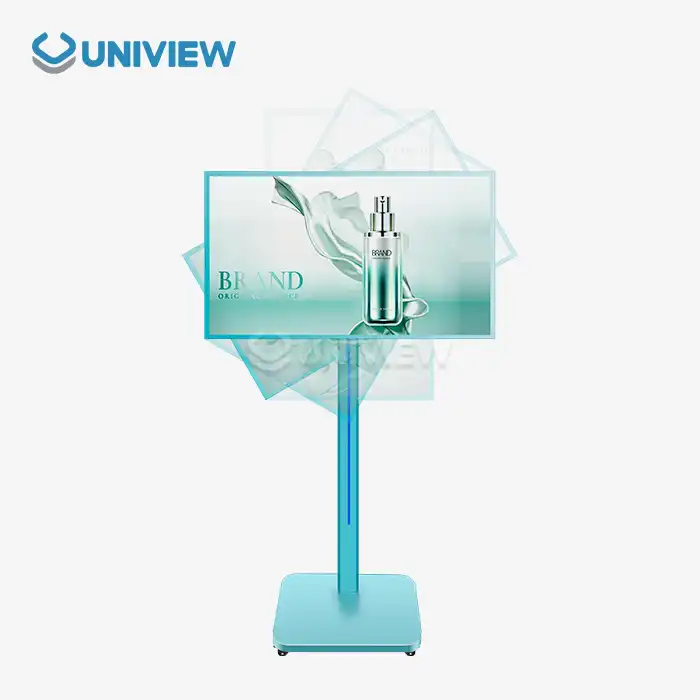
Modern technology powers our P110 Indoor Portable Rechargeable Kiosk's flexible deployment. This 27-inch LCD is battery-powered for portability. The adjustable screen's landscape and portrait orientations and varying viewing angles maximize visibility across applications.
High-brightness display with offline coated AR glass and sophisticated heat dissipation improves visibility in low light. Electronics are protected with multi-device charging outlets and double-layer anti-theft locks. Centralized administration solutions allow remote status updates and content control.
Conclusion
Portable rechargeable kiosks with environmental protection can run in adverse weather. Advanced thermal management, IP65/IP66 certifications, and weather-resistant battery systems make current devices reliable in all circumstances. Supplier selection, technology needs, and environmentally friendly deployment planning are crucial. Weatherproof portable digital signage gives B2B applications flexibility and reliability. These technologies boost consumer engagement, operational efficiency, and adaptable communication to changing business and environmental conditions.
FAQ
What operating duration can I expect from portable kiosks in extreme temperatures?
Operating duration varies significantly based on ambient temperature and battery technology. Modern lithium iron phosphate batteries maintain 70-80% capacity at temperatures down to -10°C, typically providing 8-12 hours of continuous operation. In extreme cold conditions below -20°C, heated battery compartments can extend operation to 6-8 hours. Hot weather above 40°C may reduce battery life by 15-20%, though thermal management systems help maintain consistent performance.
What maintenance practices extend kiosk lifespan in outdoor environments?
Regular maintenance protocols should include monthly gasket inspection, quarterly drainage system cleaning, and bi-annual protective coating applications. Clean displays weekly to prevent dust accumulation affecting heat dissipation. Check battery connections seasonally and replace weatherstripping annually. Software updates should be applied regularly to optimize power management algorithms. Document maintenance activities to identify patterns and predict component replacement needs.
Are solar charging solutions available for remote, off-grid deployments?
Yes, integrated solar charging systems provide sustainable power for remote installations. Modern photovoltaic panels with MPPT controllers maintain charging efficiency even during partially cloudy conditions. Hybrid systems combine solar, battery, and optional generator connections to ensure continuous operation. Solar solutions typically require 200-400 watts of panel capacity, depending on display size and usage patterns. Battery backup systems provide 2-3 days of operation during extended cloudy periods.
How do IP ratings translate to real-world weather protection?
IP65 ratings provide complete dust protection and resistance to water jets from any direction, suitable for most outdoor applications, including driving rain and snow. IP66 offers enhanced protection against high-pressure water jets, ideal for coastal environments or areas requiring frequent cleaning. These ratings ensure protection against typical weather events but may require additional considerations for extreme conditions like hurricane-force winds or sustained flooding.
What temperature ranges can weather-resistant kiosks handle?
Professional-grade weather-resistant kiosks typically operate reliably from -20°C to +60°C ambient temperature. Enhanced models with thermal management systems extend this range to -30°C to +70°C. LCD displays may experience slower response times below -10°C but maintain functionality. Internal heating systems prevent condensation formation during rapid temperature changes. Battery performance optimization maintains capacity across the full operating temperature range through advanced thermal regulation systems.
Partner with Uniview Commercial for Reliable Weather-Resistant Solutions
Ready to deploy portable digital signage that withstands harsh weather conditions? Uniview Commercial brings over a decade of expertise in manufacturing weather-resistant portable rechargeable kiosk solutions tailored to your specific environmental challenges. Our proven track record includes successful deployments across extreme climate zones, from arctic conditions to desert environments, ensuring reliable performance when you need it most.
As a leading portable rechargeable kiosk manufacturer, we offer comprehensive customization options, extended warranty coverage, and global support infrastructure. Contact our technical specialists at sales@univiewlcdisplay.com to discuss your harsh weather deployment requirements and discover how our advanced solutions can enhance your operational capabilities while delivering exceptional reliability.
References
1. International Electrotechnical Commission. "Degrees of Protection Provided by Enclosures (IP Code) - IEC 60529." Geneva: IEC Publications, 2013.
2. Society of Automotive Engineers. "Environmental Engineering Considerations and Laboratory Tests - SAE J1455." Warrendale: SAE International, 2020.
3. National Electrical Manufacturers Association. "Enclosures for Electrical Equipment (1000 Volts Maximum) - NEMA 250." Rosslyn: NEMA Standards Publication, 2018.
4. Institute of Electrical and Electronics Engineers. "Recommended Practice for Powering and Grounding Electronic Equipment - IEEE 1100." New York: IEEE Standards Association, 2019.
5. American Society for Testing and Materials. "Standard Practice for Operating Salt Spray (Fog) Apparatus - ASTM B117." West Conshohocken: ASTM International, 2019.
6. International Organization for Standardization. "Environmental Testing - Part 2: Tests - Test Cab: Damp Heat, Steady State - ISO 16750-4." Geneva: ISO Publications, 2021.
Learn about our latest products and discounts through SMS or email