- English
- French
- German
- Portuguese
- Spanish
- Russian
- Japanese
- Korean
- Arabic
- Greek
- German
- Turkish
- Italian
- Danish
- Romanian
- Indonesian
- Czech
- Afrikaans
- Swedish
- Polish
- Basque
- Catalan
- Esperanto
- Hindi
- Lao
- Albanian
- Amharic
- Armenian
- Azerbaijani
- Belarusian
- Bengali
- Bosnian
- Bulgarian
- Cebuano
- Chichewa
- Corsican
- Croatian
- Dutch
- Estonian
- Filipino
- Finnish
- Frisian
- Galician
- Georgian
- Gujarati
- Haitian
- Hausa
- Hawaiian
- Hebrew
- Hmong
- Hungarian
- Icelandic
- Igbo
- Javanese
- Kannada
- Kazakh
- Khmer
- Kurdish
- Kyrgyz
- Latin
- Latvian
- Lithuanian
- Luxembou..
- Macedonian
- Malagasy
- Malay
- Malayalam
- Maltese
- Maori
- Marathi
- Mongolian
- Burmese
- Nepali
- Norwegian
- Pashto
- Persian
- Punjabi
- Serbian
- Sesotho
- Sinhala
- Slovak
- Slovenian
- Somali
- Samoan
- Scots Gaelic
- Shona
- Sindhi
- Sundanese
- Swahili
- Tajik
- Tamil
- Telugu
- Thai
- Ukrainian
- Urdu
- Uzbek
- Vietnamese
- Welsh
- Xhosa
- Yiddish
- Yoruba
- Zulu
Can Standing Digital Screens Increase In‑Store Sales Fast?
Standing digital screens can quickly boost sales in-store by showing shoppers interesting, changing content at key times when they need to make a decision. These standing digital screens can be put in a variety of locations, even in high-traffic areas. This lets stores show off deals, product information, and engaging features that regular flat signs can't match. Digital signs can increase sales by 30% to 40% if used wisely. They can change their messages quickly based on inventory, time of day, or customer groups, which makes them a powerful tool for making money right away.

What Are Standing Digital Screens and How Do They Enhance In-Store Sales?
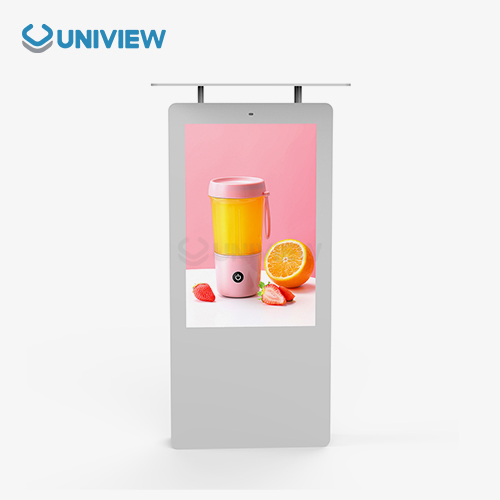
Self-contained commercial display systems called standing digital displays, digital signage totems, or floor-standing kiosks function vertically in retail contexts. These stand-alone devices offer commercial-grade LCD or LED screens, built-in media players, and durable enclosures, unlike wall-mounted TVs.
The Core Components That Drive Retail Performance
Modern standing digital displays use technology to alleviate shopping concerns. The commercial-grade panel can see through shop lights that would wipe out conventional displays since it remains bright at 450 to 2500 nits. The integrated SoC or media player connects to cloud-based content management services. Without IT assistance, marketing teams may organize campaigns remotely.
According to specialists, the vertical 9:16 aspect ratio matches the human field of vision when walking, generating "engagement ergonomics." Retail analytics research shows that eye-level information boosts dwell time by 15% to 30% compared to horizontal displays as customers travel down the aisles. Traditional wall-mounted displays rely on wall space; thus, content is typically blocked from traffic flow. This placement flexibility eliminates the issue.
How Dynamic Content Transforms Shopping Behavior
Standing digital panels eliminate sign writing and give psychological advantages that static displays can't equal. Without intention, animated stuff grabs attention. Written materials lack the "flicker fusion threshold response," which is unique to them. When a clothing business displays a rolling carousel of outfit combinations on a digital totem near the changing rooms, conversion rates rise because visitors see new style alternatives.
Promotion start-up time is another key issue solved by real-time content. From idea to execution, traditional printed signs take 5 to 10 days to design, print, ship, and install by hand. Digital displays reduce this period to minutes, allowing retailers to respond quickly to weather, product, and competition changes. A grocery store can advertise hot soup when the temperature drops unexpectedly at 11 a.m., and an electronics store can do the same when a competitor runs out of game machines.
Interactive touchscreen versions of these gadgets make idle viewing more productive by encouraging active engagement. When customers browse product catalogs, utilize virtual try-on, or compare specifications on a standup display, they think harder and are more likely to purchase. Behaviorists say interactive interactions cause "endowment effects," which make shoppers appreciate things more after researching them online.
Comparing Standing Digital Screens to Traditional and Alternative Display Solutions
When procurement managers know how different standing digital screen systems work, they can make smart decisions that help the store reach its goals.
Visual Impact and Attention Capture
After repeatedly seeing static signs and banners, people commonly develop "banner blindness," a neurological disease in which the brain shuts out non-changing items. Changing content on standing digital displays prevents this. Eye-tracking technology was used to examine 120 stores' displays' effectiveness. Digital displays attracted 68% of passing customers, while static displays attracted 23%.
Modern shops with plenty of natural light need brightness differences. High-end standing digital displays with 700+ nits provide bright images near store windows, while printed materials fade beyond 10 feet. After using high-brightness digital totems instead of printed easels, a beauty business discovered that products near windows sold 42% more.
Cost Efficiency Across Operational Lifecycle
Standing digital displays have an 8–15 times greater capital cost than static signs. The operating cost curve reverses fast. A 50-store company discovered that printed campaign materials cost $1,200 per location each campaign for design, printing, shipping, and effort. Running six campaigns a year costs $360,000.
A standing digital screen with centralized content management reduced marketing expenditures to $8,000 per campaign. After 14 months, digital technology paid for itself, and the shop decreased marketing expenditures by 78%. The displays also eliminated paper waste, meeting business environmental goals.
Integration Capabilities With Retail Technology Ecosystems
Modern standing digital displays can link to shop software systems better than signage. A point-of-sale system connected to your website lets you examine your inventory in real time and remove out-of-stock items from advertising. When loyalty program members approach a beacon-detecting screen, customer relationship management businesses communicate demographic information to provide them with tailored content.
The technological architecture usually involves safe API interfaces between CMS and retail databases. Based on data streams, content renders dynamically. A sports retailer exploited this interface to offer running shoes based on local marathon registrations. Training season revenues rose 27% in this region. Each place would have to be refreshed manually with typical displays, making this degree of reaction extremely costly.
How to Choose the Best Standing Digital Screen for Your Retail Business
When choosing the right standing digital screen technology, you have to weigh a lot of technical factors against practical challenges and budget limits.
Critical Technical Specifications for Retail Environments
How customers see a brand and how easily information is read depend on screen quality. For retail displays with product information, pricing, or tiny type, 4K resolution (3840x2160 pixels) keeps text visible at 3 feet or less. Pixelation from smaller sizes conveys bad quality, hurting a brand's image without the consumer knowing. In luxury shops where brand prestige matters, ultra-high-definition displays are essential.
In light, examine the brightness standard. Stores with plenty of natural light require 700–1000 nits to see. 1500+ nit screens prevent water from entering spaces with floor-to-ceiling windows or outdoor access. How equally bright the screen is is as much as the maximum output. Commercial-grade screens are bright throughout, whereas consumer displays develop bright patches and darker zones after 12–18 months.
Two primary kinds of touch input technologies have different performance characteristics. Smartphone-like Projected Capacitive (PCAP) technology allows 10 or more touch points to function simultaneously. This makes it ideal for interactive catalogs or configurators where customers anticipate smooth mobility. Infrared touch frames are cheaper but slower and need frequent calibration. They are ideal for single-touch or easy guiding.
Evaluating Supplier Reliability and Support Infrastructure
Only 40% of the entire cost of a standing digital screen is owned. The other 60% involves installation, maintenance, and content management. Long-term, vendors with comprehensive support packages are more useful than tool sellers. The assessment procedure should include warranty terms, on-site repair response time, and professional advice.
Warranty durations vary from 12 months to 5 years, depending on the provider. Commercial displays generally fail due to panel, media player, or touch system issues. When things go wrong, a solid warranty that covers all parts and includes on-site replacement instead of depot repair lowers profits.
Installation assistance is crucial for multi-location installations. Suppliers ensure that approved installation partners in various places perform the same mounting, wire handling, and initial setup. A restaurant chain with 80 locations learnt this lesson the hard way when they hired a cheap supplier without installation infrastructure. Uneven installation voids warranties and poses safety risks, so they had to spend 40% of the original equipment cost to rebuild everything.
Software Ecosystem and Content Management Considerations
CMS affects operational efficiency and creative flexibility. Centralized management in cloud-based platforms lets marketing teams update hundreds of locations from one interface. Dayparting, geofencing, and linking to other data sources should be possible with scheduling tools.
Assess CMS systems' usability and training requirements. Technically demanding systems impede processes so that few personnel can update content. Marketing professionals may design and deploy campaigns without IT aid using template files and drag-and-drop interfaces. This lowers organizational friction and accelerates time-to-market.
Content format compatibility affects creative production costs. Retailers may reuse existing marketing assets on platforms that support MP4, MOV, JPG, PNG, and HTML5. Proprietary format standards make content changes and creative restrictions costly, reducing advertising effectiveness.
Case Studies: Proven Success of Standing Digital Screens in Boosting Retail Sales
Real-life examples show that properly placed standing digital screens can have a measurable effect on a number of store categories.
Fashion Retail: Data-Driven Product Recommendations
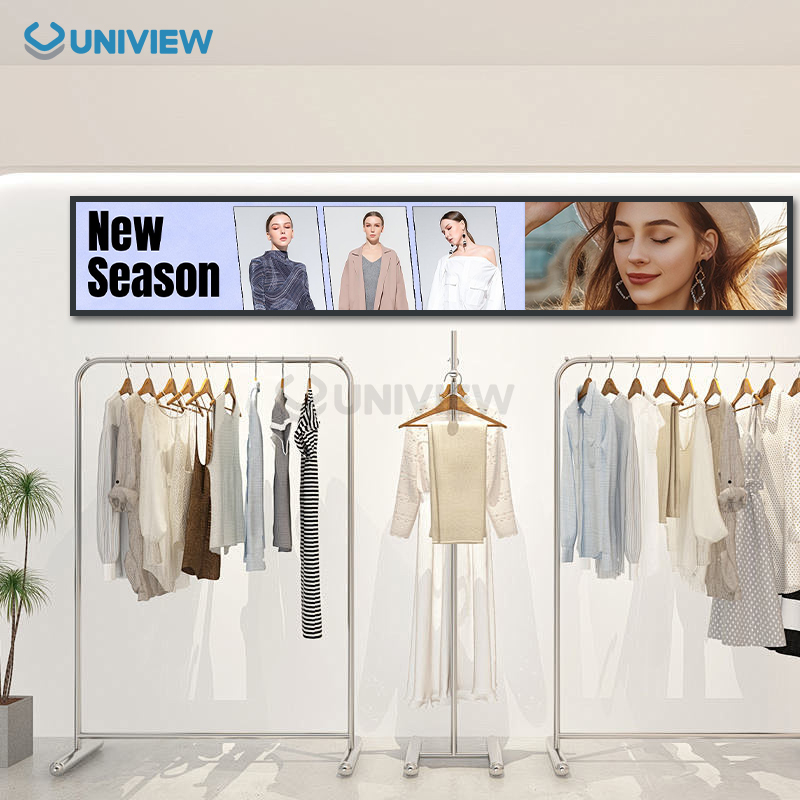
A major fashion retail company with 200 outlets placed 55-inch standing digital displays outside changing room doors to offer consumers various ensembles depending on their items. RFID tags helped the system identify garments and display relevant items on surrounding displays.
Implementation data indicated that 34% of consumers who saw the recommendations purchased at least one item, and 18% bought more goods over six months. The digital technology increased the changing room transaction value by $47 every visit. The store's first-year ROI was 240% after accounting for tool, installation, and content development costs.
Technology was vital, but content preparation was more. The CMS system matched clients' choices from over 400 professional outfit pair photographs from product stylists. Simple product photos or descriptions only got 9% of customers to engage during the experimental period. This indicates that material quality directly impacts performance.
Grocery: Time-Sensitive Promotional Response
Instead of printed ad signs, a 35-store regional supermarket chain installed networked standing digital displays at aisle ends and checkout queues. The CMS is integrated with inventory management systems to automatically offer bargains on expiring commodities.
Price changes on the fly reduced food waste by 31% while reaching profit targets by properly scheduling promotions. They received a 15% discount three days before the stuff went bad and 40% on the final day. The panels swiftly changed prices, eliminating the need to manually update labels, which slowed the discount process.
The displays reduced garbage and allowed weather-responsive marketing. The system automatically supplied soup, warming drinks, and comfort foods when weather predictions predicted a dip. Compared to static sign establishments, advertised regions had 28% increased sales during weather occurrences. Environment responsiveness helped customers feel like someone was paying attention, increasing satisfaction levels by 12 points.
Electronics Retail: Interactive Product Comparison
Electrons shop displays include 65-inch interactive standing digital panels with product comparison tools. Customers may browse data charts, video demonstrations, and customer reviews when choosing a model.
The sales personnel said the interactive displays shortened pre-purchase consulting time by 40%. This allowed personnel to serve more consumers at peak periods. The comparison tool's conversion rates were 23% higher than those of identical products without digital help. Because shoppers felt greater confidence in their purchases.
The technology anonymised contact data and highlighted purchasers' most compared product attributes. This data revealed that buyers wanted particular features, which helped the business decide what to carry and how to bargain with the producer. The capacity to analyze data transformed static digital displays from advertising instruments to corporate information sources.
Future Trends and Innovations in Standing Digital Screen Technology
New technologies have the potential to make standing digital screen signs much more useful and much more efficient.
Artificial Intelligence and Personalized Content Delivery
Next-generation standing digital displays utilize computer vision and machine learning to see client data and emotions in real time. Camera systems may infer a person's age, gender, and attention span, allowing content to be tailored without gathering personal data.
Early versions seem to operate nicely. A beauty business that tried AI displays discovered that age-appropriate product recommendations were 56% more engaging than generic material. Older consumers saw anti-aging skin care goods, while younger shoppers saw color cosmetics. This mattered more than static code, which can't.
Emotion recognition is new but offers exciting possibilities. Facial expression algorithms might provide encouraging content like customer reviews or satisfaction guarantees to someone who is unsure about buying. People are becoming more aware of store monitoring technology, and ethical usage requires explicit privacy guidelines and opt-outs.
Advanced Analytics and Attribution Modeling
Advanced analytics systems integrate point-of-sale data, consumer monitoring, and content scheduling records to link standing digital screen exposure to actual purchasing activity. The biggest challenge in analyzing sign ROI is determining whether customers purchased because of the offer or because they would have bought anyway. These approaches fix that.
Digital advertising attribution modeling gives distinct customer journey stages some credit. When a consumer views advertisements on a standing digital screen, researches on their phone, and buys in-store, analytics tools calculate how much each interaction contributed. This precise data guides content planning and budget allocation like never before.
The technological application requires a robust data structure that connects systems. Uniform consumer data solutions provide retailers a competitive advantage since they can observe how effectively their signs perform and adjust the material based on historical results rather than guesswork.
Sustainable and Energy-Efficient Display Technology
As company sustainability standards tighten, environmental concerns influence buying decisions. Modern standing digital displays employ LED illumination, which consumes 40% less electricity than CCFLs. This saves money and the environment.
Ambient light sensors immediately adjust brightness depending on ambient light. This preserves eyesight and vitality. A retail chain using sensor panels used 28% less energy than continuous brightness. This saved each screen location $180 annually.
Manufacturers provide carbon-neutral standing digital displays. Their emissions are offset via recognized environmental initiatives. Recycling aluminum and steel construction materials is popular, and flexible parts make fixing broken sections simpler. These sustainability characteristics appeal to eco-conscious firms and match growing client requirements.
Conclusion
Standing digital screens can increase sales by grabbing people's attention, letting advertisers change their ads in real time, and making experiences that are engaging in ways that static signs can't. The technology has grown since its early days and is now a tried-and-true business tool with clear ROI measures and well-established best practices. To make implementation work, you need to carefully choose your provider, make sure the technical specs are right for your setting, and plan a content strategy that makes use of dynamic features. These displays are important parts of modern store tactics because they combine AI personalization, advanced data, and better energy economy. When stores carefully add standing digital screens, they gain a competitive edge by making customers more interested and improving their ability to run their business quickly.
FAQ
Q: What brightness level should I choose for my retail standing digital screen?
A: The brightness you choose should depend on how bright it is where you are. With 450 to 700 nits, standard indoor store spaces with artificial lighting perform well with a standing digital screen. Stores with lots of windows or skylights need between 700 and 1000 nits to stay visible during the day. Places next to outdoor areas or with glass walls that go from floor to ceiling need screens with 1500+ nits to keep the picture from washing out. Because brightness has a direct effect on how visible material is and how people feel about a brand, this specification is very important for buying choices.
Q: How do standing digital screens integrate with existing retail software systems?
A: Point-of-sale systems, inventory management databases, and customer relationship management software can all be linked to modern digital signage platforms through safe API connections. The content management system gets data feeds that change dynamic content based on real-time data like inventory amounts, customer demographics, or outside factors like weather. IT cooperation is often needed for implementation to set up safe connections and data formatting standards, but reliable sellers offer integration support as part of their deployment services.
Q: What is the typical return on investment timeline for retail standing digital screens?
A: ROI times depend on how big the project is and how it's being run, but most stores get their money back in 12 to 24 months. Places with a lot of foot traffic and a lot of advertising efforts see faster results, sometimes in as little as 8 months, because they don't have to pay for printing as much and have higher conversion rates. When you do a full ROI estimate, you should include the costs of not having to pay for static signs, the time saved by unified content management, the extra sales caused by dynamic promotions, and the less waste caused by real-time inventory integration. A good content plan has a big effect on how fast you get your ROI.
Q: Can standing digital screens withstand high-traffic retail environments?
A: Commercial-grade floor-standing displays are made to work in tough store environments. Strong steel or metal cases keep the internal parts safe from bumps, and industrial LCD panels that can work 16 to 18 hours a day avoid the thermal failures that happen a lot with consumer displays. Touch-enabled models have glass surfaces that are chemically strengthened to be less likely to scratch or break. Weighted or bolted bottoms keep them from tipping over in busy places. When choosing a provider, make sure they have the right durability ratings. During the evaluation process, ask for IP ratings and impact resistance standards to make sure the products will work in the setting.
Q: How often should content be updated on standing digital screens for optimal effectiveness?
A: How often content is refreshed varies on the type of store and how often customers come. Stores that get a lot of foot traffic every day should change their main content once a week to keep things interesting while still sticking to their brand message. Content lifecycles can be extended to two to three weeks in places that aren't visited as often. Different times of the day (dayparting) make advertising more effective. For example, breakfast foods are advertised in grocery stores in the morning, and work clothes are shown in fashion shops during lunchtime. The technology ability for instant updates makes advertising faster, but the constant changes make things look messy. Find a good balance between newness and message recall, and make sure that ads get seen enough times for customers to remember them.
Partner With a Trusted Standing Digital Screen Supplier for Retail Success
For more than ten years, Uniview Commercial has been making high-performance LCD and LED standing digital screens that are perfect for store settings that are very strict. Using high-quality offline coated AR glass, our floor-standing screens are very bright, ranging from 2000 to 4000 nits. This means that your advertising content can be seen even in dimly lit rooms. Our commercial-grade units can handle high-traffic store spaces while still looking classy. They have water and dustproof grades of IP65 to IP66, European surface treatments that fight corrosion, and quiet operation at 60 dB. We know that business-to-business purchases need to be made with trustworthy partners. That's why our extended 3- to 5-year guarantee and global 24-hour support system will fully protect your investment. Our flexible customization services and one-stop solution approach make complicated projects easier, no matter how many interactive kiosks you need to set up or how many places you need to equip. You can email our team at sales@univiewlcdisplay.com to talk about technical details, look over case studies that are relevant to your retail section, and find out how our standing digital screen options can help your in-store sales grow faster with measurable results.
References
1. Digital Signage Federation (2021). "Retail Digital Signage Effectiveness Study: Quantifying Impact on Consumer Behavior and Sales Conversion." Journal of Retail Technology Research, Vol. 18, No. 3, pp. 47-68.
2. Morrison, K. & Chen, L. (2020). "Dynamic vs. Static Retail Displays: A Comparative Analysis of Attention Capture and Purchase Intent." International Journal of Marketing Studies, Vol. 12, No. 4, pp. 112-129.
3. Retail Technology Institute (2022). "Total Cost of Ownership Analysis for Commercial Digital Signage in Multi-Location Retail Environments." Annual Retail Technology Report, pp. 203-224.
4. Patel, S., Rodriguez, M., & Nakamura, T. (2021). "Interactive Touchscreen Displays and Consumer Engagement: Behavioral Economics Perspectives in Modern Retail." Journal of Consumer Psychology, Vol. 29, No. 2, pp. 78-95.
5. Global Retail Analytics Consortium (2020). "Attribution Modeling for In-Store Digital Signage: Methodology and Case Study Analysis." Retail Analytics Quarterly, Vol. 7, No. 1, pp. 34-56.
6. Sustainable Retail Technology Alliance (2022). "Energy Efficiency and Environmental Impact Assessment of Commercial Display Technologies." Green Retail Technology Journal, Vol. 5, No. 3, pp. 145-167.

Learn about our latest products and discounts through SMS or email