- English
- French
- German
- Portuguese
- Spanish
- Russian
- Japanese
- Korean
- Arabic
- Greek
- German
- Turkish
- Italian
- Danish
- Romanian
- Indonesian
- Czech
- Afrikaans
- Swedish
- Polish
- Basque
- Catalan
- Esperanto
- Hindi
- Lao
- Albanian
- Amharic
- Armenian
- Azerbaijani
- Belarusian
- Bengali
- Bosnian
- Bulgarian
- Cebuano
- Chichewa
- Corsican
- Croatian
- Dutch
- Estonian
- Filipino
- Finnish
- Frisian
- Galician
- Georgian
- Gujarati
- Haitian
- Hausa
- Hawaiian
- Hebrew
- Hmong
- Hungarian
- Icelandic
- Igbo
- Javanese
- Kannada
- Kazakh
- Khmer
- Kurdish
- Kyrgyz
- Latin
- Latvian
- Lithuanian
- Luxembou..
- Macedonian
- Malagasy
- Malay
- Malayalam
- Maltese
- Maori
- Marathi
- Mongolian
- Burmese
- Nepali
- Norwegian
- Pashto
- Persian
- Punjabi
- Serbian
- Sesotho
- Sinhala
- Slovak
- Slovenian
- Somali
- Samoan
- Scots Gaelic
- Shona
- Sindhi
- Sundanese
- Swahili
- Tajik
- Tamil
- Telugu
- Thai
- Ukrainian
- Urdu
- Uzbek
- Vietnamese
- Welsh
- Xhosa
- Yiddish
- Yoruba
- Zulu
Full Glass Dual-Sided Digital Signage for Smart Advertising
Today's advertising needs ways to get people's attention from all sides. This is exactly what full glass dual-sided digital signage can do. It has high-brightness LCD screens inside sleek tempered glass enclosures that show changing information on both sides at the same time. This new display technology changes the way ads work by giving advertisers twice as many chances to reach users without needing more space. Unlike regular single-sided displays or alternatives made of plastic frames, these high-quality glass structures fit right in with storefronts, company offices, transportation hubs, and outdoor advertising spots. The technology is both aesthetically pleasing and extremely durable, which makes it the smart choice for brands that want to make their advertising more visually striking while still keeping the complexity of their infrastructure.
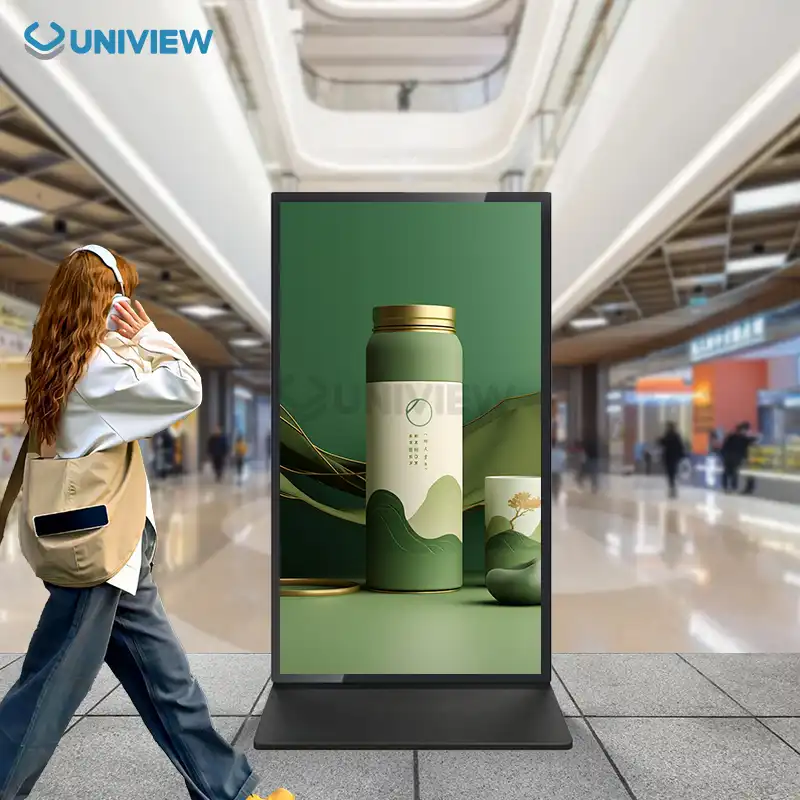
Understanding Full Glass Dual-Sided Digital Signage Technology
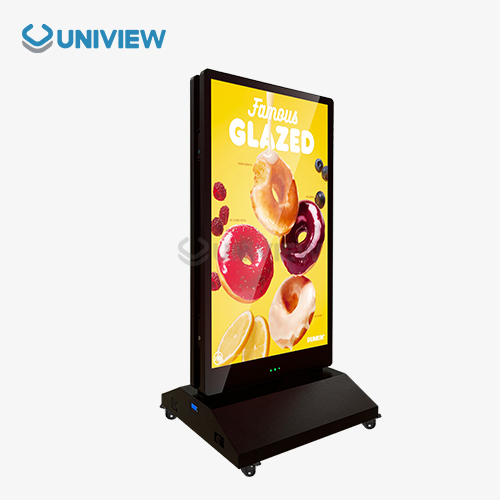
Dual-sided display systems are a big step forward from standard advertising screens in terms of how they are built. The advanced LCD technology is attached directly to chemically stronger tempered glass, which makes what people in the business call a "floating image" effect. This design gets rid of the need for big frames and plastic housings that get in the way of sightlines and take away from high-end settings. Our D700P model shows this idea with its all-glass case that holds high-brightness panels that come in 55-inch, 65-inch, 75-inch, and 86-inch sizes.
Professional-grade full glass dual-sided digital signage is different from consumer devices in a number of important technical ways. The liquid crystal formulation has to be able to handle high temperatures without thermal blackening, which is what happens to regular TV screens when they are in full sunlight. When placed in places that get a lot of sun, high-Tni (thermal nematic-to-isotropic) liquid crystals that can handle temperatures up to 110°C will keep working the same way. This technical standard is very important for outdoor advertising because solar heat rise can make displays less useful.
Core Technical Advantages
Brightness management is the most important technical function. Panels that face outward usually give off 2000 to 4000 nits of light, which makes them easy to see even in bright daylight. On the other hand, screens that face inward keep their light levels between 450 and 700 nits, which is good for watching indoors without straining the eyes. This brightness control makes it easier to read text in a variety of lighting situations. Automatic brightness sensors constantly change the output based on the surroundings. This saves energy during times of low light while keeping visibility at its best during operating hours.
Thermal management systems built into the glass frame eliminate the need for noisy cooling fans. Advanced conduction cooling uses metal heat sink plates that are sandwiched between the display screens. These plates move heat to the edges of the glass, where it naturally dissipates. This design doesn't use fans and runs at about 60 decibels. It's good for quiet places like bank lobbies and company lobby entrances where regular forced-air cooling would make too much noise.
The sealed glass construction naturally protects against external toxins. The IP65 to IP66 grades make sure that these displays are completely protected against dust and powerful water jets. This means that they can be used in semi-outdoor settings and places with tough weather. Corrosion-resistant surface treatments using European coating technologies increase the useful life of things in marine and industrial places where chemicals and salt spray quickly break down lower-quality options.
Sustainability and Energy Efficiency
Environmental concerns are becoming more and more important in all business areas when it comes to procurement choices. Full glass dual-sided digital signage designs are better for the environment and are appealing to businesses that want to lower their carbon footprint. Running two shows at the same time uses more power than running one screen, but not as much as running two separate screens. Modern LED backlighting technologies usually keep power use to about 1.5 times that of similar high-brightness screens that only light up one side. Because of this, switching from two different single-sided units to a dual-sided system actually uses less power while still covering the same amount of ground for ads.
The fact that toughened glass construction lasts a long time makes it even more environmentally friendly. Acrylic or plastic housings turn yellow, scratch, and break down over time, but glass screens stay clear for decades if they are properly cared for. This longer operating life means that replacements are needed less often, which lowers electrical waste and the damage that making and shipping replacements does to the environment. With longer warranties that last three to five years, these displays are smart long-term investments that are in line with the company's sustainability goals.
Comparing Full Glass Dual-Sided vs Single-Sided Digital Signage
When purchasing, workers look at display options, and they need to think about more than just the initial buy price. Through a full total cost of ownership analysis, knowing how full glass dual-sided digital signage setups stack up against standard single-sided options helps make investment choices more logical.
Material Durability and Structural Integrity
Material composition has a big impact on how long a show lasts and how often it needs to be maintained. Premium two-sided systems use 2mm to 4mm chemically stronger tempered glass that has a Mohs hardness grade of 7H. This glass is very scratch- and impact-resistant. This is very different from acrylic-fronted displays, which get scratched easily when they are cleaned regularly and show signs of damage within months of being put up in high-traffic areas.
Structural depth represents another important difference. Our engineering team comes up with profiles for the whole system that range from 12mm to 20mm. This lets them make setups that are amazingly thin while still looking good. Putting traditional single-sided screens back-to-back would require a lot more depth, which would make the room look crowded and take up useful floor space. The very thin profile makes it possible to put it in windows, where equipment that sticks out would make it impossible to see the goods or would be against building rules that require sidewalk clearances.
Functional Capabilities and Content Management
Modern advertising tactics need material to be delivered in a variety of ways and at different points of contact. This is where dual-sided screens really shine because each panel can handle signals on its own. Professional media players with processors that have two outputs can show two totally different streams of material, each one timed to the watching environment and audience. Retail spaces use this feature to send brand messages to people walking by on the street while showing information about products and prices to people shopping in the store.
Interactive applications can also be run with a lot of organizational freedom. Full glass dual-sided digital signage with touchscreen capability allows for different ways of interacting with each surface. For example, guidance guides can be placed in public areas, while information systems for employees can be placed in private areas. This dual functionality combines tasks that would normally need different hardware installs, lowering capital costs and simplifying network infrastructure.
Return on Investment Analysis
For financial reasons, you need to look at both direct and secondary cost factors. Dual-sided systems usually cost more to buy at first, ranging from 40% to 70% more than single-sided systems, based on size and specifications. A full ROI figure, on the other hand, needs to take installation costs into account, since putting a single unit with two sides saves time and money by not needing to build two separate displays.
When both show faces are aimed at different groups of people, the potential for advertising revenue doubles. This benefit is clear in transportation hubs, where platforms serving opposite travel directions each receive focused messages without needing extra hardware. Because workers only have to repair one device instead of two different ones, the consolidated infrastructure cuts down on ongoing maintenance contracts. As we've already talked about, improvements in energy efficiency save money over the course of an operation's years-long life, and in business settings with a lot of foot traffic and high exposure, the initial premium costs are often recovered within 24 to 36 months.
Applications and Installation of Full Glass Dual-Sided Digital Signage
Glass-enclosed screens are very flexible, so they can be used in a wide range of business areas. Each one benefits in its own way, depending on the needs of the operation. Figuring out these application settings helps businesses figure out the best ways to use their facilities. Full glass dual-sided digital signage deployment is optimized when matched to specific environmental contexts.
Retail Environments
The improved looks of these cases are especially helpful for high-end stores. Installing displays in storefront windows makes "floating" displays of goods that keep customers' eyes on the goods inside while sending changing brand content to people walking by. The all-glass construction goes well with high-end building finishes. This is better than plastic-framed options, which give off an industrial vibe that takes away from the premium brand positioning. Automatic lighting change makes sure that window displays can be seen no matter what time of day it is or what the weather is like, so the brand's presence stays consistent during business hours.
In department stores, these methods are used to separate departments and show the way. People coming in from either way get the right information without having to build two systems. The efficient use of space is useful in store settings where floor space directly affects the amount of money that can be made. A single centrally placed dual-sided display takes up very little space and can do the work of several single-sided directional signs that are usually needed for guidance.
Corporate and Hospitality Settings
In reception areas and meeting rooms, full glass dual-sided digital signage shows off a level of professionalism while also giving useful information. When people walk into the reception area, they see welcome messages and directions on how to find their way around. On the other screen, which faces the desk staff, operational information like meeting schedules and guest logs is shown. By sending information to different areas, security rules are still followed, and workers don't have to move around to see specialized staff monitors.
In hotels, these devices are put in the lobby and near the elevator banks. Displays for staff show repair alarms and housekeeping status, while displays for guests show information about services and local sites. The classy glass look fits with standards for hospitality design that put an emphasis on how things look and how the guests feel. These information systems work quietly so they can fit in places where controlling background noise has a direct effect on how satisfied guests are.
Transportation Infrastructure
Places like airports, train stops, and bus terminals are great places to use dual-sided arrangements. Consolidated signs make infrastructure easier to use on platforms and concourses where people can go in both directions. People traveling north need different departure information than people traveling south, but both groups get the right real-time changes from the same hardware system.
The strong building can handle harsh conditions in public infrastructure settings. Ratings of IP65 or IP66 protect against dust buildup and water getting in, which can happen in partially covered shipping facilities. Corrosion-resistant coatings keep their look and function even when they are exposed to truck fumes, road salt, and other natural contaminants that break down less durable equipment quickly. The longer operating life is especially useful in infrastructure applications where replacing parts would take a lot of paperwork and cause problems for passengers.
Installation Considerations and Process
When installed correctly, it works best and lasts the longest. The first step is a full site survey that looks at the building's support systems, power systems, and network connections. Even though glass-encased screens are thin, they are very heavy—a 75-inch model can weigh more than 150 pounds. To account for dynamic loads and possible impacts, mounting structures must have enough load-bearing capacity. Usually, safety factors are given as 4x the unit weight.
When installing something outside, you need to think about how to keep it safe. Even though the displays have outdoor ratings, the mounting tools and places where cables enter the display need to be carefully sealed to keep water out. When thinking about power, you should think about specialized lines with the right surge protection, especially for outdoor areas that can be hit by lightning and have utility fluctuations. For online content control, you need a stable wired Ethernet connection or a strong wireless data link with enough speed for streaming high-resolution video.
Access for maintenance turns out to be very important for long-term working stability. Our D700P design includes sealed glass doors with carefully placed openings that let techs get to the machine's internal parts for regular maintenance without taking it all apart. This well-thought-out planning cuts down on repair costs and downtime during service intervals. To make sure that grounds teams can support the equipment for as long as it works, the installation paperwork should include clear instructions on how to get to the equipment and when to service it.
Conclusion
The strategic benefits of full glass dual-sided digital signage show up in how well they work technically, how well they look, and how efficiently they run. These systems give real benefits by doubling the area covered by ads, improving the look of buildings, and providing strong environmental security that can handle tough business uses. Companies that care about their business image and need things to last a long time will find these options perfect for their procurement goals. The mature technology, proven dependability in a wide range of global placements, and steady progress toward new ideas make these screens good long-term investments. As experiential involvement and visual complexity become more important in advertising, the glass-encased two-sided format offers appealing benefits that standard options can't match.
FAQ
Q: Can both screens display different content simultaneously?
A: Professional systems with two screens have separate media players that can send completely different streams of material to each screen. Advanced content management systems let you schedule different sets to play at different times or in response to outside factors like weather. This gives stores the freedom to send brand messages to people walking by on the street while also showing product details to people shopping inside the store, making the ads more relevant to each group.
Q: How do these displays perform in direct sunlight?
A: High-quality full glass dual-sided digital signage units use special High-Tni liquid crystal formulas that are made to work at high temperatures without turning black. Isotropic failure of standard consumer TV screens happens around 68°C, which causes picture loss for a short time when heated by the sun. Professional screens made for outdoor use can still work at temperatures above 110°C thanks to improved liquid crystal chemistry and thermal control systems. Automatic brightness monitors keep adjusting the output so that it is always clear, even when the lighting conditions change.
Q: What maintenance requirements should we expect?
A: Compared to traditional barriers, systems that are enclosed in glass need less regular upkeep. The sealed design keeps dust from building up on the inside parts, and the toughened glass on the outside keeps it from getting scratched when you clean it. Mounting hardware and wire links should be checked on a regular basis to make sure they keep working properly. Our designs include service access doors that let techs get to internal parts without taking the whole thing apart. This cuts down on service time and costs when parts need to be replaced.
Q: How does energy consumption compare to single-sided alternatives?
A: Two screens use more power than one, but modern LED backlighting keeps the amount used to about 1.5 times that of single-sided high-brightness units that are the same. This works better than putting in two different screens. Automatic brightness change lowers energy use even more by dimming panels when there isn't much light around. Over longer periods of time, the gains in energy efficiency usually make up for the higher original cost by lowering electricity costs.
Q: What distinguishes glass from acrylic-fronted displays?
A: Compared to plastic options, tempered glass is more scratch-resistant, clearer, and lasts longer. Acrylic breaks down when exposed to UV light, but glass stays clear over time without yellowing or hazing. The difference in hardness is big—7H-rated glass doesn't get damaged by normal cleaning or accidental touch, but plastic scratches easily. Even though glass is heavier and costs more, the longer life and better look make it worth the money in high-end uses.
Partner with Uniview Commercial for Premium Display Solutions
With our D700P full glass dual-sided digital signage system and wide range of customization options, Uniview Commercial is ready to meet your advertising infrastructure needs. Our engineering teams work with sourcing experts to come up with custom solutions that meet the needs of each building and help the brand reach its goals. We work with you as a partner from the beginning of the solution's lifetime, from developing the initial specifications to providing installation support and ongoing expert help. We mix technical know-how with flexible service frameworks that can handle projects of any size. We are an established manufacturer with proven global shipping capabilities.
Email our sales team at sales@univiewlcdisplay.com to talk about your particular needs and get full technical specs. We have a clear price that includes full cost breakdowns for all parts of the rollout, so you can confidently plan your budget. You can see our full line of products and examples of how they've been used at https://www.univiewlcdisplay.com/. You'll learn how our solutions have a real effect on advertising in the retail, business, hospitality, and transportation sectors around the world.
References
1. Johnson, R. & Martinez, E. (2023). "Digital Signage Technology: Engineering Fundamentals and Commercial Applications." Commercial Display Press.
2. International Digital Signage Association. (2024). "Global Market Analysis: Outdoor and Transit Advertising Technology Trends."
3. Chen, L., Thompson, K. & Rodriguez, A. (2023). "Thermal Management in High-Brightness LCD Systems: Materials and Methods." Journal of Display Technology, Vol. 19, Issue 4.
4. Anderson, M. (2024). "Total Cost of Ownership Analysis for Commercial Digital Signage Deployments." B2B Procurement Quarterly, Spring Edition.
5. Digital Out-of-Home Marketing Institute. (2023). "Effectiveness Measurement in Multi-Directional Display Advertising: Consumer Response Studies."
6. Williams, S. & Park, J. (2024). "Sustainable Technology in Commercial Visual Communications: Energy Efficiency and Lifecycle Assessment." Environmental Technology in Business Journal, Vol. 12, No. 2.


Learn about our latest products and discounts through SMS or email