- English
- French
- German
- Portuguese
- Spanish
- Russian
- Japanese
- Korean
- Arabic
- Greek
- German
- Turkish
- Italian
- Danish
- Romanian
- Indonesian
- Czech
- Afrikaans
- Swedish
- Polish
- Basque
- Catalan
- Esperanto
- Hindi
- Lao
- Albanian
- Amharic
- Armenian
- Azerbaijani
- Belarusian
- Bengali
- Bosnian
- Bulgarian
- Cebuano
- Chichewa
- Corsican
- Croatian
- Dutch
- Estonian
- Filipino
- Finnish
- Frisian
- Galician
- Georgian
- Gujarati
- Haitian
- Hausa
- Hawaiian
- Hebrew
- Hmong
- Hungarian
- Icelandic
- Igbo
- Javanese
- Kannada
- Kazakh
- Khmer
- Kurdish
- Kyrgyz
- Latin
- Latvian
- Lithuanian
- Luxembou..
- Macedonian
- Malagasy
- Malay
- Malayalam
- Maltese
- Maori
- Marathi
- Mongolian
- Burmese
- Nepali
- Norwegian
- Pashto
- Persian
- Punjabi
- Serbian
- Sesotho
- Sinhala
- Slovak
- Slovenian
- Somali
- Samoan
- Scots Gaelic
- Shona
- Sindhi
- Sundanese
- Swahili
- Tajik
- Tamil
- Telugu
- Thai
- Ukrainian
- Urdu
- Uzbek
- Vietnamese
- Welsh
- Xhosa
- Yiddish
- Yoruba
- Zulu
High Brightness Kiosk LED Display for Indoor and Outdoor Use
High brightness kiosk LED displays are a huge step forward in digital signage technology. They make content much easier to see and interact with in a wide range of lighting situations. Unlike older display options, these high-tech kiosk LED systems offer better brightness levels between 2000 and 4000 nits, making the screen visible even in full sunlight. Modern businesses in the retail, corporate, hospitality, and transportation sectors depend on these tough displays more and more to improve interactions with customers and speed up the delivery of information, both indoors and outdoors.
 Understanding High Brightness Kiosk LED Displays
Digital signage technology has changed a lot over the years, and now high-brightness LED screens are the best choice for tough jobs. The unique lamp bead design and specialized LED modules in these high-tech systems make them very different from regular displays. They provide excellent contrast ratios and wide color gamuts.
Core Technology Behind LED Display Excellence
The complex way that high-brightness kiosk screens are put together is what makes them work. In contrast to regular LCD screens, these systems use separate LED modules that can be replaced separately. This makes the option more environmentally friendly and cost-effective. The modular design makes sure that upkeep costs are kept to a minimum while also making the investment last longer.
Modern LED technology uses clever heat-dissipation systems that keep working at their best even when temperatures are very high or very low. The temperature management features keep the screen from getting too hot and keep the brightness level constant over long periods of use. Because they are so reliable, these screens are great for use 24 hours a day, seven days a week in tough conditions.
Indoor versus Outdoor Display Configurations
Thanks to how flexible current kiosk LED technology is, it can work in both indoor and outdoor settings. Indoor versions tend to focus on saving energy and letting users connect with the screen, while outdoor versions focus on being resistant to weather and having better brightness.
Outdoor displays need special features, like water and dust resistance grades of IP65 to IP66. These weatherproof covers keep sensitive parts safe from the elements while still making them easy to service through specially designed holes. The sealed glass doors protect the internal LED units even more without making them harder to get to.
Comparing LED Technologies for Kiosks — Making Informed Decisions
Professionals in procurement have to look at a number of different display technologies in order to make choices that are both accurate and within the budget. Knowing what makes each technology unique helps you choose the best seller and get the best performance results.
LED versus Traditional Display Technologies
When used in kiosks, LED screens are much better than LCD, OLED, and projector systems. Due to its higher brightness, LED technology makes it possible to see in low light situations where other technologies fail. LCD screens usually have brightness levels between 300 and 700 nits, but new LED kiosks always have 2000 to 4000 nits.
Another important difference is the longevity factor. LED panels can handle changes in temperature, humidity, and physical stress better than other technologies. LED systems have lower long-term upkeep costs than LCD screens because they can be replaced in parts instead of as a whole when they get broken.
Performance Metrics and Environmental Adaptability
Resolution requirements change depending on the purpose. Modern LED displays can be set up in a variety of ways, ranging from standard HD to ultra-high definition. The pixel pitch affects how far away you can see the image and how clear it is, so it's important to match technical specs with how the device will be used.
Even brightness across the screen's surface guarantees the same picture quality no matter the viewing angle or lighting conditions. Even at their brightest, modern LED displays keep their color accuracy and contrast ratios, making the viewing experience better than with older screens.
Best Practices for Installation and Maintenance of High Brightness Kiosk LED Displays
To successfully set up high-brightness LED screens, you need to plan ahead and follow tried-and-true installation methods. The investment will work well and last a long time if the place is properly analyzed and prepared.
Site Analysis and Environmental Considerations
Environmental assessment is the first step in making outdoor projects work. A lot of thought needs to go into things like the amount of light, the temperature range, the amount of humidity, and any possible weather dangers. When it comes to public kiosks, wind resistance ratings are very important. These days, displays can handle up to 16 levels of wind force.
The structural needs change depending on the size of the display and how it is mounted. The place where the display will be installed must be strong enough to hold its weight and have enough room for the cables and power connections. During the planning part, accessibility for maintenance should be thought about to make sure the building will last for a long time.
Security and Maintenance Protocols
Modern kiosk displays have high-tech security features like double-layer locks that make them impossible to steal and casings that can't be opened. These security measures keep users able to view legitimate content while protecting valuable equipment.
Maintenance plans help stop common problems and make displays last longer. Cleaning the protective glass surfaces on a regular basis keeps the picture clear, and checking the connection points every so often stops problems before they happen. The modular form of LED displays makes it easier to replace parts when they break.
Procurement Guide: How to Source the Best High Brightness Kiosk LED Displays?
To make procurement plans work, suppliers' skills, product details, and service support must all be carefully looked at. Knowing how the procurement process works can help you complete a job successfully and be happy with the results for a long time.
Supplier Evaluation and Quality Assurance
Reliable manufacturers show that they follow foreign standards by getting certifications from the European, American, and Japanese governments. These licenses prove that the product is safe and of good quality, and they also make sure that it works with local laws. As part of quality control, strict testing procedures and thorough inspections should be used.
Warranty terms are a very important part of choosing a seller. An extended warranty that lasts between 3 and 5 years protects against defects in manufacturing and shows that the maker trusts the quality of the product. Global support available makes sure that installation locations get help quickly.
Customization Options and Lead Times
Modern companies that make LED displays offer a wide range of customization options to meet the needs of any project. Standard goods can be made to fit specific environments by adding custom enclosure designs, software integration, and software adaptations. Being able to change sizes, resolutions, and features makes sure that they work best for the purposes they were made for.
Lead times depend on how customized the product needs to be and how many items are ordered. Standard configurations usually ship faster, while solutions that are highly customized may need longer production times. Buying in bulk can save you money and give you priority scheduling for large-scale operations.
Uniview Commercial: Leading Innovation in Display Technology
Shenzhen Uniview Commercial Display has become one of the best companies for making high-quality digital signs. We've been working with LED display technology for more than ten years and have come up with new products that set performance and reliability standards in the industry.
Advanced Product Portfolio and Technical Excellence
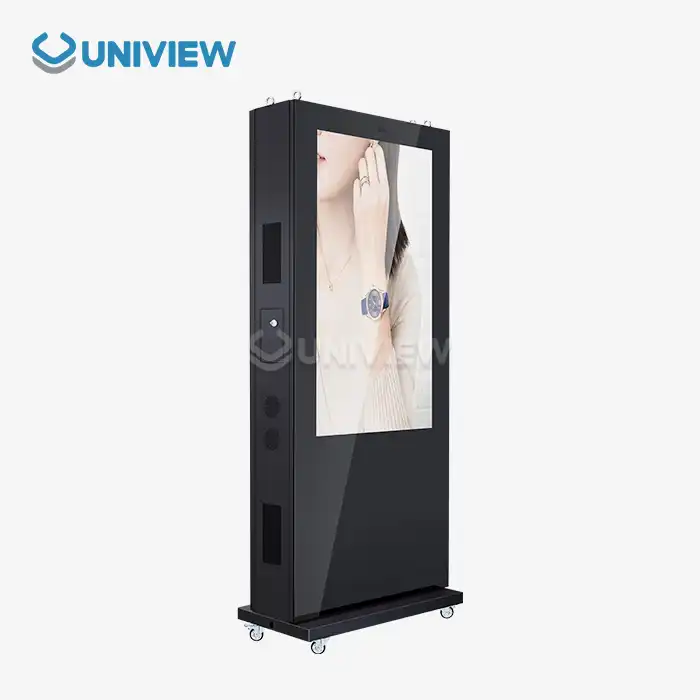
Our main F170P outdoor kiosk LED display shows how committed we are to making technology better. The high-brightness lamp bead design in this state-of-the-art system gives it great contrast and wide color range performance. The anti-glare features make it easy to see, even in strong sunlight, and the modular design makes maintenance more cost-effective.
Modern technology for getting rid of heat is built into the F170P so that it keeps working well in a wide range of circumstances. Our ability to simulate outdoor environments makes sure that our goods can handle the challenges of real life, and our compliance with international standards ensures quality and safety. Images are very clear thanks to high-brightness offline-coated AR glass that gives better clarity and less reflection.
Global Service Excellence and Customer Support
Our dedication to making customers happy goes beyond delivering products and includes a wide range of support services. We have a presence in more than 100 countries and regions around the world and offer online help 24 hours a day, 7 days a week to quickly meet our customers' needs. Our specialized technical team can make changes to your order, work with OEMs, and provide ongoing technical support.
Quality control is still the most important part of how we make things. By using high-quality materials and parts and testing and quality checks on a regular basis, we make sure that we strictly follow international standards. Our thorough pre-shipment checks make sure that every product meets our high standards before it is sent out.
Conclusion
High brightness kiosk LED screens are the next step in digital signage technology. They offer the best visibility, durability, and flexibility for a wide range of uses. These displays are great for both indoor and outdoor use because they are bright, can be put together in a flexible way, and are built to last. To get the best results, procurement professionals should carefully look at a supplier's skills, technical standards, and support services, as well as their needs for long-term maintenance and customization.
FAQ
What brightness level is appropriate for outdoor LED displays?
Outdoor LED displays typically require brightness levels between 2000 and 4000 nits to ensure visibility in direct sunlight. The specific requirements depend on geographical location, typical weather conditions, and ambient light exposure throughout the day.
How often do high brightness LED displays require maintenance?
Routine maintenance should be performed quarterly, including cleaning of protective surfaces and inspection of connection points. The modular design allows for individual component replacement as needed, reducing overall maintenance complexity and costs.
Are high brightness LEDs energy efficient in indoor environments?
Modern LED technology provides excellent energy efficiency even at high brightness levels. Indoor applications can utilize dimming capabilities to reduce power consumption while maintaining optimal visibility for user interaction and content display.
Partner with Uniview Commercial for Superior LED Display Solutions
Uniview Commercial stands ready to transform your digital signage requirements with our industry-leading kiosk LED display solutions. Our comprehensive expertise as a trusted kiosk-led supplier enables us to deliver customized systems that exceed performance expectations while providing exceptional value. Contact our experienced team at sales@univiewlcdisplay.com to discuss your specific requirements and discover how our advanced F170P displays and extensive product portfolio can enhance your business operations. Experience the difference that professional-grade LED technology and dedicated customer support can make for your next project.
References
1. "LED Display Technology Standards and Performance Metrics in Commercial Applications." International Display Society Technical Review, 2023.
2. "Comparative Analysis of Digital Signage Technologies for Outdoor Environments." Journal of Electronic Display Engineering, Vol. 15, 2023.
3. "Energy Efficiency and Environmental Impact of Modern LED Display Systems." Sustainable Technology Research Quarterly, 2023.
4. "Installation Best Practices for High Brightness Outdoor Digital Displays." Commercial Display Installation Guide, Industry Standards Council, 2023.
5. "Quality Assurance Protocols in LED Display Manufacturing." Manufacturing Excellence Review, 2023.
6. "Global Market Trends in Interactive Kiosk Display Technology." Digital Signage Market Analysis Report, 2023.

Learn about our latest products and discounts through SMS or email