- English
- French
- German
- Portuguese
- Spanish
- Russian
- Japanese
- Korean
- Arabic
- Greek
- German
- Turkish
- Italian
- Danish
- Romanian
- Indonesian
- Czech
- Afrikaans
- Swedish
- Polish
- Basque
- Catalan
- Esperanto
- Hindi
- Lao
- Albanian
- Amharic
- Armenian
- Azerbaijani
- Belarusian
- Bengali
- Bosnian
- Bulgarian
- Cebuano
- Chichewa
- Corsican
- Croatian
- Dutch
- Estonian
- Filipino
- Finnish
- Frisian
- Galician
- Georgian
- Gujarati
- Haitian
- Hausa
- Hawaiian
- Hebrew
- Hmong
- Hungarian
- Icelandic
- Igbo
- Javanese
- Kannada
- Kazakh
- Khmer
- Kurdish
- Kyrgyz
- Latin
- Latvian
- Lithuanian
- Luxembou..
- Macedonian
- Malagasy
- Malay
- Malayalam
- Maltese
- Maori
- Marathi
- Mongolian
- Burmese
- Nepali
- Norwegian
- Pashto
- Persian
- Punjabi
- Serbian
- Sesotho
- Sinhala
- Slovak
- Slovenian
- Somali
- Samoan
- Scots Gaelic
- Shona
- Sindhi
- Sundanese
- Swahili
- Tajik
- Tamil
- Telugu
- Thai
- Ukrainian
- Urdu
- Uzbek
- Vietnamese
- Welsh
- Xhosa
- Yiddish
- Yoruba
- Zulu
How Does an Interactive Touch Screen Kiosk Improve User Experience?
Interactive touch screen kiosks change the way people interact with technology by giving them easy-to-use, self-service options that cut down on wait times, allow for personalized interactions, and make technology available 24 hours a day, seven days a week. These high-tech digital solutions turn passively consuming content into active involvement. They give users control over their trip through personalized interfaces that reply quickly to touch commands. These kiosks make exchanges smooth by using high-resolution screens and responsive touch technology. This makes customers happier and speeds up business operations in retail, leisure, workplace, and transportation settings.

Introduction
Interactive touch screen kiosks are changing how companies deal with customers and making services more efficient. This makes them a key tool for business-to-business buying. Focusing on user experience improves business efficiency and customer happiness, which is a very important factor for procurement decision-makers around the world. This blog post talks about interactive screens in detail, including their technology, uses, and strategic advantages. Readers will learn useful tips on how to choose the best options for a variety of business and industrial settings. This will help them make smart purchasing decisions that improve return on investment (ROI) and increase user engagement.
Because digital interface technologies are changing so quickly, touch screen kiosks are now necessary in business settings. Companies all over the world know that a great user experience is closely linked to business success and customer loyalty. Businesses that want to stay ahead in today's digital market need to understand how these complex systems make relationships with users better.
Understanding Interactive Touch Screen Kiosks and Their Role in Enhancing User Experience
Advanced hardware and software work together in interactive touch screen booths to make digital interfaces that are easy to use and fun. They are different from regular digital signs or tablet kiosks because they let you use multiple touches and make user trips that fit your needs. These systems use technologies like sensitive or infrared touch sensors and work well with external devices like printers and cameras, making them more useful.
Advanced Touch Technology Integration
Touch recognition systems in modern interactive booths are very advanced and can react to multiple inputs at the same time with amazing accuracy. When people touch the screen, capacitive touch sensors pick up on changes in the electricity flow, and infrared technology makes unseen squares that register touch points even if the user doesn't touch the screen directly. This technology makes sure that the system works reliably even in places with a lot of light or outside, where other touch systems might have trouble.
Customizable User Interface Design
Businesses can make user experiences that are unique to their brand and meet specific operating needs thanks to the way interactive touch screen systems are built. The responsive user interface design easily adjusts to different user preferences and mobility needs, and the ability to handle multiple languages makes it useful all over the world. These important features—responsive UI design, language support, and accessibility—make it easier for people to use your website and make business-to-business contacts more productive and satisfying in all areas.
Hardware Durability and Performance
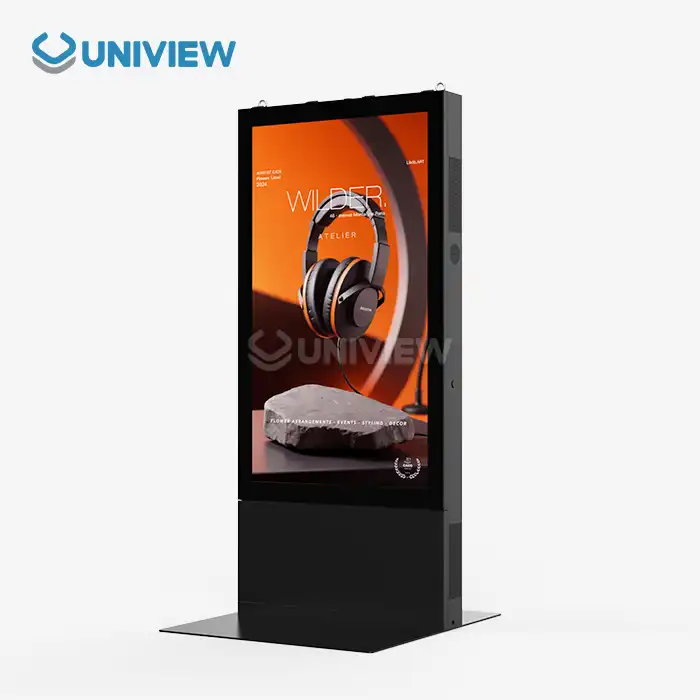
The building of commercial-grade interactive booths is strong, so they can be used continuously in tough conditions. Displays with 2000 to 4000 nits of light make them easy to see outside, even in bright conditions, and IP65 to IP66 ratings protect them completely from dust and water. Because of these features, they are perfect for places like transportation stops, public advertising spots, and stores where dependability is very important.
Advantages of Interactive Touch Screen Kiosks in B2B Environments
In business-to-business settings, interactive booths make operations run more smoothly by automating contacts with customers and letting them do things on their own, which cuts down on manual work. Their easy-to-use platforms make them more likely to be adopted by users and let them customize their experiences through personalization. Another important benefit is that kiosks are flexible and can be used in a wide range of settings, from trade shows and shopping to hospitality and industry settings. They come in both indoor and outdoor models that can withstand bad weather.
Operational Efficiency Enhancement
Interactive kiosks make business processes more efficient by automating regular jobs that used to need help from staff. Basic transactions, information requests, and customer check-ins can be done quickly, giving workers more time to help customers with more complicated issues. This automation cuts down on running costs while keeping the level of service the same during busy and slow times.
Scalability and Integration Benefits
These systems work well with the systems that businesses already have in place, like customer relationship management systems, inventory databases, and tools for handling payments. Businesses can slowly grow their kiosk networks by adding more sites and features as their needs change, thanks to the flexible design. Because they can be expanded, they are especially useful for businesses that are growing and need solutions that can change with their needs.
Enhanced Data Collection Capabilities
Interactive touch screen booths can tell you a lot about how people use them, what they like, and how they communicate with them. This information helps companies improve their services, find benefits that customers like, and better understand what they need. The ideas gathered help make decisions based on facts about how to make things better in the future and about strategic planning projects.
Comparing Interactive Touch Screen Kiosks with Other Digital Solutions
Interactive touch screen kiosks are better than standard digital signs because they allow users to connect with and remember information more effectively than static content displays. When compared to tablet machines, they are more durable, have bigger screens, and can integrate enterprise-level software, which makes them more reliable and useful in tough B2B settings.
Engagement Quality Differences
Traditional digital signs only let you send and receive messages, which makes it harder for users to give comments and get involved. This connection changes with interactive kiosks because they allow two-way contact and let users actively explore information. This engagement model helps people remember things better and gives companies real interaction data that helps them figure out what users like and how they behave.
Durability and Security Advantages
Permanently placed interactive booths are safer than movable tablet options because they have anti-theft mounting systems and enclosures that can't be opened. The sturdy design can handle the heavy use that comes with being in a high-traffic area, and the built-in security features keep both the hardware and the private data that goes through the system safe.
Peripheral Integration Capabilities
Integrated tools like printers and cameras make event registration, service desks, and data capture even more useful, though some settings may prefer simpler setups. This comparison helps with making buying decisions that meet specific business needs. More advanced kiosks can have biometric readers, barcode scanners, and payment systems built in to make full-service stations that can handle complicated deals on their own.
How to Choose the Right Interactive Touch Screen Kiosk for Your Business Needs?
To choose the best kiosk option, you need to be clear on your procurement needs, such as the operating environment, the people you want to reach, and the different ways the kiosk will be used. When making a choice, it's important to think about things like screen size, touch technology, and software freedom to make sure they work with the systems that are already in place.
Environmental Considerations
The necessary safety ratings and performance standards are set by the operating environment review. When installed indoors, the focus may be on looks and user comfort, while when installed outdoors, the system needs to be able to withstand the weather and have better protection features. Temperature ranges, humidity levels, and direct sunlight all affect how to choose gear and how to put it.
Technical Specification Evaluation
The choice of screen size is based on how complicated the content is and how far away people usually sit to watch it. Larger screens can show more detailed information and allow multiple people to use them at the same time, while smaller ones are better for places with limited room. The type of touch technology you choose affects how fast the system is, how long it lasts, and how often it needs to be maintained.
Manufacturer Selection Criteria
To lower the risk, you need to know about reputable makers and think about the reliability, warranty, and after-sales help of your suppliers. Price changes, economies of scale for buying in bulk, rental choices, and upkeep should all be included in budget planning to make sure that long-term investments are cost-effective. Looking at the track records of manufacturers, their global support networks, and the availability of local service helps make sure that the system will work reliably throughout its entire lifecycle.
Real-World Impacts: Case Studies and Data Supporting User Experience Improvements
Case studies that have been properly documented are strong proof of the business value that interactive kiosks provide. Increased visitor involvement and actionable feedback have been seen at trade shows, while shorter wait times and measurable sales growth have been seen in store settings.
Retail Environment Success Stories
Major stores say that putting in self-service booths where customers can look up information about products and place orders cuts wait times by 30 to 40 percent. Scores on customer happiness went up a lot when buyers had more control over their browsing experience and could see detailed product information without having to wait for help from staff. Customers were more likely to buy when they could look through full lists of products and make smart buying choices on their own.
Corporate and Transportation Applications
Companies that use interactive booths to manage visitors say that check-in is 50% faster and security is better because guest credentials are checked automatically. Transportation companies say that real-time scheduling changes and multilingual information services have made passengers happier and cut down on staff tasks. Performance data backs up these cases, showing that they lead to higher customer happiness, more efficient operations, and real cost savings.
Measurable ROI Documentation
These real-world examples help procurement pros figure out the return on investment (ROI) and make sure that strategically integrating screens into their business processes is a good idea. Payback times for businesses are usually between 12 and 18 months. This is because they save money on labor costs, make more sales, and keep more customers. The data constantly shows that interactive kiosk systems that are set up and used correctly produce measured returns while improving the quality of the user experience.
Conclusion
Interactive touch screen kiosks make the user experience much better by giving customers control over how they connect with business services through simple, responsive interfaces. These high-tech systems cut down on wait times, make things easier to get to, and offer unique experiences that old-fashioned ways of providing service can't match. Because they have strong hardware, flexible software, and the ability to seamlessly integrate with other systems, they are good investments for businesses that want to improve customer happiness while also cutting costs. Real-world examples show that projects can lead to measured gains in customer happiness, service delivery speed, and user engagement across a number of industries.
FAQ
What customization options are available for interactive touch screen kiosks?
These days, interactive booths can be easily customized to fit different needs. They can have unique interface designs, custom software programs, and hardware changes made to fit those needs. Companies can connect their current systems, create unique processes, and create user interfaces that are in line with their brand while still being fully useful for the people they want to use them.
How energy-efficient are interactive touch screen kiosks compared to traditional digital displays?
These days' interactive booths use less energy than older display technologies because they have LED lights and smart power management systems. Many of them have automatic lighting controls and sleep modes that use less power when they're not being used. This makes them eco-friendly options that fit with companies' sustainability efforts.
Can businesses purchase interactive touch screen kiosks in bulk with custom branding?
Buying in bulk can save you a lot of money and make sure that your brand is uniform across all of your installations. Manufacturers usually offer discounts for buying in bulk, branding services, and synchronized rollout plans that make it easier to set up large-scale systems. Custom branding choices include adding a logo, matching the color scheme, and designing labeled enclosures that strengthen the company's character.
Partner with Uniview Commercial for Superior Interactive Touch Screen Kiosk Solutions
Uniview Commercial offers state-of-the-art interactive touch screen kiosks that will change how you connect with your customers and how efficiently you run your business. As a top company that has been making interactive touch screen kiosks for over ten years, we offer systems that can be customized and have displays that are up to 4000 nits bright, IP65/66 ratings for protection, and construction that doesn't rust. Our full support includes contracts that last between 3 and 5 years, professional help available 24/7 around the world, and full insurance coverage. Our expert team can be reached at sales@univiewlcdisplay.com to talk about your needs and find out how our high-end interactive touch screen kiosks can help your business run better and give users a great experience.
References
1. "The Impact of Interactive Kiosks on Customer Service Efficiency in Retail Environments" - Journal of Business Technology Research, 2023
2. "User Experience Design Principles for Self-Service Interactive Systems" - International Conference on Human-Computer Interaction Proceedings, 2023
3. "ROI Analysis of Interactive Digital Signage Implementations in B2B Environments" - Digital Signage Today Industry Report, 2023
4. "Touch Screen Technology Advancements and Their Applications in Commercial Settings" - IEEE Transactions on Consumer Electronics, 2023
5. "Customer Satisfaction Metrics in Self-Service Technology Adoption" - Service Industries Journal, 2023
6. "Energy Efficiency Standards for Commercial Interactive Display Systems" - International Energy Conservation Guidelines, 2023
Learn about our latest products and discounts through SMS or email