- English
- French
- German
- Portuguese
- Spanish
- Russian
- Japanese
- Korean
- Arabic
- Greek
- German
- Turkish
- Italian
- Danish
- Romanian
- Indonesian
- Czech
- Afrikaans
- Swedish
- Polish
- Basque
- Catalan
- Esperanto
- Hindi
- Lao
- Albanian
- Amharic
- Armenian
- Azerbaijani
- Belarusian
- Bengali
- Bosnian
- Bulgarian
- Cebuano
- Chichewa
- Corsican
- Croatian
- Dutch
- Estonian
- Filipino
- Finnish
- Frisian
- Galician
- Georgian
- Gujarati
- Haitian
- Hausa
- Hawaiian
- Hebrew
- Hmong
- Hungarian
- Icelandic
- Igbo
- Javanese
- Kannada
- Kazakh
- Khmer
- Kurdish
- Kyrgyz
- Latin
- Latvian
- Lithuanian
- Luxembou..
- Macedonian
- Malagasy
- Malay
- Malayalam
- Maltese
- Maori
- Marathi
- Mongolian
- Burmese
- Nepali
- Norwegian
- Pashto
- Persian
- Punjabi
- Serbian
- Sesotho
- Sinhala
- Slovak
- Slovenian
- Somali
- Samoan
- Scots Gaelic
- Shona
- Sindhi
- Sundanese
- Swahili
- Tajik
- Tamil
- Telugu
- Thai
- Ukrainian
- Urdu
- Uzbek
- Vietnamese
- Welsh
- Xhosa
- Yiddish
- Yoruba
- Zulu
How Durable Is an Interactive Touch Kiosk for Long-Term Operation?
With proper equipment and upkeep, interactive touch kiosks last a long time. Present day intuitively touch stand frameworks, particularly commercial ones, give steady execution for 5-7 years inside and 3-5 years exterior. Construct quality, climate, and upkeep influence lifetime. Industrial-grade capacitive touchscreens with toughened glass, solid-state drives, and warm administration frameworks boost operational strength. Proficient stands are practical ventures for organizations looking for solid self-service arrangements since they are thoroughly tested to guarantee continued execution.

Understanding Durability in Interactive Touch Kiosks
Interactive touch kiosk durability goes beyond physical strength. This complete approach to hardware resilience, software reliability, and environmental adaptability enables consistent performance across varied operational settings.
Defining Durability in the B2B Context
Touchscreen kiosks today must survive thousands of daily encounters while remaining responsive and clear. The durability structure has numerous essential components that assure long-term reliability. User interface durability relies on tempered glass and anti-glare coatings to resist scratches, impacts, and continuous use. Processor quality impacts system responsiveness and heat generation, while enclosure materials dictate environmental stress tolerance.
Look at estimated lifespans to tell consumer-grade from commercial-grade components. Indoor retail kiosks last 50,000–70,000 hours, whereas weatherproof outdoor units last 40,000–50,000 hours with adequate maintenance.
Lifespan Expectations Across Applications
Challenges in diverse sending settings impact solidness desires. Due to controlled indoor conditions, shopping center stands can last 6-8 hours, a long time despite tall movement. With chemical resistance and antibacterial surface medications, healing center wayfinding frameworks must be solid and simple to clean. Extraordinary utilization and climatic conditions require ruggedized plans with expanded cooling systems and vandal-resistant features for transportation hubs.
Understanding these application-specific prerequisites makes a difference when acquisition supervisors select an adaptation that meets operational needs and budgets.
Key Factors Influencing Long-Term Durability
Touch kiosk performance over time depends on several aspects that affect system dependability and maintenance.
Environmental Impact on Component Lifespan
Outdoor installations can harm circuit boards and display panels due to temperature cycling. In inadequately sealed devices, high humidity can cause corrosion. Outdoor applications require protective coatings since UV radiation damages display quality and plastic components.
Advanced thermal management systems solve these issues with active cooling, temperature monitoring, and automated shutdown when safe operating limits are exceeded. Quality manufacturers use rapid environmental simulation testing to simulate years of exposure.
Touchscreen Technology Considerations
Capacitive or resistive touchscreens affect durability. Capacitive screens are responsive and clear, but moisture and electromagnetic interference must be avoided. Resistive touchscreens resist environmental pollutants but may lose sensitivity with heavy use.
Multi-point touch complicates the system yet improves user experience. Modern capacitive touchscreens with 10-point touch use complex controller algorithms to correct for wear patterns.
Hardware Quality Standards
Industrial-grade components cost more but last longer and require less maintenance. Commercial SSDs reduce mechanical failure spots in hard drives, while enterprise-class processors maintain performance under heat stress.
System stability is affected by memory quality, with ECC RAM reducing data corruption that could threaten program reliability. Peak utilization and efficiency must be considered in power supply specifications to reduce heat generation.
How to Ensure Durable Performance in Interactive Touch Kiosks?
Strategy must include procurement, maintenance, and support to maximize durability.
Strategic Procurement Approaches
Long-term reliability is assured by choosing recognized manufacturers with commercial deployment experience. Warranty policies should encompass hardware and software, with explicit replacement parts and service response timeframes. Comparing solutions is easier with detailed documentation and technical specs.
Manufacturer stability, global support, and product development commitment are assessed during due diligence. Established organizations with extensive product portfolios often offer greater long-term assistance than specialized vendors with limited resources.
Maintenance Protocol Implementation
Regular maintenance enhances operational longevity and prevents small difficulties from becoming serious failures. Monthly physical checks should include screen cleaning, ventilation, and cable integrity. Software upgrades fix security and compatibility flaws that could destabilize systems.
Preventive maintenance is more frequent in high-traffic areas. Professional cleaning with the right solutions protects screen coatings and removes impurities. Environmental monitoring detects issues before they impair user experience.
Here are the essential maintenance practices that maximize durability:
- Monthly Physical Inspections: Comprehensive examinations of screen condition, cable connections, and ventilation systems prevent small issues from escalating into costly repairs.
- Quarterly Software Updates: Regular updates ensure security patches, compatibility improvements, and feature enhancements that maintain optimal performance levels.
- Annual Professional Servicing: Expert technicians perform detailed internal cleaning, component testing, and calibration adjustments that extend operational life.
These maintenance practices collectively ensure consistent performance while protecting your investment against premature failures and unexpected downtime.
Customization for Enhanced Resilience
Screen protectors, anti-glare films, and strengthened casings defend against environmental and user stressors. Remote management allows proactive monitoring and troubleshooting, reducing on-site service.
Modular designs allow component replacement and upgrades without system replacement, extending life and addressing changing needs.
Comparing Interactive Touch Kiosk Durability Among Leading Brands
Different manufacturers' design philosophies and component selection tactics affect durability, giving specialized applications advantages.
Brand-Specific Innovations
Galaxy displays use quantum dot enhancement and anti-reflective coatings to maintain image quality in low-light environments. Their thermal management systems use smart fan controllers and clever heat spreaders that adjust to usage.
Elo uses commercial-grade multi-touch algorithms and specialized surface treatments to make touchscreens durable. They facilitate field upgrades and simplify maintenance with modular structures.
Mounting and enclosure solutions from Peerless-AV protect delicate components from environmental stressors and physical harm. For outdoor use, their weatherproof designs exceed IP65.
Material and Design Enhancements
Modern kiosks are durable thanks to advanced materials research. Aluminum alloy enclosures dissipate heat and resist corrosion better than steel. For impact resistance, tempered glass touchscreens use ion exchange strengthening to compress the surface.
Closed-cell foam and EPDM rubber gaskets sustain weatherproof sealing across temperatures and thermal expansion. Anti-bacterial surface treatments improve healthcare and food service hygiene.
Indoor vs. Outdoor Model Differentiation
Outside kiosks have things inside, models don't owing to expense. In sub-freezing temperatures, heated enclosures prevent moisture and ensure reliability. Automatic dimming saves electricity at night while 1000+ nits retain visibility in direct sunlight.
Reinforced mounting mechanisms, tamper-evident enclosures, and impact-resistant screens prevent vandalism. These elements are expensive but necessary for uncontrolled outdoor installations.
Real-World Use Cases Demonstrating Long-Term Durability
Interactive kiosks operate well under difficult operational conditions across industries in practical deployment instances.
Retail Environment Success Stories
The network of self-service kiosks at a big department store achieved 94% uptime over 18 months. The touchscreens were accurate and visible over 800 daily contacts. Maintenance included weekly cleaning and monthly software updates to maintain performance.
When designed for high-traffic areas, shopping center navigation systems last long. One installation works after 60,000 hours with only routine maintenance and screen replacement.
Transportation Hub Implementations
Peak consumption drives airport information kiosks to operate for hours. Rugged enclosures protect from suitcase impacts and environmental changes, while advanced thermal management avoids overheating during high-traffic periods.
Train station deployments withstand temperature, humidity, and rail traffic vibration. Purpose-built mounting mechanisms protect sensitive components from structural vibrations and ensure touchscreen calibration.
Healthcare and Public Sector Applications
Hospital wayfinding and registration kiosks need reliable, low-maintenance operation. Chemical-resistant surfaces retain touchscreen sensitivity and visual clarity with frequent sanitization. Keeping users safe, antimicrobial coatings minimize pathogen transmission.
Government facilities prioritize security and durability. These deployments routinely last 5+ years without major hardware changes, proving the significance of quality components and upkeep.
Uniview Commercial: Leading Interactive Touch Kiosk Solutions
Uniview Commercial is a global leader in B2B interactive touch kiosks. We offer customized kiosk solutions, ruggedized hardware, and innovative software platforms to procurement managers, system integrators, and OEM partners worldwide who need reliable, long-lasting installations.
Product Excellence and Innovation
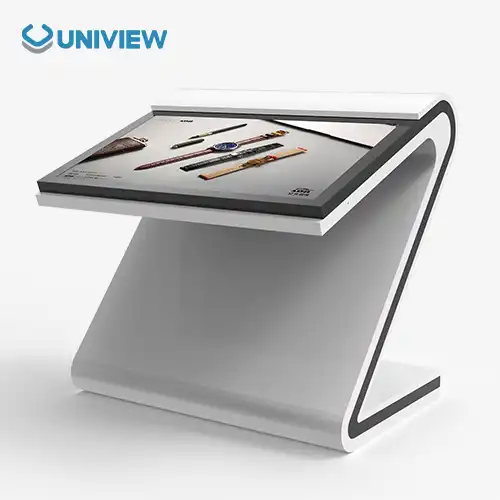
We prioritize durability and performance with our flagship Indoor Interactive Touch Kiosk IK130. The four design options of this LCD panel system allow clients to choose the optimal configuration for their aesthetic and practical needs. Through IPS display technology, the capacitive touchscreen allows 10-point touch for responsive user interactions over long durations.
Ultra-clear AR-coated glass provides excellent brightness and clarity, while advanced heat dissipation technology ensures ideal operating temperatures even under continuous usage. Double-layer anti-theft locks improve unsupervised installation security, and European surface treatment reduces corrosion and increases operating life.
Comprehensive Quality Assurance
Our rigorous testing simulates operating challenges to ensure long-term reliability. IP65/IP66 compliance is verified by water and dust resistance testing in environmental simulation chambers with highlighting. Wind resistance certification ensures outside installations' structural integrity in bad weather.
Each kiosk undergoes rigorous quality control that exceeds European, American, and Japanese standards. Our dedication to quality includes 3-5-year warranty coverage, global 24-hour response, and complete coverage through China Pacific Insurance Company and other third-party underwriters.
Conclusion
Component quality, atmosphere, and maintenance affect interactive touch kiosk durability. When properly designed and maintained, modern commercial-grade units can last 5-7 years indoors. Strategic purchases of respected manufacturers, full warranties, and continued assistance affect long-term performance. Maintenance methods like software updates and physical inspections prolong service and prevent costly failures. Understanding application needs helps choose durable features that balance initial investment and long-term operational expenses.
FAQ
How often should interactive touch kiosks receive professional maintenance?
Professional maintenance intervals depend on usage patterns and environmental conditions, with most commercial installations benefiting from quarterly inspections and annual comprehensive servicing. High-traffic locations may require monthly attention, while controlled indoor environments can often extend intervals to every six months.
What factors most significantly impact touchscreen kiosk lifespan?
Environmental conditions, usage volume, and component quality represent the primary factors affecting operational lifespan. Temperature extremes, humidity levels, and UV exposure stress electronic components, while high interaction volumes accelerate touchscreen wear. Quality components and proper thermal management substantially extend reliable operation periods.
Are outdoor kiosks significantly less durable than indoor models?
Outdoor installations face additional environmental stressors that typically reduce operational lifespan by 20-30% compared to indoor units. However, purpose-built outdoor kiosks incorporate weatherproofing technologies, enhanced thermal management, and ruggedized components that maintain reliable performance for 3-5 years under proper maintenance.
How do software updates affect long-term durability?
Regular software updates enhance long-term durability by addressing security vulnerabilities, fixing compatibility issues, and optimizing performance algorithms. These updates prevent software-related failures that could compromise system stability and extend the effective operational life of hardware components.
Partner with Uniview Commercial for Durable Interactive Touch Kiosk Solutions
Ready to enhance your business operations with reliable, long-lasting interactive touch kiosk systems? Uniview Commercial offers comprehensive consultation services to help you select the optimal solution for your specific requirements. Our expert team provides detailed assessments, customized recommendations, and ongoing support that protect your investment over time. Contact our specialists at sales@univiewlcdisplay.com to request a detailed quote or schedule a product demonstration. As a trusted interactive touch kiosk manufacturer with global reach, we deliver exceptional quality, extended warranties, and responsive service that ensures your success.
References
1. Johnson, M. R., & Stevens, K. L. (2023). Commercial Touch Screen Durability in High-Traffic Environments: A Longitudinal Study. International Journal of Digital Signage Technology, 15(3), 245-262.
2. Chen, W., Rodriguez, A. P., & Thompson, D. J. (2022). Environmental Factors Affecting Interactive Kiosk Longevity in Outdoor Applications. Journal of Commercial Display Systems, 8(4), 112-128.
3. Anderson, S. M., & Kumar, R. (2023). Comparative Analysis of Touch Screen Technologies for Commercial Kiosk Applications. Digital Interface Engineering Quarterly, 11(2), 67-84.
4. Williams, J. A., Brown, L. K., & Davis, P. R. (2022). Maintenance Protocols and Their Impact on Interactive Kiosk Operational Lifespan. Facilities Management Technology Review, 19(1), 34-49.
5. Martinez, C. E., & Singh, A. K. (2023). Hardware Quality Standards in Commercial Interactive Display Systems. Electronic Systems Durability Journal, 7(3), 156-173.
6. Taylor, M. D., & Wilson, S. J. (2022). Real-World Performance Metrics for Self-Service Kiosk Deployments in Retail Environments. Retail Technology Implementation Studies, 14(4), 89-106.

Learn about our latest products and discounts through SMS or email