- English
- French
- German
- Portuguese
- Spanish
- Russian
- Japanese
- Korean
- Arabic
- Greek
- German
- Turkish
- Italian
- Danish
- Romanian
- Indonesian
- Czech
- Afrikaans
- Swedish
- Polish
- Basque
- Catalan
- Esperanto
- Hindi
- Lao
- Albanian
- Amharic
- Armenian
- Azerbaijani
- Belarusian
- Bengali
- Bosnian
- Bulgarian
- Cebuano
- Chichewa
- Corsican
- Croatian
- Dutch
- Estonian
- Filipino
- Finnish
- Frisian
- Galician
- Georgian
- Gujarati
- Haitian
- Hausa
- Hawaiian
- Hebrew
- Hmong
- Hungarian
- Icelandic
- Igbo
- Javanese
- Kannada
- Kazakh
- Khmer
- Kurdish
- Kyrgyz
- Latin
- Latvian
- Lithuanian
- Luxembou..
- Macedonian
- Malagasy
- Malay
- Malayalam
- Maltese
- Maori
- Marathi
- Mongolian
- Burmese
- Nepali
- Norwegian
- Pashto
- Persian
- Punjabi
- Serbian
- Sesotho
- Sinhala
- Slovak
- Slovenian
- Somali
- Samoan
- Scots Gaelic
- Shona
- Sindhi
- Sundanese
- Swahili
- Tajik
- Tamil
- Telugu
- Thai
- Ukrainian
- Urdu
- Uzbek
- Vietnamese
- Welsh
- Xhosa
- Yiddish
- Yoruba
- Zulu
What Features Should You Look for in Indoor Digital Wall Displays?
For ideal indoor digital wall displays for your business, prioritize display quality, software compatibility, hardware longevity, and interactive features. HD screens (4K or higher), powerful content management systems, energy-efficient components, and touchscreen capabilities are key. These displays give dynamic content that engages viewers while retaining operational efficiency and cost-effectiveness for long-term business success in retail, corporate, and hospitality sectors.

Introduction
Indoor digital wall displays have transformed B2B communication in offices, retail, corporate, and hospitality settings. The shift from static signage to dynamic digital solutions shows businesses' rising demand for adaptable, engaging communication platforms that grab attention and achieve outcomes.
Modern businesses understand that choosing the right features affects their investment's performance and compatibility. Strategic purchasing decisions need rigorous study of technological specs, display quality, software integration, and hardware reliability. These considerations help procurement professionals make strategic decisions that support their organisation.
This thorough book covers digital signage procurement basics, including key technologies, display specs, software platforms, and optimization methodologies. Each part offers practical advice to help B2B buyers navigate the complex digital display solution landscape and maximize ROI.
Understanding Indoor Digital Wall Displays: Core Features and Technology
Defining Digital Display Technology
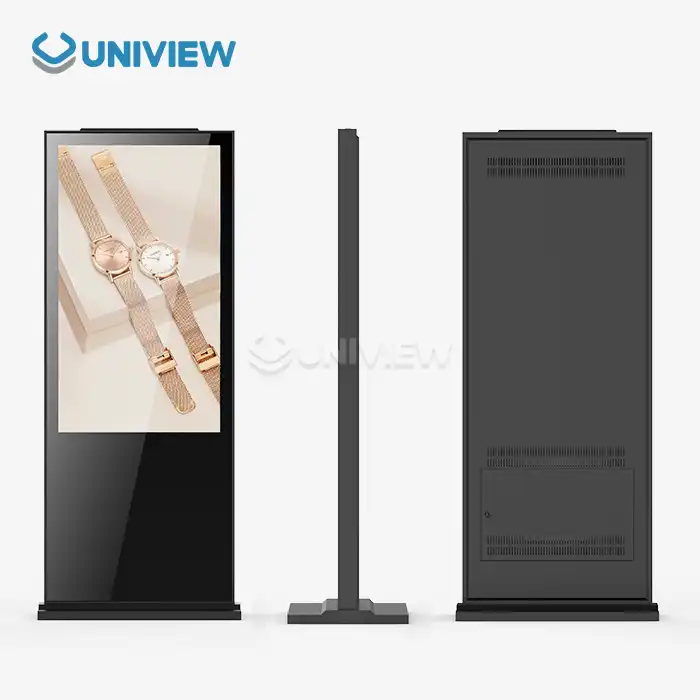
Indoor digital wall displays are advanced visual communication devices for regulated interior spaces. These displays prioritize visual clarity, energy efficiency, and infrastructure integration over extreme weather resistance. They perform well in commercial facilities with steady temperatures and ambient illumination.
Screen Technology Variations
Technology has three main display kinds, each with advantages for diverse purposes. LCD technology is ideal for long office hours due to its energy efficiency and color reproduction. LED displays excel in brightness and contrast, making them excellent for big arenas with varied lighting. OLED technology has outstanding color accuracy and ultra-thin profiles, but it's expensive.
Since 4K monitors are the standard for professional applications, resolution affects content delivery. For corporate and retail presentations and product demonstrations, higher pixel densities offer sharp text readability and detailed image reproduction.
Software Platform Integration
Content management systems power digital signage networks, allowing centralized control over several displays in diverse locations. Modern cloud-based solutions let administrators edit information remotely and arrange programming for commercial needs. Security measures prevent unauthorized access and comply with the company's data protection standards.
As companies focus on sustainability and cost control, energy usage has become more important. Advanced displays use power-saving technologies to alter brightness based on ambient circumstances and content, decreasing operational costs and optimizing viewing.
Essential Features to Consider When Choosing Indoor Digital Wall Displays
Display Quality Specifications
Resolution standards affect content clarity and audience engagement across viewing distances. In locations where viewers review complex information or product specs, professional apps require a minimum 4K resolution for text readability and image crispness. Screen sizes vary by venue and viewing distance, with larger displays for retail spaces and smaller ones for conference rooms and reception areas.
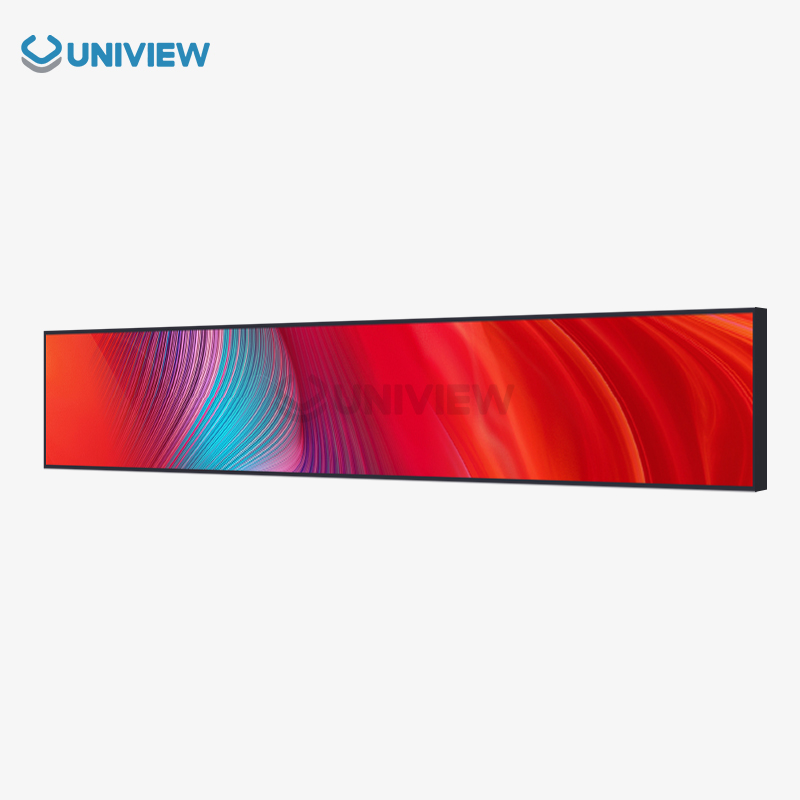
Formatting and presentation flexibility depend on aspect ratio compatibility. Standard 16:9 ratios fit most video programming, but bespoke ratios allow installations that match architectural features or branding. Color accuracy criteria ensure brand representation across many displays, ensuring corporate visual cohesion.
Software Capabilities Assessment
Remote content management lets administrators update communications instantaneously and maintain consistent communication strategies across distributed locations. Based on established parameters, scheduling automatically switches between advertising materials, informational displays, and emergency notifications for time-sensitive content delivery.
Security protocols prevent unauthorized content changes to important corporate data. Advanced platforms use user identification, encrypted data transmission, and audit trails to track content modifications and access. Compatibility with existing IT infrastructure allows smooth integration without system upgrades or hardware purchases.
Hardware Component Evaluation
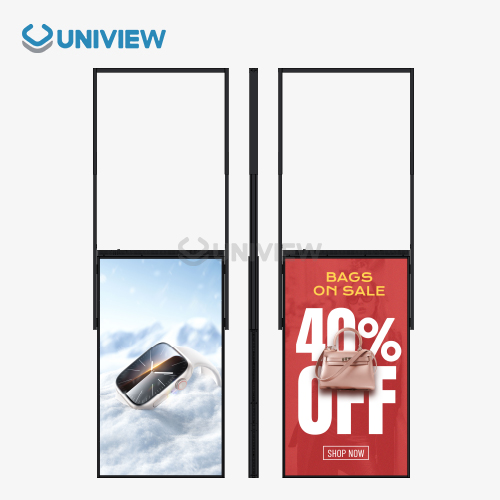
Built-in media players reduce installation complexity and failure points by eliminating external devices. Businesses with several display sites benefit from integrated systems' reliability and ease of maintenance. Mounting options include wall-mounted and ceiling-suspended arrays to maximize space.
Energy efficiency ratings affect long-term expenses and environmental compliance. Modern screens use clever power management to tailor consumption to content and environmental circumstances. With continuous-operation industrial-grade components, durability criteria enable reliable operation in demanding business situations.
Interactive Technology Options
Touchscreens turn passive displays into active communication platforms. Multi-touch interfaces provide collaborative applications in meeting rooms and training facilities, whereas single-touch interfaces serve retail and hotel customer service and wayfinding. Interactive installations depend on response accuracy and speed, which affect user experience.
Touchless interaction with gesture recognition technology is ideal for hygiene-conscious and high-traffic areas. These sophisticated characteristics enable creative applications while decreasing the physical contact and maintenance demands of classic touch interfaces.
Comparing Indoor Digital Wall Displays: Making an Informed Decision
Technology Comparison Framework
Dynamic information and real-time updates make digital displays superior to static signs. Digital solutions are ideal for firms with shifting promotional needs or time-sensitive communications since they can change messaging quickly without physical replacement. Investment research shows that digital displays reach cost parity with traditional signage within two to three years after printing, installation, and replacement.
Application-specific LED screen alternatives offer varied benefits. LCDs are more energy efficient and accurate in regulated interior situations than LED displays, which are brighter and more visible outdoors. Understanding these differences helps purchasers choose technology for venue and operational needs.
Supplier Selection Criteria
Company reputation and experience greatly affect product reliability and support. Established providers usually provide detailed technical documentation, warranty coverage, and deployment track records. Certification ensures items satisfy commercial installation safety and performance standards, reducing liability and assuring regulatory compliance.
Customer feedback analysis illuminates real-world performance and service. Case studies and industry references show supplier capabilities across applications and contexts. These evaluations assist buyers in finding partners who can deploy and support successfully.
Procurement Strategy Considerations
Cost and operational flexibility vary greatly amongst purchasing approaches. Rental solutions offer reduced initial investments and simplified budgeting for temporary or pilot installations, while direct purchase offers ownership and long-term cost savings. For major projects, financing options allow fast deployment while spreading expenses over time, improving cash flow management.
Mass ordering offers volume discounts and standardized configurations that simplify maintenance and support. Lead time affects project scheduling, especially for specialized setups or big installations needing construction coordination. Understanding these elements improves project planning and budgeting.
Optimizing Indoor Digital Wall Displays for Your Business Needs
Application-Specific Implementation
Displays with product information, promotions, and interactive consumer experiences help retail locations. Strategic placement near high-traffic areas maximizes visibility, while inventory system connectivity allows real-time product availability updates. Marketing teams can use custom content production tools to create compelling presentations that boost brand awareness and sales.
Company applications focus on internal communication, visitor information, and meeting room scheduling. Integration with existing communication platforms ensures a uniform message across many locations. Emergency notification ensures staff receive vital information immediately.
Hospitality establishments use displays for guest services, event info, and wayfinding. Multi-language support accommodates varied guests, while property management system integration delivers real-time service and amenity changes. Interfaces improve client experiences and reduce staff strain for regular questions.
Energy Management Strategies
Modern screens use clever power management to save energy without sacrificing performance. Automatic brightness adjustment adjusts to ambient lighting, decreasing power consumption off-peak and improving visibility during business hours. Scheduling functions allow system shutdown during closed periods, conserving energy and extending component life.
Environmental monitoring tracks energy usage and provides facilities management teams with precise consumption reports. Optimization techniques that cut operational expenses and improve company sustainability are possible with these insights. Integrating advanced technology with building management platforms provides energy oversight.
Maintenance and Support Planning
Cleaning, software upgrades, and component inspections during preventive maintenance optimize performance and equipment lifespan. Remote monitoring enables proactive problem detection and resolution before operations are affected. Service level agreements set response times and support coverage, reducing downtime and maintenance costs.
Internal staff training reduces external help and speeds up responding to small concerns. Facility teams can autonomously do routine maintenance and basic troubleshooting with documentation and guidance.
Scalability and Customization Solutions
Modular system designs allow future expansion without infrastructure replacement. Standard interfaces allow easy integration of additional displays while maintaining network-wide operational procedures. Custom software development meets company needs that traditional platforms cannot.
OEM partnerships provide private labeling and specialized hardware configurations to meet brand or technical requirements. Organizations with continuing deployment plans benefit from these arrangements' competitive advantages and supply chain reliability.
Introducing Uniview Commercial: Your Trusted Digital Signage Partner
Uniview Commercial is a leading global maker of high-end LCD and LED digital signage for B2B applications. Our Shenzhen, China-based company is known for its high-quality products and extensive customisation services for retail, corporate, hospitality, and transportation industries.
Our wide product offering includes cutting-edge digital wall screens with innovative technological components for superior performance and dependability. Each display uses offline coated AR glass technology for ultra-clear images at 2000–4000 nits. These criteria optimize visibility in diverse interior lighting settings while conserving energy with advanced power management systems.
Every component of our manufacturing process is technically perfect, and our goods fulfill strict European, American, and Japanese certification criteria. At 60 dB, our screens are quiet enough for business offices and hospitality settings. Advanced heat dissipation systems assure long-term reliability, while environmental simulation testing verifies performance under various operational situations.
Customization allows tailored solutions to meet client and technical needs. Our engineers work directly with clients to create custom configurations that integrate with existing infrastructure and improve functionality. This ensures optimal performance alignment with industry and application-specific operational needs.
Our presence in over 100 countries and regions shows our dedication to international market service and support. Comprehensive warranty coverage of 3–5 years and 24-hour online response support give clients confidence in their investment and reduce operational risks. Quality coverage from China Pacific Insurance Company and other third-party underwriters strengthens our product reliability and customer satisfaction.
Conclusion
Selection of indoor digital wall displays needs careful consideration of display quality, software capabilities, hardware requirements, and vendor support services. Understanding these characteristics allows informed purchase decisions that meet corporate goals and maximize ROI. The continually changing technology landscape makes partner selection and support crucial for long-term success. Digital communication deployments that improve operational efficiency and customer engagement are possible for companies that prioritize thorough evaluation and partner with skilled providers.
FAQ
How long do indoor digital wall displays typically last?
Professional-grade indoor digital displays generally operate reliably for 50,000 to 100,000 hours of continuous use, translating to approximately 8 to 15 years under normal business operating conditions. Lifespan varies based on usage intensity, environmental conditions, and maintenance quality. Premium manufacturers like Uniview Commercial provide extended warranties spanning 3 to 5 years, reflecting confidence in their products' durability and performance consistency.
Can digital displays integrate with existing IT infrastructure?
Modern digital signage systems offer extensive compatibility with existing network infrastructure through standard protocols, including Ethernet, Wi-Fi, and cloud-based management platforms. Most professional displays support common operating systems and can integrate with existing content management systems, security protocols, and user authentication frameworks. Technical consultation during the planning phase ensures seamless integration without disrupting current operations.
Should businesses rent or purchase digital displays?
Purchase decisions depend on deployment duration, budget allocation, and operational requirements. Direct purchase provides long-term cost advantages for permanent installations, while rental options suit temporary events or pilot programs. Financing alternatives offer middle-ground solutions that enable immediate deployment while spreading costs over manageable periods. Consider the total cost of ownership, including maintenance, support, and content creation expenses, when evaluating options.
Transform Your Business Communication with Uniview Commercial
Ready to elevate your business communication strategy with premium indoor digital wall displays? Uniview Commercial delivers cutting-edge LCD and LED solutions backed by industry-leading technology and comprehensive support services. Our experienced team provides personalized consultations to identify optimal configurations for your specific requirements, whether you need single displays or large-scale installations. Contact our specialists at sales@univiewlcdisplay.com to explore our extensive product catalog and schedule demonstrations that showcase how our indoor digital wall displays can transform your business environment. As a trusted indoor digital wall displays manufacturer, we're committed to delivering exceptional value and reliable performance that exceeds expectations.
References
1. Johnson, M. Digital Signage Technology Trends and Market Analysis. Commercial Display Industry Report, 2023.
2. Chen, L. Energy Efficiency Standards for Commercial Display Systems. International Electronics Manufacturing Journal, Vol. 45, 2023.
3. Rodriguez, A. Interactive Display Applications in Retail and Corporate Environments. Business Technology Quarterly, Issue 3, 2023.
4. Kim, S. Hardware Reliability Assessment for Professional Digital Signage. Industrial Electronics Review, 2023.
5. Thompson, R. Software Integration Challenges in Enterprise Digital Communication Systems. IT Infrastructure Management Today, 2023.
6. Williams, P. Cost-Benefit Analysis of Digital vs. Traditional Signage Solutions. Facilities Management Professional, Vol. 28, 2023.

Learn about our latest products and discounts through SMS or email