- English
- French
- German
- Portuguese
- Spanish
- Russian
- Japanese
- Korean
- Arabic
- Greek
- German
- Turkish
- Italian
- Danish
- Romanian
- Indonesian
- Czech
- Afrikaans
- Swedish
- Polish
- Basque
- Catalan
- Esperanto
- Hindi
- Lao
- Albanian
- Amharic
- Armenian
- Azerbaijani
- Belarusian
- Bengali
- Bosnian
- Bulgarian
- Cebuano
- Chichewa
- Corsican
- Croatian
- Dutch
- Estonian
- Filipino
- Finnish
- Frisian
- Galician
- Georgian
- Gujarati
- Haitian
- Hausa
- Hawaiian
- Hebrew
- Hmong
- Hungarian
- Icelandic
- Igbo
- Javanese
- Kannada
- Kazakh
- Khmer
- Kurdish
- Kyrgyz
- Latin
- Latvian
- Lithuanian
- Luxembou..
- Macedonian
- Malagasy
- Malay
- Malayalam
- Maltese
- Maori
- Marathi
- Mongolian
- Burmese
- Nepali
- Norwegian
- Pashto
- Persian
- Punjabi
- Serbian
- Sesotho
- Sinhala
- Slovak
- Slovenian
- Somali
- Samoan
- Scots Gaelic
- Shona
- Sindhi
- Sundanese
- Swahili
- Tajik
- Tamil
- Telugu
- Thai
- Ukrainian
- Urdu
- Uzbek
- Vietnamese
- Welsh
- Xhosa
- Yiddish
- Yoruba
- Zulu
How to Choose the Right Digital Floor Standing Signage Vendor?
To find the best digital floor standing signage supplier, you need to weigh technical requirements, service dependability, and the value of a long-term relationship. The best seller has industrial-grade displays that are designed to work continuously, full customization options, clear price structures, and a strong global support network. Teams in charge of buying things should give preference to companies that have a history of providing high-brightness screens (2000–4000 nits), durable casings with IP65/IP66 ratings, and Content Management Systems that can be used in multiple locations. This choice has an immediate effect on how well customers are engaged, the total cost of ownership, and the exposure of the company in competitive markets.
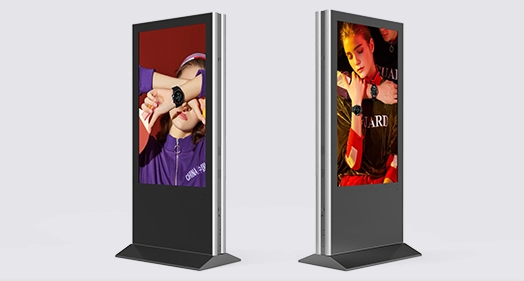
Understanding Digital Floor Standing Signage and Market Needs
Defining Digital Floor Standing Signage Solutions
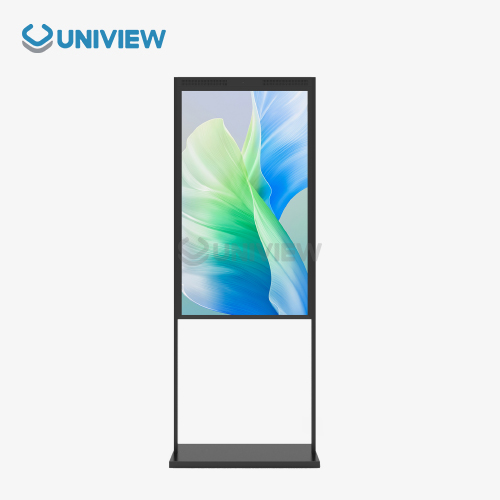
digital floor standing signage is a complete business display solution that includes an industrial-grade LCD or LED panel that is positioned vertically, a ruggedized metal case, and a media player that is built in. Unlike regular TVs, these units are designed to work nonstop 24 hours a day, seven days a week, and they have special temperature control systems to keep the panels from breaking down. The displays sit directly on the floor and don't need any infrastructure for mounting to the wall. This makes them perfect for places with a lot of foot traffic where freedom and visual effect are important.
Identifying Your Business Requirements
These units solve important B2B marketing problems, like the fact that static posters can be hard to see, that printing and changing old signs is expensive, and that you can't use real-time dynamic material across networks of multiple locations. The ability to engage with wayfinding screens is useful in retail settings, and corporate halls use them as digital receptionists. Flight Information Display Systems need to be available 99.99% of the time for transportation hubs to count on them.
Addressing Common Procurement Challenges
Hardware, software, and content management systems that don't work well together can cause vendor compatibility problems. When quality varies between product lines, it can be dangerous for operations, especially when deployments are spread out to more than one place. When low original price hides poor after-sales support or hardware failure before it's even supposed to, cost-value trade-offs become clear. To lower these risks, procurement pros set clear assessment criteria that weigh the initial investment against the total cost of ownership. These criteria include things like energy use, maintenance needs, and the estimated equipment lifespan of more than 50,000 operational hours.
Core Criteria for Evaluating Digital Floor Standing Signage Vendors
Product Quality and Technical Specifications
To judge the quality of a product, you should start with the screen sharpness and digital floor standing signage panel technology. Commercial IPS (In-Plane Switching) screens have a wide viewing angle (178°/178°) and accurate colors, so colors don't change when looked at from the side. For clear visuals, resolution standards should meet 4K UHD requirements. This is especially important in business and leisure settings where brand image is important. The estimated lifetime (MTBF) of the panel should be more than 50,000 hours, which means it was built to last and work continuously.
Specifications for durability show how well the building was done. In harsh settings, rust and scratching don't happen on enclosures made of cold-rolled steel or an aluminum alloy that has been powder coated. The front of the screen should be made of 4 mm tempered glass with a Mohs hardness rating of 7 to protect it from damage. The glass should also have anti-glare and oleophobic treatments to reduce shadows and fingerprint marks. When a touchscreen is needed, it must use industrial-grade sensitive technology that can handle millions of touch cycles without losing its performance. This technology must support multi-touch motions.
Using less energy has a direct effect on the costs of running big operations. Vendors should give thorough information about how much power their products use and show that they meet energy saving standards. The amount of maintenance needed depends on how well the parts are made. For example, industrial-grade power supply units with over-voltage safety and flexible designs can be replaced quickly in the field, which cuts down on downtime. Smart fan settings in thermal management systems make parts last longer while keeping noise levels below 60 dB, even in outdoor setups.
Software Platform and Content Management
The organizational freedom and scalability are based on the software systems. The Content Management System (CMS) should be able to check the health of devices from afar, play media on a plan, and change content in real time across multiple networks. API integration lets inventory systems talk to each other, so discounts and prices can change in real time in store settings. Cloud-based systems are more flexible than on-premise options, so they can grow with your business without you having to spend money on new infrastructure.
Operating system settings influence software compatibility and modification choices. Android-based systems work better with more apps and are better for touchscreens, while Windows platforms can integrate old business software. For mission-critical applications, Linux solutions offer better protection. The built-in System-on-Chip (SoC) design should handle multi-zone split-screen playback, which lets video, weather, and scrolling text all show up at the same time without the need for extra processing.
Pricing Transparency and Service Warranties
Professional vendors can be told apart from opportunistic vendors by clear price systems. Teams in charge of buying things should ask for detailed quotes that break down the costs of gear, software licensing, installation services, and choices for longer warranties. For operations in more than one place, bulk discount structures become useful, with volume limits usually beginning at 10 units ordered. Rental and lease-to-own credit methods make it easier to buy new things without having to spend a lot of money.
Service guarantees show that the seller trusts that the product will work. Standard warranties that last between 12 and 24 months are the bare minimum in the business. More expensive sellers offer warranties that last between 3 and 5 years and cover all parts and work. Global warranty coverage makes sure that the level of service is the same across all foreign operations. Third-party insurance policy, like coverage by China Pacific Insurance Company, gives you extra financial safety against problems with the way the product was made and how it works.
Vendor Reputation and Support Infrastructure
The image of a vendor builds trust, which is important for long-term relationships. Industry certificates like UL (for safety), FCC (for electromagnetic interference), CE, and RoHS compliance show that the product meets international quality standards. Longevity as a vendor in the business display market is a sign of financial security and knowledge gained over time. Customer reviews and case studies back up what vendors say about how well their products work and how quickly they respond to customer needs.
The quality of the experience after the buy depends on the support system. A strong service network with regional service centers lets hardware problems be fixed quickly on-site. With 24-hour online technical help, businesses can run around the world and in different time zones. By finding software problems without sending out techs, remote diagnostics shortens the time it takes to fix problems. Having spare parts stored in regional stores by vendors cuts down on machine downtime, which keeps operations going while repairs are being made.
Comparing Vendor Solutions: What to Look For
Feature Alignment with Business Needs
To do a thorough review of vendors, you need to match certain qualities with business needs. Interactive guidance and virtual concierge apps work well on touch-enabled computers, and capacitive touch technology is more quick than resistive touch technology. For transportation hubs and outdoor advertising, outdoor reliability requirements become very important. To survive environmental stresses, digital floor standing signage with screens that are 2500 nits or brighter, weatherproof shelters with IP65 or IP66 ratings, and anti-vibration mounting within the frame are needed.
Indoor options focus on both how they look and how much room they use. Slim-profile units with narrow borders look great in business lobbies and hotel lobbies, where the visual appeal helps build brand recognition. In retail hallways, portrait orientation makes the best use of vertical space, while landscape forms work best in waiting rooms and meeting rooms. Split-screen features let you show multiple pieces of content at the same time, which increases the amount of information shown without being too much for users to handle.
The ability to integrate peripherals adds more features than just viewing. Scanners for QR codes make it easier to use mobile payments and collect customer information. For self-service booths, thermal printers make it possible to print tickets and receipts. RFID card readers can be used for both entry control and integrating reward programs. Modular accessory mounting options from vendors give you the freedom to change how you put your products as your business needs change.
Case Studies and Real-World Performance
Case studies give real proof of how well a vendor's product works. When interactive digital floor standing signage with real-time store listing changes were added to a large shopping mall in Singapore, they made it 40% easier for customers to find their way around. For easy viewing in bright mall lighting, the installation used 65-inch portrait screens with PCAP touch technology and brightness levels up to 700 nits. Integration with the mall's inventory management system made it possible for dynamic advertising material, which led to a 25% rise in traffic to featured stores.
Implementations in the transportation field show dependability in tough situations. Over the course of 18 months, 200 units were used as Flight Information Display Systems at Frankfurt International Airport, which achieved a 99.97% uptime rate. The gear had two separate power supplies and industrial-grade SoC media players that could automatically switch to the other power source. Structures moved with the movement of planes taxiing, but anti-vibration mounting systems made it possible, and brightness levels above 1000 nits made it possible to see in airport areas with lots of natural light.
Hospitality apps show off premium placement and keep guests interested. A high-end hotel chain put in lobby 4K resolution floor-standing displays with high contrast ratios (3000:1) that made business messages and event schedules look clear. The units were connected to property management systems so they could show custom welcome messages for VIP guests and up-to-date information on events in real time. The sleek industrial design went well with the architecture and met practical communication needs.
After-Sales Support and Maintenance Contracts
Long-term business success depends on how quickly after-sales help is responded to. Service level agreements (SLAs) should spell out reaction times for different levels of problem severity from vendors. Critical hardware failures that need to be fixed on-site within 24 hours are considered top service levels. Software problems, on the other hand, may be able to be fixed remotely within 48 to 72 hours. Unexpected breakdowns are less likely to happen with preventive maintenance plans that include checks every three months and firmware updates.
Structures for maintenance contracts range from simple parts replacement to full service packages. Basic guarantees cover problems with the way the product was made, but not worn-out parts or damage caused by accidents. Premium maintenance plans include cleaning, calibrating the panels once a year, and replacing parts before they break based on formulas for predictive maintenance. The total cost of ownership should include the costs of the servicing contract, weighing the initial costs against the reduced downtime of operations.
Internal help is improved by vendor training programs. Facility management teams can fix small problems without having to call a provider when they have on-site training classes that cover basic troubleshooting, how to use a content management system, and regular maintenance procedures. Online lessons and knowledge bases can be used as a constant source of information. System designer certification programs build networks of experts in different areas, which speeds up rollout times and improves the quality of solutions.
Installation and Maintenance Considerations
Site Preparation and Installation Best Practices
A well-prepared spot is the first step to a successful installation. Checking the floor's load-bearing ability with structural tests is especially important for big screens that weigh more than 100 kg. Dedicated lines with the right voltage regulation and surge safety must be built into the electrical grid. For reliable network connection, you need either hardwired Ethernet or wireless service that has been tested and has enough speed for viewing high-resolution content.
Environmental fit tests find problems that might come up during operation. High-brightness requirements and anti-glare glass treatments are needed for areas that get direct sunlight. Extreme temperatures call for better heat management or climate-controlled shelters. When humidity levels are above 80%, secure containers with desiccant systems may be needed. Places that are likely to shake, like stations near rail lines, need isolation mounting systems to keep fragile display parts safe.
Working together with other vendors during installation cuts down on problems and extra costs. Technical teams from vendors do pre-installation site checks to find problems that weren't expected before the equipment is delivered. Installation plans that are coordinated with business operations have the least amount of effect on customers. After installation, validation steps check all the functional requirements, such as the uniformity of brightness, the accuracy of touch responses, and the security of network connection.
Ongoing Maintenance Strategies
Regular maintenance keeps equipment running smoothly and increases its life. Regular cleaning schedules get rid of the dust that builds up in air systems, which stops heat loss and early component failure. Cleaning the surface of a display with approved solutions keeps the image clear without harming the protective layers. Every three months, methods for calibration make sure that color accuracy and brightness are the same across shipments of multiple units.
Software upkeep includes firmware changes that fix security holes and make the software work better. When you update your content management system, it adds new tools for arranging and reporting. Tools for remote tracking keep an eye on a device's health by keeping an eye on its internal temperatures, operating hours, and error logs. Predictive maintenance programs look at patterns in performance and suggest that parts be replaced before they break.
Management of spare parts inventories matches the need for supply with the cost of capital investment. For high-availability uses, keeping critical parts like power sources, media players, and touch controller boards on-site makes sense. Less important parts, like mounting brackets and wire kits, can be rely on seller stock and fast shipping. Centralized spare parts distribution that works with regional service teams is helpful for transfers to more than one place.
Final Steps in Selecting Your Digital Floor Standing Signage Vendor
Structured Vendor Evaluation Workflows
Structured evaluation processes make choosing a digital floor standing signage vendor more objective. Depending on what's most important to the company, scoring matrices give more weight to technical specs, price, service skills, and the name of the vendor. Technical scores check whether a product meets the basic requirements for brightness, sharpness, longevity, and energy economy. The total cost of ownership, which includes the purchase price, installation fees, upkeep contracts, and the expected lifespan, is taken into account by financial scores.
Cross-Functional Stakeholder Engagement
Service capability numbers look at how long the guarantee covers, how fast the SLA responds, and how well the help network covers the area. Credentials in the industry, time in the market, and the quality of customer references are all factors that go into a vendor's reputation score. Weighted scoring shows how willing an organization is to take risks and what its strategic goals are. For example, mission-critical applications put a lot of weight on service skills, while projects with limited funds put a lot of weight on financial scores.
Engaging stakeholders across functions makes sure that the whole review is done and that the company works together. IT teams look at how to integrate networks, how to protect data, and how well content management systems work with current systems. Facilities management looks at how hard the work is, how easy it is to do upkeep, and how much environmental control is needed. Marketing teams check that the content can be shown, that the clarity is good, and that the dynamic features work.
Negotiation Tactics and Value-Added Services
Professionals in procurement organize the input of stakeholders and discuss the terms of contracts. When special software is being made, legal teams look over the warranty terms, responsibility limits, and intellectual property issues. The finance staff figures out the total cost of ownership and looks at different ways to pay for things. Executive backers help make sure that investments in technology are in line with the goals of the business for growth.
worth-added services that maximize the total worth of the investment can be secured through good bargaining. For a small extra cost, extending guarantee coverage beyond the usual terms lowers long-term risk. When you bundle installation and training services, you save time and money on coordination costs and make the most of partner knowledge. Volume price agreements allow for phased rollout plans and secure better pricing for future growth while limiting the need for instant capital investment.
Planning for Scalability and Innovation
Flexible payment options help you better control your cash flow. Lease-to-own agreements turn capital expenditures into routine expenses, which means that the company can keep its credit lines open for investments in its core operations. Because manufacturers have relationships with banks, vendor credit programs often offer affordable rates. Performance-based payment structures link the final payment to verified performance measures. This makes sure that the vendor's goals are in line with the success of the customer.
Forward-looking buying makes sure that technology roadmaps are in line with how the business is expected to grow. Modular designs allow for small increases in capacity that don't require changing current equipment. Content management systems that can be extended through APIs can be used with new technologies like computer vision analytics and tailoring powered by AI in the future. As performance needs change, hardware designs that allow field-upgradable components make the hardware last longer.
Innovation roadmaps from vendors show that they are committed to always getting better. The amount of money spent on research and development shows how much room there is for making the next generation of products. Being a part of industry standards groups means having a say in how new technologies are developed. Early-adopter programs give companies access to beta technologies, which puts them ahead of the competition and helps improve products by getting feedback from real users.
Conclusion
To find the best digital floor standing signage supplier, you need to carefully consider their technical skills, service infrastructure, and possibility for forming a strategic relationship. The choice will have an effect on how well customers are engaged, how efficiently operations run, and how the brand is positioned for years after it is put into action. A good buying process combines short-term technical needs with long-term scalability needs, service response with seller financial stability, and upfront investment with total cost of ownership. Companies that put these thorough evaluation factors at the top of their list will get the most out of their investments in digital floor standing signage.
FAQ
Q: What is the typical lifespan of digital floor standing signage?
A: The estimated panel life for commercial-grade digital floor standing signage screens that are meant to be used continuously is usually between 50,000 and 70,000 hours, which is about 8 to 10 years of 16-hour daily operation. The actual lifespan depends on the climate, the quality of upkeep, and how often the product is used. Thermal stress speeds up the breakdown of high-brightness outdoor units, while climate-controlled indoor installs often perform better than stated. Regular upkeep, such as cleaning the heating system and checking the parts, makes the service last longer. Especially as content quality standards move from 1080p to 4K and beyond, technology aging often forces replacement before hardware fails.
Q: Why do signage costs vary significantly among vendors?
A: Price differences are caused by changes in panel technology, the quality of the parts, and the facilities for service. Premium sellers use industrial-grade IPS screens that have better uniform brightness and longer lifespans, but they cost more than consumer-grade parts. The level of complexity of the software platform affects the price. For example, cloud-based content management systems with advanced analytics features deserve to be priced higher than media players with basic features. Extended guarantee coverage and full global support networks raise the costs that vendors have to run their businesses, which is mirrored in the prices of their products. Customization options, especially custom container designs and specialized environmental protection, raise the cost of building. Volume pricing and seller marketing strategies make prices vary even more, even for goods with similar specs.
Q: Can vendors provide customized content management software?
A: Most expert vendors offer a range of content management software choices, from their own platforms to integrations with other systems. Proprietary CMS systems offer optimized hardware and software that is tightly combined, making deployment easier and providing unified support. Third-party systems give you more options and more complicated features, but they might take more work to integrate. Custom software creation can be used to meet specific process needs or to integrate old systems. Whether you choose a vendor-provided or third-party CMS relies on how complicated your infrastructure is, how good your own IT team is, and how flexible you need to be in the long run. Cloud-based systems are becoming more popular because they can grow with your business and require less infrastructure on-site. However, on-premise options are still useful in high-security settings.
Ready to Transform Your Brand Presence with Premium Digital Floor Standing Signage?
As a reliable digital floor standing signage manufacturer, Uniview Commercial offers industrial-grade display solutions made for tough B2B settings in the transportation, retail, hotel, and business sectors. Our wide range of products includes LCD and LED screens with high light levels between 2000 and 4000 nits, tough cases with IP65 and IP66 ratings, and smart thermal management that makes sure they work reliably 24 hours a day, seven days a week. With relationships in over 100 countries spanning ten years, we offer open customization services that are made to fit your specific business needs. Our dedication goes beyond just delivering tools; you can also take advantage of extended warranties that last between 3 and 5 years, global online help that's available 24 hours a day, 7 days a week, and full quality coverage backed by China Pacific Insurance Company. For a personalized consultation, please contact our expert team at sales@univiewlcdisplay.com. Find out how our cutting-edge signage solutions can improve brand exposure and customer interaction in your market.
References
1. Federation of Digital Signage (2022). There are standards and best practices for buying commercial displays for business-to-business uses. Tech Reports for Business, Vol. 14.
2. Jones, M. & Chen, L. (2021). A look at the total cost of ownership in digital signage deployments across multiple industries. It's in the Journal of Commercial Technology Management (28(3), 145–167).
3. It stands for the International Display Standards Organization. Details about how to set up outdoor and indoor floor-standing digital signage systems. IDSO Publication 2023-08.
4. Martinez, R. (2022). Architecture and integration strategies for content management systems for digital signage networks that are spread out. 17(2), 78–94; Technology Solutions Quarterly, 19(2).
5. Shekhar Patel, K. Wong, and T. Anderson. (2021). Frameworks for choosing vendors in commercial display procurement: real-world examples from Fortune 500 companies. Journal of Strategic Procurement, 35(4), 412–438.
6. Association for Retail Technology (2023). Multi-location case study analysis of the effects of interactive floor standing signs on customer engagement metrics. The RTA Research Brief for 2023–15.

Learn about our latest products and discounts through SMS or email