- English
- French
- German
- Portuguese
- Spanish
- Russian
- Japanese
- Korean
- Arabic
- Greek
- German
- Turkish
- Italian
- Danish
- Romanian
- Indonesian
- Czech
- Afrikaans
- Swedish
- Polish
- Basque
- Catalan
- Esperanto
- Hindi
- Lao
- Albanian
- Amharic
- Armenian
- Azerbaijani
- Belarusian
- Bengali
- Bosnian
- Bulgarian
- Cebuano
- Chichewa
- Corsican
- Croatian
- Dutch
- Estonian
- Filipino
- Finnish
- Frisian
- Galician
- Georgian
- Gujarati
- Haitian
- Hausa
- Hawaiian
- Hebrew
- Hmong
- Hungarian
- Icelandic
- Igbo
- Javanese
- Kannada
- Kazakh
- Khmer
- Kurdish
- Kyrgyz
- Latin
- Latvian
- Lithuanian
- Luxembou..
- Macedonian
- Malagasy
- Malay
- Malayalam
- Maltese
- Maori
- Marathi
- Mongolian
- Burmese
- Nepali
- Norwegian
- Pashto
- Persian
- Punjabi
- Serbian
- Sesotho
- Sinhala
- Slovak
- Slovenian
- Somali
- Samoan
- Scots Gaelic
- Shona
- Sindhi
- Sundanese
- Swahili
- Tajik
- Tamil
- Telugu
- Thai
- Ukrainian
- Urdu
- Uzbek
- Vietnamese
- Welsh
- Xhosa
- Yiddish
- Yoruba
- Zulu
How to choose the right floor standing LCD digital signage for business use?
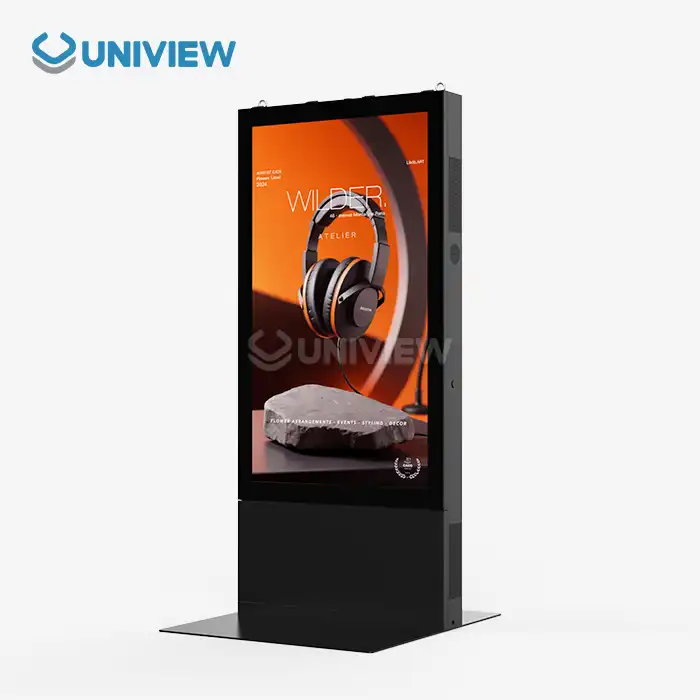
Understanding your unique working needs, environmental factors, and financial limits are necessary before choosing the right floor standing LCD digital signage for your company. The best digital display option has the right screen size and quality, as well as strong hardware features that make sure it works well in business settings. Some important things to think about are the right brightness levels for your position, the ability to connect with customers to get them involved, the compatibility with content management systems, and the long-term durability backed by a full guarantee. To get the best return on investment, professionals making procurement choices should look at both the instant purchase price and the total cost of ownership.
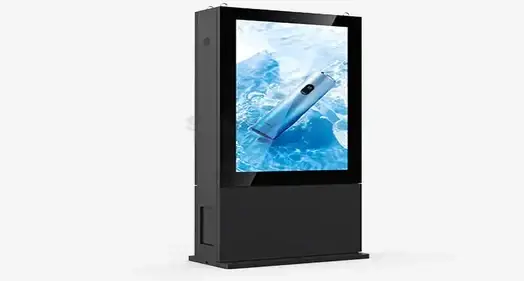
Understanding Floor Standing LCD Digital Signage: What and Why
Core Technology and Screen Size Specifications
Floor-standing digital screens use advanced LCD technology with commercial-grade IPS or VA panels that are made to work 24 hours a day, seven days a week. Most of these screens are between 32 and 86 inches, and professional models have Mean Time Between Failures (MTBF) of more than 60,000 hours. This technology uses special backlit systems that work the same even when the lighting conditions change. This makes them better than consumer-grade options.
Brightness levels for contemporary floor standing lcd digital signage units range from 450 nits for typical indoor settings to more than 2500 nits for setups facing windows. The screens use commercial IPS panels that offer viewing angles greater than 178 degrees both horizontally and vertically, so material can be seen from a variety of places. Newer models have coverings that reduce glare and reflection, making them easier to read in places with overhead lighting.
Enhanced Customer Engagement and Brand Visibility
Digital signage turns idle watching into active interactions with customers by using bright visuals and the ability to be interacted with. Digital displays get 400% more views than static signs, according to research. This makes brand recognition and customer interaction measures much better. These screens let material be updated in real time, which lets businesses react right away to changes in the market, sales possibilities, and customer tastes.
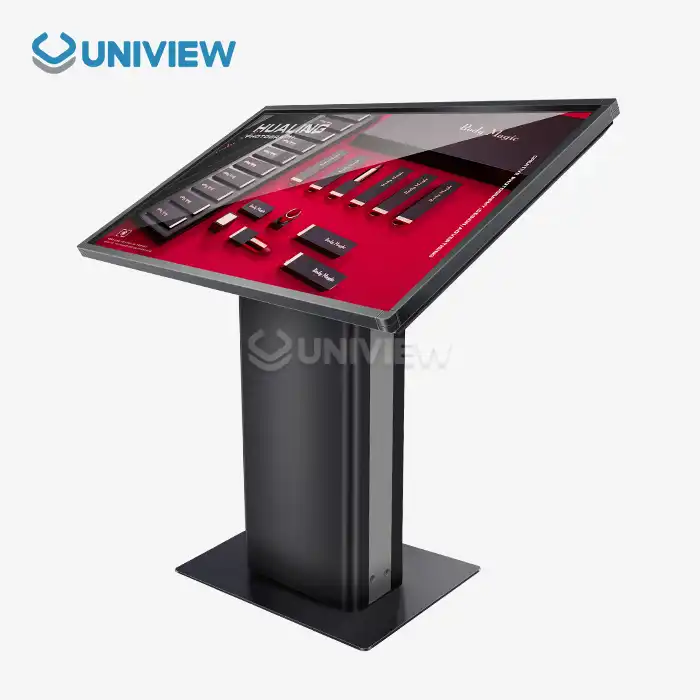
Freestanding units are flexible enough to be placed strategically in high-traffic places without having to be permanently installed. Businesses can find the best places to put their products based on how customers move through the store and what the season calls for. Touchscreen models that are interactive make things even more interesting by letting customers use self-service apps, product catalogs, and navigation systems that make customers happier while also making staff's jobs easier.
Operational Flexibility and Energy Efficiency
Modern floor-standing screens are very flexible in how they can be used because they have built-in content management systems and the ability to be monitored remotely. These systems make it possible to handle multiple displays from one place, which makes it easier to schedule upkeep and distribute information. Cloud-based systems allow for instant updates, which makes sure that messages are the same across entire store networks or workplace settings.
One big benefit over older monitor technologies is that they use less energy. Modern LCD screens use about 40% less power than similar LED video walls, but they still produce better images. Adding smart thermal management systems, like temperature-controlled cooling, to a product makes the gear last longer and costs less to run over its entire lifecycle.
Core Criteria for Selecting Floor Standing LCD Digital Signage
Business Use Cases and Environmental Assessment
A good way to choose a device is to think about all of its possible uses and the situations it will be used in. In retail settings, screens need to be able to handle a lot of light while still showing colors accurately so that products look their best. In business settings, noiseless operation and a good look are important, so fanless cooling systems and high-quality finishes that match the building's style are required.
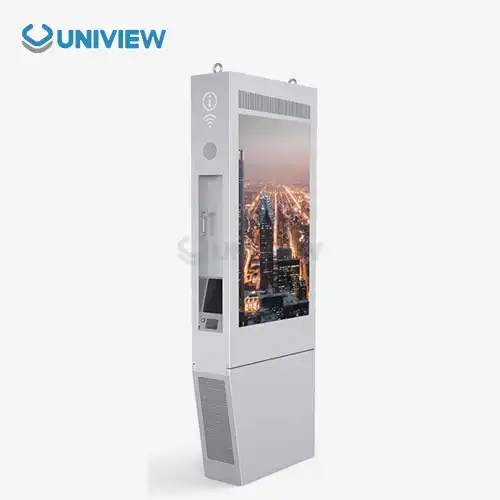
There are some problems that only transportation hubs have, like constant shaking, dust, and changes in temperature. For these settings, professional-grade floor standing lcd digital signage has ruggedized power sources, conformal coating on the PCBs inside, and improved structural stability. In tough working conditions, IP grades between IP54 and IP66 provide the security against dust and water that is needed.
Screen Size, Resolution, and Viewing Distance Optimization
For the right screen size, you need to think carefully about viewing lengths and the type of material you want to show. The best viewing distance is usually between 1.5 and 4 times the diagonal size of the screen. This depends on the quality and the depth of the content. 4K screens let you see things from closer while still keeping the picture quality clear, which makes them perfect for interactive apps and detailed product presentations.
The resolution you choose has a direct effect on how clear the text is and how good the customer experience is. HD displays (1920x1080) are still good for basic informational material and general advertising. However, 4K displays (3840x2160) are needed for fine images, detailed text, and expensive brand presentations. When used in certain situations, ultra-wide forms are very useful, but they need special care when creating and managing material.
Hardware Durability and Power Efficiency
For commercial displays to last, they need to be built with strong materials, like toughened glass front plates with a Mohs hardness grade of 7 and weighted base plates that keep the displays from falling over. Professional types are made of an aluminum alloy that allows for good heat absorption and structural stability when they are used continuously. These design features make sure that the product will work reliably in business settings with a lot of foot traffic where accidental contact is common.
Power efficiency is important for more than just lowering direct running costs. It's also important for the environment and for meeting cooling needs. Adaptive brightness control is built into modern displays. This function instantly changes the output based on the lighting conditions, which saves power. The sleep mode feature further reduces energy use when the device is not in use, but it still has instant-on capabilities for quick action.
Comparing Floor Standing LCD Digital Signage with Other Display Solutions
Installation Flexibility and Visibility Advantages
When it comes to placement options, floor standing lcd digital signage is unmatched. Unlike wall-mounted options, it doesn't require any structure changes and can be set up quickly in a variety of settings. This portability is especially helpful for short-term installs, trade shows, and seasonal ads where permanent hanging options aren't possible or would be too expensive.
Wall-mounted screens need to be installed by a professional, and the building may need to be changed, which adds a lot to the overall cost of the job. When freestanding units are delivered, they are ready to be used right away; all that needs to be done is to connect them to power and set up the network. Because it's so easy, businesses can move screens as their needs change without having to pay more for installation or have to shut down.
Brightness, Lifespan, and Maintenance Considerations
LCD technology offers better color clarity and consistent brightness compared to projection systems, as well as a longer working lifespan. Professional LCD screens keep 50% of their original brightness after 60,000 hours of nonstop use, which is a lot longer than the life of a projector lamp. This makes things last longer, which cuts down on upkeep and replacement costs over longer operation times.
While LED video walls can be very bright, they require much larger original investments and more complicated installation processes. For most business uses, LCD displays are the best combination of speed, cost, and ease of upkeep. Because independent displays are flexible, they are easier to service because parts can be replaced quickly without affecting nearby units or needing special tools for installation.
Interactive Capabilities and Customer Engagement
When touchscreens are added to static displays, they become strong tools for engaging customers that can run self-service apps, product catalogs, and interactive navigation systems. Projected Capacitive (PCAP) touchscreen technology lets you use multiple touches at once and is durable enough for use in business settings. Businesses can cut down on staffing needs and boost customer happiness by giving them more ways to help themselves with these interactive features.
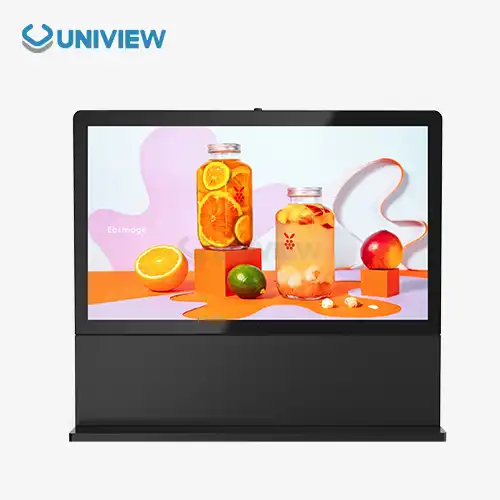
Non-interactive models are still the best choice for advertising uses where keeping information safe and keeping things simple are the most important things. These screens put more effort into making images look better and working reliably than adding touch features. This means they are often a better deal for simple promotional uses. Which model to use—interactive or non-interactive—depends on how you want to engage customers and how your business works.
Procurement Insights: How to Buy Floor Standing LCD Digital Signage for Your Business
Pricing Structure and Total Cost of Ownership
When you understand how comprehensive pricing works, you can make smart purchasing choices that take into account more than just the initial buy price. The unit costs are very different depending on the screen size, resolution, ability to connect, and environmental grade. Professional-grade displays cost more, but they are more reliable, come with longer guarantees, and need less upkeep, so the extra money is usually worth it.
Bulk purchasing deals often offer big price cuts for deployments of multiple units while making sure that all installations follow the same specs. Volume savings usually start at five units and go up in line with the size of the sale. These economies of scale work especially well for store chains, business networks, and big venue installations that need standard ways to show their products.
Supplier Verification and Authentication Methods
To build relationships with trustworthy providers, you need to carefully check their certifications, warranty coverage, and expert help. Real business displays have certificates like UL, CE, FCC, and RoHS compliance, which means they meet international safety and environmental standards. Suppliers that have been checked out give a lot of information, like technical specs, installation instructions, and guarantee terms.
Professional floor standing lcd digital signage providers provide a wide range of technical support services, such as pre-sales advice, installation advice, and ongoing upkeep assistance. Local service networks that can provide quick response times and on-site service are maintained by established providers. These support structures are necessary to keep operations running smoothly in applications that are important to the business and where downtime has a direct effect on making money.
Long-term Partnership and Support Considerations
Strategic relationships with suppliers include more than just buying gear. They also include ongoing assistance, software changes, and the ability to grow in the future. Having established ties lets you get better prices on future orders, faster technical help, and early access to new products. Businesses that plan phased launches or regular gear refresh cycles can benefit the most from these relationships.
Schedules for preventative maintenance, quick replacement programs, and expert training for internal staff should all be part of full-service agreements. Professional suppliers give service packages that are tailored to the needs of each business and the amount of risk that can be tolerated. These deals make it possible to plan operations and stick to budgets, and they also make sure that displays work at their best for long periods of time.
Case Studies and Practical Examples of Successful Deployments
Retail Chain Implementation and Customer Engagement Results
To improve customer product finding and cut down on staff consultations, a major electronics shop installed 150 interactive floor standing lcd digital signage units across their national store network. The 55-inch 4K displays had PCAP touchscreens that ran special software for cataloging products and were connected to systems for managing supplies. Results from the implementation showed that customer contact time went up by 35% and cross-selling success went up by 22%.
Displays were put at store entrances and departmental changes were made as part of the rollout strategy to catch people's attention as they naturally browsed. Content management systems let promotions be updated in real time, in sync with product levels and price strategies used in different regions. Headquarters had access to full usage analytics and speed metrics across the whole network thanks to remote tracking. This let them make data-driven decisions about how to best place content and displays.
Corporate Environment Communication Enhancement
An international company put up 80 non-interactive displays around their global offices to make it easier for employees to talk to each other and for visitors to have a better time. The installation included 65-inch screens in the entrance and 43-inch screens in the elevator hallways. All of them were designed to be quiet and look great. The rollout cut the cost of printed materials by a large amount and made it possible for people to get quick information on company news and emergency alerts.
The content approach was mainly about recognizing employees, sharing company accomplishments, and providing real-time building information, such as meeting room availability and guest directions. Integration with existing company networks made it easy for centralized marketing teams to send content to all buildings while keeping control of information that was special to each building. Because the system worked so well, it was expanded to 12 more business buildings within 18 months of its original launch.
Trade Show and Event Portable Display Solutions
40 portable floor standing lcd digital signage screens were purchased by an international trade show management business for quick placement at multiple concurrent events. The screens were made to be tough, and they came with built-in battery backup systems and wifi connection for easy setup without the need for extra hardware. Organizers of the event said that setup time was cut by 60% and that exhibitor happiness rates went up by 45%.
The movable units were both wayfinding tools and high-quality advertising space for event sponsors. Multiple settings could be used at the same time with modular content management, which kept control in one place and allowed for real-time changes. Battery backup systems kept things running even when the power went out, which was important for keeping important signaling features during busy times.
Conclusion
Technical requirements must be balanced with practical needs and financial limits when choosing the best floor standing lcd digital signage. When professionals buy things, they should look for screens with the right amount of brightness, strong construction, and full guarantee coverage that are suitable for their deployment settings. Interactive features keep customers more interested, but they need to be carefully thought out in terms of upkeep needs and content management complexity. Building relationships with trustworthy providers that can offer ongoing technical support and service skills during long deployment times is key to a successful implementation.
FAQ
Q: What maintenance requirements ensure continuous operation?
A: As part of regular upkeep, the display surfaces should be cleaned once a month with the right anti-static cleaning solutions, and the air systems should be checked every three months to keep dust from building up. Professional screens need to be calibrated once a year to make sure that the colors and brightness stay accurate over their entire life. To get the best speed and security from your system, you should only apply software updates and security patches that are recommended by the maker.
Q: How do LCD displays compare to LED alternatives in energy efficiency?
A: Most of the time, LCD technology uses 30–40% less power than similar LED video screens while keeping colors and light more stable. Modern LCD screens have smart power management systems that change the brightness automatically based on the lights in the room, which uses even less energy. LCD screens last longer, which is good for the earth because it means they don't need to be replaced as often and less electrical waste is made.
When should businesses choose professional installation versus in-house setup?
For complicated installs that include network interaction, setting up a content management system, and installing interactive software, you need to hire a professional installer. Most of the time, basic floor-standing LCD digital signage units can be set up with internal resources. However, more complex installs that need calibration, security settings, and multi-display synchronization should be done by a professional. Professional installation also makes sure that the guarantee is followed and that the system works at its best from the start.
Transform Your Business Communication with Uniview Commercial Floor-Standing LCD Digital Signage
Uniview Commercial delivers cutting-edge digital display solutions tailored for demanding B2B environments across retail, corporate, hospitality, and transportation sectors. Our floor-standing LCD digital signage manufacturer expertise spans over a decade of innovation, resulting in displays featuring ultra-high brightness levels from 2000 to 4000 nits, IP65-IP66 environmental protection, and industry-leading 3-5 year warranty coverage. As a trusted floor-standing LCD digital signage supplier, we provide comprehensive customization services and 24-hour global technical support backed by China Pacific Insurance Company coverage. Contact our procurement specialists at sales@univiewlcdisplay.com to discuss your specific requirements and receive detailed quotations for floor-standing LCD digital signage for sale that perfectly matches your operational needs and budget parameters.
References
1. Digital Signage Federation. "Commercial Display Technology Standards and Best Practices for B2B Procurement." Digital Signage Industry Report, 2023.
2. International Society for Technology in Education. "Interactive Display Systems: Performance Metrics and ROI Analysis in Commercial Environments." Educational Technology Research Journal, 2023.
3. Society for Information Display. "LCD Panel Technology Advancements: Brightness, Durability, and Energy Efficiency in Professional Applications." Display Technology Quarterly, 2023.
4. National Retail Federation. "Customer Engagement Through Digital Signage: Impact Analysis and Implementation Guidelines." Retail Technology Review, 2023.
5. Building Industry Consulting Service International. "Environmental Ratings and Durability Standards for Commercial Electronic Displays." Commercial Building Technology Standards, 2023.
6. American Society of Heating, Refrigerating and Air-Conditioning Engineers. "Thermal Management Systems in Commercial Display Technology: Efficiency and Longevity Analysis." HVAC Applications in Commercial Electronics, 2023.
Learn about our latest products and discounts through SMS or email