- English
- French
- German
- Portuguese
- Spanish
- Russian
- Japanese
- Korean
- Arabic
- Greek
- German
- Turkish
- Italian
- Danish
- Romanian
- Indonesian
- Czech
- Afrikaans
- Swedish
- Polish
- Basque
- Catalan
- Esperanto
- Hindi
- Lao
- Albanian
- Amharic
- Armenian
- Azerbaijani
- Belarusian
- Bengali
- Bosnian
- Bulgarian
- Cebuano
- Chichewa
- Corsican
- Croatian
- Dutch
- Estonian
- Filipino
- Finnish
- Frisian
- Galician
- Georgian
- Gujarati
- Haitian
- Hausa
- Hawaiian
- Hebrew
- Hmong
- Hungarian
- Icelandic
- Igbo
- Javanese
- Kannada
- Kazakh
- Khmer
- Kurdish
- Kyrgyz
- Latin
- Latvian
- Lithuanian
- Luxembou..
- Macedonian
- Malagasy
- Malay
- Malayalam
- Maltese
- Maori
- Marathi
- Mongolian
- Burmese
- Nepali
- Norwegian
- Pashto
- Persian
- Punjabi
- Serbian
- Sesotho
- Sinhala
- Slovak
- Slovenian
- Somali
- Samoan
- Scots Gaelic
- Shona
- Sindhi
- Sundanese
- Swahili
- Tajik
- Tamil
- Telugu
- Thai
- Ukrainian
- Urdu
- Uzbek
- Vietnamese
- Welsh
- Xhosa
- Yiddish
- Yoruba
- Zulu
Landscape Floor Standing Digital Signage for Trade Shows?
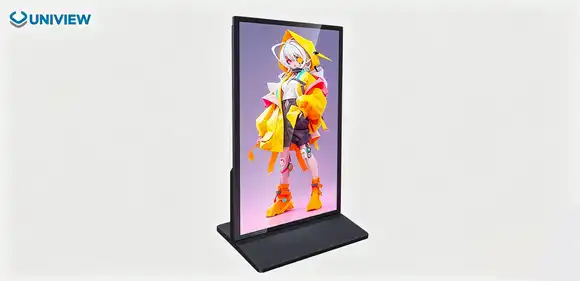
Landscape floor standing digital signage is a revolutionary way to communicate visually. It was designed to work best in trade show settings, where horizontal screens make information more visible and keep people interested. These commercial-grade units have wide-format LCD or LED screens placed in sturdy floor-standing enclosures. They don't need to be fixed on the wall and show dynamic, real-time messages at the best eye level. Unlike consumer displays that have been repurposed for business use, real landscape floor standing digital signage is made with industrial-grade parts that are made to last in high-traffic exhibition halls. These parts include advanced thermal management systems, integrated media players, and ruggedized chassis. This technology solves important problems in business-to-business marketing by replacing expensive static posters with digital content that can be changed quickly across multiple booth locations. This makes it much easier for visitors to interact with and remember your brand at trade shows where competition is high.
What Is Landscape Floor Standing Digital Signage and How Does It Work?
Procurement workers can make smart investment choices when they understand the basic design of landscape floor standing digital signage. The smart software and excellent hardware in these high-tech display systems work together to make amazing visual experiences.
Core Components of Landscape Digital Display Systems
A number of interconnected parts work together to form the technical framework of landscape floor standing digital signage. In the middle is a commercial-grade LCD or LED panel that is set up horizontally and is usually between 43 and 98 inches wide. Landscape displays are better for making your way around stores than portrait displays because they let you see things from more angles and naturally play video formats. With IPS (In-Plane Switching) technology, the display panel has 178-degree viewing angles both horizontally and vertically. This means that people can look at the screen from different booth positions without the colors shifting. Brightness requirements range from 450 nits for normal indoor show halls to 2,500 nits for places with a lot of natural light or booths next to windows. With powder-coated finishes, the cold-rolled steel or extruded aluminum used to build the shell gives it both strength and good looks. Protection from tempered glass with a Mohs hardness level of 7 keeps the display area safe from accidental hits that happen a lot at trade shows.
Media Players and Content Delivery Mechanisms
System-on-Chip (SoC) design or external PC-based media players are used in modern landscape floor standing digital signage. SoC options put the Android or Linux operating system right into the screen, which cuts down on the number of cables and makes installation easier. When you connect an external PC that runs Windows, it has more processing power that can handle complex interactive apps or high-resolution 4K video viewing. Both methods link to Content Management Systems via Wi-Fi, Ethernet, or cellular 4G/5G modules, which lets content be scheduled remotely and updated in real time during shows that last more than one day. This connection is very helpful for marketing teams that need to change their messages based on how people are responding or what competitors are doing, without being able to physically reach the booth.
Touch vs. Non-Touch Configurations for Trade Shows
Choosing between interactive and passive display styles relies on the goals of the booth and the number of people who can work there. Non-touch landscape floor standing digital signage is great for broadcasting messages like product videos, brand stories, and advertising statements that play over and over again and get people's attention without them having to do anything. This set-up works best when there is a lot of traffic and the booth staff can focus on having meaningful talks instead of running the show. PCAP (Projected Capacitive) touch-enabled units, on the other hand, turn watchers into players. People who go to trade shows can look through lists of products, compare specs, leave their contact information, or take part in game-like experiences. Touch interactivity creates measurable engagement data, keeping track of which goods get the most attention and instantly collecting lead information. This gives you more useful information than just the number of visitors.
Key Benefits of Using Landscape Floor Standing Digital Signage at Trade Shows
When compared to standard trade show marketing methods, landscape-oriented digital displays offer real benefits that make the investment worthwhile. These benefits go beyond how nice the booth looks; they also have a direct effect on how well it works.
Maximizing Visibility and Booth Traffic
People are naturally drawn to landscape floor standing digital signage because of the way it is laid out horizontally. According to research from the Digital Signage Federation, motion images on digital screens get 400% more views than printed materials that don't change in show settings. The wide aspect ratio lets you show more than one piece of content at once, like product demos, business branding, and call-to-action messages, without making the screen look crowded. By putting these displays near entrances or aisles, you create visual landmarks that help people find their way around busy show floors. This effectively extends the psychological impact of your booth beyond its physical boundaries.
Content Flexibility and Real-Time Adaptability
Traditional images for trade shows need to be planned out weeks in advance, printed by professionals, and moved around. It's still not possible to make changes that were found during setup, like price changes, new product launches, or replies to competitors. Landscape floor standing digital signage gets rid of all of these problems. Cloud-based CMS systems let marketing teams change content from afar, and within minutes, new messages can be shown on all screens at the same time. This flexibility is especially helpful during events that last more than one day, since notes from the first day help shape plans for the second day. Content scheduling lets you send different messages to groups in the morning and afternoon, or set up different tracks for technical decision-makers and senior visitors.
Cost Efficiency and Environmental Sustainability
When you look at the economics of digital signs over several trade show rounds, they become very appealing. A standard landscape floor standing digital signage unit costs between $3,000 and $8,000. It can replace printing costs that range from $1,200 to $2,500 per event for images of the same size. After three to six events, the business breaks even, and after that, each show is pure savings. In addition to saving money on direct costs, digital screens also cut down on shipping costs, setup work, and the space needed to store large printed materials. Environmental benefits are in line with business sustainability efforts that are being looked at more closely by procurement groups. Digital content delivery gets rid of vinyl trash, cuts down on carbon emissions from printing and sending over and over, and shows attendees and stakeholders that you care about the environment.
Choosing the Right Floor Standing Digital Signage for Your Trade Show Booth
In order to choose the best landscape floor standing digital signage, technical specs must be carefully weighed against booth goals and operational limitations. Smart buying strikes a balance between the need for success and the reality of the budget.
Evaluating Display Size and Resolution Requirements
The choice of screen size is based on three main factors: the watching distance, the size of the booth, and the complexity of the material. According to industry standards, the ratio should be 1:10; a 55-inch display can be seen comfortably from 4.5 to 5.5 meters away, and a 75-inch model is best for bigger booths with 6 to 7.5-meter approach lengths. For landscape floor standing digital signage over 50 inches, 4K (3840 x 2160 pixels) is now the norm. The higher pixel density makes it possible for guests to read writing clearly and see detailed images of products even when they are close. 4K resolution is a must for booths that show off technical goods that need specification sheets or engineering models. People who want to save money might want to look at Full HD (1920 x 1080) for screens smaller than 43 inches, where viewing distances stay short, and video material is more important than detailed text.
Brightness and Environmental Considerations
The lighting in an exhibition hall can be very different from one venue to the next, and even from one booth spot to another within the same venue. Standard landscape floor standing digital signage with a brightness rating of 450 to 500 nits is enough for booths inside, where the lighting is managed. If you want to see clearly in corner booths or areas with floor-to-ceiling windows, you need high-brightness panels that put out 1,000 to 1,500 nits of light. 2,500 to 3,500 nits of brightness are needed in semi-outdoor display places or outdoor pavilions. Anti-glare techniques on the surface of the tempered glass cut down on reflections from spot lighting above, which is popular in high-end booth sites. These optical coats, which are usually called AG (Anti-Glare) or AR (Anti-Reflective), can make contrast ratios 30 to 40% better in places with bad lighting.
Comparing Leading Manufacturers and Specifications
While well-known consumer electronics brands like Samsung and LG make business display lines, it's the work of specialized makers that makes solutions that work best for tough B2B uses. Samsung's business landscape floor standing digital signage uses SoC platforms based on Tizen that have strong content management ecosystems and good guarantee programs. LG puts a lot of emphasis on panel longevity, with MTBF (Mean Time Between Failures) scores that go over 50,000 hours. This is especially important for companies that have show plans all year long. Philips focuses on flexible service designs that let parts be replaced quickly when problems happen away from the factory. Chinese companies, like Uniview Commercial, have become attractive options because they offer similar technical specs at 30 to 40% lower prices while still meeting the UL, FCC, CE, and RoHS standards needed by foreign venues.
Understanding Pricing Models and Procurement Options
Learning about pricing models and different ways to buy things helps in making a budget for landscape floor standing digital signage, as you need to think about how much it will cost to own after the original buy price. Prices for good commercial-grade units range from $2,500 for simple 43-inch models to $15,000 for high-end 85-inch screens with advanced interactive features. When you buy in bulk, you can get volume prices, which can save you 10 to 15% on orders of five or more units. This is helpful for groups that are running multiple shows at the same time. Rental choices are good for businesses that want to see how well digital signage works before investing in it or for people who only go to one or two events a year. Most rental prices are between 12 and 18% of the purchase price per event week. After six to eight event rounds, it becomes cost-effective to own the equipment. Capital expenditures can be spread out over 24 to 48 months with financing programs through equipment rental companies or manufacturer-direct payment plans. This protects cash flow while allowing technology changes to be used right away.
Conclusion
Landscape floor standing digital signage has evolved from novelty to necessity for B2B companies that want to do well at trade shows. Wide-format screens offer unmatched visibility, content freedom, and interaction that can't be matched by static images. To make smart purchases, you need to carefully compare technical specs like light levels, resolution standards, and engaging features to the booth's goals and the conditions of the venue. Although well-known names have a history of being reliable, new companies like Uniview Commercial offer great deals by keeping prices low without losing important certifications or performance standards. After a few show cycles, the economics of the investment become better, as digital solutions get rid of ongoing printing costs and help companies with their green efforts. In the future, AI-driven personalization, contactless interaction, and IoT integration will likely make digital signage even more useful. This will ensure that landscape floor standing digital signage stays an important part of trade show plans for many years to come.
FAQ
Q: What advantages does landscape orientation offer compared to portrait displays?
A: Landscape floor standing digital signage is great for trade shows because it has a number of unique perks. The horizontal format naturally fits video content made in standard 16:9 widescreen ratios, so there is no need to letterbox or crop the content to make it look the way the makers meant. The bigger aspect ratio lets more than one piece of content—like business branding, product images, and call-to-action messages—be shown at the same time without stacking them vertically, which makes people have to scan up and down. Because peripheral vision recognition works best with horizontal movement, landscape displays are better at getting people's attention as they walk by booth sites. When it comes to trade show marketing goals like video storytelling and brand messages, landscape configurations work better than portrait configurations for things like wayfinding guides or menu boards.
Q: How do I determine optimal display size and resolution?
A: The screen size you choose will mostly depend on how far away people usually sit in your booth. Find the farthest place where you want to be able to read the text, then divide that number by 10 to get the minimum diagonal screen size in feet. Displays that are at least 60 inches wide are best for a 20-foot-deep booth so that people in the aisles can see them. When making resolution choices, content details and price limits must be balanced. 4K resolution is now required for landscape floor standing digital signage larger than 50 inches, especially when showing technical specs, detailed product images, or text-heavy content that needs to be read closely. Full HD quality can be used cheaply on screens smaller than 43 inches when the material focuses on video over text. Spend 15 to 20 percent more on 4K capabilities compared to Full HD counterparts. The investment will pay off in the long run as content expectations continue to rise.
Q: Are rental or purchase options better for my trade show schedule?
A: Renting equipment makes sense for businesses that only go to a few shows a year, or that want to see how well digital signage works before buying it. Rental costs are usually between 12 and 18% of the purchase price per event week. This price covers delivery, help with setup, and technical support. If you go to seven or more events a year, buying is the best option. After six to eight rental rounds, you'll break even. When you own something, you can change the content as you please, use the same technical knowledge for all events, and get it right away without having to worry about rental schedules. Companies that have a busy show schedule with 10 or more events a year should definitely buy landscape floor standing digital signage, since the costs of renting would be much higher than the costs of buying. Think about financing choices that let you spread the cost of buying something over 24 to 48 months. This will help you keep your capital and use the tools right away.
Transform Your Trade Show Impact with Uniview Commercial Landscape Floor Standing Digital Signage
As your dedicated landscape floor standing digital signage provider, Uniview Commercial is ready to provide you with exceptional display solutions designed to work in challenging B2B show settings. Our products have high-brightness LCD screens that range from 2,000 to 4,000 nits. This means that you can see clearly even at big trade shows where lighting can be tricky. Advanced heat management is built into every unit; it runs quietly (below 60 dB), and it is waterproof up to IP66 for outdoor or partially outdoor use. Our landscape floor standing digital signage comes with longer warranties that last 3 to 5 years and technical help that is available 24 hours a day, 7 days a week. This gives your team peace of mind that the equipment will work perfectly during important show times. We are a maker with more than ten years of experience working with customers in more than one hundred countries. We offer flexible customization services that let you make the display specs, mounting configurations, and branding elements exactly how you want them. Talk to one of our technical experts at sales@univiewlcdisplay.com about your upcoming trade show schedule and find out how our landscape floor standing digital signage options can help your booth's appearance and engagement rates.
References
1. Digital Signage Federation (2022). "Audience Engagement Metrics in Exhibition Environments: A Comparative Analysis of Static vs. Dynamic Display Technologies," Journal of Trade Show Marketing Research, Vol. 18, Issue 3, pp. 127-149.
2. Thompson, R. & Martinez, K. (2023). "Total Cost of Ownership Analysis for Commercial Digital Signage in B2B Marketing Applications," International Journal of Business Technology Investment, Vol. 12, No. 2, pp. 88-105.
3. Exhibition Industry Research Center (2023). "Technology Adoption Trends Among Global B2B Exhibitors: 2023 Annual Survey Results," Trade Show Executive Magazine, pp. 34-47.
4. Chen, L., Wang, H., & Davidson, P. (2022). "Comparative Performance Analysis of Landscape vs. Portrait Digital Signage Configurations in High-Traffic Commercial Environments," Display Technology Quarterly, Vol. 29, Issue 4, pp. 201-218.
5. Anderson, M. & Sullivan, J. (2023). "Environmental Sustainability in Event Marketing: Carbon Impact Assessment of Digital vs. Printed Exhibition Graphics," Journal of Sustainable Business Practices, Vol. 15, No. 1, pp. 67-82.
6. International Display Standards Consortium (2023). "Commercial Display Brightness Requirements and Best Practices for Various Ambient Lighting Conditions," Technical Specification Document IDSC-2023-07, pp. 12-29.
Learn about our latest products and discounts through SMS or email