- English
- French
- German
- Portuguese
- Spanish
- Russian
- Japanese
- Korean
- Arabic
- Greek
- German
- Turkish
- Italian
- Danish
- Romanian
- Indonesian
- Czech
- Afrikaans
- Swedish
- Polish
- Basque
- Catalan
- Esperanto
- Hindi
- Lao
- Albanian
- Amharic
- Armenian
- Azerbaijani
- Belarusian
- Bengali
- Bosnian
- Bulgarian
- Cebuano
- Chichewa
- Corsican
- Croatian
- Dutch
- Estonian
- Filipino
- Finnish
- Frisian
- Galician
- Georgian
- Gujarati
- Haitian
- Hausa
- Hawaiian
- Hebrew
- Hmong
- Hungarian
- Icelandic
- Igbo
- Javanese
- Kannada
- Kazakh
- Khmer
- Kurdish
- Kyrgyz
- Latin
- Latvian
- Lithuanian
- Luxembou..
- Macedonian
- Malagasy
- Malay
- Malayalam
- Maltese
- Maori
- Marathi
- Mongolian
- Burmese
- Nepali
- Norwegian
- Pashto
- Persian
- Punjabi
- Serbian
- Sesotho
- Sinhala
- Slovak
- Slovenian
- Somali
- Samoan
- Scots Gaelic
- Shona
- Sindhi
- Sundanese
- Swahili
- Tajik
- Tamil
- Telugu
- Thai
- Ukrainian
- Urdu
- Uzbek
- Vietnamese
- Welsh
- Xhosa
- Yiddish
- Yoruba
- Zulu
LED Display Kiosk with Full HD Visuals & Robust Build
The modern LED display kiosk is the best way to get cutting-edge digital sign options. It is the pinnacle of visual technology and engineering longevity. These cutting-edge systems have Full HD resolution and are built to withstand the elements. They offer great light levels (2000 to 4000 nits) and keep the picture quality crystal clear. These kiosks are made to last in tough conditions. They have IP65-IP66 grades and materials that don't rust, so they can be used indoors or outdoors in the retail, business, leisure, and transportation sectors.
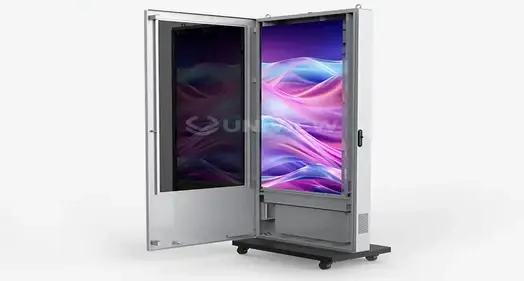
Understanding LED Display Kiosks: Technology, Types, and Benefits
The Technology Behind Full HD LED Displays
Better visual performance and lower energy use have made LED display technology a game-changer in how companies talk to their customers. Modern LED kiosks use advanced semiconductor technology to turn electrical energy straight into light. This makes displays that are bright and colorful, even when they are in full sunlight. Full HD definition makes sure that text is clear and images are beautiful, which is great for getting people's attention. These complex systems have high-tech thermal control systems that keep the right temperatures for operation while ensuring steady performance. The technology uses high-quality, offline covered AR glass that reduces reflections and glare, making sure that watching is best in all kinds of lighting. One important benefit that never goes away is the power economy. LED screens use a lot less power than older display technologies while producing more brightness.
Indoor vs Outdoor LED Display Solutions
When deciding whether to use an LED kiosk indoors or outdoors, you need to carefully think about the surroundings and the technology requirements. Indoor models usually work with lower brightness levels, around 500 to 1500 nits, which is best for places with controlled lighting, like shopping malls, business halls, and hospitality sites. For close-range exchanges, these units put color accuracy and eye comfort first.For outdoor use, designs need to be more rugged, with better weather protection and higher brightness. The sealed housings on these units are stronger and have IP65 and IP66 grades, which keep dust and water out. The higher brightness output makes sure that content can be seen during the day, and the advanced thermal management systems keep the screen from getting too hot when it's being used for long periods of time. Ratings for wind resistance up to 16 levels make sure that the structure stays strong in bad weather.
Interactive Capabilities and User Engagement
Touch-enabled LED kiosks turn idle watching into engaging customer trips that get people involved and help businesses succeed. Multitouch technology makes it easy to move around on information websites, service listings, and product catalogs. The flexible interface design lets users choose how they want to connect with it, an LED display kiosk, and it works the same way no matter what they do. Businesses can get useful information about their customers, make personalized suggestions, and speed up the service delivery process with these dynamic features. The integration features make it easy to connect to current business systems, which lets you update material and keep an eye on performance in real time. Advanced motion recognition technology lets you connect with things in more ways than just touching them. This creates memorable user experiences that help brands stand out in a crowded market.
Comparing LED Display Kiosks: Making the Right Choice for Your Business
LED vs LCD: Technical Performance Analysis
By understanding the main differences between LED and LCD display technologies, buying professionals can make choices that are in line with their companies' needs. LED screens are great because they are bright, use little power, and last a long time. This makes them perfect for outdoor use and places with a lot of natural light. Since there is no need for backlighting, the direct light output makes the contrast ratios higher and the colors more vivid.For indoor uses where high brightness isn't needed, LCD technology is cheaper than other options. However, LED screens are more valuable in the long run because they last longer (more than 100,000 hours) and need less upkeep. Because LED technology is so good at getting rid of heat, the cooling system doesn't have to work as hard. This makes the operation quieter, at about 60 dB, even in noisy outdoor settings.
Evaluating Brand Quality and Certifications
To find trustworthy makers, you need to carefully look at their quality approvals and international compliance standards. Reliable suppliers keep their approvals from quality groups in Europe, the US, and Japan up to date, which makes sure that their goods meet strict safety and performance standards. Manufacturing companies should have ISO quality management systems and environmental safety certifications that show they are committed to making products in a way that doesn't harm the environment. Research and development skills, patent collections, and innovation track records should all be looked at as part of the review process. Manufacturers who have been around for a while usually offer a lot of technical information, thorough specification sheets, and data from independent testing labs that prove their products work. Signs of a global footprint, like foreign partnerships, regional service centers, and the ability to offer help in more than one language, show that you can provide consistent service in different markets.
Budget Considerations and Total Cost of Ownership
Effective buying strategies look at more than just the original purchase price. They also take into account the total cost of ownership, which includes costs for setup, upkeep, and running the business. Most of the time, LED display machines cost more up front than LCD options, but they save you a lot of money in the long run because they use less energy and need less maintenance. The estimate should take into account the cost of power use, the supply of replacement parts, and the need for a service technician. Leasing and rental programs are two types of financing that give businesses with limited budgets or temporary employment needs more choices. Agreements to buy in bulk often include better prices and longer warranty periods that make the total value propositions stronger. The study should also look at how to make upgrades in the future and how to make sure that technology roadmaps stay relevant throughout the duration of the equipment.
Procurement Insights: Buying, Customization, and After-Sales Support
Supplier Selection and Geographic Reach
To successfully buy LED kiosks, LED display kiosk you need to work with providers who can show they can reach customers all over the world and offer local help. When judging a company, you should look at its ability to make things, its quality control systems, and its marketing networks that make sure its products are always available and delivered on time. Suppliers who have a history of doing business in more than one region usually offer better customer service and more parts. As part of the evaluation process, trips to factories, audits of quality systems, and calls to current users in related fields should be made. Financial stability signs, like insurance coverage, the ability to bond, and long-term business partnerships, give customers trust in the reliability of a provider. Being close to service centers cuts down on reaction times and shipping costs while still giving you access to technical support when you need it.
Customization Options and Design Flexibility
Many changes can be made to modern LED display booths so they perfectly match your brand's image and meet your useful needs. Size options range from small desktop units to big outdoor setups, and custom sizes can be made to fit the needs of any building. The colors, materials, and finishes of enclosures can fit current design themes while still being strong and resistant to the weather.
Here are the most important ways that LED display booths can be customized:
- Display Configuration: Screen sizes run from 32 inches to 98 inches, and aspect ratios and layouts for multiple screens can be changed.
- Enclosure Design: choosing from aluminum, steel, and hybrid materials with different surface treatments and color matching
- Interface Options: Payment systems, cameras, speakers, and sensors can be added for better usefulness.
- Mounting Options: Freestanding, wall-mounted, and hung from the ceiling models with security features to prevent theft
With these customization choices, businesses can make installations that are unique and show the spirit of their brand while also meeting certain operational needs. The adaptability makes sure that it works well with both current systems and plans for future growth.
Warranty Coverage and Support Systems
Protecting your investments in LED displays with comprehensive guarantee plans is important to make sure they keep working. Extended service choices that last between 3 and 5 years show that the maker trusts the product's trustworthiness and help you plan your budget for upkeep costs. Coverage should include replacing parts, paying for work, and sending urgent repairs more quickly. No matter where the site is located, global support systems that can respond 24 hours a day make sure that there is little downtime. Technical support in multiple languages, remote diagnostics, and on-site service choices all offer complete help throughout the duration of the equipment. Getting insurance from a reputable provider like China Pacific Insurance Company adds more layers of safety and financial security.
Designing and Maintaining LED Display Kiosks for Optimal Performance
Industrial Design Principles for Durability
The design of a robust LED booth uses engineering concepts to make sure that it works well in a variety of settings. High-quality materials that don't rust, break down in UV light, or buckle under stress are the first step in building a strong structure. European surface treatment methods offer better safety against the elements while keeping the surface's good looks for longer periods of time. Thermal management systems are very important for keeping working temperatures at the right level and stopping parts from breaking down. Modern ventilation designs allow natural airflow while still keeping the purity of the weather cover. Vents, internal fans, and thermal contact materials that move heat efficiently from important parts to the outside are some of the ways that heat can be dissipated. More and more people are worried about theft and damage in public places, so security features are being added. Double-layer anti-theft locks provide mechanical security, and designs that are hard to mess with make it less likely that someone will try to get in without permission. Impact-resistant glass and reinforced casings keep interior parts safe while keeping the screen clear and the touch sensitive.
Content Optimization for Full HD Displays
For the best visual effect, the material needs to be carefully planned so that it uses Full HD resolution and takes viewing distance and lighting into account. High-resolution images, an LED display kiosk, and clear text make the text readable from a range of viewing positions and distances. When choosing colors, you should think about how well they will show up outside and how consistent your brand should be. Content management systems let you schedule updates and changes that happen in real time, which keeps information up to date and useful. Dynamic content change keeps viewers interested and gets the word seen by as many people as possible from different groups. Because it works with business systems, price, inventory, and advertising data can be updated automatically, without anyone having to do it by hand. Motion images and video material look better on LED screens because they have faster refresh rates and better color reproduction. High-quality graphics and smooth changes make experiences that are fun and keep people's attention. Content optimization includes choosing the right file format, compression settings, and delivery methods to make sure that the quality of playback is always the same while using as little data as possible.
Maintenance Best Practices and Troubleshooting
Proactive repair programs keep technology running at its best and extend its useful life. Cleaning on a regular basis gets rid of dust, dirt, and other outdoor pollutants that can hurt the quality of the display and the cooling system's ability to work well. Specialized cleaning products and methods protect anti-reflective surfaces and get rid of all traces of dirt and grime. Part reviews, connection checks, and performance tests are all part of preventive maintenance routines. They find possible problems before they stop operations. Temperature monitoring, power consumption tracking, and display calibration make sure that the quality of the product stays the same over the service time. Writing down what you do for repair gives you useful information for warranty claims and improving efficiency. Troubleshooting steps help fix problems quickly and reduce the effects of downtime as much as possible. Power source issues, strange display behavior, and communication problems are all common problems that can usually be fixed by following a set of steps. Technical support teams can find and fix many problems without having to go to the site themselves, thanks to remote tracking. This cuts down on reaction times and service costs.
Future Outlook and Innovation Trends in LED Display Kiosks
Emerging Technologies and Smart Features
When artificial intelligence is added to standard LED kiosks, they become smart communication platforms that change content based on the demographics and interaction habits of the audience. Real-time crowd analysis is possible with computer vision technology. This lets the material be changed in real time to have the most impact and usefulness. Based on the surroundings and how the device is used, machine learning algorithms choose the best screen brightness, content, and energy use. Connectivity to the internet of things makes it possible to control a whole fleet, keeping an eye on performance data, predicting when maintenance will be needed, and coordinating the distribution of material across multiple places. Edge computing cuts down on delay and bandwidth needs while letting advanced local processing of interaction features and analytics functions work. With advanced sensor integration, you can connect with things in more ways than just touching them. As people get closer, proximity sensors turn on content, and motion recognition lets you participate without touching the screen, which is good for cleanliness and meets accessibility needs. Environmental monitors change the settings of the display automatically based on the temperature, lighting, and weather.
Sustainability and Energy Efficiency Advances
Environmental sustainability drives progress in LED display technology by using less energy and materials that can be recycled. Next-generation LED chips produce more light with less power use, which makes it possible for sites in remote areas to be driven by batteries or the sun. Smart power control systems use the least amount of energy possible based on what's being used and the environment. Sustainable manufacturing practices include choosing the right materials, making production more efficient, and having recycling programs for old products that have little to no effect on the environment. Modular designs let you update parts without replacing the whole system, which extends its useful life and cuts down on waste. Strategies for lowering carbon footprints include finding the best ways to use transportation, making things locally, and running businesses in ways that use less energy and are in line with the company's environmental goals. Certification programs like Energy Star and EPEAT give you a way to compare products' environmental performance and make buying decisions.
Market Expansion and Application Evolution
As more people move to cities, LED display kiosks and more businesses go digital, the markets for digital signs keep growing in new areas and types of businesses. LED booths are used in smart city projects as information hubs, wayfinding systems, and emergency contact networks to help cities' growing populations. Modernizing transportation infrastructure makes room for customer information systems, ad sites, and places where services can be combined. As stores move toward digital experiences, more people want engaging displays that connect online and offline shopping. Healthcare apps include systems that let patients check in, help them find their way, and show them health information in a way that makes service delivery more efficient. Educational schools use interactive booths to help students find their way around campus, promote events, and get services that make their time on campus better.
Conclusion
LED display booths with Full HD images and sturdy construction are must-haves for companies that want to get customers more involved and raise brand awareness. Advanced LED technology, weatherproof design, and the ability to connect with people all work together to make platforms that can be used in a variety of situations and get measured results. Making smart choices about what to buy by putting quality, flexibility, and full support at the top of the list will lead to successful projects that provide long-term value. As technology keeps getting better, these high-tech systems will become even more important for businesses to connect with their customers through interesting visuals.
FAQ
1. What brightness levels are recommended for outdoor LED display kiosks?
For outdoor LED display booths to be readable in full sunlight, the brightness level needs to be between 2000 and 4000 nits. Following this standard will make sure that the material can be read during the day and that the device will use less energy at night by automatically adjusting the brightness.
2. How do I choose between touchscreen and non-touchscreen LED kiosks?
Touchscreen types work great for things like finding your way, browsing products, and looking up service providers. Versions without touchscreens work well for information boards and ads, where watching without touching the screen is enough. Think about how much maintenance is needed, since touchscreen types need to be cleaned and calibrated on a frequent basis.
3. What are the cost differences between indoor and outdoor LED kiosks?
Due to better weatherproofing, higher brightness, and more ruggedized parts, outdoor LED booths usually cost 40 to 60 percent more than indoor types. However, outdoor units usually give a better return on investment because they are easier to see and can be used 24 hours a day, seven days a week.
4. How long do LED display kiosks typically last?
With regular upkeep, good LED display screens will work reliably for 10 to 15 years, giving you more than 100,000 hours of use. After 7–10 years, some parts may need to be replaced, but flexible designs make changes possible without having to replace the whole system.
5. What maintenance is required for LED display kiosks?
Regular care includes cleaning once a month, checking the performance every three months, and having a professional inspect it once a year. Outdoor units need to be cleaned and checked for weather seals more often. Remote tracking systems can figure out when a repair is needed and schedule it in the best way.
Transform Your Business with Uniview Commercial LED Display Kiosks
Are you ready to take your digital signs to the next level with high-end LED display kiosks? Uniview Commercial blends decades of production experience with cutting-edge technology to provide stunning Full HD images and the longest-lasting durability possible. Our wide range of customization options, global support network, and top-notch guarantees make sure that your investment pays off in a big way. Contact our knowledgeable staff at sales@univiewlcdisplay.com right away to talk about your LED display booth needs and find out why top brands around the world choose Uniview Commercial as their digital signage provider of choice.
References
1. Digital Signage Technology Review: LED vs. LCD Performance Analysis in Commercial Applications, International Display Technology Association, 2024.
2. Global LED Display Market Trends and Procurement Best Practices for B2B Applications, Commercial Electronics Research Institute, 2024.
3. Weather Resistance Standards for Outdoor Digital Signage Equipment: IP Rating Requirements and Testing Protocols, International Electrotechnical Commission, 2023.
4. Energy Efficiency Guidelines for Commercial LED Display Systems: Sustainability and Cost Optimization Strategies, Green Technology Standards Organization, 2024.
5. Interactive Digital Kiosk Design Principles: User Experience and Accessibility Requirements for Public Installations, Human-Computer Interaction Research Council, 2024.
6. Total Cost of Ownership Analysis for Commercial LED Display Procurement: Financial Planning and ROI Optimization, Business Technology Investment Advisory, 2023.
Learn about our latest products and discounts through SMS or email