- English
- French
- German
- Portuguese
- Spanish
- Russian
- Japanese
- Korean
- Arabic
- Greek
- German
- Turkish
- Italian
- Danish
- Romanian
- Indonesian
- Czech
- Afrikaans
- Swedish
- Polish
- Basque
- Catalan
- Esperanto
- Hindi
- Lao
- Albanian
- Amharic
- Armenian
- Azerbaijani
- Belarusian
- Bengali
- Bosnian
- Bulgarian
- Cebuano
- Chichewa
- Corsican
- Croatian
- Dutch
- Estonian
- Filipino
- Finnish
- Frisian
- Galician
- Georgian
- Gujarati
- Haitian
- Hausa
- Hawaiian
- Hebrew
- Hmong
- Hungarian
- Icelandic
- Igbo
- Javanese
- Kannada
- Kazakh
- Khmer
- Kurdish
- Kyrgyz
- Latin
- Latvian
- Lithuanian
- Luxembou..
- Macedonian
- Malagasy
- Malay
- Malayalam
- Maltese
- Maori
- Marathi
- Mongolian
- Burmese
- Nepali
- Norwegian
- Pashto
- Persian
- Punjabi
- Serbian
- Sesotho
- Sinhala
- Slovak
- Slovenian
- Somali
- Samoan
- Scots Gaelic
- Shona
- Sindhi
- Sundanese
- Swahili
- Tajik
- Tamil
- Telugu
- Thai
- Ukrainian
- Urdu
- Uzbek
- Vietnamese
- Welsh
- Xhosa
- Yiddish
- Yoruba
- Zulu
Semi-Outdoor Window Facing Display with Remote Content Control
Semi-outdoor window facing displays represent a specialized category of digital signage that bridges the gap between indoor comfort and outdoor visibility requirements. These innovative displays are engineered to withstand partial environmental exposure while delivering exceptional brightness and clarity for storefront applications, retail environments, and corporate spaces. A semioutdoor window facing display with remote content control capabilities enables businesses to manage their visual messaging dynamically, updating content across multiple locations from a centralized platform without requiring on-site personnel intervention. There is a special type of digital signs called semi-outdoor window-facing displays that meet the needs for both indoor comfort and outdoor exposure. These new screens are made to be partially exposed to the environment while still providing great brightness and clarity for storefronts, retail settings, and business offices. Businesses can handle their visual messages dynamically by updating content across multiple locations from a central platform without having to send staff to each location. This is possible with a semioutdoor window facing display that has remote content control capabilities.
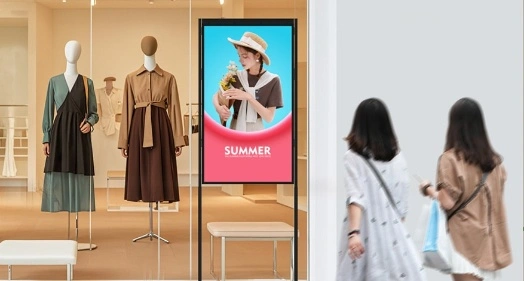
Understanding Semi-Outdoor Window Facing Displays
Semioutdoor window facing displays are a special kind of digital signs because they are made for transitional areas that have to deal with both indoor and outdoor environmental problems. These screens are great for shop windows, entrance halls, and covered outdoor areas because they use high-brightness LED technology and have safety features.
Several important technologies are built into the basic structure of these screens. LED screens are the main technology behind displays. They offer brightness levels that are usually between 2000 and 4000 nits, which means that they can be seen through glass even in full sunlight. Advanced heat absorption systems keep things from getting too hot in partially open spaces, and special mounting hardware makes sure they stay in place in window-facing situations.
Businesses now use remote content management tools to change how they set up and run digital signs. These systems let you schedule updates, make changes to content in real time, and keep an eye on multiple display places from a single dashboard interface. Because of the connection, marketing teams can quickly react to new sales, holiday campaigns, or emergency alerts without having to send technology staff to each location.
These days, remote controls can handle many types of material, like movies, pictures, live feeds, and interactive apps. Cloud-based platforms make sure that you can always join and have backup systems that keep your displays working even when the network goes down. Security measures keep people from getting in without permission and make sure that information is delivered smoothly in a lot of different places.
Displays that face a window have to deal with special weather problems, like changes in temperature and humidity, as well as UV light coming through the glass. For protection against water and dust getting in, grades from IP65 to IP66 are available. Special coats also protect against UV damage and keep colors accurate for long periods of time.
The screens are built to last using materials that don't rust and European surface treatment technology that makes them last longer in harsh settings. Double-layer anti-theft locks keep important items safe in easy-to-reach places, and wind resistance grades of up to level 16 make sure the doors stay stable in bad weather.
Comparing Semi-Outdoor Window Facing Displays to Other Display Types
Standard indoor screens aren't bright enough or protected enough from the elements to work in window-facing situations where light levels change a lot during the day. Semi-outdoor units have a much higher brightness output—usually three to five times higher than indoor options—so content can be seen and kept interesting no matter what the lighting is like outside.
Semi-outdoor screens solve problems caused by reflective glass surfaces and different user positions by offering wider viewing angles and reducing glare. These features are especially important in stores where they need to grab customers' attention quickly and successfully from a variety of angles.
Full outdoor displays offer the most protection from the weather, but they are often too complicated for uses that face windows and get some shade from buildings. Semi-outdoor solutions offer the best performance at lower costs, which makes them appealing to companies that want to communicate visually with impact but don't want to pay the higher prices of outdoor solutions. Another big benefit is that semi-outdoor screens use less power than full-outdoor options while still performing better than indoor units. This balance means that the display will have lower operating costs and a smaller effect on the world over its lifetime.
Digital signs are good for general promotion, but they aren't as precise or cost-effective as window-facing displays for certain business uses. Semi-outdoor window displays let you send targeted messages, strengthen your brand, and interact with customers at the point of entry, which is where most decisions are made. Businesses can use multiple semi-outdoor units in different places while still keeping control of all the material from one place. This lets them create coordinated marketing campaigns that are just as effective as billboards but cost a lot less per spot.
How to Select the Best Semi-Outdoor Window Facing Display for Your Business?
Choosing a semioutdoor window facing display show starts with figuring out how bright it needs to be. Places with lots of big windows that let in full sunlight need displays that can handle 3000 to 4000 nits. Places with some shade or smaller windows may be able to get by with 2000 to 2500 nits. Resolution needs to balance the amount of information needed for the content with the distance of the viewer, since higher pixel densities are needed for better visual effect at closer watching distances.
The size requirements depend on the mounting room you have, the watching distance, and the complexity of the material. Larger screens get people's attention better, but they need more support structures and power systems to keep up. Scheduling tools, real-time tracking, emergency override features, and multi-user access controls that work with how your company is managed should all be part of your remote content control.
Purchasing managers have to figure out how trustworthy a seller is by looking at a number of factors, such as certifications, manufacturing skills, and customer support systems. Compliance with international standards makes sure that the product works with local safety and electrical codes, and dealer clearance networks make sure that the product can get help and service in its own country.
Case studies and comments from customers show how well the product works in real life and how responsive the provider is during the installation and operation phases. Businesses that operate in various regions or need to be able to operate 24 hours a day need to be able to get technical help in a variety of time zones.
A full cost study must include more than just the original buy price. It must also include the costs of installation, ongoing maintenance, energy use, and possible upgrade costs. For deployments in multiple locations, buying in bulk can save you a lot of money, and extra insurance coverage can protect you from having to pay for repairs you didn't expect.
There may be long-term costs for subscriptions or licenses that come with remote content control systems. These ongoing costs should be weighed against the time and money saved by centralizing content management and reducing the need for technical support on-site.
Installation and Maintenance Best Practices
A full site survey, which includes a look at the building, the electrical equipment, and the environmental conditions, is the first step to a successful installation. Mounting surfaces must be strong enough to hold the weight of the show and the force of the wind, and electrical connections must meet local safety and building rules.
Window orientation research figures out the best viewing angles and helps find reflection problems that could make the display less useful. HVAC issues make sure there is enough air flow to get rid of heat, especially in mounting settings that are enclosed or partly enclosed.
For remote content management tools to work reliably, they need strong backup systems and safe network connections. Setting up user accounts, organizing the content library, making scheduling templates, and setting up emergency contact procedures are all part of the initial arrangement.
Pay close attention to security procedures, bandwidth needs, and firewall configurations when integrating with current IT systems. Regular security fixes and software updates keep the system safe and add new features and functions over time.
Regular cleaning plans keep screens clear and stop dust from building up, which can hurt picture quality and heat dissipation. Inspections every three months check the stability of the fixing, the electrical connections, and the effectiveness of the environmental seal before problems get worse and cost a lot to fix.
By using remote troubleshooting tools to keep an eye on performance, problems can be found before they affect the display's usefulness. Comprehensive repair agreements with providers make sure that you get expert technical help and a quick answer when equipment breaks down or stops working properly.
Future Trends and Innovations in Semi-Outdoor Window Facing Displays
AI-powered content scheduling systems look at patterns of viewers, the environment, and business data to automatically find the best times to send content. Machine learning systems change based on the environment and how people behave in it. This increases participation while lowering the need for manual management.
Predictive maintenance uses data from sensors and performance analytics to find problems with machines before they break down. These systems plan maintenance tasks for times when there isn't much traffic and automatically order replacement parts to keep operations running as smoothly as possible.
The next wave of LED technologies keeps making them brighter and more colorful while using less energy. In the right places, solar integration options could allow for energy-neutral activities, which would cut costs and damage to the environment at the same time.
Materials that can be recycled and flexible design make it easier to reuse old parts and create less waste. Energy management systems make the best use of power based on the amount of light present and the needs of the content, which lowers running costs even more.
Touch-screen integration turns static screens into engaging customer service platforms that let customers get information about products, get help finding their way, and give direct feedback. Proximity sensors and camera systems make it possible to offer personalized content based on the demographics and behavior patterns of viewers.
With multi-location synchronization, campaigns can be organized across entire store networks or business buildings. This creates a unified brand experience while still letting users customize things locally. Because of these changes, semi-outdoor displays are now seen as sites for full-on customer interaction rather than just advertising tools.
Conclusion
Semioutdoor window facing displays with remote content control are a big step forward in business communication technology. They offer the best combination of visibility, sturdiness, and operating freedom. With unified management, these systems let companies keep up-to-date, interesting interactions with their customers while also making operations simpler and cheaper. As AI is added, energy efficiency is improved, and interaction is increased, these displays will become more useful for businesses that want to stay ahead of the competition by getting customers more involved and making their brand more visible.
FAQ
Depending on the placement setting, the best brightness levels are usually between 2000 and 4000 nits. Places with a lot of glass that let in full sunlight need the higher end of this range. Places that are partly covered may be fine with 2000 to 2500 nits. A professional site inspection helps figure out exactly what each building site needs.
Remote content management gets rid of the need for people to be on-site to physically change show content. This cuts down on the cost of labor and travel between places. Centralized scheduling makes it easier to create and distribute content quickly, and real-time tracking finds and fixes problems before they become so bad that they need expensive emergency service calls.
Most of the time, leading makers offer guarantees that cover both hardware and software for 3 to 5 years. Premium providers offer technical help 24 hours a day, 7 days a week, with assured response times. Some also offer full insurance coverage through third-party insurers to protect against damage or failures that happen out of the blue.
Modern semi-outdoor screens can connect to a number of business systems, such as inventory management systems, point-of-sale platforms, and tools for managing customer relationships. Connecting to an API lets content be updated automatically based on business data, and scheduling tools can work with operating calendars and marketing efforts.
Transform Your Business Visibility with Uniview Commercial
With our cutting-edge semioutdoor window facing display systems and extensive remote content control capabilities, Uniview Commercial is ready to improve your brand's visibility. Our displays have great brightness levels of up to 4000 nits, IP66 grades for security, and corrosion-resistant construction that makes sure they will work well for a long time. We offer customized solutions backed by 3–5 year warranties and expert help 24 hours a day, 7 days a week. We are a known company with a presence in more than 100 countries around the world. For personalized talks, email our expert team at sales@univiewlcdisplay.com to find out how our cutting-edge technology can change the way you connect with customers and make your business more efficient.
References
1. Digital Signage Market Analysis: Semi-Outdoor Display Technologies and Growth Projections 2024-2029, International Display Research Institute, 2024.
2. Remote Content Management Systems: Operational Efficiency and Cost Reduction in Commercial Display Networks, Journal of Digital Marketing Technology, Volume 15, 2024.
3. Environmental Durability Standards for Semi-Outdoor Electronic Displays: IP Rating Requirements and Performance Benchmarks, Technical Standards Association, 2024.
4. Brightness Optimization for Window-Facing Digital Displays: Ambient Light Adaptation and Viewer Engagement Studies, Display Technology Review, Issue 8, 2024.
5. AI Integration in Digital Signage: Automated Content Scheduling and Performance Analytics for Semi-Outdoor Applications, Smart Technology Quarterly, Spring 2024.
6. Energy Efficiency and Sustainability Trends in Commercial Display Technology: LED Advances and Solar Integration Possibilities, Green Technology Journal, March 2024.
Learn about our latest products and discounts through SMS or email