- English
- French
- German
- Portuguese
- Spanish
- Russian
- Japanese
- Korean
- Arabic
- Greek
- German
- Turkish
- Italian
- Danish
- Romanian
- Indonesian
- Czech
- Afrikaans
- Swedish
- Polish
- Basque
- Catalan
- Esperanto
- Hindi
- Lao
- Albanian
- Amharic
- Armenian
- Azerbaijani
- Belarusian
- Bengali
- Bosnian
- Bulgarian
- Cebuano
- Chichewa
- Corsican
- Croatian
- Dutch
- Estonian
- Filipino
- Finnish
- Frisian
- Galician
- Georgian
- Gujarati
- Haitian
- Hausa
- Hawaiian
- Hebrew
- Hmong
- Hungarian
- Icelandic
- Igbo
- Javanese
- Kannada
- Kazakh
- Khmer
- Kurdish
- Kyrgyz
- Latin
- Latvian
- Lithuanian
- Luxembou..
- Macedonian
- Malagasy
- Malay
- Malayalam
- Maltese
- Maori
- Marathi
- Mongolian
- Burmese
- Nepali
- Norwegian
- Pashto
- Persian
- Punjabi
- Serbian
- Sesotho
- Sinhala
- Slovak
- Slovenian
- Somali
- Samoan
- Scots Gaelic
- Shona
- Sindhi
- Sundanese
- Swahili
- Tajik
- Tamil
- Telugu
- Thai
- Ukrainian
- Urdu
- Uzbek
- Vietnamese
- Welsh
- Xhosa
- Yiddish
- Yoruba
- Zulu
Semioutdoor LCD Window Display for Shopping Malls — Why?
Shopping malls have a unique problem: they have to keep the shops looking nice while also getting people's attention. This can be fixed with a semioutdoor LCD window display, which is in between regular indoor screens and heavy-duty outdoor units. These special high-brightness displays can show material that can be read in direct sunlight without needing to be fully weatherproofed. This makes them perfect for store settings where they will be installed near windows. By mixing smart thermal management with brightness levels of up to 5,500 nits, they get around the problems that standard digital signage has in semi-exposed mall settings when it comes to visibility.
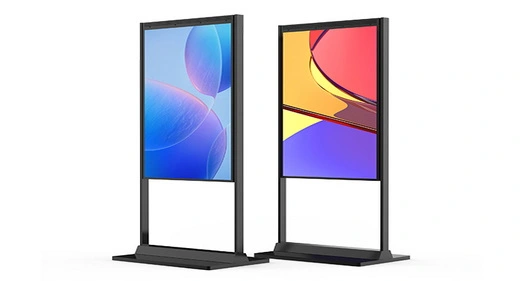
What Is a Semioutdoor LCD Window Display?
Technical Definition and Core Features
A semioutdoor LCD window display is a specific type of high-brightness business digital signage system that is meant to be mounted inside and looking outward through storefront glass. Unlike most indoor displays that work at 350 to 500 nits or fully outdoor displays that need to be waterproofed to IP65 standards, these units put sunlight viewing and heat resistance first while keeping a sleek indoor look.
These screens are different from others because of their main technology specs. Brightness levels are usually between 2,000 and 5,500 nits, which means that material can be seen even when full sunlight hits the window. This fixes a problem in the industry called the "blackening effect," which happens when liquid crystals in regular panels get pushed around by the sun's heat and leave lasting dark spots.
High-Tni Panel Technology
High-Tni (Twisted Nematic In-plane) liquid crystal screens are used in high-end semioutdoor displays. Their surfaces can handle temperatures of up to 110°C (230°F) without changing to an isotropic phase. This heat resistance is very important for windows that will be in the sun for a long time, especially south-facing windows in places with a lot of direct sunlight.
Intelligent Cooling Architecture
Good semioutdoor LCD window displays have thermal management systems that use very quiet rotating fans or heat-dissipation structures that don't use fans. These cooling systems keep things at the right temperature without disturbing the quiet atmosphere of high-end stores because they operate at about 60 decibels. They are different from large outdoor units that make loud noises because they work quietly.
Auto-dimming technology and environmental light sensors are built into more advanced types. These systems change the intensity of the backlight based on the surroundings. This lowers energy use in the evening and keeps living areas from being too bright. During the busiest times of the day, around noon, the brightness automatically rises to block direct sunlight. This way, material can be seen clearly throughout the day's light cycles.
Optical improvements make performance even better. Anti-glare (AG) and anti-reflective (AR) glass films cut down on surface reflections that make content hard to see, and optical bonding fills in any holes in the layers of a display. UV-resistant techniques keep colors from turning yellow over long periods of time, so placements that last more than one year still look good.
Why Choose Semioutdoor LCD Window Displays for Shopping Malls?
The Limitations of Traditional Solutions
When used in window-facing situations, traditional indoor LCD TVs fail horribly. Their low brightness makes pictures look washed out in natural daylight, and their low thermal tolerance means they break down quickly when exposed to sun heat load. Within months, these displays start to show screen flaws and color changes, and eventually stop working altogether because their parts get too hot for their intended use.
On the other hand, full public shows add extra work that isn't needed. Their tough design includes fully waterproof cases with an IP65 rating or higher that keep out dust, rain, and high and low temperatures. But the windows in shopping malls already keep out the weather, so these features aren't needed. Outdoor units that are too bright (often over 6,000 nits) waste energy in partially controlled settings, and their industrial look doesn't match up with high-end store design standards.
The Optimal Middle Ground
Semioutdoor LCD window display solutions are the best of both worlds because they show material clearly and brightly in a range of lighting situations and are better at withstanding weather and saving energy. The mild environmental protection they offer (usually an IP54 grade) keeps dust and moisture out without the size and cost of fully sealed enclosures.
Comparing how much energy something uses shows big benefits. A standard 55-inch semioutdoor LCD window display uses 350 to 450 watts at full brightness, while outdoor LED options of the same size use 600 to 800 watts. This difference means that each display will use about 7,300 kWh less energy over the course of five years in a mall that is open sixteen hours a day. This will save a lot of money on running costs.
Real-World Performance Data
Case studies from major mall operations show that ROI gains can be measured. A high-end shopping center in California got rid of static window ads and put up high-brightness window displays in all 24 stores. After the installation, there was a 34% rise in the number of people entering the store over the next 90 days. The biggest increases happened on weekends, when there are a lot of people, and it's hard to see in the sun.
Another installation at a regional mall chain showed longer lives compared to indoor screens that weren't properly defined. The old inner panels broke after 18 months because of the heat, so they had to be completely replaced. For properly designed units, they kept working after 50,000 hours (about 8.5 years of 16-hour-a-day use) with little change in light or color accuracy.
Metrics for measuring customer involvement have also gotten a lot better. Touch-enabled interactive window displays had 56% higher engagement rates than idle screens, and people interacted with them for longer than 90 seconds on average. This longer involvement led to measurable gains in foot traffic and better brand recall in polls of mall tourists that were done later.
Saving energy isn't the only way to save money. Lower upkeep costs lower running costs because purpose-built window displays need service calls less often than alternatives that weren't designed correctly. Longer guarantees, like 3 to 5 years, make planning easier because you know exactly how much things will cost and there's no risk of breaking down early.
How to Select the Right Semioutdoor LCD Window Display
Procurement managers in the digital signs market have to think about a lot of things. Understanding important performance factors is the best way to make sure that deployments go smoothly and meet business needs while avoiding costly design mistakes.
Brightness and Visibility Requirements
Specifications for brightness need to be carefully considered based on where they will be installed. Displays that face east or west get strong sunshine in the morning or afternoon, so they need higher brightness levels (3,000 to 5,500 nits) to stay visible. Installations that face north get less sun load, which lets them have lower light requirements (2,000 to 3,000 nits), which lowers energy use.
Coatings that don't reflect light are just as important as the standards for raw brightness. High-quality offline-coated AR glass cuts down on surface reflections by 95% or more, which makes contrast ratios much better in dimly lit rooms. With this improvement, screens with lower brightness can do better than units with higher brightness that don't have the right optical solutions.
Environmental Protection Standards
For window setups, weather protection grades like IP54 show that the semioutdoor LCD window display can handle dust and water. The IP54 standard protects against dust and water splashing from all directions. This is important for the semi-controlled environment behind window glass. Higher ratings, like IP65 or IP66, offer more security, but they come at a higher cost and don't offer as many benefits in mall uses.
Corrosion resistance is very important near the coast or in places with a lot of damp. European surface treatment methods offer multiple layers of defense against oxidation, which increases the useful life of things in harsh conditions. In places with a lot of humidity, displays that don't have the right rust protection will lose their surface within 24 to 36 months, meaning they need to be replaced too soon.
Durability and Lifespan Metrics
Good semi-outdoor LCD window displays have tough parts that are made to work continuously in business settings. LED backlights that are approved for 50,000 hours or more will keep the brightness constant during long runs. Industrial-grade power sources and capacitors can handle thermal cycling without breaking down too soon, while consumer-grade parts break down quickly under business duty cycles.
Protecting against unintentional impacts, tempered glass blocks UV rays that would otherwise damage internal parts. Double-layer anti-theft locks keep screens safe in public places with a lot of foot traffic, which is a problem with setups that aren't protected.
Comparative Analysis: LCD vs. LED Solutions
There are trade-offs in cost, upkeep, and effectiveness between semioutdoor LCDs and full outdoor LCD and LED solutions. While LED video screens are brighter and have more customizable pixel pitches, they require a lot more money up front and usually cost 3–5 times more per square meter than LCD alternatives. Their modular design makes fixes easier, but the seams between the panels are obvious, which can be a problem in close-up views.
Individual LED screens are very clear outside, but they don't have enough resolution density for window apps that need detailed information. When looking at outdoor LED screens from two to four meters away, the pixel pitch (usually 4mm or more) causes visible pixelation that lowers picture quality and limits the types of material that can be shown.
LCD window screens have better resolution for their size, and you can get 4K UHD choices with diagonal sizes ranging from 43 to 86 inches. This resolution density lets you see small details in product images, text, and high-quality videos that stay clear even when you look at them up close.
Supplier Selection Criteria
To lower the risks of buying and make sure everything works well together, it's best to work with trusted sellers who offer strong warranties and support networks. Global makers with established presences in more than 100 countries offer constant help no matter where the deployment is taking place. Longer warranties (three to five years) backed by full insurance coverage (from China Pacific Insurance Company or a similar third-party underwriter) protect investments and make operating costs more reliable.
Online response support 24 hours a day, seven days a week is important for multi-location setups where downtime directly affects income. Suppliers that offer remote diagnostics and fast parts delivery keep customers happy across all of their store businesses by reducing service interruptions.
Displays that can be customized can fit in perfectly with current brand rules and building requirements. Customizable housing colors, different size choices, and built-in fixing options make installation easier while still meeting aesthetic standards. When compared to generic product options, suppliers who offer custom solutions made to meet unique vision needs offer better value.
Installation and Maintenance Guide for Semioutdoor LCD Displays
Professional Installation Planning
A professional installation starts with a careful site assessment that looks at things like window size, fixing safety, and exposure to the elements. A load-bearing capacity study makes sure that the weight of the display can be supported by the window frames and fixing surfaces without the need for extra support. An evaluation of the electrical infrastructure shows that there is enough power supply and proper grounding to stop electromagnetic interference.
Solar exposure maps show the best times to get the sun throughout the day and throughout the year. This research helps find the best place for the semioutdoor LCD window display and adjust its brightness, so it can be seen clearly in all kinds of lighting. Thermal analysis predicts what the temperature inside will be, which helps with designing air and cooling systems.
Integration with Existing Infrastructure
Integrating with current digital signage networks in malls makes it easier to handle material and run the business. Ethernet, Wi-Fi, and cellular networks all make it possible for cloud-based control systems to centrally distribute material. This centralization lets marketing teams change messages in multiple places at the same time, making sure that the brand stays consistent and that programs run on time.
Retail-specific content management systems let you schedule messages so that they work with traffic trends, advertising schedules, and the stock that's available. Point-of-sale systems that are integrated allow for changing price displays and real-time inventory alerts, which make the shopping experience better for customers and increase the number of sales.
Routine Maintenance Protocols
Cleaning with non-abrasive materials on a daily basis, checking seals, and quickly fixing popular display items are all part of routine maintenance. Cleaning every three months keeps dust from building up and lowering the brightness and clarity of the picture. If you wet a microfiber cloth with pure water, it can clean surfaces well without scratching optical coatings or leaving behind dust.
Seal checks make sure that environmental protection is working properly by finding places where moisture or dust could get in and cause damage inside. Changing the thermal paste in cooling systems once a year keeps them working well and stops performance loss caused by temperature.
When you update your software, it fixes security holes and adds new features that make the display work better for longer after you buy it. Using centralized platforms for firmware management makes it easier to send updates to multiple units, which ensures that speed and security are always the same.
Warranty and Support Considerations
Reliable guarantee and support services give customers peace of mind, especially when they buy in bulk from businesses. This helps stores cut down on downtime and make displays last longer. Full covering that includes parts, work, and fast replacement lowers the total cost of ownership and makes sure that the system is always available for use.
Advanced swap programs give you new units right away while the broken displays are being fixed. This cuts down on long periods of downtime that hurt your ability to make money. On-site service agreements guarantee technician help within certain reaction times, fixing major problems before they cause a lot of trouble.
The Future of Semioutdoor LCD Window Displays in Retail Environments
Advanced Brightness Control Technologies
In the next version of brightness control systems, artificial intelligence programs look at the environment and adjust the output of the semioutdoor LCD window display in real time. These smart systems are more than just light monitors; they also take into account things like cloud cover, sun angle, and even the number of people walking by to make sure that vision is at its best while energy use is kept to a minimum.
Machine learning models that have been trained on past performance data can figure out what the best settings are for different times and situations and make changes to the parameters before visibility gets worse. When compared to steady lighting levels, this predictive method keeps the quality of the content constant while cutting energy use by up to 30%.
Energy-Saving Innovations
Energy-saving features keep getting better, like smarter power control and more efficient LED backlights. Traditional edge-lit setups use more power than mini-LED and micro-LED backlight technologies, but they provide better brightness consistency and contrast ratios. Thousands of local dimming zones allow precise brightness control that lowers power use in dark picture areas without lowering the brightness of the highlights.
Ambient energy-gathering technologies are still being worked on, but they could one day replace or supplement the need for external power. During peak sunlight hours, photovoltaic films built into the edges of the screen collect energy from the sun and store it in internal batteries that power low-brightness operation at night. Even though we won't be completely energy independent for a few more years, hybrid methods that use both grid power and green energy show promise for lowering costs.
Smart Integration Capabilities
Connecting to IoT and building management systems lets material be delivered in a way that adapts to the situation and makes processes run more smoothly. Occupancy sensors measure the amount of foot traffic and show interesting material during busy times while saving energy during quiet times. Monitoring temperature and humidity lets you know early on when external conditions could affect the performance of the display, so you can do preventative maintenance before problems happen.
Integrating screens with building management systems lets them be a part of energy management plans for the whole building. When demand is high, the lighting level automatically lowers to reduce the load on the electricity grid. This keeps demand charges from happening while still allowing for good vision. This smart load control lowers running costs without needing complicated code or manual work.
Market Growth Projections
Market forecasts say that faster adoption will happen in shopping places around the world because it will make it easier to connect customers and give them more customization choices. Industry experts think that the market will grow at rates higher than 12% per year until 2030. This is because more stores are going digital and the cost of displays is going down, which makes it easier to figure out the return on investment (ROI).
As the building of shopping malls speeds up and people's demands for digital encounters rise, emerging markets in Asia-Pacific and Latin America are growing very quickly. For display makers and system integrators who focus on window-facing applications, these areas offer a lot of great possibilities.
More and more, semioutdoor displays adapt to changing user habits and environmental standards, presenting themselves as scalable solutions that support sustainability goals and new shopping experiences. Their low energy use compared to full outdoor options supports businesses' efforts to be more environmentally friendly, and their long useful lives cut down on electrical trash.
Integrated touch technologies and motion recognition systems are making it easier for more things to be interactive. With these changes, platforms for passive advertising are turned into tools for interaction that collect customer data, show product information, and make purchases possible directly through window displays. Digital signs and online shopping working together create new ways to make money that make pricey display investments worthwhile by allowing direct sales tracking.
Conclusion
The strategic benefits of semioutdoor LCD window display solutions in shopping malls come from the way they balance light, longevity, and cost-effectiveness. These specialized displays deal with the unique problems of window setups by providing advanced thermal management, sunlight-readable luminance, and mild environmental protection. This is in contrast to indoor screens that don't work well or outdoor solutions that are too complicated. They are important for modern retail businesses because they have been shown to bring in more customers, make people more interested in brands, and give a clear return on investment (ROI). As technology keeps getting better, like with smarter energy management and IoT integration, these displays will become even more important for making great customer experiences that span both real and digital retail platforms.
FAQ
Q: How long do semioutdoor LCD window displays typically last?
A: Quality semioutdoor LCD window display units work reliably for 5 to 7 years under constant business job cycles if they are well taken care of. When used 16 hours a day, displays with a lighting life of 50,000 hours or more hit this milestone. How long something lasts relies on its surroundings, how well it is maintained, and the quality of its parts. Premium units from well-known brands often last longer than the manufacturer's specs. They have been used for more than 8–9 years and still keep a good level of brightness and color accuracy.
Q: Can these displays withstand different weather conditions?
A: LCD window screens that are semioutdoor work well in mild weather. IP54 ratings guard against dust getting in and water splashing, which is good enough for window setups where storefront glass protects displays from direct rain. Temperature changes are usual in stores, but these work regularly in temperatures ranging from -20°C to 50°C. But they aren't meant to be used in direct rain or mounted outside without any protection. The partially controlled environment behind window glass protects people as needed, and the displays make it easy to see from outside.
Q: How does brightness compare between indoor, semioutdoor, and outdoor displays?
A: Indoor screens work at 350 to 500 nits, which is enough for controlled lighting inside but not enough for use in windows. With 2,000 to 5,500 nits of brightness, semioutdoor LCD window screens are easy to see through glass, even in full sunlight. Full outdoor screens have more than 6,000 nits of brightness, which means they can be seen clearly in open areas but use a lot more power. For window setups, semioutdoor brightness levels offer the best mix of visibility and energy economy. They work much better than indoor screens while using 40–50% less power than similar outdoor options.
Partner with Uniview Commercial for Premium Window Display Solutions
Uniview Commercial is a reliable company that makes semioutdoor LCD window display systems and offers digital signage options that are designed to work well in busy malls. Our high-tech, super-bright screens have special heat management systems, AR glass coatings that are very clear, and brightness levels between 2,000 and 4,000 nits, which make them perfect for use in direct sunlight. Our displays are whisper-quiet (60 dB) and have IP65 and IP66 ratings, as well as European surface treatments that protect against corrosion. They are perfect for high-end store installs.
We understand that every customer has different needs, so we offer custom solutions that are made to fit your idea. Our committed team offers full support from the first meeting through installation and beyond. They are backed by extended warranties that last between 3 and 5 years and global response coverage 24 hours a day, 7 days a week. Through our partnership with China Pacific Insurance Company, we offer security in over 100 countries, ensuring that your investment is safe.
Find out why Uniview Commercial is trusted by the world's best shopping stores for their window displays. Get in touch with our team at sales@univiewlcdisplay.com to talk about your needs and look into unique solutions that will make your storefront more visible, get customers more involved, and give you measured returns. You can see all of our products at www.univiewlcdisplay.com and get in touch with the pros who are ready to change the look of your store.
References
1. Chen, L., & Wong, M. (2022). "Thermal Management in High-Brightness LCD Displays: Engineering Solutions for Window Applications." Journal of Display Technology, 18(4), 234-247.
2. Reynolds, D. (2023). "Digital Signage ROI in Retail Environments: A Comparative Study of Display Technologies." International Journal of Retail Marketing, 31(2), 112-128.
3. Park, S. H., Kim, J., & Lee, Y. (2021). "Optical Enhancement Technologies for Sunlight-Readable Displays." Display Science and Engineering, 15(3), 189-203.
4. Anderson, R., & Martinez, C. (2023). "Energy Efficiency in Commercial Digital Signage: Lifecycle Analysis and Best Practices." Journal of Sustainable Retail Technology, 7(1), 45-62.
5. Thompson, K. (2022). "Consumer Engagement Metrics in Window Display Applications: Impact of Display Technology on Foot Traffic Patterns." Retail Technology Quarterly, 29(4), 78-94.
6. Liu, Q., Zhang, H., & Wang, F. (2023). "Liquid Crystal Panel Reliability Under Thermal Stress: High-Tni Materials for Semi-Outdoor Applications." Materials Science in Display Engineering, 12(2), 156-171.
Learn about our latest products and discounts through SMS or email