- English
- French
- German
- Portuguese
- Spanish
- Russian
- Japanese
- Korean
- Arabic
- Greek
- German
- Turkish
- Italian
- Danish
- Romanian
- Indonesian
- Czech
- Afrikaans
- Swedish
- Polish
- Basque
- Catalan
- Esperanto
- Hindi
- Lao
- Albanian
- Amharic
- Armenian
- Azerbaijani
- Belarusian
- Bengali
- Bosnian
- Bulgarian
- Cebuano
- Chichewa
- Corsican
- Croatian
- Dutch
- Estonian
- Filipino
- Finnish
- Frisian
- Galician
- Georgian
- Gujarati
- Haitian
- Hausa
- Hawaiian
- Hebrew
- Hmong
- Hungarian
- Icelandic
- Igbo
- Javanese
- Kannada
- Kazakh
- Khmer
- Kurdish
- Kyrgyz
- Latin
- Latvian
- Lithuanian
- Luxembou..
- Macedonian
- Malagasy
- Malay
- Malayalam
- Maltese
- Maori
- Marathi
- Mongolian
- Burmese
- Nepali
- Norwegian
- Pashto
- Persian
- Punjabi
- Serbian
- Sesotho
- Sinhala
- Slovak
- Slovenian
- Somali
- Samoan
- Scots Gaelic
- Shona
- Sindhi
- Sundanese
- Swahili
- Tajik
- Tamil
- Telugu
- Thai
- Ukrainian
- Urdu
- Uzbek
- Vietnamese
- Welsh
- Xhosa
- Yiddish
- Yoruba
- Zulu
Wall Mount Digital Signage for Retail: What Drives Results?
Wall mount digital signage is a game-changing investment for stores because they offer real benefits like better customer interaction, better space utilization, and dynamic content delivery. Strategic location, strong technical specs, easy connection with content management systems, and choosing commercial-grade displays made to run all the time are all important for success. When retailers use wall mount digital signage that is properly placed, advertising efficiency, brand image, and eventually sales conversion rates are all much higher than with traditional static signage.

Understanding Wall Mount Digital Signage in Retail
There is always pressure on stores to get customers' attention while making the most of every square foot of space they have. Traditional floor-standing displays often get in the way of customers and take up space that could be used for selling. This problem can be solved by wall mount digital signage, which provides powerful visual messaging without taking up valuable floor space.
The Evolution from Static to Dynamic Retail Communications
Shopping has changed dramatically in the last decade. Static printed signs are expensive, need frequent replacement, and cannot be utilized for short-term events. Digital alternatives on upright surfaces provide shops with greater messaging control than before. One screen may display various discounts every hour, alter with the time of day, and automatically adjust to stock changes.
Commercial-grade wall-mounted panels vary from home TVs. Industrial-grade components allow these devices to run 24/7 without temperature or pixel issues. More powerful power sources, improved cooling, and System-on-Chip processors that can run content management software are within.
Configuration Options for Diverse Retail Needs
Retail establishments benefit from customized mounting configurations. Fixed bolts are the safest fitting with the shortest profile width, making them ideal for high-traffic locations where tampering is possible. Tip-and-turn adjustable mounts may be utilized when clients have various lines of sight.
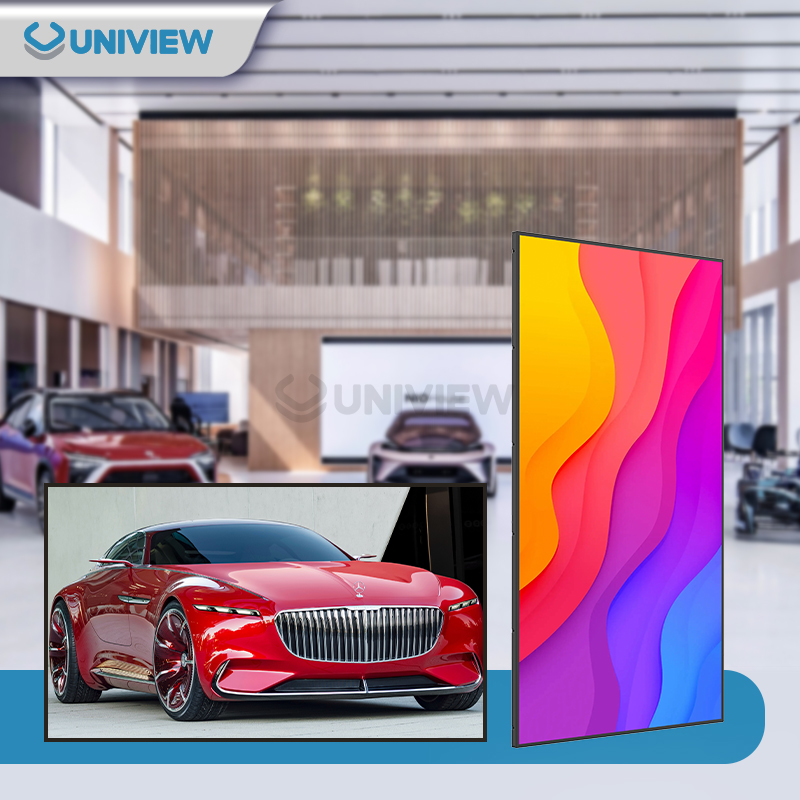
Video wall designs boost the impact of wall-mounted digital signage by creating large-format visual experiences. Luxury stores and flagship stores employ seamless multi-panel setups to attract customers and boost the brand's luxury image. Narrow bezels on modern commercial displays allow for easy viewing of adjacent panels. These photos look nice on huge surfaces.
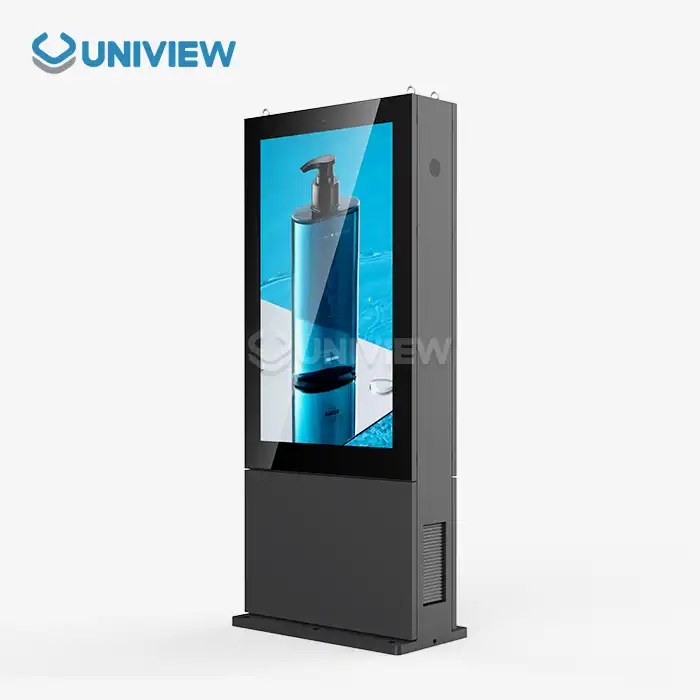
Indoor and outdoor versions solve different climate issues. Indoor equipment can adjust illumination at 450–700 nits. Installations near windows or outdoors require 2000–4000 nits to be seen in direct sunshine. Outdoor models include IP65 or IP66 shells to protect internal parts from dust, water, and temperature fluctuations.
Performance Advantages Over Alternative Mounting Methods
There are obvious advantages for shop usage as compared to ceiling or freestanding wall mount digital signage installations. Airport terminals and large establishments with high ceilings benefit from ceiling displays. However, in conventional establishments, they seldom block consumers' views. Freestanding solutions are portable but less sturdy and take up floor space that might be utilized to exhibit things and earn money.
Wall installations provide the finest view at eye level, where people gaze. The sleek style complements retail decor and helps the brand seem professional, rather like an afterthought. Wall-mount cable management solutions provide a clean appearance in customer-facing locations.
How to Choose the Right Wall Mount Digital Signage Solution
To choose the right displays and hanging tools, you need to carefully consider your store's surroundings and business goals. During the decision-making process, many scientific and practical factors that have an immediate effect on long-term success should be taken into account.
Matching Display Specifications to Store Requirements
Small businesses must follow different regulations from large stores or malls. With 800 square feet, a specialized business may benefit from one 55-inch screen near the cash station. Large format shops exceeding 20,000 square feet may install hundreds of displays, requiring standard mounting options and a single content management system.
First and foremost, consider whether the screen will fit on the wall. Tiny 32-inch panels are suitable for tiny product sections, while large 86-inch displays stand out in crowded areas. Screen width should be roughly one-sixth of the primary viewing distance. Screens 12 feet distant should be 72 inches wide for easy viewing.
Depending on illumination, brightness specifications must be considered. Retail spaces with plenty of overhead lighting or windows need higher nit levels for good eyesight. In bright settings, a 500-nit display might seem washed out, while a 2500-nit screen can stay brilliant.
Technical Criteria for Commercial-Grade Installations
Besides display requirements, other technological criteria distinguish successful installations. VESA-compatible universal mounting hardware works with your displays. Common patterns include 200x200mm, 400x400mm, and 600x400mm. Checking the pattern's size and weight restriction before purchasing fixing clamps can save you a lot on reinstallation.
Attractive mounting gear contains cable management to protect connections and look attractive. Power, HDMI, and network cables routed via concealed passageways hide unsightly wire lines. Modern mounts with cable covers and quick-release mechanisms make repairs easy without taking the mount off.
Each mounting technique has varying installation difficulty. Safety cables, leveling systems, and stud finders are common on business-grade choices. Buying proper mounting gear upfront makes fitting simpler, reduces labor costs, and increases dependability, saving you money.
Safety certifications and requirements protect retailers from public lawsuits. UL or ETL listings indicate safe electricity. Seismic ratings matter in earthquake-prone areas. Know the building requirements and ADA guidelines to avoid costly repairs.
Evaluating Wall Mounts Versus Ceiling Mounting Solutions
Mounting location influences visibility, cost, and maintenance. Wall mount digital signage works well in stores with 8–12-foot ceilings. Wall-mounted displays put material in the customer's line of sight, saving them from neck-straining angles.
Today, wall mounting is cheaper than roof mounting in retail. Wall studs or concrete stakes may support constructions without suspended ceiling systems or ceiling tools. Maintenance staff can reach wall-mounted displays without lift equipment, making access simpler. They can utilize standard ladders.
In certain cases, ceiling repair is preferable. Ceiling screens may improve visibility across big floor areas in establishments with high ceilings. Where windows or merchandise displays cover the walls, ceiling fixing is the only choice. Space constraints and customer flow should guide your decision.
Installation and Safety Guidelines for Wall Mount Digital Signage
Installing a display correctly has a direct effect on how long it lasts, how safe it is, and how well it looks. When stores try to cut corners on installation, they often end up with expensive problems like damaged property, broken displays, or even worse, hurt customers. Wall mount digital signage planning is essential to mitigate these risks.
Pre-Installation Planning and Site Assessment
Successful mounting hardware installation starts with careful planning before hitting walls. Site investigations should document wall materials, stud locations, electrical outlet proximity, and network accessibility. Find studs for sturdy drywall installation. Masonry screws must be rated for the wall's weight and include a safety cushion for concrete or brick walls.
The screen, hanging bracket, media players, and other accessories must be included in the weight calculation. Most 65-inch corporate screens weigh 60–80 pounds. Add anchoring tools, and the weight exceeds 100 pounds. Mounting clamps should be rated for 150% of the weight for safety.
Display location depends on room temperature, humidity, and airflow. Display parts wear more quickly near air vents or in direct sunlight. Displays with ample space surrounding air holes prevent heat accumulation that shortens part life.
Mounting Hardware Selection and Installation Procedures
The appropriate bolts and frames are crucial to safety. When constructing with wood, lag bolts into wall studs work well. Concrete installations need expansion anchors or epoxy-set bolts that can support the system. Toggle bolts may remedy hollow walls when stud spacing doesn't match display placement.
To avoid skewed displays, bracket placement must be exact. The appearance of expertise is greatly affected by this minor element. Digital or laser leveling instruments ensure horizontal bracket alignment. Most decent clamps contain adjustment holes for minor adjustments after installation.
Electrical codes govern the power source route. Many commercial spaces don't have visible extension cables. They require qualified electricians to install specialty outlets or wiring in the wall. Electrical infrastructure planning during construction prevents code violations and removes ugly power wires.
Safety Compliance and Ongoing Maintenance Protocols
Screens should not be tampered with or accidentally removed to protect equipment and consumers. Safety wires or auxiliary retention systems may sustain the primary fixing if it fails. Anti-theft security screws that need specific equipment prevent public theft.
Cable management looks beautiful and is safe. Trips are easy on unsecured wires in consumer areas. Wires may be moved appropriately via conduit or cable channels, which protect them from harm. Strain relief at connecting points prevents wires from wearing out and failing.
After placement, plan periodic checks. Monthly visual examinations ensure that the fastening hardware is still in place and not loose. Detail inspections every three months examine electrical connections, displays, and air ports for blockage. Records of test findings shield you from liability and help you predict future repairs.
Top Wall Mount Digital Signage Products and Brands for Retail
The choice of product has a big effect on how well it is installed and how much it costs to run in the long run. There are many companies that make wall mount digital signage for stores, and their products have different quality levels and sets of features.
Leading Commercial Display Manufacturers
Samsung and LG dominate business screens with entry-level to high-end models. Samsung's QM series and LG's SM5KE series are dependable for companies and include built-in media players for easy installation. Large distribution networks ensure product availability and timely technical support for these well-known brands.
Business-to-business clients that want customizable, high-performance displays love Uniview Commercial. Our business-grade LCD and LED digital signage has 2000–4000 nits of brightness. This makes them ideal for outdoor and window stores. Even in low light, the panels' offline coated AR glass produces crisp visuals.
Our products' dependability characteristics address retail issues. MTBF ratings for industrial-grade parts exceed 50,000 hours, or 5–7 years of continual usage. Even in heated shops, sophisticated cooling systems maintain temperature. Displays with IP65 to IP66 ratings are suitable for semi-outdoor or completely outdoor shop environments.
Mounting Hardware Manufacturers and Compatibility
Vogel's, Peerless, and Chief Manufacturing make the finest fastening hardware. These firms create specialized brackets for businesses. They support higher weights, manage wires professionally, and simplify installation. They include mounting templates, leveling guidelines, and all necessary equipment in one box.
Checking the screen and mounting tool compatibility prevents installation issues. VESA standardization ensures that many devices function together, although weight grading, display depth, and interface usability remain. Some screens have mounting elements built in, while others need additional purchase depending on installation.
Service, Warranty, and Procurement Considerations
Warranty coverage varies by manufacturer and product. Most consumer-grade screens lose warranty when used for business. Commercial screens have warranties for business usage. The warranties vary from one year for cheaper devices to five years for more costly ones.
Extended warranties cover everything for 3–5 years to safeguard commercial usage. Technical support is provided 24/7, regardless of site location or time zone. Our presence in over 100 countries makes local services simpler to access, reducing downtime if issues arise.
Store chains that employ the same displays benefit from bulk purchase. Volume discounts may reduce unit costs by 15–30%. Standardization makes staff training, managing spare parts inventories, and maintaining a consistent appearance simpler.
Retailers may specify brightness settings, mounting arrangements, and branded interface components when ordering bespoke. Our solutions are tailored to each customer. Our staff will collaborate with you to build brand-appropriate displays for your company.
Maximizing ROI with Wall Mount Digital Signage in Retail
When used strategically, wall mount digital signage has measured business benefits that go beyond its basic advertising role. The money that retailers make from setups is much higher when they plan them out instead of just hanging screens.
Strategic Placement for Maximum Customer Engagement
The optimum show location considers how people move and view. Studies utilizing heat mapping in businesses reveal that shoppers instinctively gaze at walls rather than ceilings. Most adults can see displays 5 to 6 feet above the ground, so they catch attention without having to look up.
Entryways near major entrances are good for advertising. Shops are ideal for holiday sales and product launches because customers are receptive to communications. Point-of-sale displays with similar product suggestions might encourage impulsive buys.
Adjustable hanging hardware allows tailoring viewing angles to client behavior after installation. Customers from various orientations may see better with a 5–10-degree-lowered display. This versatility is important in businesses with high display mounting points.
Content Management Systems and Dynamic Messaging
Strong content management systems turn static screens into active marketing tools. Cloud-based CMSs allow real-time content changes across several locations or retail chains. If an offer works at one store, it may be broadcast to all shops, and if not, it can be replaced.
Dayparting allows you to tailor communications to time and consumer type. There are morning coffee specials, midday meal deals, and nighttime high-end products discounts. This concentrated technique improves relevance and conversion rates compared to distributing the same message all day.
Data integration allows shop experiences to be adaptive. Displays may reflect inventory levels, so out-of-stock products can't be marketed. Weather data is used with other data to create products like umbrellas for rain and sunscreen for heat. This social connection changes consumers' perceptions and engagement.
Measurable Impact on Sales Performance
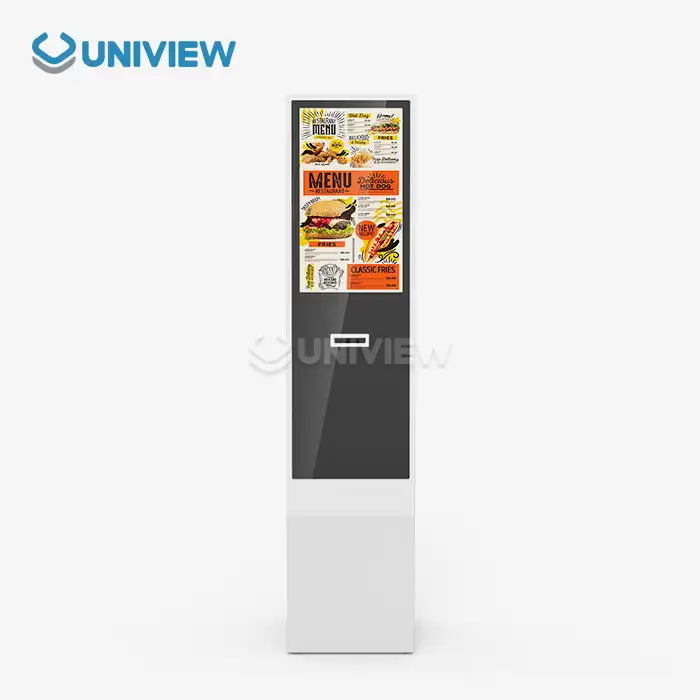
Retail case studies indicate that effective digital signage may boost sales. A big supermarket business reported 32% greater sales on digital menu boards than static boards. A clothes business discovered that digital signage increased conversion rates by 18%.
Promotions work better with motion and changeable content than static signs. People learn about and feel connected to goods via video examples. Switching between product features keeps viewers engaged longer.
Places with attractive digital content increase client stay time. More time in the shop increases the probability of buying. Engaging information may convert a checkout line wait into a fun activity.
Future-Proofing Retail Technology Investments
Consider how technology is evolving while purchasing anything to prolong its life. Future media players and content systems will support HDMI, DisplayPort, and USB-C displays. Ethernet or WiFi allows you to control and update material remotely without hard media.
Wireless mounting solutions are novel wire-free mounts. Built-in WiFi and power over Ethernet displays simplify installation and store plan changes. As retailers save on launch expenses, adoption rates are rising swiftly despite their higher price.
Scalable designs enable incremental additions based on needs and budget. Start with high-impact sites and go to secondary ones to spread out the investment and demonstrate ROI before complete implementation. Standard modular systems function well with this step-by-step strategy.
Conclusion
Wall mount digital signage can completely change the look of stores by strategically placing them, being reliable enough for businesses, and being able to show changing content. To be successful, you need to pay close attention to the display requirements, have professionals install it, and make sure it works with strong content management systems. Retailers who use digital signs as a strategic communication tool instead of just advertising screens see much higher returns in the form of more engaged customers and measured sales growth. Buying good screens, the right mounting tools, and having a professional install them pays off over time with years of trouble-free use and a competitive edge.
FAQ
Q: What makes commercial displays different from consumer TVs for retail use?
A: Commercial screens use industrial-grade parts that are made to work nonstop for 16 hours a day, seven days a week, without getting tired. They are different from consumer gadgets because they have better cooling systems, stronger power sources with 50,000-hour MTBF rates, and tough enclosures. When used for business, consumer TVs lose their picture quality, their panels break down, and their guarantees are canceled.
Q: How do I determine the correct mount weight capacity?
A: Find the total weight of the system, which should include the screen, the hanging bracket, and any other accessories. To be safe, choose fastening tools that can hold at least 150% of the total weight. Make sure the wall structure can hold the weight by using the right anchors, like lag bolts into studs for a wood frame or expansion pegs for concrete.
Q: Can wall-mounted displays operate without external media players?
A: System-on-Chip processors in modern business screens often run Android or proprietary operating systems and can run content management tools on their own. With these integrated options, you don't need an external media player to play standard material. Dedicated computer gear may still be needed for complex data displays or high-performance apps.
Q: What brightness level is necessary for window-facing retail displays?
A: Installations that face a window need at least 1500 to 2500 nits to stay noticeable in full sunlight. 450 to 700 nits is a good range for indoor areas with controlled lighting. For outdoor setups, you need between 2500 and 4000 nits of light with IP65 or IP66 protection against dust and moisture getting in.
Q: How long do commercial displays typically last in retail environments?
A: Commercial screens that are normal in the industry last between 50,000 and 60,000 hours at half brightness when used continuously. This is the same as using it 24 hours a day, seven days a week. Operational lifespan is increased by good airflow, regular upkeep, and environmental limits. These basic standards are often surpassed by high-end screens with better cooling and better component quality.
Q: Is professional installation necessary for wall mount digital signage?
A: Professional repair makes sure that safety standards, building rules, and maker instructions are followed. Licensed electricians should do any wiring that needs to be done inside walls so that cables can be routed cleanly. Professional fitters avoid making mistakes that cost a lot of money when placing the mount, figuring out the weight, and choosing the right structural anchors. These mistakes can put businesses at risk of liability.
Partner with Uniview Commercial for Premium Wall Mount Digital Signage Solutions
As a recognized wall mount digital signage maker, Uniview Commercial gives stores all over the world high-quality products that can be fully customized. Our engineering team creates displays that specifically solve problems that stores face. Ultra-high-brightness panels make them easy to see in any lighting, IP65/IP66 ratings protect investments in tough environments, and European surface treatment technology that prevents corrosion ensures long-lasting use. We're confident in the stability of our products, which is why we offer extended warranties that last between 3 and 5 years and are backed by China Pacific Insurance Company. When you need help, global technical support is available 24 hours a day, seven days a week. This keeps your store network running as smoothly as possible. Get in touch with our sales team at sales@univiewlcdisplay.com to talk about your unique needs and find out how our wall mount digital signage supplier services can change the way you communicate in your store space.
References
1. Digital Signage Federation. "Retail Digital Signage Best Practices and ROI Measurement." Industry Standards Publication, 2023.
2. Johnson, Michael T. "Commercial Display Technology: Engineering Principles for Continuous Operation." Journal of Retail Technology Systems, Vol. 34, 2022.
3. Retail Industry Leaders Association. "The Impact of Dynamic Digital Messaging on Consumer Purchase Behavior." Annual Research Report, 2023.
4. Chen, Patricia L. "Installation Safety Standards for Commercial Display Systems." Building Technology and Safety Quarterly, Spring 2023.
5. Martinez, Robert K. "Content Management Systems for Multi-Location Retail Digital Signage Networks." Enterprise Technology Review, December 2022.
6. Thompson, Sarah J. "Environmental Durability Testing of Commercial-Grade Display Panels." Materials Science and Engineering Applications, Vol. 28, 2023.

Learn about our latest products and discounts through SMS or email