- English
- French
- German
- Portuguese
- Spanish
- Russian
- Japanese
- Korean
- Arabic
- Greek
- German
- Turkish
- Italian
- Danish
- Romanian
- Indonesian
- Czech
- Afrikaans
- Swedish
- Polish
- Basque
- Catalan
- Esperanto
- Hindi
- Lao
- Albanian
- Amharic
- Armenian
- Azerbaijani
- Belarusian
- Bengali
- Bosnian
- Bulgarian
- Cebuano
- Chichewa
- Corsican
- Croatian
- Dutch
- Estonian
- Filipino
- Finnish
- Frisian
- Galician
- Georgian
- Gujarati
- Haitian
- Hausa
- Hawaiian
- Hebrew
- Hmong
- Hungarian
- Icelandic
- Igbo
- Javanese
- Kannada
- Kazakh
- Khmer
- Kurdish
- Kyrgyz
- Latin
- Latvian
- Lithuanian
- Luxembou..
- Macedonian
- Malagasy
- Malay
- Malayalam
- Maltese
- Maori
- Marathi
- Mongolian
- Burmese
- Nepali
- Norwegian
- Pashto
- Persian
- Punjabi
- Serbian
- Sesotho
- Sinhala
- Slovak
- Slovenian
- Somali
- Samoan
- Scots Gaelic
- Shona
- Sindhi
- Sundanese
- Swahili
- Tajik
- Tamil
- Telugu
- Thai
- Ukrainian
- Urdu
- Uzbek
- Vietnamese
- Welsh
- Xhosa
- Yiddish
- Yoruba
- Zulu
What Screen Size Is Recommended for a Free Standing Digital Screen?
Optimal free-standing digital screen size depends on viewing distance, audience size, and application context. 32-43-inch displays are good for close-up encounters in retail and business settings, 55-65 inches for medium-distance viewing in lobbies and events, and 75+ inches for vast venues and outdoor advertising. To enhance engagement and ROI, choose a free-standing digital screen that balances visibility, size, and budget.

Introduction
Free-standing digital screens have changed retail, corporate, hospitality, transportation, and outdoor advertising communication. These displays are effective for brand message, wayfinding, information sharing, and customer interaction. Screen size affects visibility, audience engagement, and ROI.
Market trends indicate a rising need for high-resolution content delivery and flexible installation options that function across varied contexts. Modern businesses need digital signage that can be seen from afar and convey clear, engaging content. In today's competitive market, procurement professionals must understand screen size and viewing circumstances.
Analyzing viewing distances, audience demographics, content genres, and environmental factors helps choose the right size. This detailed handbook helps decision-makers make budget-friendly and operationally sound choices. Designing a corporate lobby, retail storefront, transportation hub, or outdoor advertising area with the correct screen size can improve communication and consumer experience.
Understanding Free-Standing Digital Screens and Their Key Dimensions
Defining Free-Standing Digital Display Technology
Digital screens that stand alone without wall attachment are called free-standing screens. These machines use advanced LCD or LED technology and solid support structures to create movable signage. Their portability makes them ideal for businesses that need flexible communication tools for temporary or changing spaces.
Modern free-standing displays have weatherproof housings, high-brightness panels, and easy content control. Modular design lets you tailor screen sizes, mounting arrangements, and protective casings to individual applications. Integrated media players, wireless connectivity, and remote management facilitate content deployment and system monitoring in these systems.
Common Size Categories and Applications
The digital signage business divides free-standing digital screens into three size categories for different applications. Small displays (24–43 inches) work well in close-proximity situations where viewers engage directly with content. These tiny units perform well in retail checkout areas, information kiosks, and reception desks when space is limited.
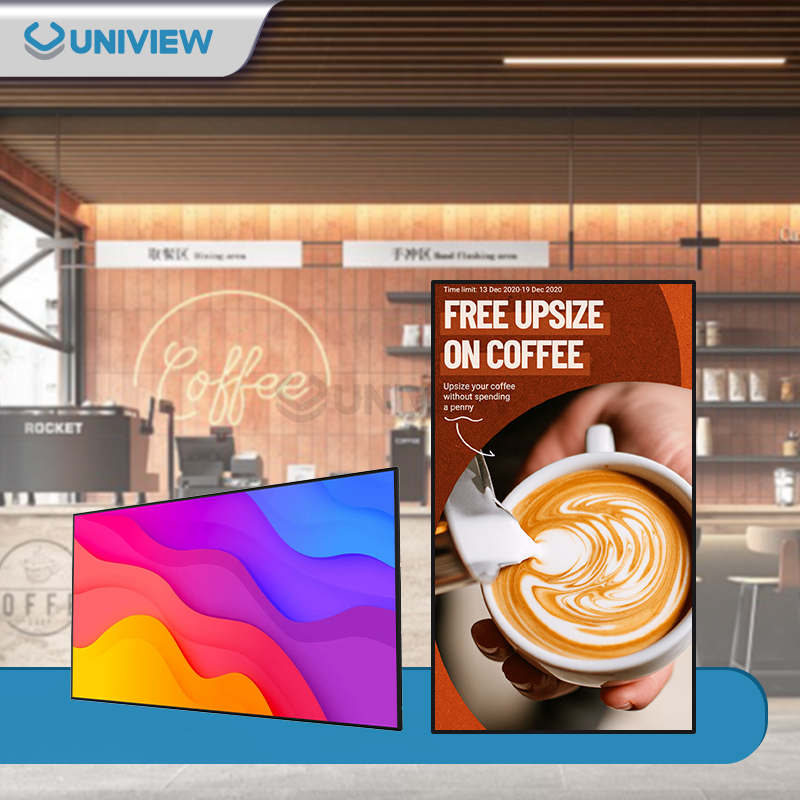
Medium-format screens 43 to 65 inches offer balanced visibility at moderate viewing distances with easy installation. These displays work well in corporate lobbies, restaurant menu boards, and trade fair presentations where audiences are 6–15 feet away. The size range maximizes reading without overwhelming smaller locations or mounting equipment.
Large displays over 65 inches are more effective in high-traffic areas and remote viewing. These huge displays attract attention from afar in transportation hubs, outdoor advertising areas, and vast retail venues. The enormous scale makes content visible even in poor lighting or crowded areas where smaller displays may be overwhelmed.
Impact on User Experience and Content Clarity
Screen size affects how viewers interact with content. Larger displays draw attention and may display more detail without sacrificing legibility. However, huge screens in small settings might be uncomfortable, while smaller displays in large spaces may fail to grab attention.
The right viewing distance for different screen sizes depends on resolution density. Lower resolution screens require wider viewing distances to preserve image quality, while higher pixel density allows closer viewing without pixelation. Understanding these linkages helps procurement teams choose displays that maximize visuals within spatial limits and usage patterns.
Factors to Consider When Selecting Screen Size for Free-Standing Digital Displays?
Viewing Distance and Audience Considerations
Screen size selection starts with the ideal viewing distance. According to industry standards, comfortable viewing occurs when the screen diagonal is one-sixth to one-third of the primary viewing distance. Screen sizes between 40 and 80 inches ensure material is legible without eye strain or head movement for audiences 10 feet away.
Audience demographics also affect size needs. To meet accessibility needs, older or visually impaired viewers may need greater text sizes and contrast ratios, requiring larger displays. Corporate workplaces with various staff demographics should use inclusive design principles to specify display dimensions for universal usability across age groups and visual abilities.
The number of concurrent viewers affects size selection. Single-user applications like information kiosks can use smaller displays, but group presentations need larger screens to ensure clean sight lines. To avoid visibility concerns in high-traffic areas, the minimum size should reflect peak audience sizes.
Environmental Constraints and Installation Conditions
Indoor and outdoor installations have quite distinct screen size requirements. Size selection is more flexible in indoor contexts because of controlled lighting, consistent temperatures, and weather protection. Ceiling heights, door widths, and elevator access may limit indoor installation size.
Outdoor applications need strong construction and improved visibility to overcome ambient lights. Readability is reduced by harsh sunshine, requiring larger screens or higher brightness. For bigger outdoor displays, wind loading may require foundation construction or structural adjustments that affect project budgets and deadlines.
Climate affects performance and longevity across sizes. Larger displays have more temperature, moisture, and UV exposure. Environmental stressors can accelerate component degradation and increase maintenance frequency. When choosing sizes for tough outdoor situations, procurement teams must weigh impact against long-term operations expenses.
Content Types and Resolution Requirements
Content greatly determines optimal screen size. News feeds, schedules, and product details need enough space to read from a distance. Larger displays can show fine details and provide compelling user experiences for complex graphics, films, and interactive information.
Video resolutions like 4K and 8K increase display requirements. Premium content types improve visuals but require larger displays to justify the higher bandwidth and storage. Ultra-high-resolution content may not benefit smaller monitors, while oversized screens without enough resolution may appear pixelated or blurry.
Dynamic, daily information may require different-sized concerns than static communications. Touch-based interactive apps function best with displays at comfortable heights and sizes that enable natural arm movements. To accommodate numerous viewers during peak usage, menu boards or wayfinding apps may need larger proportions.
Comparing Popular Screen Sizes for Free-Standing Digital Screens
Small Format Displays: 32-43 Inch Solutions
Applications needing close-proximity interaction and space-efficient installations favor small-format displays. These tiny units use less power, emit less heat, and blend into existing architecture without dominating visual spaces. These screens deliver tailored messaging without cluttering product displays at retail points of sale.
Smaller displays are more portable for businesses needing flexible signage. Event organizers, trade fair exhibitors, and temporary installations like tiny display formats have lower shipping costs, easier setup, and less infrastructure needs. Integrated batteries or low-power consumption profiles extend deployment choices for these systems.
However, small-format displays are limited in high-traffic or distant visibility applications. In crowded environments or against larger visual elements, the intimate scale that works well for personal interactions may not be enough. To retain readability and impact, content complexity must match screen real estate.
Medium Format Excellence: 43-65 Inch Systems
Many commercial applications benefit from medium format displays, which have a big visual impact but low installation and operating costs. These displays may be installed and maintained by one person and are large enough for group viewing. This balanced size variety benefits corporate communications, restaurant menu displays, and retail promotions.
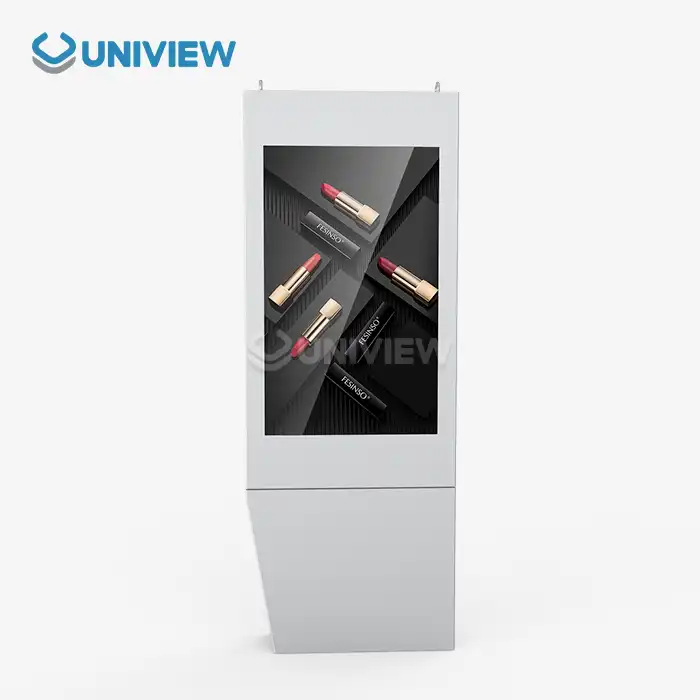
Medium format displays can be used in portrait and landscape orientations, allowing imaginative installation methods that maximize visual effect under architectural constraints. Vertical mounting is ideal for natural scrolling wayfinding apps, directory listings, and social media feeds.
Medium-format power consumption and heat generation are manageable, decreasing electrical and cooling infrastructure needs. This practical advantage generally lowers the total cost of ownership while improving brand perception and consumer engagement with professional presentation.
Large Format Impact: 65+ Inch Displays
Large-format displays are suited for high-impact applications in large spaces due to their size and visual presence. These displays' clear messaging across long distances benefits airport terminals, shopping mall corridors, and outdoor advertising areas. The large screen real estate allows complex content layouts, many information zones, and high-resolution video that generates unique viewer experiences.
Advanced features, including ultra-high brightness, expanded color gamuts, and specific coatings, keep these displays visible in poor circumstances. Large format displays' premium positioning usually justifies investment in cutting-edge display technologies that outperform and last longer than smaller equivalents.
Large format installations must include structural, electrical, and maintenance needs. These systems' weight, power consumption, and complexity can increase installation and operational costs. Large format deployments require more cost and complexity, so procurement teams must decide if the visual impact is worth it.
Installation, Maintenance, and Cost Implications of Different Screen Sizes
Installation Complexity Across Size Categories
Installation needs increase with display size, influencing project timeframes and budgets. Standard tools and techniques may be used to install small-format displays by one person. The lightweight and compact design allows for easy installation and positioning. These benefits lower labor costs and simplify project coordination.
Medium-format displays require two-person installation crews and specific lifting equipment for safety. Increased weight and dimensions require stronger mounting methods and structural load calculations. Power needs may surpass normal outlet capacities, requiring dedicated circuits and professional electrical installation.
Large-scale installations require skilled teams, large lifting equipment, and thorough site preparation. Large display installations may require foundation, electrical, and structural construction. Complexity issues can delay projects and demand cooperation between skilled contractors.
Maintenance Requirements and Service Accessibility
varied display sizes require varied maintenance, affecting long-term operational expenses and service planning. Modular designs allow component replacement and routine maintenance on smaller displays. Due to its compactness, professionals can conduct most service chores without extra equipment or safety precautions.
Maintenance of larger screens is complicated by limited access to raised components, specialized cleaning for large screen surfaces, and sophisticated diagnostic procedures for advanced display systems. Lane closures, scaffold erection, and other preparations for service intervals can impede business operations and raise service prices.
Here are the key maintenance considerations that affect operational planning:
- Cleaning Frequency: Larger displays accumulate proportionally more dust and environmental contaminants, requiring more frequent cleaning cycles and specialized cleaning equipment to maintain optimal appearance and performance levels.
- Component Accessibility: Modular component designs enable efficient service procedures, while integrated systems may require complete unit replacement for relatively minor component failures, significantly impacting service costs and downtime duration.
- Preventive Maintenance: Regular inspection schedules become increasingly important for larger installations where component failures can result in substantial business disruption and expensive emergency service calls.
These maintenance factors directly impact the total cost of ownership calculations that guide initial size selection decisions. Businesses operating multiple displays should standardize on size categories that align with their internal maintenance capabilities and service provider networks.
Total Cost of Ownership Analysis
The whole financial picture needs examination of initial purchase prices, installation costs, energy usage, and continuous servicing fees over the estimated lifespan. Smaller displays have lower entry costs but may require numerous units to cover desired areas, increasing system complexity and management.
Energy consumption varies greatly by size and display technology. LED displays use less electricity than LCD ones; larger screens use more, regardless of efficiency. Energy efficiency is important since operational costs over five to seven years can exceed purchase prices.
Warranty coverage and service support quality are crucial for larger, more expensive displays where component failures have a major commercial impact. For mission-critical applications where downtime costs exceed service premiums, extended warranty options, comprehensive service coverage, and rapid response guarantees justify a premium price.
Making an Informed Decision: Matching Screen Size to Your Business Needs
Industry-Specific Size Recommendations
Retail spaces benefit from diverse sizing techniques that match customer journey touchpoints and merchandise presentation needs. Large entrance displays attract foot traffic, while smaller, specialized displays work well for product-specific messaging near the point of sale. Creating a coordinated ecosystem of correctly sized displays that guide clients through shopping experiences is crucial.
Corporate communications offer unique size selection choices to strengthen company culture and professional image. Executive briefing centers and board rooms need premium large-format displays that convey authority and technology. Internal communications can be displayed on medium-format monitors in employee common areas and cafeterias, while personal productivity programs can be displayed on small-format displays.
Audience demographics, viewing distances, and operational demands are unique to transportation and hospitality. In hotel lobbies, beautiful medium-size displays can complement interior design, whereas airport terminals need large-format displays visible across packed concourses. These industries require reliable screens for 24/7 operations.
Customization Options and Flexibility Considerations
Modern display makers can customize standard sizes for specialized applications. Modifying bezels, mounting options, and protective enclosures can make standard screens suitable for diverse operational situations. Businesses can attain the required functionality without compromising core size or budget with these modification options.
Modular display systems offer great flexibility for enterprises anticipating changes or expansion. Initial deployments can use smaller setups that add modules as needs or resources allow. This scalable strategy reduces initial expenditure, preserves growth options, and maintains visual consistency among installations.
Size selection should be future-proofed to handle changing content and technology. Displays with sufficient resolution, processing power, and connectivity can adapt to new content formats and distribution techniques without replacement. This proactive approach maximizes ROI and minimizes technology transition impact.
Partnering with Reputable Suppliers
Suppliers who understand industry needs and can support ownership throughout the lifecycle are essential for display procurement. Based on previous applications, experienced vendors can advise on size selection and identify potential issues before they affect project success. Their experience helps avoid costly mistakes and maximize performance from the start.
Quality vendors offer extensive product testing, certification paperwork, and performance guarantees to decrease procurement risk and ensure long-term reliability. Independent testing, industry certifications, and comprehensive warranties show supplier commitment to product quality and customer satisfaction. These assurances are especially useful for large-scale displays when component failures damage commerce.
Uniview Commercial knows that choosing the right screen size means balancing viewing needs, environmental constraints, and budget. Our engineering team collaborates with clients to examine applications and offer sizing solutions that improve efficiency while satisfying operational restrictions. Our 32-inch to 100-inch monitors use sophisticated LCD and LED technology with brightness levels up to 4000 nits for outdoor visibility.
Conclusion
Calculating the right size for a free-standing digital screen includes considering viewing distances, audience needs, environmental conditions, and budget. Small displays are best for close-proximity applications, medium formats are versatile for most commercial settings, and big formats are most effective in large, high-traffic areas. Understanding the relationship between screen size and total cost of ownership helps you maintain investment value. Successfully matching display specs to application needs and working with experienced suppliers that can provide extensive support and proven reliability are key.
FAQ
What size screen works best for outdoor advertising applications?
Outdoor advertising typically requires displays of 75 inches or larger to ensure visibility from significant distances and overcome bright ambient lighting conditions. The optimal size depends on viewing distance, with highway applications potentially requiring 100+ inch displays for maximum impact. High-brightness panels with 3000+ nits output become essential regardless of size to combat direct sunlight.
How do I determine the right viewing distance for my screen size?
The general rule suggests that optimal viewing distance equals 1.5 to 2.5 times the screen diagonal measurement. A 55-inch display works best when viewed from 7 to 12 feet away, while larger displays can accommodate proportionally greater distances. Content complexity and resolution also influence comfortable viewing ranges.
Do larger screens always provide better customer engagement?
Larger screens capture more attention but don't guarantee better engagement if content quality, placement, or viewing conditions are inappropriate. Oversized displays in confined spaces can create discomfort, while undersized displays may fail to capture attention in busy environments. The balance between size, content quality, and environmental factors determines engagement effectiveness.
What are typical lead times for different screen sizes?
Standard sizes typically ship within 2-4 weeks, while custom configurations may require 6-8 weeks for manufacturing and testing. Large format displays often require longer lead times due to specialized components and quality assurance procedures. International shipping and customs clearance can add additional time depending on destination requirements.
How important is warranty coverage for different screen sizes?
Warranty importance increases with screen size due to higher replacement costs and greater business impact from failures. Large format displays justify extended warranty coverage and comprehensive service agreements, while smaller displays may rely on standard manufacturer warranties. Service accessibility and response times become critical factors for mission-critical applications.
Ready to Find Your Perfect Digital Display Solution?
Uniview Commercial stands ready to help you select the ideal free-standing digital screen size for your specific application requirements. Our experienced team combines deep technical expertise with practical installation knowledge to recommend optimal solutions that maximize your investment return. As a leading free-standing digital screen manufacturer, we offer comprehensive customization options, competitive pricing, and reliable global support that ensures your project's success.
Contact our specialists at sales@univiewlcdisplay.com to discuss your requirements and receive personalized recommendations based on your unique operational needs. We provide detailed specifications, installation guidance, and ongoing support that simplifies your procurement process and delivers exceptional long-term value.
References
1. Digital Signage Federation. "Screen Size Selection Guidelines for Commercial Applications." Digital Signage Industry Standards, 2023.
2. Johnson, Michael R. "Optimal Viewing Distance Calculations for Digital Display Systems." Journal of Commercial Display Technology, Vol. 15, 2023.
3. Thompson, Sarah L. "Total Cost of Ownership Analysis for Digital Signage Installations." Business Technology Review, Issue 8, 2023.
4. Chen, David K. "Environmental Factors Affecting Outdoor Digital Display Performance." International Conference on Digital Signage Technology, 2023.
5. Rodriguez, Maria P. "User Experience Optimization in Commercial Digital Display Applications." Human-Computer Interaction Quarterly, Vol. 12, 2023.
6. Williams, Robert A. "Maintenance Best Practices for Large Format Digital Display Systems." Technical Service Management Journal, Issue 4, 2023.


Learn about our latest products and discounts through SMS or email