- English
- French
- German
- Portuguese
- Spanish
- Russian
- Japanese
- Korean
- Arabic
- Greek
- German
- Turkish
- Italian
- Danish
- Romanian
- Indonesian
- Czech
- Afrikaans
- Swedish
- Polish
- Basque
- Catalan
- Esperanto
- Hindi
- Lao
- Albanian
- Amharic
- Armenian
- Azerbaijani
- Belarusian
- Bengali
- Bosnian
- Bulgarian
- Cebuano
- Chichewa
- Corsican
- Croatian
- Dutch
- Estonian
- Filipino
- Finnish
- Frisian
- Galician
- Georgian
- Gujarati
- Haitian
- Hausa
- Hawaiian
- Hebrew
- Hmong
- Hungarian
- Icelandic
- Igbo
- Javanese
- Kannada
- Kazakh
- Khmer
- Kurdish
- Kyrgyz
- Latin
- Latvian
- Lithuanian
- Luxembou..
- Macedonian
- Malagasy
- Malay
- Malayalam
- Maltese
- Maori
- Marathi
- Mongolian
- Burmese
- Nepali
- Norwegian
- Pashto
- Persian
- Punjabi
- Serbian
- Sesotho
- Sinhala
- Slovak
- Slovenian
- Somali
- Samoan
- Scots Gaelic
- Shona
- Sindhi
- Sundanese
- Swahili
- Tajik
- Tamil
- Telugu
- Thai
- Ukrainian
- Urdu
- Uzbek
- Vietnamese
- Welsh
- Xhosa
- Yiddish
- Yoruba
- Zulu
Why Choose Free Standing Digital Signage for Your Business?
Digital advertising that stands alone is a game-changing option for companies that want to send flexible, powerful visual messages. Unlike fixed screens, these stand-alone units are mobile and have strong digital features that allow for dynamic content delivery in a variety of settings. Whether you work in retail, hospitality, business places, free-standing digital signage, or transportation, free-standing digital signage can change to meet your evolving needs while generating quantifiable ROI. The technology gives advertisers, people who share information, and customers who connect with businesses a lot of options that can help them grow.
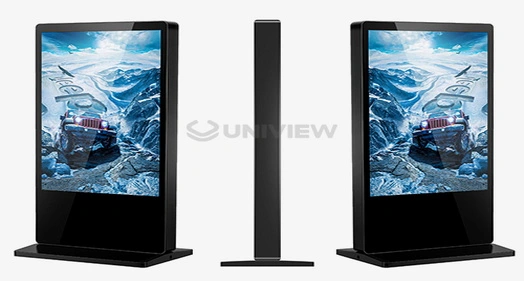
Understanding Free Standing Digital Signage
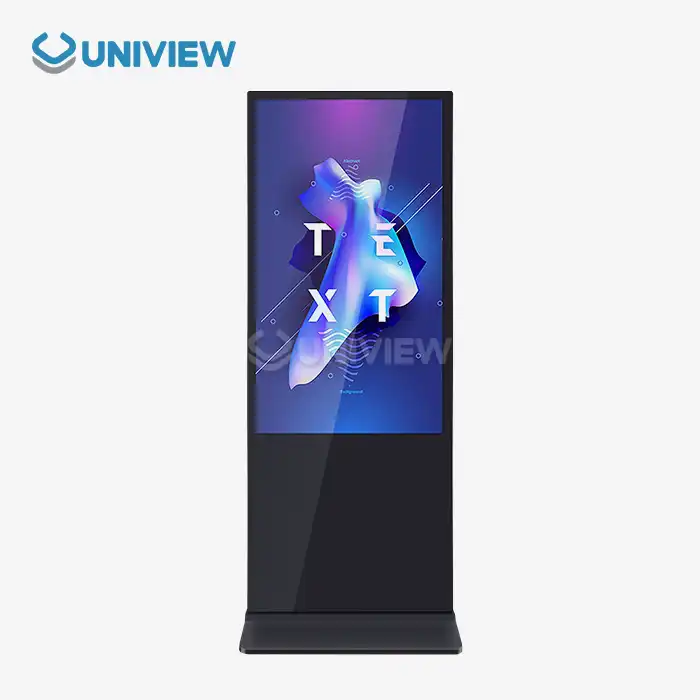
Freestanding digital signage includes digital display units that are self-supporting and can be placed in a variety of business settings. These high-tech systems combine strong support structures with high-resolution LCD or LED screens to make flexible communication platforms that don't need to be mounted on the wall or set up permanently.
Core Components and Technology Integration
Modern independent screens are made up of a few important parts that work together to give you great performance. The display hardware is the base. It uses modern LCD or LED technology to make bright, high-resolution images that can be seen in a variety of lighting situations. Content management software (CMS) lets multiple groups schedule tasks, get information from afar, and change content in real time. Wi-Fi, Ethernet, and cellular links are all possible for connecting to the network. This makes sure that content delivery and system tracking are stable. Touchscreens turn passive displays into engaging ones, and media players that are built in mean you don't need any other gear. With these features working together, full digital communication solutions are made that can adapt to meet new business needs.
Operational Flexibility and Placement Advantages
Portable digital screens are different from other types of signs because they can be moved around. Businesses don't have to make big changes to their infrastructure to move units based on traffic trends, seasonal sales, or special events. This flexibility is especially useful in places like stores, trade shows, and business buildings where the message needs change all the time. Another important benefit is that it is easy to install. Most units don't need much setup beyond connecting to power and setting up the network. This cuts down on the time and money needed for distribution. The self-contained design gets rid of the need for complicated mounting methods and structure changes that are usually needed for wall-mounted options.
Comparing Free Standing Digital Signage with Other Display Solutions
Knowing the differences between the different types of digital displays helps businesses make smart decisions about what to buy. Each type of answer has its own benefits that are best for certain business needs and environmental limitations.
Installation Complexity and Space Utilization
Wall-mounted displays are great for permanent placements where a constant message is still the main goal because they don't take up much room. However, installation needs professional mounting services, structure studies, free-standing digital signage, and often changes to the building itself. These set installations can't change to fit new room needs or marketing plans. Kiosk systems let you connect with others, but they are usually more complicated and cost more. When you build a custom booth, you need to use special software, think about security, and get ongoing upkeep help. Kiosks can be useful for certain tasks, like helping people find their way or showing them products, but they might not be flexible enough for changing marketing efforts. Standalone units work best when they need to be mobile and able to change positions. Moving displays around without having to pay to do it again is helpful in event areas, stores, hallways, and temporary installations. The self-contained design makes it easy to quickly establish in multiple places while keeping branding and messaging uniform.
Display Technology Considerations
Because LED technology gives these screens higher brightness levels, they can be used in places with a lot of natural light or outside. Modern LED screens have better energy economy, which lowers operating costs and increases visibility. LED screens, on the other hand, usually require a bigger starting investment than LCD options.LCD technology provides great picture quality and accurate color reproduction at reasonable costs. More recent LCD screens can get as bright as 4000 nits, which is bright enough for most indoor uses and many outdoor ones. The technology works well and has been shown to last for a long time in business settings.
Return on Investment Analysis
When figuring out ROI, you have to look at the total cost of ownership, which includes tools, setup, upkeep, and content management. Portable displays usually have a faster return on investment (ROI) because they are easier to move around, cost less to build, and need less equipment. When compared to fixed sites, being able to use units in different places and projects makes the best use of assets. This freedom is especially helpful for businesses that only open during certain times of the year or whose marketing plans change all the time.
Selecting the Right Free-Standing Digital Signage for Your Business
To find the best stand-alone display options, you need to do a full needs assessment that looks at environmental factors, usage cases, and technical specs. Strategic review makes sure that investments are in line with business goals and offer growth potential that can be expanded.
Environmental and Usage Assessment
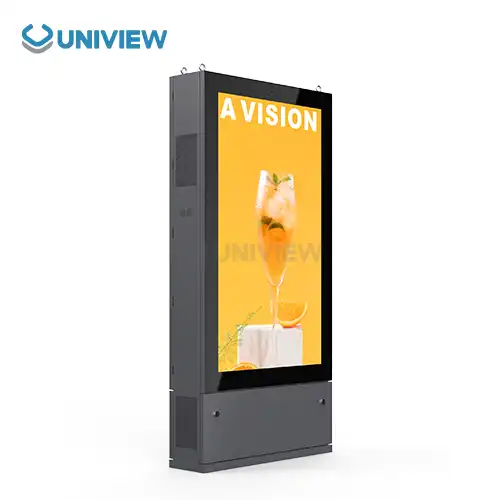
When used indoors, image clarity, viewing angles, and compatibility with current systems are the most important things. For most indoor settings, the brightness needs to be between 700 and 1500 nits. However, areas with a lot of natural light may need stricter rules. When planning missions, think about things like how close the HVAC units are, how much foot traffic there is, and how much power is available. For placements outside, designs need to be tough and provide better weather protection. IP65 or IP66 ratings make sure that dust and water can't get in, and corrosion-resistant surfaces keep the environment out. Between 2000 and 4000 nits of brightness are needed to see clearly in strong sunlight. Screen size, location height, and the ability to connect are all affected by the demographics of the audience you want to reach. In business settings, polished looks and compatibility with current technology may be given top priority. To get customers' attention, retail apps often focus on using interactive content and images that stand out.
Technical Specifications and Performance Criteria
Screen size choices rely on how far away you are from the screen and how complicated the content is. Bigger screens have more effect, free-standing digital signage, but they need higher resolutions to keep the beauty of the images. 4K resolution is now common for screens bigger than 55 inches. This makes sure that text and images can be read clearly at normal viewing distances. Touch features increase the number of engaging product demos, wayfinding, and customer interaction uses that can be used. Capacitive touch technology makes it easy to use and responds quickly, and it can also withstand heavy use in business settings. Think about whether multi-touch features are useful for the apps you're using. Connectivity choices should meet your current needs while also allowing for growth. Different content sources and peripheral devices can join through the multiple HDMI inputs, USB ports, and network links. Built-in Wi-Fi cuts down on the need for cables, and cellular connection lets it be used in places that don't have network infrastructure.
Manufacturer Selection and Support Considerations
Leading makers have clear benefits when it comes to build quality, new technology, and customer service. Brands that have been around for a while usually offer full warranty support, global service networks, and a history of success in business deployments. New manufacturers, on the other hand, may be able to offer reasonable prices and features that are specific to certain market groups. Uniview Commercial stands out as a reliable company that makes high-quality LCD and LED digital sign systems that meet the most stringent technical standards. Our goods have screens with a brightness range of 2000 to 4000 nits, strong IP65/66 weather protection, and a build that doesn't rust thanks to European surface treatment technology. Our thorough 3- to 5-year warranty and global 24-hour help show that we care about the success of our customers.
Budget Planning and Financing Options
The cost of hardware is only one part of the total expense that needs to be made. When making spending plans, don't forget to include installation services, mounting tools, content creation, and ongoing upkeep. Content management system software licensing fees can be either monthly or yearly, based on the number of features needed and the need for growth. You can finance something by buying it, leasing it, or renting it. Leasing choices let you plan your monthly costs and save money for other assets. Rental deals are good for short-term projects or test deployments before deciding to make an installation permanent.
Implementing Free Standing Digital Signage: From Procurement to Deployment
To make execution work, you need to plan for things like choosing a provider, how to install the system, and how to set up operations. Full project management makes sure that rollout goes smoothly and that business operations are interrupted as little as possible.
Supplier Selection and Procurement Strategy
To find trusted providers, you need to look at things like product quality, pricing, and customer service. To figure out how trustworthy a vendor is, ask for thorough specs, warranty terms, and contact information for past customers. To make an informed choice, compare quotes that include hardware, shipping, installation services, and continued support. Here are the key advantages of working with well-known companies like Uniview Commercial:
- Advanced Technology Integration: Our screens have solid methods for getting rid of heat, are tested in simulated environments, and meet international standards from the US, Europe, and Japan.
- Better Build Quality: Offline-coated AR glass of the highest quality produces very clear pictures with great clarity and low noise levels of only 60 dB.
- Full Protection: Double-layer anti-theft locks keep your things safe, and 16-level wind resistance grades make sure your things stay stable in windy situations.
- Global Support Network: With a large presence in more than 100 countries, we can offer local support and online support 24 hours a day, 7 days a week.
These benefits solve common distribution problems right away, and free-standing digital signage guarantees long-term performance and dependability. Because Uniview cares about product and customer service, the total cost of ownership is lower, and the return on investment is higher.
Installation Best Practices and Site Preparation
The best placement improves sight and makes sure the system works safely and steadily. When choosing places, think about things like sight lines, how people normally walk, and mobility needs. Enough air flow around screens keeps them from getting too hot, and placing them securely keeps them from getting damaged or stolen by accident. The amount of power needed depends on the size and type of the display. Make sure the electricity capacity meets the requirements while preparing for future growth. When planning network connections, you should think about how much bandwidth you'll need for content updates and the ability to watch from afar . Professional installation services are often worth it because they know how to place things correctly, organize cables, and set up the system for the first time. But many new units have easier setup processes that let internal IT teams handle rollout with help from the maker.
Software Configuration and Content Management
The choice of a content management system affects how well operations run and how creative people can be. Cloud-based systems let you handle data from afar and in multiple places, and they can be expanded as your needs change. Think about whether the system can connect to other marketing automation, customer relationship management, or business resource planning systems that are already in place. Creating material in the beginning is the key to long-term success. For the most effect, use high-quality graphics, the right fonts, and a clear message. Plan when to update your content so that you can keep viewers interested and meet the needs of your marketing campaigns and holiday messages. Remote tracking gives you useful information about how well the system is working, what material is working well, and what maintenance needs to be done. Analytics data helps make content plans better, and predictive maintenance alerts stop downtime that you didn't expect.
Future Trends and Innovations in Free-Standing Digital Signage
New technologies are constantly changing the digital signage environment, opening up new ways to connect customers and make operations run more smoothly. Businesses can get ready for future changes and get the most out of their current investments by understanding these trends.
Advanced Display Technologies and Visual Quality
OLED and MicroLED technologies offer big changes in picture quality, battery life, and the number of screen sizes that can be used. OLED screens have perfect black levels and an infinite contrast ratio, which makes for stunning visual experiences that stand out in competition settings. Power consumption drops by 30–40% compared to older LCD technology, which saves money on running costs over longer operations.MicroLED technology has all the benefits of traditional LEDs, including better color clarity and longer life. These screens keep working perfectly for more than 100,000 hours, and they can handle apps with very high resolutions. As production volumes rise, MicroLEDs will be used for more than just high-end uses. They will also be used in common business settings.
Artificial Intelligence and Personalization
AI-powered content optimization looks at the demographics, attention habits, and external factors of viewers to send them more relevant messages. Computer vision systems can tell things about an audience, like their age, gender, and how long they stay on a page, so they can automatically show the right material. This ability to personalize makes engagement rates much higher and gives useful customer information data. Based on past success data and current conditions, machine learning algorithms find the best times to schedule material. Predictive analytics find the best times to send messages based on weather trends, high engagement times, and seasonal patterns. These smart systems make marketing results better while reducing the work that needs to be done by hand to control content.
Enhanced Interactivity and User Experience
Touchscreen technology keeps getting better with better response, motion recognition, and the ability to support multiple users. Haptic feedback systems let people who are blind or have low vision connect with computers more easily by giving them tactile reactions. Voice recognition lets you use the device without using your hands, which is especially helpful in places that care about cleanliness. Adding augmented reality (AR) to regular screens turns them into tools for immersive experiences. Customers can see how goods would look in their own homes, get specific information through smartphone apps, free-standing digital signage, or take part in hands-on demos. These better experiences keep people interested while also gathering useful information about what customers like.
Sustainability and Environmental Responsibility
Improving energy efficiency helps companies meet their growing green goals while also cutting costs. When compared to older generations, new monitor technologies use 40–50% less power while still performing better. Solar charging makes it possible to use devices that aren't connected to the grid, which is good for the Earth. Materials that can be recycled and forms that can be put together in different ways help the circular economy by making products last longer and cutting waste. More and more, manufacturers offer take-back programs and repair services to help the environment and give current customers cheap ways to get new products.
Conclusion
Businesses that want powerful visual communication tools can't find better than freestanding digital signs when it comes to performance and freedom. When you combine mobility, cutting-edge technology, and full functionality, you can improve business efficiency and customer interaction at the same time. Strategic choice and implementation make sure that the investment gets the best return possible while also giving bases that can be expanded for future growth. Even as technology keeps getting better, these screens will still be necessary for businesses to communicate effectively.
FAQ
1. How does free-standing digital signage improve customer engagement compared to traditional signage?
Digital displays are more interesting than basic signs because they have moving pictures, bright colors, and changing material all the time. Businesses can react quickly to changes in customer behavior, the seasons, and advertising opportunities when they can update their messages. Interactive features allow two-way contact, which is useful for getting feedback from customers and giving them more unique experiences that make them more interested and increase the number of people who buy something.
2. What are the typical installation costs and lead times for free-standing digital signage?
Installation costs are very different depending on the size of the display, how hard it is to install, and what other equipment is needed. Installing something simply inside might cost $200 to $500 per unit, but installing something complicated outside and needing new wiring could cost $2,000 to $5,000 per unit. For normal setups, lead times are usually between 2 and 6 weeks. For custom options, they can take up to 12 weeks. During the conversation, Uniview Commercial gives specific project timelines to make sure that planning goes smoothly.
3. Can free-standing digital signage be customized to fit specific branding and content needs?
Modern digital signage systems let you change a lot of things about how the hardware looks and how the software works. Custom exterior colors, labeled frames, and name integration make sure that displays are in line with the standards of the company's brand. Content management systems let you use unique themes, make your own animations, and connect to other marketing automation platforms. Uniview Commercial specializes in custom solutions that meet the specific needs of each business while still being cost-effective.
Partner with Uniview Commercial for Premium Free Standing Digital Signage Solutions
With cutting-edge stand-alone digital display options, Uniview Commercial is ready to change the way your business communicates. We provide high-quality LCD and LED displays with unrivaled brightness, weather resistance, and dependability as a top seller of free-standing digital signage. Our full support includes advice on how to set up, consultations, free-standing digital signage, and extra warranty coverage backed by service capabilities around the world. Get in touch with sales@univiewlcdisplay.com right away to talk about your unique needs and find out how our cutting-edge solutions can help your business grow and keep customers interested.
References
1. Digital Signage Market Analysis and Growth Projections 2024-2029, Industry Research Institute
2. B2B Display Technology Adoption Trends in Retail and Corporate Environments, Commercial AV Magazine
3. ROI Analysis of Digital Signage Implementations Across Multiple Industry Sectors, Business Technology Review
4. Comparative Study of LCD vs LED Display Technologies for Commercial Applications, Display Technology Journal
5. Environmental Impact Assessment of Modern Digital Signage Systems, Sustainable Business Quarterly
6. Customer Engagement Metrics in Digital vs Traditional Signage Applications, Marketing Research Quarterly
Learn about our latest products and discounts through SMS or email