- English
- French
- German
- Portuguese
- Spanish
- Russian
- Japanese
- Korean
- Arabic
- Greek
- German
- Turkish
- Italian
- Danish
- Romanian
- Indonesian
- Czech
- Afrikaans
- Swedish
- Polish
- Basque
- Catalan
- Esperanto
- Hindi
- Lao
- Albanian
- Amharic
- Armenian
- Azerbaijani
- Belarusian
- Bengali
- Bosnian
- Bulgarian
- Cebuano
- Chichewa
- Corsican
- Croatian
- Dutch
- Estonian
- Filipino
- Finnish
- Frisian
- Galician
- Georgian
- Gujarati
- Haitian
- Hausa
- Hawaiian
- Hebrew
- Hmong
- Hungarian
- Icelandic
- Igbo
- Javanese
- Kannada
- Kazakh
- Khmer
- Kurdish
- Kyrgyz
- Latin
- Latvian
- Lithuanian
- Luxembou..
- Macedonian
- Malagasy
- Malay
- Malayalam
- Maltese
- Maori
- Marathi
- Mongolian
- Burmese
- Nepali
- Norwegian
- Pashto
- Persian
- Punjabi
- Serbian
- Sesotho
- Sinhala
- Slovak
- Slovenian
- Somali
- Samoan
- Scots Gaelic
- Shona
- Sindhi
- Sundanese
- Swahili
- Tajik
- Tamil
- Telugu
- Thai
- Ukrainian
- Urdu
- Uzbek
- Vietnamese
- Welsh
- Xhosa
- Yiddish
- Yoruba
- Zulu
Why Choose Portable Outdoor Battery Powered Digital Signage?
Portable Outdoor Battery Powered Digital Signage offers businesses unprecedented flexibility by combining cordless mobility with robust outdoor performance. Unlike traditional wired displays or fixed solar-powered systems, battery-operated signage eliminates infrastructure dependency, enabling rapid deployment across remote job sites, pop-up retail zones, outdoor events, and transportation hubs. With integrated high-capacity batteries, weather-resistant enclosures rated IP65/IP66, and high-brightness panels exceeding 2500 nits, these displays deliver uninterrupted visual communication where conventional signage fails. This technology empowers global B2B buyers—from system integrators to brand owners—to achieve marketing agility, reduce installation costs, and maximize audience engagement in challenging outdoor environments.
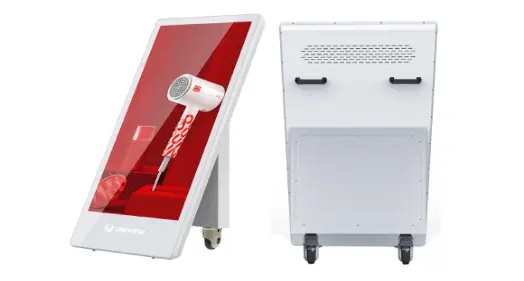
Understanding Portable Outdoor Battery Powered Digital Signage
Portable Outdoor Battery-Powered Digital Signage is a huge step forward in business display technology. It solves important practical problems that B2B buyers have when putting up visual communication systems in places with limited power. At its core, this technology combines three important parts into a single mobile platform: industrial-grade recharging battery systems, high-performance LED or LCD panels, and waterproof cases that are tough enough to handle rough conditions outside.
Core Components and Technical Architecture
Lithium Iron Phosphate (LiFePO4) chemistry is usually used in the battery system. This type of chemistry is safer and can be charged more times than regular lithium-ion batteries. With a capacity of 15,000mAh to 60,000mAh, these power units can run continuously for 12 to 24 hours, based on the brightness levels and temperature of the room. Battery Management Systems (BMS) keep batteries safe and make sure they last longer than 2000 charge cycles by protecting them against overcharge, thermal runaway, and deep discharge.
The screen sizes range from 43 inches to 75 inches, and they use commercial-grade LED or IPS LCD technology with brightness levels of 2000 to 4000 nits, which is needed to keep the screen visible in full sunlight. There are resolutions ranging from Full HD (1920x1080) to Ultra HD (3840x2160), and the viewing angles are wider than 178 degrees both horizontally and vertically. Ambient light sensors change the brightness automatically to get the most out of the battery life while keeping the clarity of vision clear in all kinds of daylight.
Weather-resistant shelters have frames made of corrosion-resistant aluminum alloy that have been coated with European-standard materials, tempered glass with a Mohs hardness level of 7, and sealed entry protection that meets IP65 or IP66 standards. These requirements ensure protection against dust infiltration and high-pressure water jets, allowing safe use in coastal areas, building zones, and places where ads are displayed outside. Ratings for wind resistance usually reach level 16 on the Beaufort scale, and the temperature range for use is from -20°C to +50°C.
Differentiation from Alternative Technologies
Wired sign systems need expensive drops in the electrical infrastructure and professional installation. Portable Outdoor Battery-Powered Digital Signage units, on the other hand, don't need trenching, pipe installation, or coordination of utilities. This freedom cuts the time it takes to deploy from weeks to hours and the cost of installation by 60–70% in temporary or faraway places. Unlike solar-powered options, battery units offer consistent runtime no matter the weather. This means that performance doesn't drop during cloudy days or winter months when solar charging isn't reliable.
The benefit of movement goes beyond the initial placement. Wheeled chassis designs with heavy-duty lockable casters make it possible for one person to move things around without any technical help. This means that they can be moved around to adapt to changes in foot traffic, event plans, or yearly marketing campaigns. This operating flexibility is very helpful for pop-up shops, outdoor events, transportation hubs, and building projects where the needs for display locations change all the time.
By knowing these basic technical details, procurement professionals can figure out if Portable Outdoor Battery Powered Digital Signage will work in their settings, especially when installing electricity infrastructure would be too expensive or impossible to set up. True wireless operation, durability outside, and the ability to be moved around create unique value propositions that standard fixed signs can't match.
Key Benefits of Portable Outdoor Battery Powered Digital Signage for B2B Applications
The smart use of Portable Outdoor Battery Powered Digital Signage brings real, practical and financial benefits in a wide range of business-to-business settings. These benefits change how companies approach visual communication and audience interaction tactics outside.
Unmatched Flexibility and Rapid Deployment
Portable Outdoor Battery Powered Digital Signage gets rid of the main problem with traditional outdoor displays: they need to be connected to an electrical grid. System integrators who set up displays at music festivals, sports events, or temporary store activations can put screens exactly where people are most likely to be looking at them, without having to worry about where the power outlets are. One member of the group can move and turn on a display in just 15 minutes, compared to the several days needed for permanent wired installs that require electrical permits, trenching, and coordinating with utilities.
This advantage of movement lasts the whole duration of the display. Hospitality managers who are in charge of outdoor eating areas can move digital menu boards to fit changes in the season or the needs of a special event. During building projects or other times when operations are interrupted, transportation officials can move wayfinding signs to different terminal areas. Retail brands running regional marketing campaigns can move displays between stores to get the most out of their assets and offer promotional material that is specific to the demographics of each location.
Significant Cost Efficiency and Operational Savings
There are financial benefits that show up in more than one cost area. When electrical infrastructure is no longer needed, installation costs drop by a huge amount because there are no longer any costs for electricians, trenching workers, pipe materials, utility connection fees, or permit applications. Companies putting up screens in five to ten places can get the extra money they spent on battery technology back in the first rollout cycle, when they don't have to pay for installation costs.
Maintenance costs are lower for cordless versions because they are easier to use and have less complexity. Instead of sending specialized staff to far-flung field sites, technicians can bring broken units to central service centers. Seasonal storage during off-peak times keeps displays safe from needless weather exposure, which makes them last longer. When events end or location deals end, organizations that run temporary or rotating display networks don't have to leave behind expensive electrical infrastructure.
Even though batteries need to be charged, the energy costs are still good. Modern power management systems reduce power use by intelligently adjusting the brightness, setting planned activating times, and using sleep modes when there isn't much activity. Total energy costs for three years of ownership are usually 40–60% less than for similarly sized permanently powered screens, when connection fees, demand charges, and infrastructure upkeep are taken into account.
Enhanced Visibility and Superior Audience Engagement
Outdoor-optimized brightness levels between 2500 and 4000 nits make sure that content stays bright and easy to read even in full sunlight at noon. This solves the major visibility problems that come up with normal indoor displays when they are used outside. High-brightness performance keeps the brand message clear during busy times, when exposure to the audience is at its highest. Anti-glare coverings and wide viewing angles make vision zones bigger, drawing attention from cars going by, people walking up from an angle, and people watching from above.
Interactive touchscreens with weatherproof touch sensors turn inactive watching into active interaction. This makes it possible to use outdoor product catalogs, navigation systems, and places to collect customer feedback. Having Wi-Fi and cellular modules built in makes it possible to update content in real time, run campaigns across multiple display networks, and use data analytics to see how viewers engage with the content. Compared to static outdoor advertising options, these features lead to measured changes in brand recall rates, dwell time measures, and the progression of the sales funnel.
Companies that care about the environment, like how battery systems can incorporate green energy through portable solar charging devices. This makes outdoor advertising infrastructure more in line with the company's environmental goals while still allowing it to run without using grid power.
Comparing Portable Battery Powered Signage with Other Solutions
Buyers around the world who are looking at outdoor display technologies can benefit from systematically comparing Portable Outdoor Battery Powered Digital Signage, wired, and solar-powered options. This lets them see what technical features are available, what limitations there are, and how much it will cost to install each option in different situations.
Technical Performance Comparison
Portable Outdoor Battery Powered Digital Signage displays are great because they are portable, easy to set up, and quick to deploy. This makes them perfect for short-term events, changing store promotions, and places where installing electricity would be too expensive. Runtime limits are usually between 12 and 24 hours per charge cycle, so they need to be charged every day or every other day, based on the light settings and the temperature outside. This constraint works well for apps that have natural breaks in their operations, like overnight closures, event plans that come and go, or deployment patterns that change across multiple places.
By providing a constant power source, wired signs can run for an endless amount of time, removing the need for charging and allowing 24/7 operation, which is important for transportation hubs, highway advertising, and permanent store installations. Installation gets a lot harder and costs a lot more because you need electricity workers, to coordinate with utilities, to get permits, and to set up equipment that gets left behind when displays move. Fixed setups also come with ongoing energy costs and the risk of power outages if they are not paired with backup systems.
Solar-powered options claim to be better for the environment and give businesses more freedom, but their performance can change depending on the weather, the length of the sunlight during different seasons, and the location of the business. In the winter, charging is less efficient in the north, and areas that are cloudy have trouble making power consistently. It's still pretty hard to install because you need stable mounting structures, the right way to position the solar panels, and bigger battery banks to make up for charging that doesn't happen all the time. When you add up the prices of solar panels, charge controllers, and extra-large batteries needed for dependability, the total cost of a system is often higher than the cost of both Portable Outdoor Battery Powered Digital Signage and wired options.
Brand Landscape and Product Positioning
Leading makers make Portable Outdoor Battery Powered Digital Signage in different ways that reflect different technology theories and market goals. Samsung's outdoor display lineup focuses on high-quality panels, advanced smart signage systems with strong content management tools, and enterprise-grade dependability backed by full insurance coverage. Their 3000 nits of brightness and commercial-grade durability make them perfect for high-visibility retail and business settings where picture quality and brand reputation are important enough to support higher prices.
LG places its outdoor signage options with a focus on low energy use, small size, and easy integration with other digital ecosystem goods. Their webOS platform makes it easier to handle material while still working with third-party software that system integrators like. Brightness levels are usually between 2500 and 3000 nits, which is a good balance between vision and power use, which is helpful for battery-powered apps that need to run for a long time.
ViewSonic goes after price-conscious customers with outdoor displays that are reasonably priced and have good basic features like 2000 to 2500 nit brightness, standard connectivity choices, and easy-to-use interfaces. Even though they don't have as many high-tech features as more expensive options, ViewSonic goods work well for people on a budget who care more about functionality than cutting-edge features.
BrightSign focuses on media player technology rather than full display solutions. They provide reliable industrial-grade playback devices that can be scheduled in advance and can handle dynamic material. System integrators often pair BrightSign players with different types of displays to make unique solutions that meet the needs of each project.
NEC focuses on vertical market solutions by making outdoor displays that are specifically designed for use in public spaces, stores, and transportation. Their product specs show that they are designed with professional installation in mind, with tough construction, wider temperature ranges, and industrial insurance terms that meet the needs of large businesses.
Peerless-AV focuses on mounting options and outdoor cases instead of display panels themselves. They offer weatherproof cabinets that work with a variety of display brands. Their containers have IP65/IP66 ratings and come with climate control, locks that can't be opened without the key, and different mounting choices for different installation settings.
This competitive landscape shows that picking the best provider relies on the details of the project, like the size of the deployment, the budget, the level of professional help needed, and how complicated the integration needs to be. There are no one-size-fits-all "best choice" suggestions.
Procurement Considerations for Global Buyers
To buy Portable Outdoor Battery Powered Digital Signage successfully, you need to carefully look at their technical specs, the skills of the seller, and the total cost of ownership. This way, you can be sure that the solutions you choose meet your needs and reduce the risk of implementation.
Critical Technical Evaluation Criteria
The main thing that determines how well Portable Outdoor Battery Powered Digital Signage works is how long the batteries last. The procurement team should check the actual runtime specs in real-world situations, such as at maximum brightness, in normal room temperatures, and for the lengths of time that are expected for deployment. Manufacturers often give optimistic runtime numbers that are based on lower light or perfect temperature conditions. This means that there are breaks in performance when the devices are actually used in the field. Accurate runtime estimates can be made by asking for specific power usage data across a range of brightness levels and temperature levels.
Specifications for display brightness should be carefully looked over, since viewing needs outside are much higher than the standards inside. A brightness level of at least 2500 nits is needed for good viewing in cloudy and partly sunny conditions, and 3000 to 4000 nits is needed for clear vision in the middle of the day when the sun is very bright. Anti-reflective coatings and ambient light sensors that adjust the brightness automatically based on the surroundings make the battery last longer while keeping vision constant.
Weatherproofing badges give unbiased proof of how long something will last in harsh conditions. The IP65 grade means that it will protect against dust and low-pressure water jets, and it can be used in most outdoor areas that won't be exposed to direct rain. IP66 approval adds security against high-pressure water jets, which is important for coastal areas, maintenance that uses pressure washing, or places where it rains a lot. Local climate conditions should be taken into account in operating temperature ranges, with standards ranging from -20°C to +50°C covering most deployment sites around the world.
The terms of the warranty show that the maker believes the product will last and protect you financially if it breaks down too soon. Most businesses display guarantees that last for one to two years, but industrial-grade outdoor units last for three to five years. Total ownership costs are affected by things like how quickly warranty claims are processed, how clear it is about which parts are covered (like the display panel, battery system, enclosure, and electronics), and how long the warranty lasts. This is especially true for large-scale deployments where failure rates affect ongoing operational costs.
Procurement Pathways and Sourcing Strategies
When you buy directly from the manufacturer, you have the most customization options, the best prices on large orders, and direct access to technical help tools. This method works well for large-scale deployments of more than 20 units, where customizing specifications, having a single warranty, and having long-term ties with suppliers make the direct involvement process worth it. Before committing to large orders, buyers should make sure the maker can do what they say they can do by inspecting the plant, talking to past customers, and testing a sample unit.
When you buy between 5 and 20 units, going through a wholesale distribution route can help you because it gives you access to more than one manufacturer's product lines, local supplies for faster shipping, and well-established logistics networks. Distributors usually keep expert staff on hand who know about the rules, voltage standards, and compatibility issues that come up with foreign operations. Prices usually include a 15–25% markup over what the maker charges directly, but this is matched by the fact that buying things locally makes things easier, and services are more accessible.
Rental models work well for short-term deployments of a few weeks to a few months, when it's hard to justify spending a lot of money on assets or how they will be used. Rental flexibility is good for event production companies, seasonal stores, and test programs, but for projects longer than six months, the total costs are higher than the economics of buying. Rental agreements should spell out who is responsible for repairs and upkeep, who is responsible for damages, what insurance is needed, and what options are available for buying out if the temporary deployment turns into a permanent installation.
Custom production can meet unique needs that go beyond standard product specs. For example, it can handle odd screen sizes, built-in mounting hardware, specific connectivity ports, branded enclosure designs, or higher environmental ratings. Customization can add 8 to 16 weeks to the lead time, and based on how complicated the change is, most orders need to be for at least 10 to 50 units. Before giving the go-ahead for full production runs, buyers should discuss thorough specs, accept physical samples, and set up procedures for quality inspection.
Maintaining and Maximizing the ROI of Portable Outdoor Battery Powered Digital Signage
Maintenance plans and operating optimization techniques that work well can make Portable Outdoor Battery Powered Digital Signage last longer, reduce unplanned downtime, and get you the best return on your investment over longer times of ownership.
Routine Maintenance and Environmental Protection
Systematic check plans find new problems before they get so bad that they stop working. Visual checks should be done once a month to see if the case seals are breaking down, the mounting hardware is securely attached, the display panel is clear and there is no moisture getting in, and the battery charge retention rates are tested. Deep maintenance done every three months includes cleaning the intake vents to keep dust from building up and making the cooling less effective, tightening any electrical connections that could be damaged by thermal expansion cycles, making sure that software updates keep security and compatibility up to date, and writing down performance metrics that can be used to find degradation trends.
Environmental safety methods keep parts in good shape even when they are exposed to harsh weather. Putting protective coats made of silicone on the edges of enclosures makes them more weatherproof as factory seals age and material elasticity decreases due to exposure to the environment. Putting displays in places with some protection, like under building overhangs, dome structures, or in a way that keeps them out of direct rain, lowers the stress of weatherproofing while keeping the audience's view. Seasonal storage during extreme weather or slow months keeps displays from being exposed to needless damage, especially in coastal salt-air environments that speed up rust or northern climates where subzero temperatures stress battery chemistry.
Maintenance for display panels is mostly about cleaning processes that get rid of dirt, pollen, and other outdoor contaminants that make the picture less clear without hurting the anti-reflective coatings or touchscreen sensors. Regular upkeep can be done safely with microfiber cloths wet with distilled water. For tough residues, special display cleaning options are available. To protect sensitive optical coatings and stop water from getting in through speaker grilles or port covers, don't use ammonia-based cleaners, rough materials, or too much liquid.
Battery Optimization and Power Management
By avoiding the patterns of decline that shorten the life of lithium-based batteries, strategic charging routines make batteries last longer. Keeping charge levels between 20 and 80% during normal use instead of deep discharge cycles or a steady 100% charge increases cycle life by 40 to 60% compared to patterns with high charge states. Setting up planned charging for times when the temperature is reasonable avoids charging at high temperatures, which speeds up the loss of capacity. Also, full discharge-charge cycles every 30 to 40 charges make the battery management system more accurate.
Power-saving modes greatly increase the life of the battery and decrease the number of times the battery needs to be charged. Automated brightness change based on natural light conditions keeps visibility high while avoiding wasteful power use when it's cloudy or early in the morning or late at night, when modest brightness is enough. Scheduled activation lines up display operation with times of high traffic, so it doesn't waste time running at night or when there aren't many people around. By limiting video with a lot of movement in favor of images with little or no movement, content optimization can cut processor load and display update power use by 15 to 25 percent.
Planning when to change batteries based on written capacity testing keeps operations from stopping working without warning. Most lithium iron phosphate batteries keep 80% of their original power after 1500 to 2000 charge cycles, which can last anywhere from 3 to 5 years based on how they are used. Before capacity degradation affects operational reliability, procurement teams should set substitute budgets and build relationships with vendors. They should do this because waiting until total failure happens could leave Portable Outdoor Battery Powered Digital Signage without power during important campaign times.
Future-Proofing and Technology Integration
Hardware flexibility lets you replace parts, which keeps the product useful as technology changes. By choosing screens with upgradable battery packs, changeable media player modules, and standard mounting interfaces, you can improve performance without having to buy whole new systems. Upgrading media players every three to four years improves their processing power, connection standards, and software compatibility. This makes the whole system last eight to ten years, which is twice as long as the average replacement cycle for non-modular, integrated designs.
The choice of software environment affects the total cost of ownership and the freedom of operations over time. Cloud-based content management systems that support open standards and a variety of hardware models keep you from being locked into one vendor and give you control over all of your distributed display networks from one place. Technology investments are kept from becoming useless too soon by regular firmware changes that fix security holes, add new features, and make sure that devices can still work with new content types.
Outdoor signs that can connect to the Internet of Things can be used as data-gathering hubs in larger smart city or retail analytics ecosystems. Displays with environmental sensors, audience detection cameras with privacy-compliant analytics, and two-way communication make operational intelligence that improves audience targeting, optimizes content strategy, and shows measurable business impact that justifies continuing to invest in technology. With these advanced features, Portable Outdoor Battery Powered Digital Signage goes from being an idle way to communicate to being a strategic assets that help people make decisions based on data.
Comprehensive maintenance programs, optimizing operational parameters, and planning strategic technology refresh cycles can cut the total cost per operational hour by 35 to 50 percent compared to reactive maintenance approaches. These programs also increase the useful life of products by two to three years. By using these methods, public signs go from being short-term marketing costs to long-lasting infrastructure assets that give businesses long-term economic benefits.
Conclusion
Portable Outdoor Battery Powered Digital Signage is a great option for business buyers who want visual communication solutions that are flexible, sturdy, and cost-effective in tough settings. The technology's ability to work without electricity, along with its weather-resistant design and bright outdoor screens, solves some of the most important problems that stop regular signs from being used. Global procurement teams can save a lot of money on installation costs, make operations more flexible, and get people more interested in what they're selling by carefully looking over technical specs, choosing suppliers strategically, and putting in place thorough upkeep programs. As flexible designs, cloud-based management platforms, and IoT integration become more common, mobile outdoor signs become more important as strategic technology infrastructure that helps modern marketing and communication goals.
FAQ
Q: How long do batteries typically last on a single charge?
A: The battery runtime depends on the screen size, lighting settings, and temperature outside. Quality Portable Outdoor Battery Powered Digital Signage can work nonstop for 12 to 16 hours under normal conditions and with a brightness level of 2500 to 3000 nits for best viewing outside. If you set your display to its brightest setting of 4000 nits, it may only last 8 to 10 hours. But if you use power-saving modes and the lighting is reasonable, it can last 20 to 24 hours. Low temperatures below 0°C make batteries about 20–30% less efficient. For best performance, keep the temperature between 15 and 25°C.
Q: Can I customize the hardware and content to fit my specific business needs?
A: A lot of customization choices let businesses meet a wide range of needs when it comes to hardware and how information is presented. You can change the hardware by choosing a screen size between 43 and 75 inches, a brightness level between 2000 and 4000 nits, the color and branding of the enclosure, the inclusion of a touchscreen, different mounting options, and better connectivity options like 5G cellular modules or IoT sensors. Customizing content includes making branded user interfaces, making engaging apps, integrating them with other content management systems, adding real-time data feeds, and supporting multiple languages. Working directly with makers gives you the most customization choices, but it can take 8 to 16 weeks to make specialized changes.
Q: What warranty and support should I expect from suppliers?
A: Portable Outdoor Battery Powered Digital Signage from reputable companies usually comes with a full guarantee that covers the display panels, battery systems, electrical parts, and weatherproof enclosures for 3 to 5 years. The warranty terms should make it clear which parts are protected, how to fix or replace them, how long it will take to respond, and if on-site help is available. Some of the best makers offer technical help by phone and email 24 hours a day, seven days a week. They also have global service networks that make sure parts are always available, and technicians can reach deployment areas around the world. Quality sellers back their goods with third-party insurance and have clear claims processes with set deadlines for settlement, usually between 48 and 72 hours for major operating failures that affect deployments that make money.
Partner with Uniview Commercial for Portable Outdoor Battery Powered Digital Signage Solutions
Uniview Commercial stands as your dedicated Portable Outdoor Battery Powered Digital Signage manufacturer, delivering superior quality and flexible customization backed by over a decade of proven global expertise. Based in Shenzhen, China, we specialize in engineering robust outdoor displays featuring ultra-high brightness reaching 2000 to 4000 nits, ensuring exceptional visibility even under direct sunlight. Our products incorporate IP65 to IP66 weatherproof ratings, corrosion-resistant European surface treatment technology, and wind resistance up to level 16—specifications essential for demanding outdoor environments across retail, transportation, hospitality, and outdoor advertising sectors.
We understand that system integrators and brand owners require reliable partners capable of delivering both standardized solutions and bespoke configurations tailored to unique project requirements. Our technical capabilities include high-quality offline coated AR glass producing ultra-clear images, efficient heat dissipation systems maintaining optimal performance, and quiet 60 dB operation suitable for public spaces. Extended warranty coverage spanning 3 to 5 years, combined with global 24-hour online support and comprehensive quality insurance through China Pacific Insurance Company, provides the reliability assurance your procurement decisions demand.
With an established presence across more than 100 countries and regions, Uniview Commercial offers a convenient one-stop service encompassing product selection consultation, customization development, logistics coordination, installation support, and ongoing technical assistance. Whether you need Portable Outdoor Battery Powered Digital Signage for sale in standard configurations or custom-engineered solutions addressing specialized deployment challenges, our dedicated team delivers exceptional value and responsive partnership.
Contact our specialists today at sales@univiewlcdisplay.com or visit www.univiewlcdisplay.com to explore how our advanced portable outdoor signage solutions can elevate your visual communication strategy and deliver measurable business results.
References
1. Digital Signage Federation. (2023). "Outdoor Digital Signage Technical Standards and Best Practices Guide for Commercial Deployments." Industry Standards Publication.
2. International Battery Association. (2022). "Lithium Iron Phosphate Battery Systems: Performance Characteristics and Commercial Applications in Mobile Display Technology." Technical Research Report.
3. Outdoor Advertising Association of America. (2023). "Mobile and Battery-Powered Digital Signage: Market Trends and ROI Analysis for B2B Buyers." Market Research Study.
4. Society for Information Display. (2022). "High-Brightness Display Technologies for Outdoor and Sunlight-Readable Applications: Technical Performance Benchmarks." Technical Journal Publication.
5. International Electrotechnical Commission. (2023). "IEC 60529 Ingress Protection Ratings: Application Standards for Outdoor Electronic Enclosures." Technical Standards Documentation.
6. Commercial Display Technology Association. (2023). "Total Cost of Ownership Analysis: Comparative Economics of Wired, Battery-Powered, and Solar-Powered Outdoor Digital Signage." Industry White Paper.

Learn about our latest products and discounts through SMS or email