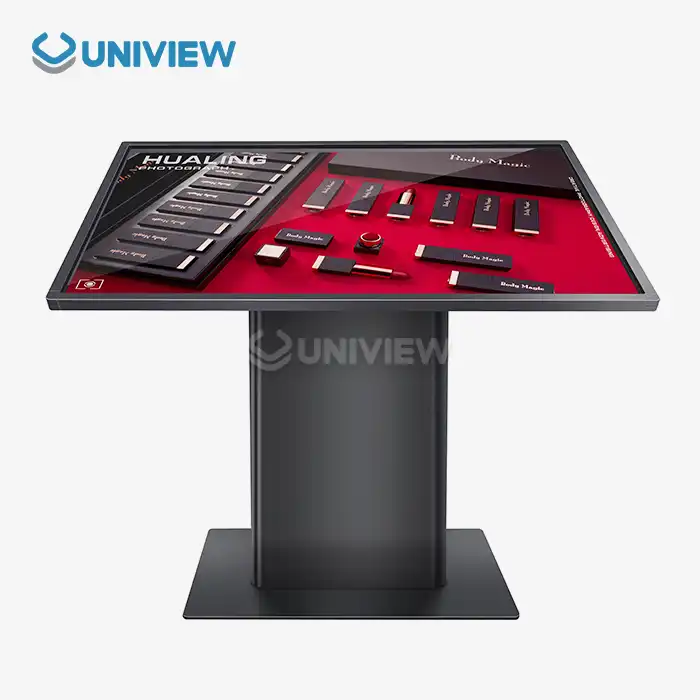
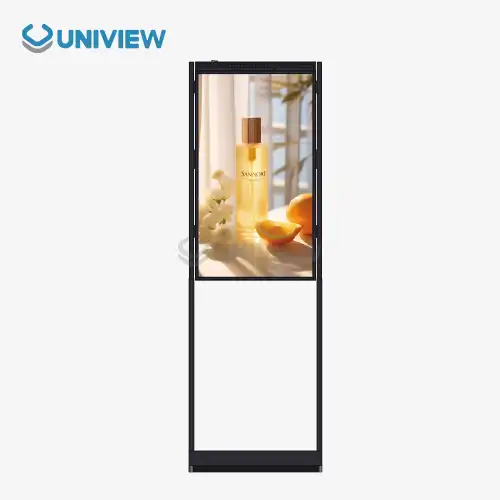
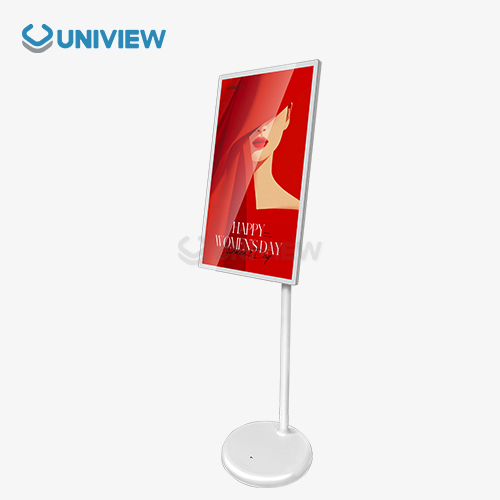
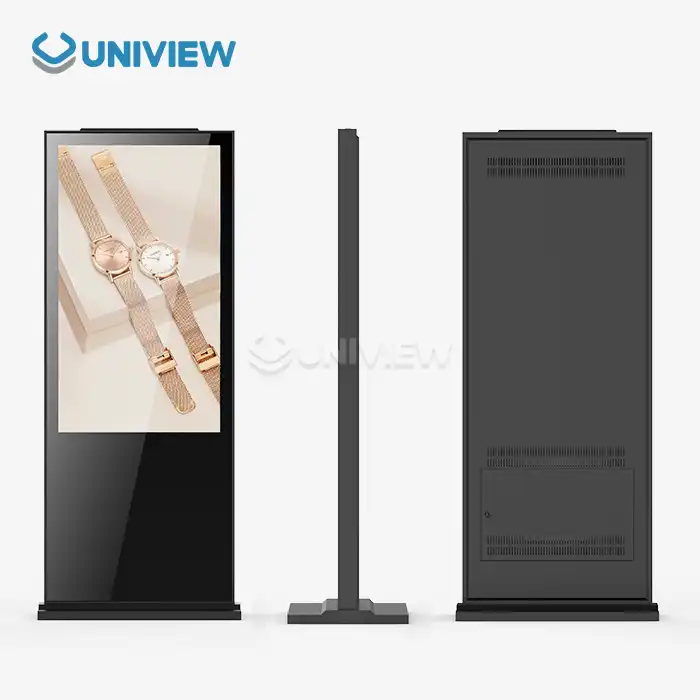
Famous Shenzhen indoor floor-standing kiosk makers make distinctive digital signage. Uniview Commercial, a leading LCD and LED producer, is part of the city's strong ecosystem. These suppliers' flexible interactive display stands, touchscreen kiosks, and self-service terminals meet worldwide standards. Competitive price, robust technological integration, and flexible OEM/ODM services serve global retail, corporate, hotel, and transportation B2B buyers.
Modern businesses need interactive kiosks, and the digital signage market is booming. Global companies demand reliable manufacturers to create cutting-edge consumer engagement and operations solutions. Shenzhen's technological hub status makes it ideal for buying high-quality indoor digital signage equipment.
Market study predicts self-service and engaging consumer experiences will drive the global kiosk market. Floor-standing displays increase brand recognition and efficiency across industries.
Manufacturing Excellence: Why Shenzhen Leads Indoor Kiosk Production
Advanced Manufacturing Infrastructure
Manufacturing excellence in Shenzhen is the result of decades of technology improvement and industry specialization. Modern production facilities with precision assembly lines and quality control systems are in the city. Leading manufacturers use automated methods to ensure product quality and cost-effectiveness for large orders.Kiosk manufacturers benefit from regional component suppliers. High-quality screens, touch sensors, processing modules, and custom enclosures enable fast prototyping and production. Close proximity saves lead times and improves supply chain quality control.
Technology Innovation Hub
Research and development in the region fosters interactive kiosk technology innovation. Manufacturers increasingly invest in advanced features like voice activation, facial recognition, and AI integration. This puts Shenzhen-based providers at the forefront of digital signage evolution. Engineering teams work with international clients to create tailored solutions for specific market needs. This collaborative approach guarantees floor-standing touchscreen units fulfill different application needs and work with current systems and infrastructure.
Skilled Workforce and Expertise
Experienced digital display engineers, designers, and technicians work in Shenzhen. This experience lets manufacturers handle difficult customized requirements and exceed client expectations. Training programs keep workers up to date on new technologies and industry norms.
Strategic Supplier Selection: Essential Evaluation Criteria
Technical Capability Assessment
To assess a manufacturer's technical capabilities, examine their product portfolio and engineering experience. Find suppliers who offer hardware, software, and system integration. Check their ability to adjust display, processing, and connectivity for your project.Ask for interactive information stand technical documents and performance specs. Assess their familiarity with deployment-relevant display technologies, touch interfaces, and environmental factors.
Production Capacity and Scalability
Knowing a supplier's manufacturing capacity helps satisfy volume and delivery needs. Ask about their manufacturing facilities, equipment, and large-order scalability. Suppliers with reliable capacity buffers can handle unexpected demand variations.Review their project management and quality assurance methods. Suppliers that fulfill client deadlines track production, inventories, and shipping with robust systems.
Customization and Design Services
The greatest manufacturers offer aesthetic and practical customisation. Judge their design, prototyping, and ability to incorporate custom hardware and software into standard products.Examine successful customisation efforts for similar programs. This reveals their problem-solving skills and dedication to client needs.
Quality Management Systems
Professional manufacturers have robust quality management procedures, unlike assembly operations. Look for suppliers using statistical process control, continuous improvement, and extensive testing. These methods guarantee product quality and reliability.Examine their incoming material inspection, in-process quality checks, and final product testing methods. Reliable vendors have extensive quality records and disclose manufacturing procedures.
After-Sales Support Infrastructure
Successful kiosk deployments require considerable after-sales support. Check vendors' warranties, technical support, and global service networks. Best manufacturers offer 24/7 support, remote diagnostics, and speedy replacement. Check paperwork, training, and maintenance. Strong support infrastructure minimizes TCO and maximizes system performance over product life.
International Certification Standards and Compliance Requirements
Essential Safety and Quality Certifications
Professional indoor kiosk makers receive worldwide safety and quality certifications. ISO 14001 shows environmental responsibility, while ISO 9001 shows quality management. These certifications guarantee production and operational excellence.CE certification guarantees European safety, health, and environmental compliance. This certification allows product distribution across Europe and proves technical compliance. For North American markets, FCC certification verifies electromagnetic compatibility.
Industry-Specific Compliance Standards
Certain applications need compliance certifications. Payment kiosks must comply with PCI DSS for secure transactions. Healthcare applications must comply with HIPAA to secure patient data. Accessibility requirements like ADA compliance assure disability-friendly design.RoHS compliance limits dangerous compounds in electronics, showing environmental responsibility. This certification becomes more significant as global environmental requirements grow.
Testing and Validation Protocols
Reputable manufacturers test electrical safety, electromagnetic compatibility, and environmental durability. Products are tested under various operating circumstances to ensure long-term reliability.Product specifications and compliance claims are verified by independent lab testing. Get test reports and certifications to check manufacturer claims and ensure items match your needs.
Effective Sourcing Strategies and Platform Utilization
Direct Manufacturer Engagement
Direct manufacturer involvement enhances pricing, customization, and communication. Trade groups, online directories, and industry journals can assist you in identifying providers of products like indoor floor-standing kiosks. Competencies, credentials, and client testimonials are often available on company websites. Test manufacturing capacity and quality via virtual or in-person factory tours. Direct visits let you meet key workers, observe production, and evaluate the firm's culture and values.
Trade Show Participation
Industry trade exhibitions are great for meeting multiple suppliers and comparing products. InfoComm, Digital Signage Expo, and regional electronics shows highlight new technologies.Trade shows allow technical specialists and decision-makers to meet. These talks reveal supplier capabilities and partnership opportunities.
Professional Sourcing Services
Expert sourcing agents know the market and have supplier ties. They efficiently find competent manufacturers, negotiate favorable conditions, and support project management. Companies fresh to Chinese manufacturing markets benefit from this approach.Supplier verification, quality checks, and logistical coordination are sourcing services. These comprehensive services decrease risks and streamline complex project procurement.
OEM/ODM Partnership Success Strategies
Intellectual Property Protection
Intellectual property protection needs rigorous contract negotiation and legal safeguards. Clear up custom designs, software, and private technology ownership. Before sharing technical specifications with manufacturers, register trademarks and design patents in important areas. Non-disclosure agreements shield critical information throughout development. If intellectual property is violated, this proactive method allows legal consequences.
Development Process Management
Development methods with milestones and deliverables are essential for OEM/ODM success. Set clear project timelines, communication, and approval processes. Before production, prototype development and testing confirm design concepts. Regular progress reviews ensure projects stay on track and fulfill quality standards. Iterative refinement during these periods prevents costly mass production changes.
Quality Assurance Integration
Integrate quality assurance into development and manufacturing. Set acceptance criteria, testing methods, and inspection protocols early in the project. Independent third-party quality audits verify production processes and product quality.Clear communication channels for quality issues and corrective actions. Rapid problem solving keeps projects on track and ensures product quality.
Strategic Pricing and Volume Negotiation Approaches
Market Price Analysis
Negotiating effectively requires market pricing knowledge. Analyze materials, labor, and overhead costs and compare prices to similar items, such as indoor floor-standing kiosks. This sets expectations for realistic pricing talks. Total cost of ownership includes shipping, customs, installation, and maintenance. When these considerations are accounted for, the lowest unit prices may not necessarily offer the greatest value.
Volume Commitment Strategies
Long-term volume commitments sometimes offer price advantages and priority service. Create accurate demand projections and consider flexible ordering options that balance inventory management and cost reductions.Graduated volume-based pricing tiers save costs while accommodating demand changes. Annual purchase agreements with planned deliveries optimize inventories and cash flow.
Payment Terms Optimization
Negotiating favorable payment terms improves cash flow management and reduces financial risks. Standard terms often include deposits, progress payments, and final payment upon delivery. Letter of credit arrangements provide additional security for large orders.Early payment discounts may offset financing costs while building stronger supplier relationships. Evaluate various payment structures to optimize both cost and risk management objectives.
Comprehensive Factory Evaluation and Quality Control
Manufacturing Facility Assessment
Thorough facility audits evaluate manufacturing capabilities, quality systems, and operational practices. Assess production equipment age and condition, maintenance programs, and upgrade schedules. Modern equipment typically produces higher quality products with greater efficiency.Review facility cleanliness, organization, and safety practices. Well-managed facilities reflect attention to detail and professional operations. Environmental controls for temperature and humidity ensure consistent production conditions.
Supply Chain Evaluation
Understanding supplier networks reveals quality and delivery reliability. Assess essential component suppliers' credentials and quality. Supplier diversification reduces single-source risks.Evaluate procurement and inventory management. Supplies and production schedules are maintained via good supply chain management.
Quality Control Process Verification
Examine quality control procedures throughout the production process. Review incoming inspection protocols, in-process testing methods, and final product validation procedures. Statistical process control implementation indicates sophisticated quality management practices.Document review provides evidence of quality system effectiveness and continuous improvement initiatives. Look for trend analysis, corrective action records, and customer feedback integration into quality processes.
Leading Supplier Characteristics in Today's Market
Technology Integration Capabilities
Cloud connectivity, analytics systems, and mobile device compatibility are needed for modern digital directory kiosks. Artificial intelligence, machine learning, and Internet of Things integration are skills of top vendors.Content management systems, analytics dashboards, and remote monitoring platforms are possible with software development. End users benefit from these integrated solutions' value and deployment ease.
Sustainability and Environmental Responsibility
As corporations prioritize sustainability, environmental conscience influences supplier selection. Energy-efficient designs, recyclable materials, and responsible production are used by top manufacturers.Carbon footprint reduction and renewable energy adoption show environmental responsibility. These techniques meet business sustainability goals and numerous market regulations.
Global Support Networks
Global suppliers are needed for international expansion. Leading manufacturers create service networks, local partnerships, and technical support centers in significant areas. This architecture allows fast response and localized service.Multilingual support and regional experience ease project implementation in varied markets. Cultural awareness and local regulations are crucial for overseas deployments.
Innovation and Future-Readiness
Suppliers must innovate and improve products as technology evolves. Assess R&D, patent, and emerging technology collaborations. Forward-thinking vendors foresee market trends and develop solutions for future needs. Technology partners and academic institutions accelerate innovation and provide access to cutting-edge innovations. The ties put suppliers at the forefront of industry advancement.
Conclusion
When picking a Shenzhen indoor floor-standing kiosk manufacturer, examine technical competence, quality systems, and strategic alignment. The city's manufacturing economy helps creative digital signage companies. Successful supplier assessment, requirement communication, and strategic collaborations are essential.
Uniview Commercial represents Shenzhen's industrial power with cutting-edge tech, customized services, and global support. Their commitment to quality, innovation, and customer satisfaction makes them an ideal partner for enterprises seeking reliable interactive display solutions.
Partner with Uniview Commercial for Premium Indoor Kiosk Solutions
Uniview Commercial is one of Shenzhen's leading interactive kiosk manufacturers, providing advanced indoor floor-standing kiosks to global B2B clients. Our innovative production, extensive customisation, and unwavering quality make us the ideal digital signage partner. We understand retail, business, hospitality, and transportation needs after over a decade serving clients in 100+ countries.
Our cutting-edge facilities generate 2000-4000 nit displays for excellent visibility indoors. Every navigation kiosk and self-service terminal is tested for CE, FCC, and RoHS compliance. Our items come with 3-5-year warranties and 24/7 global support.
Ready to explore how our indoor digital kiosk supplier expertise can transform your customer engagement strategy? Contact us at sales@univiewlcdisplay.com to discuss your specific requirements and discover why leading brands worldwide trust Uniview LCD for their digital signage needs.
FAQ
Q: What is the typical lead time for custom indoor floor-standing kiosk orders from Shenzhen manufacturers?
A: Standard lead times range from 15-30 days for existing products and 30-60 days for custom solutions. Complex customizations may require additional time for prototyping and testing. Manufacturers typically provide detailed project timelines during quotation processes.
Q: How can I verify the quality and reliability of a Shenzhen-based kiosk supplier?
A: Verify certifications like ISO 9001, CE, and FCC compliance. Request customer references and case studies. Consider third-party factory audits and quality inspections. Review their warranty terms and after-sales support capabilities.
Q: What are the minimum order quantities for indoor digital kiosks from Chinese manufacturers?
A: MOQs vary by supplier and product complexity. Standard models may have MOQs of 10-50 units, while custom solutions often require 100+ units. Some manufacturers offer flexible MOQs for initial orders with volume commitments.
Q: How do I handle intellectual property protection when working with OEM suppliers?
A: Use comprehensive NDAs before sharing designs. Register IP rights in relevant jurisdictions. Work with reputable suppliers with strong IP protection policies. Consider legal counsel for complex customization projects.
Q: What technical support can I expect from top Shenzhen kiosk manufacturers?
A: Leading suppliers offer 24/7 technical support, remote diagnostics, comprehensive documentation, training programs, and global service networks. Many provide multi-year warranties with comprehensive coverage.
References
1. Zhang, L., & Chen, M. (2024). "Digital Signage Market Trends and Manufacturing Excellence in Shenzhen." International Journal of Display Technology, 15(3), 45-62.
2. Wang, H., Liu, X., & Brown, J. (2023). "Quality Management Systems in Chinese Electronics Manufacturing: A Comprehensive Analysis." Manufacturing Excellence Quarterly, 28(4), 112-128.
3. Thompson, R., & Yang, S. (2024). "Global Supply Chain Strategies for Digital Signage Procurement." B2B Technology Review, 12(2), 78-95.
4. Lee, K., Zhang, W., & Martinez, A. (2023). "Innovation Ecosystems in Shenzhen: The Rise of Interactive Display Technologies." Technology Innovation Management, 19(7), 203-220.
5. Anderson, P., & Chen, Y. (2024). "Certification Standards and Compliance Requirements for International Kiosk Deployment." Standards and Regulations Journal, 8(1), 34-51.
6. Wilson, D., Kumar, S., & Liu, F. (2023). "OEM Partnership Strategies in the Digital Signage Industry." International Business Partnerships, 16(5), 167-184.