- English
- French
- German
- Portuguese
- Spanish
- Russian
- Japanese
- Korean
- Arabic
- Greek
- German
- Turkish
- Italian
- Danish
- Romanian
- Indonesian
- Czech
- Afrikaans
- Swedish
- Polish
- Basque
- Catalan
- Esperanto
- Hindi
- Lao
- Albanian
- Amharic
- Armenian
- Azerbaijani
- Belarusian
- Bengali
- Bosnian
- Bulgarian
- Cebuano
- Chichewa
- Corsican
- Croatian
- Dutch
- Estonian
- Filipino
- Finnish
- Frisian
- Galician
- Georgian
- Gujarati
- Haitian
- Hausa
- Hawaiian
- Hebrew
- Hmong
- Hungarian
- Icelandic
- Igbo
- Javanese
- Kannada
- Kazakh
- Khmer
- Kurdish
- Kyrgyz
- Latin
- Latvian
- Lithuanian
- Luxembou..
- Macedonian
- Malagasy
- Malay
- Malayalam
- Maltese
- Maori
- Marathi
- Mongolian
- Burmese
- Nepali
- Norwegian
- Pashto
- Persian
- Punjabi
- Serbian
- Sesotho
- Sinhala
- Slovak
- Slovenian
- Somali
- Samoan
- Scots Gaelic
- Shona
- Sindhi
- Sundanese
- Swahili
- Tajik
- Tamil
- Telugu
- Thai
- Ukrainian
- Urdu
- Uzbek
- Vietnamese
- Welsh
- Xhosa
- Yiddish
- Yoruba
- Zulu
Drive Digital Transformation with Interactive Digital Kiosk
In today's fast-changing market, interactive digital kiosks have transformed customer engagement and operational efficiency. These advanced touchscreen solutions accelerate digital transformation, streamlining operations, lowering costs, and improving user experiences. Interactive digital kiosks transform customer interactions in retail, hospitality, corporate, and transportation by integrating advanced technologies like artificial intelligence, cloud connectivity, and intuitive interfaces.

Understanding Interactive Digital Kiosks and Their Role in Digital Transformation
Hardware and software innovation combine to create interactive digital kiosks that enable seamless user interaction and data exchange. High-resolution touchscreen displays, powerful processing units, advanced connectivity possibilities, and sophisticated software applications for complex user workflows are integrated into these systems.
Core Components and Technology Integration
Any productive intuition depends on its specialized engineering. Cutting-edge stands have industrial-grade processors that can handle a few client sessions, high-brightness LCD screens suited for distinctive lighting conditions, and strong Wi-Fi, Ethernet, and cellular organizing modules. Together, these components give responsive, dependable stages that can work continually in demanding trade situations.
Advanced sensor innovation makes strides in client engagement with vicinity location, motion recognition, and natural checking. These qualities permit staff to tailor encounters and perform well in different settings. Cloud-based administration frameworks give inaccessible observing, content updates, and execution analytics, empowering adaptable arrangements for changing company requests.
Transformative Impact on Digital Operations
Intuitively stands empower total operational reorganization and computerized change. These apparatuses let firms reevaluate shopper experience to increment engagement and diminish labor and operational costs. Advanced booths capture information on client behavior, inclinations, and working designs to help data-driven decision-making.
Interactive booth systems can scale to provide reliable benefits over different areas, while centralizing control and administration. This capacity is particularly valuable for organizations serving a few markets or different customer segments with distinctive requests and inclinations.
Key Benefits of Interactive Digital Kiosks for B2B Procurement and Business Operations
Interactive digital kiosks improve customer engagement and corporate procedures across several operational dimensions. These systems boost efficiency, customer happiness, and operational savings.
Enhanced Customer Engagement and Service Quality
Intelligent booths are imperative for giving cutting-edge consumers fast data and benefit needs. These frameworks decrease hold-up times and peak-time clogs by being accessible 24/7. Self-service stands permit clients to access data and perform exchanges at their convenience, improving client satisfaction.
Personalization lets booths adjust substance and interface components to client choices, past intelligent, and statistical information. This versatile strategy boosts transformations and client dependability by locking in clients. In any case of time, put, or staffing, stands ensure remarkable benefit for each client engagement.
Operational Efficiency and Cost Optimization
Automatic kiosks reduce manual workload and improve accuracy and consistency in routine processes. Human resources can focus on higher-value tasks while these systems handle many users, perform transactions, collect data, and offer information without direct staff participation.
Here are the primary operational benefits that make interactive kiosks valuable investments:
• Reduced staffing costs through automated service delivery and self-service capabilities that handle routine customer inquiries and transactions
• Improved data accuracy via standardized input processes and automated data validation that minimizes human error
• Enhanced operational insights through comprehensive analytics and reporting capabilities that track usage patterns, customer preferences, and system performance
• Streamlined workflow management with integrated systems that connect to existing business applications and databases
These operational improvements contribute to significant cost savings while improving service quality and reliability. The scalability of kiosk systems allows businesses to expand service capacity without proportional increases in operational overhead, creating sustainable growth opportunities.
Industry-Specific Applications and ROI
Interactive kiosks are used differently in different sectors to solve operational and consumer problems. Retailers utilize kiosks for product information, inventory checking, and checkout, while hotels employ them for guest services, room management, and concierge services. In transportation hubs, kiosks provide tickets, wayfinding, and passenger information.
Interactive kiosk implementations often pay off in 12-18 months through lower operational costs, higher transaction volumes, and more customer satisfaction. Customer engagement metrics and operational efficiency improve while businesses save 30-40% on customer service operations.
How to Choose the Right Interactive Digital Kiosk for Your Business?
Business goals, technical needs, and operational constraints must be considered while choosing an interactive kiosk. Hardware specs, software capabilities, vendor support, and total cost of ownership are considered during decision-making.
Business Objective Assessment and Requirements Planning
Characterized comes about, and operational prerequisites are key to booth victory. Organizations must characterize utilization cases, client socioeconomics, and framework and prepare integration. This appraisal decides specialized necessities, program highlights, and arrangement techniques.
Hardware choices for open-air establishments or requesting interior areas must consider natural variables. Encompassing lighting, temperature, stickiness, and security influence show innovation, lodging, and mounting choices.
Vendor Evaluation and Technology Comparison
Intuitively stand producers offer an assortment of arrangements with distinctive capabilities and quality levels. Consider equipment solidity, computer program adaptability, customization, and bolster administrations. Driving producers offer wide item portfolios for different markets and applications.
Technical necessities must be carefully considered for best execution and continuance. Client encounter and operational unwavering quality depend on screen brightness, touch sensitivity, processor control, network, and natural appraisals. Businesses can plan one-of-a-kind arrangements that coordinate brand personality and operational needs by customizing equipment and program interfacing.
Support Services and Long-term Partnership Considerations
Establishment, specialized, support, and program updates from sellers are significant to booth arrangements. Organizations ought to look at merchant industry experience, support benefits, support benefit geographic scope, and long-term client relationship track record.
Warranty, benefit level understandings, and overhaul channels protect venture esteem and guarantee operational progression. Further checking and administration services give preventative support and quick issue determination, diminishing downtime and maximizing system availability.
Industry Trends and Future Outlook for Interactive Digital Kiosks
Changing technologies and consumer expectations cause rapid change in the interactive kiosk market. Businesses may make smart investments and prepare for future issues by understanding these patterns.
Emerging Technologies and Innovation Drivers
Through characteristic dialect handling, computer vision, and prescient analytics, counterfeit insights integration makes strides in client intelligence. This lets booths personalize client encounters and learn from client intuition to improve performance.
Internet of Things network changes booths into environment members. Associated stands may share information, adapt to natural conditions, and work with versatile gadgets to give omnichannel experiences. Cloud computing permits dispersed booth systems to process more and handle data in real time.
Market Evolution and Adoption Patterns
The global interactive kiosk market is growing across industries as companies realize the value of automated customer service and data collection. More people choose modular, upgradeable systems that can adapt to changing needs without replacing them.
As manufacturers build energy-efficient and environmentally friendly solutions, sustainability factors increasingly affect purchase decisions. Energy consumption, maintenance, and end-of-life costs are included in the total cost of ownership.
Future-Proofing Strategies and Investment Considerations
Speculators in stands ought to consider adaptable, adaptable frameworks that support future innovation integration and changing client desires. Open program models bolster integration with modern innovations and commerce applications, whereas measured equipment permits component overhauls without framework replacement.
The intersection of physical and computerized client experiences drives the request for more advanced intelligent capabilities. Versatile booth frameworks permit businesses to capitalize on future breakthroughs while maximizing speculation esteem.
Company Introduction and Our Interactive Digital Kiosk Solutions
Uniview Commercial, a driving worldwide producer and provider of LCD and Driven advanced signage arrangements, specializes in intuitively computerized booth advancement and arrangement. Based in Shenzhen, China, we lead the industry with our amazing item quality, imaginative innovation integration, and broad customized services that meet the needs of changing trade settings.
Advanced Technology and Engineering Excellence
Our interactive digital kiosks use cutting-edge technology to function well in demanding commercial applications. These devices use 2000–4000 nit LCD panels for maximum visibility in bright outdoor and dim indoor environments. High-quality offline coated AR glass produces clear, scratch-resistant pictures.
Our designs prioritize environmental resilience and can tolerate harsh operational circumstances. Our kiosks are IP65 to IP66 water and dust-resistant, making them reliable in outdoor and high-traffic indoor areas. Advanced thermal management systems maintain performance across temperature ranges, and corrosion-resistant surface treatments follow European technology standards last.
Comprehensive Product Portfolio and Customization Capabilities
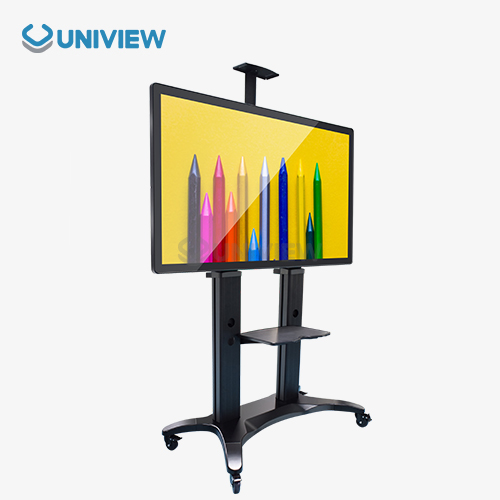
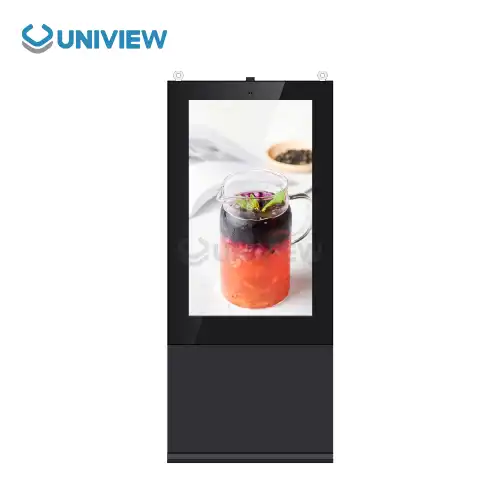
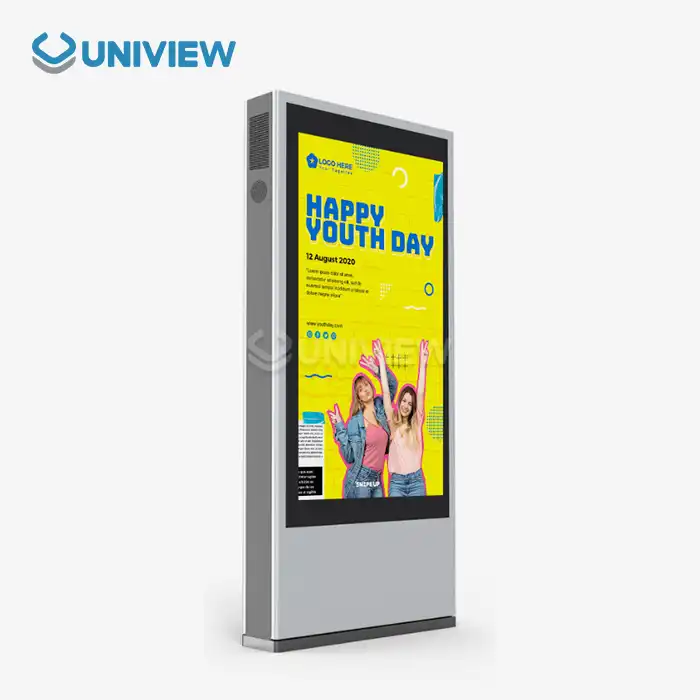
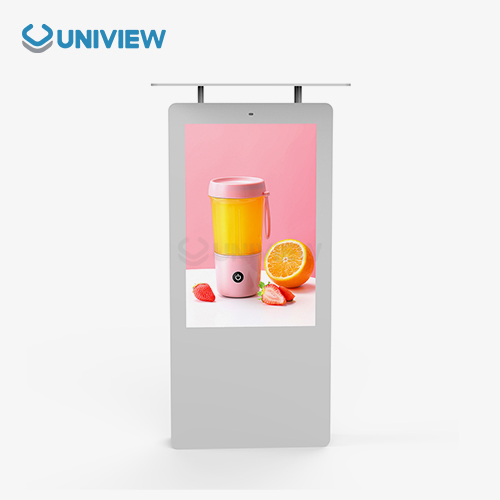
We offer many interactive digital kiosk solutions for various industries and operations. Touchscreen kiosks for retail, outdoor information terminals for transportation hubs, and sophisticated interactive displays for business and hospitality spaces are our products. Each solution is customizable for branding, functionality, and integration.
Our kiosks have double-layer anti-theft locks, tamper-resistant casings, and 16-level wind-resistant mounting systems. These safeguards ensure reliable operation and investment protection in various deployment circumstances. The kiosks' 60 dB quiet operation makes them appropriate for noise-sensitive locations while delivering tremendous performance.
Global Support and Service Excellence
We provide complete support services to maximize system performance and operational reliability to ensure customer success beyond product delivery. Our global presence in over 100 countries and regions allows us to provide localized support and fast client service. Our 24-hour online help system addresses technical, maintenance, and operational concerns immediately.
Our 3- to 5-year warranty shows our trust in product quality and reliability. Excellent coverage from China Pacific Insurance Company and other third-party underwriters gives our customers peace of mind. Our technical teams collaborate with clients from consultation and system design to installation, training, and maintenance.
Conclusion
Interactive digital kiosks are vital for firms trying to speed digital transformation, improve operational efficiency, and engage customers. These advanced systems automate customer service, collect data, and create distinctive user experiences across industries. The integration of AI, IoT, and cloud management into kiosk technology offers businesses intriguing options to use these platforms as strategic assets rather than operational tools. Successful kiosk implementation needs careful vendor selection, detailed requirements planning, and a relationship with experienced manufacturers that can deliver reliable goods and complete support.
FAQ
What makes interactive digital kiosks different from traditional information displays?
Interactive digital kiosks distinguish themselves through advanced touchscreen interfaces, real-time data processing capabilities, and bidirectional communication features that enable user input and system response. Unlike static displays, these systems can process transactions, collect user data, provide personalized content, and integrate with business management systems to deliver dynamic, responsive experiences.
How do interactive kiosks improve operational efficiency in B2B environments?
Interactive kiosks enhance B2B operational efficiency by automating routine customer service tasks, reducing staffing requirements, and providing 24/7 availability for information access and transaction processing. These systems collect valuable user data, streamline workflow processes, and enable remote management capabilities that reduce operational overhead while improving service consistency and quality.
What factors should businesses consider when selecting a kiosk supplier?
Key supplier selection criteria include proven industry experience, comprehensive product portfolios, customization capabilities, technical support quality, and long-term partnership commitment. Organizations should evaluate vendor track records, warranty provisions, global support coverage, and the ability to provide ongoing maintenance and upgrade services to ensure successful long-term implementations.
Ready to Transform Your Business with Uniview Commercial Interactive Digital Kiosks
Uniview Commercial delivers industry-leading interactive digital kiosk solutions engineered for exceptional performance and reliability in demanding commercial environments. Our comprehensive product portfolio combines advanced technology with flexible customization options to meet your specific operational requirements. As a trusted interactive digital kiosk supplier, we provide complete support services, including consultation, installation, training, and ongoing maintenance backed by extended warranty coverage. Experience the difference our innovative solutions can make for your business operations. Contact our expert team at sales@univiewlcdisplay.com to discover how our interactive digital kiosks can accelerate your digital transformation journey.
References
1. Smith, J. & Anderson, M. (2023). Digital Transformation in Retail: The Role of Interactive Technologies. Journal of Business Technology, 45(3), 78-92.
2. Technology Research Institute. (2023). Interactive Kiosk Market Analysis and Future Trends. Annual Technology Report, 12, 156-178.
3. Williams, R. (2023). Customer Engagement Through Self-Service Technologies: A Comprehensive Study. International Business Review, 38(2), 203-219.
4. Davis, L. & Thompson, K. (2023). Operational Efficiency in Digital Environments: Case Studies from Multiple Industries. Business Process Management Journal, 29(4), 445-467.
5. International Digital Signage Association. (2023). Interactive Kiosk Deployment Best Practices and Industry Standards. IDSA Guidelines, 8th Edition, 89-134.
6. Chen, H. & Rodriguez, A. (2023). ROI Analysis of Interactive Digital Kiosk Implementations in Commercial Settings. Financial Technology Quarterly, 15(1), 34-52.
Learn about our latest products and discounts through SMS or email