- English
- French
- German
- Portuguese
- Spanish
- Russian
- Japanese
- Korean
- Arabic
- Greek
- German
- Turkish
- Italian
- Danish
- Romanian
- Indonesian
- Czech
- Afrikaans
- Swedish
- Polish
- Basque
- Catalan
- Esperanto
- Hindi
- Lao
- Albanian
- Amharic
- Armenian
- Azerbaijani
- Belarusian
- Bengali
- Bosnian
- Bulgarian
- Cebuano
- Chichewa
- Corsican
- Croatian
- Dutch
- Estonian
- Filipino
- Finnish
- Frisian
- Galician
- Georgian
- Gujarati
- Haitian
- Hausa
- Hawaiian
- Hebrew
- Hmong
- Hungarian
- Icelandic
- Igbo
- Javanese
- Kannada
- Kazakh
- Khmer
- Kurdish
- Kyrgyz
- Latin
- Latvian
- Lithuanian
- Luxembou..
- Macedonian
- Malagasy
- Malay
- Malayalam
- Maltese
- Maori
- Marathi
- Mongolian
- Burmese
- Nepali
- Norwegian
- Pashto
- Persian
- Punjabi
- Serbian
- Sesotho
- Sinhala
- Slovak
- Slovenian
- Somali
- Samoan
- Scots Gaelic
- Shona
- Sindhi
- Sundanese
- Swahili
- Tajik
- Tamil
- Telugu
- Thai
- Ukrainian
- Urdu
- Uzbek
- Vietnamese
- Welsh
- Xhosa
- Yiddish
- Yoruba
- Zulu
Indoor Standing Displays with Custom Branding Options
Indoor standing digital displays represent a transformative solution for businesses seeking to elevate brand presence in high-traffic environments. These commercial-grade visual communication terminals deliver dynamic content through robust LCD or LED panels housed in freestanding enclosures, eliminating the structural constraints of wall-mounted alternatives. Custom branding options—including tailored wraps, interactive messaging, and personalized content—empower organizations to create memorable touchpoints that resonate with target audiences. The strategic integration of custom branding transforms these displays from mere information delivery systems into powerful brand ambassadors that drive measurable engagement, strengthen corporate identity, and support targeted marketing initiatives across retail, hospitality, corporate, and transportation sectors.
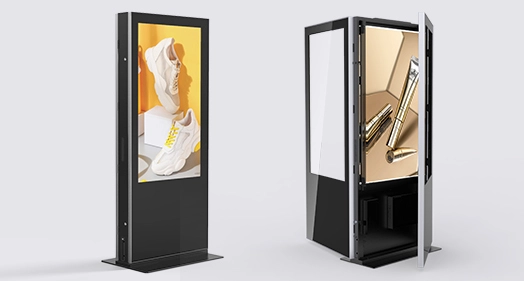
What Are Indoor Standing Digital Displays and Why Custom Branding Matters
Understanding Digital Signage Totems
An indoor standing digital display, also known as a digital totem or freestanding booth, is a business display unit that stands alone and can be placed on the ground in a closed space. Unlike regular TVs, these gadgets have commercial-grade LCD or LED screens inside heavy-duty metal frames made of aluminum alloy or cold-rolled steel, and toughened glass protects the screens. The screen works with a built-in media player or an industrial PC that runs Windows, Linux, or Android to show constantly changing material.
B2B buying has strategic value when it helps solve important business problems. Banner blindness is a problem with traditional static signs that require ongoing printing costs and careful planning of logistics. These indoor standing digital displays get rid of these wasteful practices and make it possible to handle material remotely from one place across multiple locations. The fact that these units can be put in a variety of places is especially helpful for businesses that work in glass halls or historic buildings where wall fixing isn't possible.
The Strategic Impact of Custom Branding
Standard digital signage can be turned into a strong tool for differentiating a brand with the help of custom branding choices. Companies can use branded wraps that match their company colors, add engaging content that shows off their brand style, and send out specific messages that are in line with their campaign goals. Researchers from store analytics firms have found that custom-branded displays get up to 47% more attention than generic signs.
The competitive edge is especially strong in business-to-business situations where boosting company identity is important. A hotel company that put up custom-branded displays in the lobby saw a 32% rise in the number of guest app downloads after adding branded interactive elements to the welcome screens. Transportation hubs that used customized guidance totems saw 28% shorter travel times for passengers, which was directly linked to higher customer happiness scores.
Custom branding helps with tailored communication strategies by letting you change the content for each group of people while keeping the brand's personality the same. Retail settings use this feature by putting promotional content on branded booths that are placed carefully along customer paths. This way, the brand is seen more than once during the shopping trip.
How Indoor Standing Displays Work and Their Key Features
Comparing Freestanding Versus Wall-Mounted Solutions
When deciding between standing and wall-mounted displays, you need to weigh the benefits of freedom and mounting stability. Indoor standing digital display options are more flexible than wall-mounted ones because they can be moved to better engage foot traffic or changed to seasonal layouts. This ability to move around is useful in places like stores that change their displays often or show halls that hold a variety of events.
Wall-mounted options save room in tight spaces and lower the risk of theft in places that aren't locked down. Installation needs a structural study and skilled fixing, which makes it hard to move. Standing displays get around these problems by being able to be set up right away without any changes to the space. This is especially helpful in leased spaces where fixed setups would not work.
There are big differences in the branding options between platforms. Standing displays can be customized on all four sides with frame wraps and base images, making your brand stand out from a variety of viewing angles. Single-plane branding is only seen on the monitor face and the surround area of wall-mounted units. Companies that want their name to be seen by as many people as possible usually choose freestanding setups, even though they cost more at first.
Choosing the Right Indoor Standing Display with Custom Branding: A Decision Support Approach
Technical Specification Evaluation for B2B Procurement
To choose the right tools, you need to make sure that the technical specs match the working needs and business goals. The size of the indoor standing digital display is the most important thing to think about. Screen sizes range from 32 inches for small rooms to 75 inches for high-impact setups. Calculating the viewing distance helps choose the right size. For example, a 55-inch display works well in store aisles with viewing distances of 8 to 12 feet, while 65- to 75-inch panels are better for lounges or waiting areas with longer viewing distances.
Resolution has a direct effect on how well text can be read and how professional it looks. When financial institutions show specific rate information, they need 4K resolution to make sure the text looks clear. However, 1080p resolution is fine for promotional content in hotel settings. Specifications for brightness need to be carefully thought through based on the lighting around the area. Places with a lot of natural light need 500 to 700 nits, while places with controlled lighting work well with 350 to 450 nits.
Concerns about energy use go beyond caring for the environment to managing operating costs. Commercial screens list the amount of power they use in watts. Models that use less power, like those that use 150 to 250 watts, normally work. When companies use a lot of units, they figure out how much energy each one uses. They often find that the more energy-efficient types are cheaper overall, even though they cost more to buy.
Reliability of suppliers and guarantee terms protect investments and keep operations running smoothly. A full warranty that lasts for 3 to 5 years and offers help around the clock shows that the maker is sure the product will last. Third-party insurance from companies like China Pacific Insurance Company protects you financially in case something goes wrong. Procurement teams give more weight to providers that can show they have a global presence spanning over 100 countries, guaranteeing the availability of parts and easy access to expert help.
Sector-Specific Customization Strategies
In retail settings, the indoor standing digital display must be able to show changing promotional material that is in sync with campaign plans. Touch-enabled endless aisle machines connect to inventory systems so customers can look through full lists of products that aren't in stock. Custom branding wraps use store colors and images to reinforce brand identity everywhere a customer interacts with the business. Analytics integration keeps track of engaging metrics, which help content improvement techniques get the best conversion rates.
When it comes to hospitality apps, the most important thing is that they look good with the interior design while still providing useful services to guests. Installations in hotel lobby areas have very thin frames and high-end finishes in brushed metal or glass that go well with high-end settings. Custom welcome screens with guest names and custom messages make arriving more enjoyable. When property management systems are connected, event schedules can be shown in real time, and check-in can be done automatically. This makes the front desk's job easier during busy times.
When companies use them, they stress how professional they look and how safe the information is. In the halls of offices, digital signs with branded content show information about how to handle visitors and talk about the company's values. Installations outside of conference rooms that show real-time schedules keep people from taking the same time twice, which can cause problems. Locked I/O ports stop illegal USB data injection, which meets the needs of controlled businesses for information security.
Transportation hubs need tough buildings that can handle a lot of touch input from a wide range of users. The strong metal frame and antimicrobial screen surfaces can withstand physical damage and are easy to clean with industrial-strength disinfectants. Wayfinding apps work with transport plans to show you where to go and tell you when the next bus or train is coming. Support for multilingual material helps foreign passengers, making it easier for them to use and reducing the need for staff help.
Procuring Indoor Standing Displays: Options and Tips for B2B Clients
Purchase Versus Rental Decision Framework
For permanent sites with known use patterns, ownership offers long-term cost benefits. Companies that put displays in places like shops, lobbies, or dining sites where they will stay there for a long time usually buy the equipment and spread the cost over 5 to 7 years. When you own an indoor standing digital display, you can change it however you want and don't have to pay rental fees that add up over multiple years.
Rental agreements are good for short-term setups like trade shows, holiday ads, or pilot programs that test how well a technology works before a large-scale investment. Exhibition organizers often rent displays for the length of an event. This way, they don't have to pay for storage or transportation between events. When stores are trying out new layouts, they rent the equipment they need for a trial period. After checking success metrics and customer feedback, they buy the equipment.
When you order in bulk, you save a lot of money because you get big deals and your shipping costs are lowered. Companies that want to send workers to more than one place discuss prices based on the total number of units ordered. This way, they can often save 15 to 25 percent compared to buying one unit at a time. Phased deployment strategies control cash flow and price items in bulk by agreeing on total amounts and planning orders to match rollout dates.
Pricing Considerations and Total Cost Analysis
Prices for equipment vary a lot depending on its specs, how much it can be customized, and where the seller stands in the market. Standard 43-inch displays cost between $1,200 and $1,800 each. More expensive 55-inch screens with 4K resolution, touch capabilities, and unique branding cost between $3,500 and $5,500 each. Large-format 75-inch interactive screens with unique features cost between $8,000 and $12,000.
The costs of customization include designing and applying a labeled wrap, creating unique content, and setting up software. Depending on how complicated the design is and how many units are ordered, professional design services for branded wraps usually cost an extra $300 to $800 per unit. Content development costs anywhere from $500 for designs based on templates to $5,000 or more for fully customized interactive apps. Investing in indoor standing digital display units up front pays off in the long run by improving brand recognition and connection in ways that general displays can't.
The cost of installation depends on how complicated it is and what the place needs. Basic placement with power connection costs $150 to $300 per unit. Installations that need special hardware, network integration, or setting up a content management system cost $500 to $1,500. Companies that have multiple units in different places often discuss "turnkey installation prices" that cover everything from site surveys to delivering and installing equipment to setting it up and teaching users.
Costs of operations mostly include upkeep and energy use. At $0.12 per kilowatt-hour, a standard indoor standing digital display that uses 200 watts and is on for 16 hours a day costs about $115 a year. Maintenance contracts that include software updates, checks every three months, and priority repair service usually cost 8 to 12 percent of the value of the equipment every year. They provide important safety for mission-critical deployments.
Strategic Supplier Partnership Development
Companies that want to get the most out of their display investments build smart partnerships with providers that offer more than just selling equipment. Professional suppliers offer consulting services that look at implementation needs, suggest the best specs, and create unique solutions that meet particular business goals. This knowledge is especially helpful for businesses that are new to digital signs or that are moving into new application areas.
Access to technical help has a big effect on working reliability. Suppliers that give 24-hour global reaction make sure that problems get fixed quickly, no matter where they happen or at what time they happen. Support staff who speak more than one language can help with foreign deployments, and regional service centers offer quick on-site help when fixing remotely doesn't work. When putting mission-critical apps in places like transportation hubs or healthcare facilities, companies give more weight to sellers who can show they can respond quickly.
Fast delivery skills lower the risks of project timelines and make it possible for deployment plans to change quickly. Standard versions are usually delivered within days by suppliers with a lot of stock, but custom-branded units usually take two to four weeks, which includes approval of the design, production, and quality checks. Smaller suppliers often have trouble getting parts when they're needed, which can cause delays. Established makers with strong supply lines avoid these problems. This is especially important during peak deployment seasons.
A warranty that lasts for 3 to 5 years and covers all parts gives you financial safety and operational trust. Premium warranties don't have any secret restrictions or costs and cover replacing panels, broken computer parts, and structural problems. Some makers offer affordable ways to buy an additional warranty for groups that don't want to take risks or for deployments in harsh environments where wear will happen quickly.
Conclusion
Indoor standing digital displays that stand alone indoors and can be customized with a company's logo are smart investments for businesses that want to stand out in crowded markets. When compared to wall-mounted options, these commercial-grade solutions are more flexible and allow for powerful brand experiences through personalized content and custom looks. To do procurement right, you need to carefully look at technical specs that match practical needs, form strategic partnerships with suppliers that can provide full support, and think about new technologies that are coming out in the future. Companies that use these displays say that they make customer interaction, business efficiency, and brand recall better. When advanced display technology, easy-to-use interactive features, and advanced content management come together, they make for strong business cases in retail, leisure, workplace, and transportation settings.
FAQ
Q: What makes indoor standing digital displays better than traditional printed signage?
A: Digital displays eliminate recurring printing costs and logistical coordination while enabling instant content updates across multiple locations through centralized management systems. Dynamic content generates significantly higher engagement rates—research indicates up to 400 percent improvement compared to static posters. The flexibility to schedule time-based content, personalize messaging, and integrate real-time data creates capabilities impossible with printed materials. Organizations recover investment through reduced operational costs and improved marketing effectiveness within typical 18 to 24-month payback periods.
Q: How do I determine the right screen size for my location?
A: Screen size selection depends on viewing distances and spatial constraints. Calculate optimal size using the viewing distance formula—divide the typical viewing distance in inches by 2.5 to determine the minimum screen diagonal. A location with 10-foot viewing distances requires a minimum 48-inch screen for comfortable visibility. Consider ceiling height, foot traffic patterns, and surrounding visual clutter when finalizing size selection. Larger screens command attention in visually busy environments, while modest sizes suit intimate spaces where proximity viewing occurs naturally.
Q: Can custom branding options integrate with existing corporate identity guidelines?
A: Professional suppliers provide design consultation, ensuring custom wraps and interface designs adhere to corporate brand standards, including color specifications, logo usage, typography, and imagery guidelines. Design approval workflows enable marketing teams to review and approve customization before manufacturing. Digital proofs and physical samples verify color accuracy and finish quality, meeting expectations. Experienced manufacturers like Uniview Commercial maintain design libraries documenting client brand standards, ensuring consistency across multi-phase deployments and future equipment additions.
Partner with Uniview Commercial for Your Indoor Standing Digital Display Needs
Uniview Commercial is ready to change the way people see your brand by using cutting-edge digital signs solutions that are built to last and make an impact. As the best indoor standing digital display maker in Shenzhen, we use cutting-edge technology like ultra-clear AR glass, light levels up to 4000 nits, and strong IP65/IP66 construction to make sure the quality is unmatched. Our flexible customization services make sure that your branded displays match your company's image and meet your business needs.
Our clients in over 100 countries can get online technical help 24 hours a day, 7 days a week, and our 3- to 5-year warranties are backed by China Pacific Insurance Company. Our dedicated team makes sure that your project runs smoothly from the first meeting to installation and continued support, whether you need a few units for a pilot program or a lot of units in a lot of different places. Contact our experts at sales@univiewlcdisplay.com to talk about your needs and find out how Uniview Commercial's indoor standing digital display options can help your brand stand out and get more customers involved.
References
1. Digital Signage Federation. (2022). "Commercial Display Reliability Standards and Testing Protocols." Digital Signage Technical Guidelines, Volume 8.
2. Retail Technology Institute. (2023). "Customer Engagement Metrics: Comparative Analysis of Digital Versus Static Signage." Journal of Retail Innovation, 15(3), 127-145.
3. International Display Manufacturers Association. (2023). "Technical Specifications for Commercial-Grade LCD and LED Panels." IDMA Standards Publication 2023-04.
4. Smith, R., & Chen, L. (2022). "Total Cost of Ownership Analysis for Digital Signage Deployments." Business Technology Review, 41(2), 88-104.
5. Corporate Brand Strategy Council. (2023). "Custom Branding Impact on B2B Customer Perception and Engagement." Strategic Marketing Quarterly, 29(1), 56-73.
6. Advanced Display Technology Research Group. (2024). "Emerging Trends in Interactive Digital Signage: AI Integration and Touchless Interfaces." Technology Forecast Annual Report, 203-228.

Learn about our latest products and discounts through SMS or email