- English
- French
- German
- Portuguese
- Spanish
- Russian
- Japanese
- Korean
- Arabic
- Greek
- German
- Turkish
- Italian
- Danish
- Romanian
- Indonesian
- Czech
- Afrikaans
- Swedish
- Polish
- Basque
- Catalan
- Esperanto
- Hindi
- Lao
- Albanian
- Amharic
- Armenian
- Azerbaijani
- Belarusian
- Bengali
- Bosnian
- Bulgarian
- Cebuano
- Chichewa
- Corsican
- Croatian
- Dutch
- Estonian
- Filipino
- Finnish
- Frisian
- Galician
- Georgian
- Gujarati
- Haitian
- Hausa
- Hawaiian
- Hebrew
- Hmong
- Hungarian
- Icelandic
- Igbo
- Javanese
- Kannada
- Kazakh
- Khmer
- Kurdish
- Kyrgyz
- Latin
- Latvian
- Lithuanian
- Luxembou..
- Macedonian
- Malagasy
- Malay
- Malayalam
- Maltese
- Maori
- Marathi
- Mongolian
- Burmese
- Nepali
- Norwegian
- Pashto
- Persian
- Punjabi
- Serbian
- Sesotho
- Sinhala
- Slovak
- Slovenian
- Somali
- Samoan
- Scots Gaelic
- Shona
- Sindhi
- Sundanese
- Swahili
- Tajik
- Tamil
- Telugu
- Thai
- Ukrainian
- Urdu
- Uzbek
- Vietnamese
- Welsh
- Xhosa
- Yiddish
- Yoruba
- Zulu
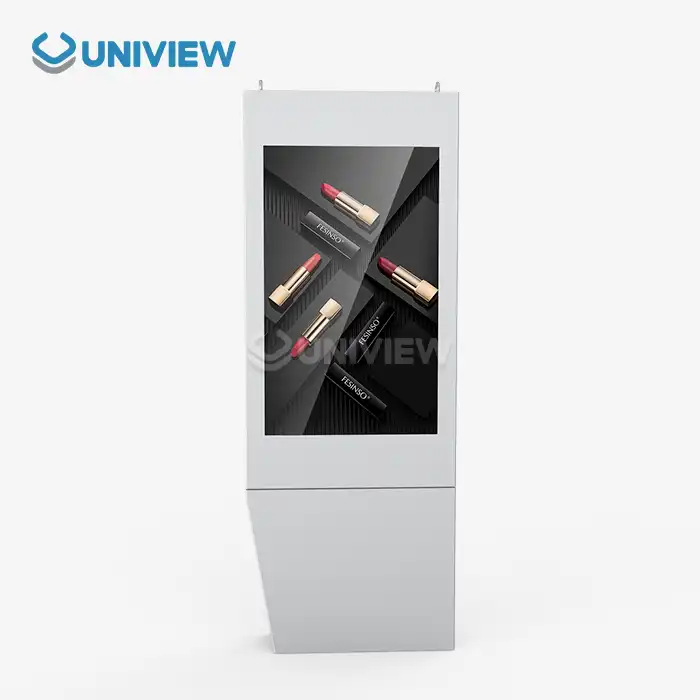
Kiosk LED Display for Events, Exhibitions & Trade Shows
LED kiosk displays have changed the way companies show off their names at trade shows, exhibitions, events, and fairs in the US and around the world. These cutting-edge digital signage solutions blend amazing brightness, great energy efficiency, kiosk-led display, and amazing longevity to make visually engaging experiences that grab people's attention. Contemporary booth LED display technology produces images that are very clear and bright, up to 4000 nits, so they can be seen clearly even in dimly lit rooms. The switch from static signs to interactive LED kiosks is a big step forward in event marketing technology. These kiosks give businesses new ways to connect with their target audiences through dynamic content delivery and interactive experiences.
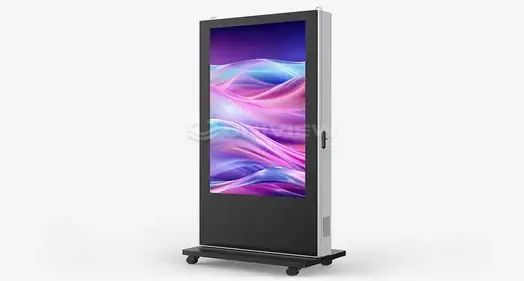
Understanding Kiosk LED Displays: Technology and Key Benefits
What Makes LED Kiosks Different from Traditional Displays
LED display booths use a group of light-emitting diodes to make bright colors and clear pictures without the need for backlighting, which is what LCD screens do. The technology allows for better control of brightness, which means that screens can stay visible in full sunlight while using a lot less power than other options. Modern LED booths are made of movable panels, which makes them very flexible and easy to adapt to different event needs. The main benefit of LED technology is that it works the same way in all kinds of situations. LED screens keep their visual effect no matter how bright the room is, unlike projector-based systems that have trouble with interference from other lights. Because they are so reliable, they are great for trade shows and exhibitions held inside and outside, as well as events that take place in a variety of settings where the lighting changes throughout the day.
Core Benefits for Event Applications
When event managers and exhibitors use LED display booths, they get a number of important benefits. Because LED technology uses about 50% less power than similar LCD options while providing better brightness levels, energy economy is a major practical benefit. This economy leads to lower operating costs during longer event times and better environmental protection. Another important benefit is that professional-grade LED kiosks have IP65 to IP66 ratings for security against dust and water. Strong materials that don't rust and strengthened mounting systems make up the structure, which can survive outdoor conditions and a lot of people at an event. Up to level 16 of wind resistance makes these displays stable even in bad weather, so they can be used at outdoor events, trade shows, and permanent exhibition setups. Modern LED booths are even more valuable because they can be used to interact with people. Multi-point interaction is possible on touch-enabled surfaces, so guests can look at goods, get information, use a kiosk-led display, and connect directly with branded content. When you combine high-resolution images with responsive touch technology, you get unique user experiences that get a lot more interest and conversions than static screens.
Selecting the Best Kiosk LED Display for Your Event Needs
Evaluating Technical Specifications for Optimal Performance
To choose the right LED booth for an event, you need to carefully look at the technical specs and make sure they match the needs of the event. Between 2000 and 4000 nits of brightness ensures good visibility in a range of lighting situations. Pixel pitch, on the other hand, determines how clear a picture is at different viewing distances. Finer pixel pitches are better for events where people will be close to the screen, while bigger pitches are better for screens where people will be far away. Resolution needs rely on how complicated the content is and how the viewer wants to experience it. Standard resolutions are good for general ads and brand messages, while high resolutions are better for interactive apps and detailed product demos. When thinking about size, you have to weigh the visual effect against practical issues like location limitations, transportation needs, and the difficulty of installation.
When purchasing managers choose LED booths, these are the most important technical factors they should look at:
Brightness Performance: Applications that take place outside need at least 3000 nits, while events that take place inside do well with 1500–2500 nits, making sure that the material can be seen in all lighting situations.
- Protection from the environment: an IP65 rating is required for outdoor use at the very least, and an IP66 rating is recommended for use in tough weather to keep interior parts safe from dust and water.
- Color Accuracy: Support for a wide color range reaching 90% NTSC makes sure that brand colors are reproduced correctly, keeping the look of marketing materials consistent.
- Operating Temperature Range: The wide temperature range, from -20°C to +60°C, allows for a variety of weather situations and yearly changes.
- Connectivity Options: HDMI, USB, and wireless are just a few of the input types that can be used. These allow for a wide range of content sources and real-time changes.
These technology requirements have a direct effect on how well and reliably the displays work during the event rollout. Professional-grade parts make sure that the system works consistently, and advanced features like automatic brightness change make watching better depending on the environment.
Brand Reliability and Support Considerations
Choosing the right vendor has a big effect on long-term happiness and business success. Manufacturers that have been around for a while usually offer full warranties, quick technical help, and a history of doing well in tough event settings. Certifications from well-known testing groups, written proof of service skills, and examples of installations in similar situations should all be used as evaluation factors. When technology problems need to be fixed right away during event deployment, having local help available is very important. Vendors that offer 24-hour reaction times and on-site service choices are great for reducing risk in important installs. Longer warranty periods, like 3 to 5 years, show that the maker is confident in the product and protects capital investments against breakdowns that come up out of the blue.
Implementing Kiosk LED Displays at Events, Exhibitions & Trade Shows
Strategic Deployment for Maximum Impact
To set up LED kiosks that work well, you need to plan and think about things like traffic flow, content goals, and technology infrastructure. Putting it in a prime location near main doors, registration areas,kiosk-led display, and high-traffic paths will give it the most exposure while also making sure it has enough power and network connections. Because LED technology is flexible, it can be put together in creative ways, such as to make curved screens, video walls, or building elements that are built in. A content plan is also a key part of getting the most out of your investment. Messages stay new with dynamic content rotation, and planned programming can reach different groups of people at different times during event days. Touch-enabled features in interactive apps like product listings, registration processes, and social media interaction make people more interested in what's being offered.
Installation Best Practices and Maintenance
Professional construction makes sure that the event runs smoothly and safely throughout its length. Using the right positioning systems for the weight and wind loads of the LED panels keeps the structure from falling apart, and managing the cables keeps them from getting damaged or becoming a safety risk. Ground-level screens need extra security, like mounting that can't be stolen and cases that can't be opened without being tampered with. Regular repair plans keep the visible quality of displays and make them last longer. Cleaning every day gets rid of dust and other particles that can make it harder for heat to escape and images to look clear. As part of preventive maintenance, connections are checked, software is updated, and performance is tracked to find problems before they affect how the event runs.
Real-World Success Stories
At foreign auto shows, big car companies have used LED kiosks to make immersive brand experiences by mixing virtual reality with product movies and configurators. Compared to standard display methods, these sites showed a significant rise in the amount of time visitors stayed and the number of leads they generated. At trade shows, tech companies use LED video walls to show off the features of their products through high-resolution demos and interactive talks. Retail brands have had the most success with LED booths at outdoor events like fairs and sports games, where they can stay open all day and night due to their high brightness and weather resistance. Being able to change material from afar lets you make changes to promotions and add social media features that keep your audience interested.
Comparing Kiosk LED Displays with Alternatives
LED Versus LCD Technology
When you compare LED and LCD technologies, you can see that LED options are much better for event settings. LCD screens are cheaper to buy at first, but LED screens are brighter, use less energy, and last longer, all of which lower the total cost of ownership over longer periods of time. In full sunlight, LCD screens become almost impossible to read, but LED displays keep working perfectly. Additionally, LED screens make a lot less heat than LCD options, which is another important difference. This efficiency cuts down on the need for cooling and increases the life of parts, which is especially important for outdoor setups and the long hours that are common at trade shows and fairs.
Cost-Effectiveness Analysis
Lifecycle cost study shows that LED technology is more cost-effective, even though it requires a bigger starting investment. LED screens use 40–60% less power than similar LCD solutions, which adds up to big energy savings over time. Total cost of ownership estimates are also made better by parts that last longer and need less upkeep. Being able to successfully work without climate-controlled settings cuts down on the need for infrastructure and the costs that come with it. LED displays work well in a bigger range of temperatures without losing performance, so they don't need the expensive environmental control systems that LCDs do in tough circumstances.
Procurement and Supply Chain Insights for Purchasing Kiosk LED Displays
Supplier Evaluation and Selection
For buying to go well, suppliers must be carefully evaluated in terms of their professional skills, the quality of their products, and their support services. When compared to distributor routes, direct maker relationships often offer more customization choices and better prices. However, it is important to carefully consider the availability of local help. Certification needs change depending on the use and area. For example, UL listing is needed for permanent placements, and CE marking makes sure that European standards are met. The FCC certification covers electromagnetic compatibility standards that are very important for trade shows with a lot of electrical equipment.
Negotiation Strategies and Contract Terms
When organizations have a lot of events or big projects, a kiosk-led display can save a lot of money by buying in bulk. Annual buying deals can get you better prices and make sure that you get the best products during times of high demand. Customization needs should be made clear during the first talks so that costs and delivery times aren't a surprise. Beyond the basic covering times, warranty terms need to be carefully looked over. Full warranties should include limits on how many pixels can fail, promises for color consistency, and requirements for maintaining brightness. On-site service is especially helpful in rural areas or during important events where a broken display could have a big effect on business goals.
Conclusion
Kiosk LED displays are the future of event marketing technology because they offer better visibility, longevity, and connection than any other type of sign. Businesses that want to get the most out of their event marketing efforts can get a lot of value from brighter screens, use less energy, and have interactive features. Modern LED technology has grown to offer solid, low-cost options that can be used for a wide range of situations, from small trade show booths to big outdoor events. To make implementation work, you need to carefully plan, choose the right seller, and install the technology in a way that matches your event's goals and your audience's participation goals.
FAQ
1. What brightness level do I need for outdoor kiosk LED displays?
For outdoor uses, the lighting level usually needs to be at least 3000 to 4000 nits so that it can be seen in full sunlight. This level of brightness keeps things readable even during the brightest parts of the day, and automatic brightness control features make things easier to see as the light changes throughout the day.
2. How do I maintain LED kiosks during extended events?
Daily cleaning with the right tools to get rid of dust and other debris is part of regular upkeep. Other parts of it include making sure all links are secure and keeping an eye on performance for any problems. Professional-grade LED screens have diagnostic features that let workers know about possible problems before they get in the way of their work.
3. Can LED kiosks integrate touchscreen functionality effectively?
These days, LED booths can integrate advanced touchscreens that can respond to touch from multiple points. When you put together high-resolution LED screens and capacitive touch overlays, you get fun interactive experiences that still have the sturdiness and light benefits of LED technology.
4. What environmental protection ratings should I specify?
For most outdoor uses, an IP65 rating is enough protection, while an IP66 rating gives better protection in tough weather. These rates make sure that displays don't let water or dust into them, which could hurt their performance or internal parts.
Partner with Uniview Commercial for Superior LED Display Solutions
Uniview Commercial is ready to change the way you sell your events with cutting-edge booth LED display technology that is designed to have the most impact and be reliable. Our complete solutions include the brightest levels in the industry (up to 4000 nits), the best protection against the elements (IP65/66),
, and cutting-edge engaging features that keep people interested and involved. With over ten years of experience making kiosk LED displays around the world, we offer custom solutions backed by guarantees that last between three and five years and are available 24 hours a day, seven days a week. Email our knowledgeable staff at sales@univiewlcdisplay.com to find out how our high-quality LED displays can make your next show stand out and create memorable brand experiences that lead to real business results.
References
1. Digital Signage Today Industry Report: LED Display Technology Trends in Event Marketing Applications, 2024
2. International Association of Exhibitions and Events: Technology Integration Best Practices for Trade Show Success
3. Commercial Display Magazine: Comparative Analysis of LED versus LCD Technologies in Outdoor Signage Applications
4. Event Marketing Institute: ROI Measurement Strategies for Interactive Display Technologies at Trade Shows
5. Professional Display Association: Environmental Standards and Certification Requirements for Commercial LED Installations
6. Global Events Industry Report: Technology Adoption Trends and Performance Metrics in Exhibition Marketing
Learn about our latest products and discounts through SMS or email