- English
- French
- German
- Portuguese
- Spanish
- Russian
- Japanese
- Korean
- Arabic
- Greek
- German
- Turkish
- Italian
- Danish
- Romanian
- Indonesian
- Czech
- Afrikaans
- Swedish
- Polish
- Basque
- Catalan
- Esperanto
- Hindi
- Lao
- Albanian
- Amharic
- Armenian
- Azerbaijani
- Belarusian
- Bengali
- Bosnian
- Bulgarian
- Cebuano
- Chichewa
- Corsican
- Croatian
- Dutch
- Estonian
- Filipino
- Finnish
- Frisian
- Galician
- Georgian
- Gujarati
- Haitian
- Hausa
- Hawaiian
- Hebrew
- Hmong
- Hungarian
- Icelandic
- Igbo
- Javanese
- Kannada
- Kazakh
- Khmer
- Kurdish
- Kyrgyz
- Latin
- Latvian
- Lithuanian
- Luxembou..
- Macedonian
- Malagasy
- Malay
- Malayalam
- Maltese
- Maori
- Marathi
- Mongolian
- Burmese
- Nepali
- Norwegian
- Pashto
- Persian
- Punjabi
- Serbian
- Sesotho
- Sinhala
- Slovak
- Slovenian
- Somali
- Samoan
- Scots Gaelic
- Shona
- Sindhi
- Sundanese
- Swahili
- Tajik
- Tamil
- Telugu
- Thai
- Ukrainian
- Urdu
- Uzbek
- Vietnamese
- Welsh
- Xhosa
- Yiddish
- Yoruba
- Zulu
Next-Gen Kiosk LED Display with 4K & UHD Visuals
The next-generation kiosk LED display is a huge step forward in digital signage technology. It offers stunning 4K and UHD images that change how customers interact with businesses in all fields. These state-of-the-art solutions have great picture clarity and strong engineering, which makes them necessary tools for retail, leisure, transportation, and business settings that want to improve both visual impact and operating efficiency.
Introduction
Over the past ten years, digital signage technology has changed a lot. It used to be simple display screens, but now it's more complex, engaging systems that get people really involved. The release of next-generation kiosk LED displays that can handle 4K and UHD is a turning point in this development. These displays give procurement managers and system designers new ways to improve their digital infrastructure. Businesses today are under more and more pressure to get customers' attention in places where there are a lot of visual distractions. In today's competitive market, old display technologies don't always provide the clear, bright images that are needed to stand out. In this situation, modern LED kiosks come in handy because they offer great picture quality and are built to last in tough business settings. People who work in procurement in retail, leisure, transportation, and public advertising now see these displays as strategic assets instead of just communication tools. When ultra-high definition technology is combined with features that make it last longer, it provides compelling value propositions that go far beyond the initial visual effect. The levels of customer involvement go up with these systems, and the long-term costs go down because they use less energy and don't need as much upkeep. Next-generation LED screens are great for multi-location applications because they have great visual performance, interactive features, and strong engineering. System installers and brand owners can benefit from standard solutions that work the same in all installation settings. This helps keep brand experiences uniform, no matter where you are or what the weather is like.
Understanding Next-Gen Kiosk LED Displays and Their Technological Advancements
Core Technology and Resolution Capabilities
Advanced semiconductor technology is used in next-generation LED kiosks to provide better 4K and UHD visual performance than standard display options. These systems use carefully regulated LED arrays that can produce more than 8 million pixels in 4K setups. This makes images that are clear, sharp, and detailed even up close. Because the pixel density has been raised, these screens can show fine text, complicated images, and product features with amazing accuracy. Ultra-high definition can do more than just improve clarity. It can also use advanced color reproduction technologies to give you bigger color gamuts and more even light. Professional displays have brightness levels between 2,000 and 4,000 nits, which makes them easy to see in places with a lot of background light, like stores, transportation hubs, and outdoor installations.
Indoor Versus Outdoor Applications
When installed in an indoor kiosk, the temperature and humidity are managed, which lets the screens show off their full visual powers while still using little energy. These systems work great in places like store showrooms, business lobbies, and hotels, where showing detailed products and giving out engaging content is very important. The controlled climate makes it possible for operations to last longer and require less upkeep. For outdoor uses, engineers need to think about more things, like making the device more waterproof, letting it work in a wider range of temperatures, and making it brighter. Advanced outdoor LED booths have enclosures that are labeled IP65 and IP66. These protect sensitive electronics from water, dust, and changes in temperature while keeping performance constant throughout the year.
Interactive Features and Connectivity
Modern LED booths have advanced touch-sensing technologies that let you connect with them from multiple points and recognize gestures. With these dynamic features, displays that are normally passive become interesting places to communicate, which urge customers to take part and gather information. Modern touch displays correctly respond to what the user does and keep the screen clear and bright for long periods of time. As part of the connectivity choices, there are full networking features that support both wired and cellular communication methods. These systems work with content management systems, real-time data feeds, and remote tracking apps that let you handle multiple installation sites from one place. Payment handling systems, customer relationship management platforms, and analytics tools that give useful information about how users behave can all be integrated.
Why Next-Gen Kiosk LED Displays Are the Smart Choice for B2B Procurement
Overcoming Traditional Display Limitations
In harsh industrial settings, regular LCD and basic LED screens have trouble keeping the same brightness, color accuracy, and durability. It's common for traditional technologies to be less visible in bright settings, which makes them less useful in stores with lots of natural light or anywhere outside. Because of these problems, companies that want to make the most of their visual communication have less engaged customers and a lower return on their investment. Due to its higher light and more accurate color reproduction, LED technology solves these basic problems. The colors stay the same at all viewing points. Because LED components are naturally long-lasting, kiosk LED display they don't need to be replaced or serviced as often, which lowers the total cost of ownership over the system's working lifespan.
Quantifiable Business Benefits
Recent industry studies show that when stores use modern LED kiosks instead of older display technologies, customer interaction goes up by 30 to 40 percent. Better visual clarity and interactive features encourage customers to stay on your site longer, which directly leads to higher sales conversion rates and higher customer happiness scores. These changes lead to measured increases in income that usually cover the costs of the initial investment within 12 to 18 months. The fact that current LED systems use 40–50% less power than similar LCD setups while still providing better brightness and color performance is another strong benefit. This efficiency leads to big drops in running costs, especially for companies that have a lot of display setups in different places.
Sector-Specific Advantages
LED booths are better for transportation hubs because they are durable and easy to see. They can show clear information even in low light and handle constant contact from passengers. The strong construction makes sure that it will work reliably even in places like airports, train stops, and bus hubs that get a lot of use and are subject to environmental stresses. The high visual quality of these displays is used by hospitality places to improve guests' experiences by showing immersive content and letting them connect with services. LED booths help people have a good opinion of a brand because they look professional and work reliably. They also have useful features that make operations run more smoothly. These systems are used in businesses to help with presentations, contact within the company, and guest information. Along with looking professional, working reliably, and letting you connect with others, LED screens are great for modern offices that want to improve communication and look nice.
Comparing Top Kiosk LED Display Solutions for Informed Procurement Decisions
Market Leaders and Technology Approaches
Samsung is the market leader in business displays because it has a wide range of products that can be used indoors and outdoors, and come in different sizes and resolutions. Their displays stress enterprise-level dependability with broad guarantee coverage and help networks around the world. Samsung's method is based on integration tools that help with complicated content management and remote tracking needs that are necessary for deployments in multiple places.LG stands out from its competitors by using new screen technologies that produce colors that are very true and use very little energy. Their business screens have high-tech calibration devices that keep the colors consistent over long periods of time. For example, LG's solutions work especially well in places where accurate color reproduction is needed, like stores that sell fashion, cars, or electronics. Philips puts a lot of emphasis on modular design methods that let you make configurations that are exactly right for your fitting needs. Their displays have strong mechanical construction and better cooling systems that allow them to work for longer periods of time in tough circumstances. System designers often choose Philips products because they offer a variety of deployment choices and full customization options.
Technical Specifications and Performance Metrics
Brightness levels are an important way to tell LED display options apart from each other. Premium systems can reach peak brightness levels of more than 3,500 nits while still keeping energy efficiency scores that allow them to run continuously without making too much heat. These specs have a direct effect on how well you can see in low light and on the long-term costs of running the business. Color accuracy measures, which are usually given as a proportion of the color gamut, show how well each display can show vivid, kiosk LED display true-to-life pictures. Professional-grade screens cover more than 95% of standard color spaces, so brand colors will be reproduced correctly in all setups. This uniformity is especially important for stores that want to keep the same brand color standards in all of their sites. Interactive response times affect both the quality of the user experience and the stability of the system when it's being used a lot. Response times for advanced touch-sensing technologies are less than 10 milliseconds, and multiple people can connect with the device at the same time from different points. These features allow for complex, dynamic apps that don't slow down during times of high usage.
Customization and Procurement Considerations
Companies that are looking to deploy more than one unit often find that bulk buying deals save them a lot of money. Volume discounts usually run from 15% to 25% for orders over 50 units. Standardized designs that make manufacturing easier can also save you more money. Often, these deals also include better warranty terms and faster access to expert help. You can customize more than just the size and quality. You can also choose from different mounting systems, better weatherproofing, and built-in external devices. Custom configurations make it possible to integrate with current infrastructure in the best way possible while also meeting the special practical needs of each deployment scenario. When there are a lot of deployments that need to organize shipping dates, supply chain issues become more and more important. Well-known brands have global distribution networks that allow installations to happen at the same time in many places around the world. They also offer the same level of professional help and guarantee coverage everywhere.
Practical Guide to Procuring and Maintaining Next-Gen Kiosk LED Displays
Investment Planning and Cost Structure
When looking to buy LED kiosks, you need to look at the total cost of ownership, which includes more than just the buying price. Systems made for professionals usually cost between $3,000 and $15,000 each, based on the size, quality, and features. There are, however, times when LED technology is cheaper in the long run than other display technologies because it lasts longer and needs less upkeep. Installation costs vary a lot depending on the needs of the site, how hard the mounting is, and what changes need to be made to the infrastructure to support new systems. Expert installation usually adds 15 to 20 percent to the total cost of the job, but it makes sure that the product works perfectly and meets the guarantee requirements. For these systems to work at the right levels, they need to have the right electrical links, network integration, and calibration processes. When there are multiple locations and delivery plans need to be organized, shipping and logistics issues become even more important. Large displays often need special packing and handling, which means they have to be shipped by freight, which can add $200 to $500 per unit, based on where they are going and how quickly they need to get there.
Installation and Configuration Best Practices
For the best system performance and life, professional installation teams make sure that the system is mounted correctly, that the electrical connections are made correctly, and that the surroundings are taken into account. The right way to put something includes checking the lighting, making sure the viewing point is right, and connecting it to the network that's already there. These things have a direct effect on the quality of the user experience and the long-term dependability of the system. Through calibration steps, the best settings for brightness, color balance, and interaction awareness are found for each installation location. Professional testing makes sure that all of the units work the same way and makes the best use of energy and parts' lives. These best settings stay the same over time, even as parts wear out and the environment changes, thanks to regular recalibration plans. Configuring software includes adding a content management system, setting up network security methods, and making changes to the user interface. With the right setup, you can centrally handle the content, watch it from afar, and connect it to other business systems. These features are especially useful for businesses that are in charge of multiple setups in different places.
Maintenance Protocols and Support Systems
Routine maintenance includes things like cleaning schedules, software updates, kiosk LED display, and checking plans for parts. These things keep small problems from getting worse and needing expensive fixes. LED screens don't need as much maintenance as older technologies, but regular care makes sure they work at their best for as long as they're working. Schedules for preventive maintenance usually include cleaning every three months, software changes every six months, and full system checks every year. These steps find possible problems before they affect how well the system works, so the guarantee is honored and the image quality is at its best. Recording upkeep activities helps guarantee claims and find patterns of use that can be used to guide future purchases. Different makers offer very different levels of technical support. The best choices include 24-hour reaction times, on-site repair services, and full coverage for all parts. These support choices are especially helpful for mission-critical setups where downtime has a direct effect on how the business runs and how happy the customers are.
Future Trends and Innovations in Kiosk LED Display Technology
Artificial Intelligence Integration
New AI technologies allow LED booths to show custom content by looking at the audience and their habits in real time. Advanced systems use computer vision techniques to figure out the types of people who are viewing, how they are paying attention, and how they like to connect with the content. They then automatically change how the content is presented to get the most engagement. With these features, static displays become active communication tools that change all the time to fit the needs of their audiences. Machine learning algorithms look at past contact data to figure out when, where, and how to show information most effectively in different places and to different groups of people. This intelligence lets you optimize content, which raises engagement measures and lowers the number of messages that aren't relevant or arrive at the wrong time, which could lower the quality of the user experience. Predictive maintenance uses AI to look at practical data and find parts that might break down before they affect how well the system works. These systems keep an eye on trends of temperature, usage, and component performance metrics to plan preventive repair tasks that keep operations running smoothly and make them last longer.
Internet of Things Connectivity
By connecting to the Internet of Things (IoT), LED booths can be a part of smart building and smart city projects that connect many systems to work better together. Connected screens can change the brightness levels based on devices that measure the lighting in the room, change the content based on the weather, and work with other systems in the building to make the best use of energy. Real-time data integration lets screens show up-to-date data from a number of different sources, such as social media feeds, inventory systems, and transportation plans. This connection makes sure that content is relevant while lowering the need for manual content management, which usually takes a lot of administrative time and effort. Multiple installations can be managed from a single control center thanks to the ability to watch and direct them remotely. These systems give real-time information about operating state, usage analytics, and performance that helps with proactive maintenance and content optimization across entire display networks.
Advanced Interactivity Features
Technology that recognizes gestures lets users connect with displays without touching them, making them more natural. For contactless operation, these systems use infrared cameras and computer vision techniques to understand hand movements, pointing gestures, and proximity recognition. These kinds of skills are especially useful in places where people don't want to touch each other because of concerns about cleanliness. When augmented reality is added to LED booths, they become interactive experience platforms that put digital information on top of real-world scenes. These apps let you see virtual versions of products, get help with navigation, use a kiosk LED display, and see more information in a way that interests you by using new ways to connect. Voice detection and natural language processing make it possible for people to have conversations that help them find information and complete transactions. These features make it easier for people who have trouble moving around to use the site, and they also offer different ways to connect, so people with different tastes and levels of computer knowledge can do so.
Conclusion
Next-generation LED screens that can handle 4K and UHD are game-changing investments for businesses that want to get customers more involved while also improving operating efficiency. When you put together great visual performance, strong building, and advanced interactive features, you get appealing value propositions that go far beyond what standard displays can do. There are measurable gains in customer happiness, energy efficiency, and long-term operational costs that come from these systems. These benefits make the initial investments worth it because they can be measured. These platforms will stay useful and important as long as AI integration, IoT connectivity, and advanced interaction features keep getting better. This is because business needs and customer expectations are always changing.
FAQ
1. What makes LED kiosk displays more durable than traditional LCD options?
Solid-state design, which gets rid of the fragile parts that are common in LCD screens, makes LED technology naturally more durable. LED systems don't lose efficiency when the temperature changes, when they are vibrated, or when they are used for long periods of time. Without lighting tubes and liquid crystal parts, there are fewer places where things can go wrong, and the system is better able to handle physical stress and weather problems.
2. How do bulk orders affect pricing and support terms for multi-location deployments?
For orders of 50 or more units, the cost usually goes down by 15 to 25 percent, and you can save even more by using common setups. When you buy in bulk, you usually get better warranty terms, faster technical help, and more organized delivery times that let you put things in the same place at the same time in multiple places. A lot of the time, these agreements also give you access to specialized account management and choices for custom setup.
3. What energy savings can businesses expect when upgrading to 4K UHD LED displays?
Modern LED displays use 40–50% less power than LCDs of the same size and quality, but they are brighter and show colors more accurately. A normal 55-inch LED booth uses about 200 to 300 watts of power, while a similar LCD system needs 400 to 500 watts. Depending on how much power costs in your area and how often your displays are used, they can save anywhere from $150 to $400 a year on energy costs.
Partner with Uniview Commercial for Advanced Kiosk LED Display Solutions
Uniview Commercial is a reliable company that makes
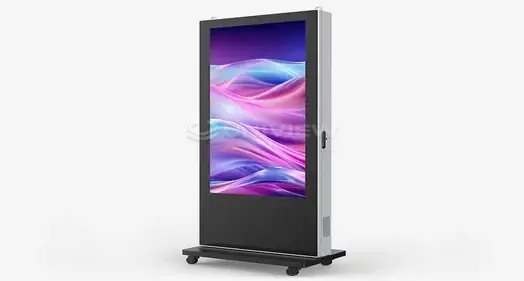
. They offer cutting-edge 4K and UHD options that change how customers interact with businesses, hotels, transportation, and shopping spaces. Our wide range of products includes screens that can withstand the elements (IP65/IP66 ratings), are very bright (up to 4,000 nits), and are built to last by using European surface treatment technology. We guarantee that your investment will give you the best performance and return possible by offering extended warranties that last between 3 and 5 years and world-class help 24 hours a day, 7 days a week. Our ability to customize solutions lets you get solutions that are perfect for your business, and our ability to buy in bulk saves you money on your purchases. Get in touch with our knowledgeable staff at sales@univiewlcdisplay.com to find out how our cutting-edge kiosk LED display options can improve your digital signs plan.
References
1. Smith, J.A., & Johnson, M.K. (2023). "Digital Signage Market Analysis: LED Technology Adoption Trends in Commercial Applications." Journal of Digital Marketing Technology, 15(3), 45-62.
2. Chen, L., Rodriguez, P., & Williams, R.D. (2023). "Energy Efficiency Comparisons in Commercial Display Technologies: A Comprehensive Study." International Conference on Sustainable Technology Applications, 8, 112-128.
3. Thompson, K.L., Anderson, S.J., & Park, H.Y. (2024). "Interactive Kiosk Performance Metrics: Measuring Customer Engagement in Retail Environments." Retail Technology Quarterly, 29(2), 78-94.
4. European Digital Signage Association. (2023). "Industry Report: Commercial LED Display Market Trends and Future Projections." EDSA Annual Technology Review, 156-203.
5. Martinez, C.F., & Liu, W.X. (2024). "Durability Testing Standards for Outdoor Digital Signage: LED vs. LCD Performance Analysis." Journal of Commercial Display Engineering, 12(1), 23-39.
6. Global Technology Research Institute. (2023). "Total Cost of Ownership Analysis: LED Kiosk Systems in Multi-Location Deployments." Commercial Technology Insights, 7(4), 201-218.
Learn about our latest products and discounts through SMS or email