- English
- French
- German
- Portuguese
- Spanish
- Russian
- Japanese
- Korean
- Arabic
- Greek
- German
- Turkish
- Italian
- Danish
- Romanian
- Indonesian
- Czech
- Afrikaans
- Swedish
- Polish
- Basque
- Catalan
- Esperanto
- Hindi
- Lao
- Albanian
- Amharic
- Armenian
- Azerbaijani
- Belarusian
- Bengali
- Bosnian
- Bulgarian
- Cebuano
- Chichewa
- Corsican
- Croatian
- Dutch
- Estonian
- Filipino
- Finnish
- Frisian
- Galician
- Georgian
- Gujarati
- Haitian
- Hausa
- Hawaiian
- Hebrew
- Hmong
- Hungarian
- Icelandic
- Igbo
- Javanese
- Kannada
- Kazakh
- Khmer
- Kurdish
- Kyrgyz
- Latin
- Latvian
- Lithuanian
- Luxembou..
- Macedonian
- Malagasy
- Malay
- Malayalam
- Maltese
- Maori
- Marathi
- Mongolian
- Burmese
- Nepali
- Norwegian
- Pashto
- Persian
- Punjabi
- Serbian
- Sesotho
- Sinhala
- Slovak
- Slovenian
- Somali
- Samoan
- Scots Gaelic
- Shona
- Sindhi
- Sundanese
- Swahili
- Tajik
- Tamil
- Telugu
- Thai
- Ukrainian
- Urdu
- Uzbek
- Vietnamese
- Welsh
- Xhosa
- Yiddish
- Yoruba
- Zulu
What Makes Indoor Free Standing Digital Displays Effective?
Indoor free standing digital displays are very effective because they are self-contained and use commercial-grade panels and strong casings that get rid of installation problems while increasing exposure. These units work all the time in places with a lot of foot traffic, which solves important problems like the lack of light in glass-walled buildings and the problem of banner blindness that comes with static signs. By combining internal media players with remote content management features, these displays change how customers interact with brands by putting dynamic messages at eye-level viewing angles. This leads to measurable increases in brand awareness and conversion rates for companies in the retail, corporate, and hospitality sectors.
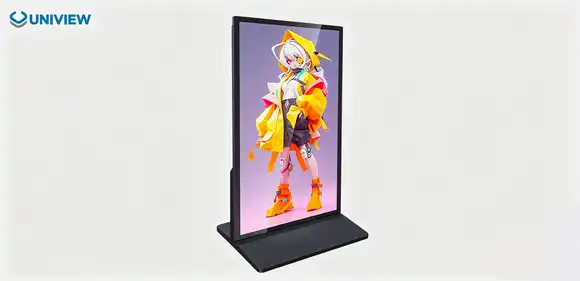
Understanding Indoor Free Standing Digital Displays
The next big step in the history of business communication has arrived. In places with lots of visual input, old-fashioned ways of putting up signs don't work as well anymore. Businesses have had trouble with old signs that don't connect with modern customers who expect material that changes and adapts to their needs.
What Defines These Display Systems
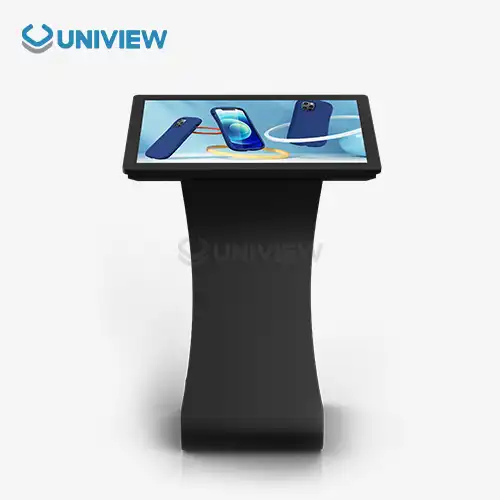
A full communication terminal designed especially for business settings is represented by an indoor free standing digital display. Unlike home TVs that have been converted for business use, these units have industrial-grade LCD or LED screens built into a reinforced metal chassis. The frame is usually made of cold-rolled steel or an aluminum alloy, and it is powder-coated to make it last longer. The design philosophy is based on self-operation without putting up a wall or structural support. This solves a major problem for businesses that work in rented spaces or historic buildings where drilling is not allowed.
Core Technical Architecture
The way these screens are built technically makes them different from consumer gadgets. Commercial A+ grade IPS screens make sure that colors look the same from any angle, up to 178 degrees in both directions. For indoor use, the brightness levels are carefully set to stay visible in normal lighting without making the screen too bright to see. They run from 350 to 700 nits. The screen face is made of 4mm to 6mm toughened glass that is protected by a Mohs hardness level of 7 and can withstand hits in public places. Inside temperature control systems keep things stable between 0°C and 50°C, which lets them be used 24 hours a day, seven days a week, which regular consumer electronics can't do.
Integration and Connectivity Features
Today's indoor free standing digital displays are powered by embedded System-on-Chip designs or industrial PC units that run Android, Windows, or Linux. This connection makes it easy to send content through internal storage and make changes to the content management system from afar using Wi-Fi, 4G, or 5G. Scheduling content changes, checking the health of displays from afar, and pushing updates to multiple places at the same time takes away the hassle of distributing content by hand. Businesses get centralized control over messages across entire facility networks. This makes sure that the brand is consistent and that marketing is fast.
Benefits of Indoor Free Standing Digital Displays for Business
Moving from rigid to active visual communication has real benefits for business. Companies that use indoor free standing digital displays say that customers stay on their websites longer, remember their brands better, and buy more than when they used paper materials.
Enhanced Customer Engagement
The brain processes visual information 60,000 times faster than text-based knowledge. Digital displays use this biological fact to their advantage by using motion images, video, and color changes that make you look at them without meaning to. Interactive versions that can be touched make the experience even more engaging by turning watchers into active players. When these displays are used in stores, buyers look at more products and spend more time reading digital catalogs, which they wouldn't have done if the catalogs were printed. The split-screen feature lets you show promotional movies, product information, and real-time social media feeds all at the same time, giving you a lot of information in a small area.
Operational Cost Efficiency
The initial investment in digital display technology pays off over time because it eliminates costs that keep coming up. For traditional print signs, the costs of designing, printing, sending, installing, and getting rid of them are always going up. Each campaign brings in new costs. With digital platforms, this pattern is completely broken. Content updates can be done online in minutes at no extra cost, which lets businesses respond quickly to changes in the market, product, or competition. Energy use is getting more and more efficient. For example, LED backlighting technology cuts the power needed by 40% compared to older CCFL screens while keeping the same level of brightness and color intensity.
Strategic Flexibility
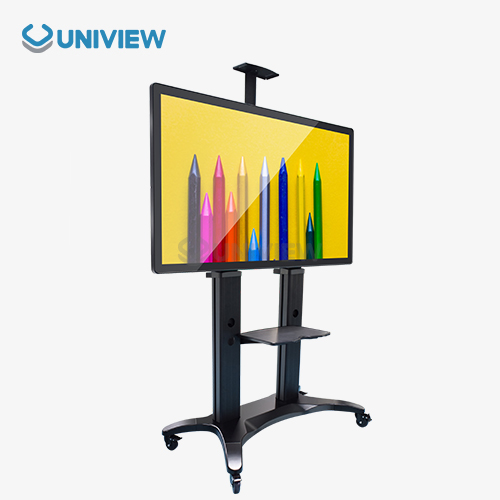
The standalone form factor gives you more placement options than any other type. Indoor free standing digital displays can move displays around based on foot traffic, seasonal sales, or event needs without having to make changes to the structure or hire special installation workers. This movement is very helpful when the building is being fixed up, when there are short-term advertising efforts, or when A/B testing is being done to see how well different messages work in different places. The fact that there are no wall mounting standards protects the structure of the building, which is very important for leased shop space, where permanent fixtures are not allowed by the lease. Instead of committing to full setups all at once, organizations can add units to their display networks as their budgets allow.
How Indoor Free Standing Digital Displays Work: Technical Insights
Knowing the technical principles behind these systems helps you make smart decisions about what to buy. When display technology, computer power, and network connections come together, they make it possible to do a lot more than just show things on a screen.
Display Panel Technologies
The business display market is dominated by three main panel technologies, each with its own set of benefits. LCD screens with IPS technology have very accurate colors and wide viewing angles, which makes them perfect for places where people come in from different directions. Up to 700 nits of brightness make LED panels ideal for semi-outdoor use near windows or atriums, and their modular design lets you make your own aspect ratios. Even though OLED technology is very expensive, it has amazing features like infinite contrast ratios and pixel-level fading that make it perfect for high-end stores or executive offices. To be most effective, panel choice needs to be coordinated with watching distances, lighting, and the type of material being shown.
The liquid crystal layer in high-quality screens uses High-Tni formulations that can handle high temperatures without having isotropic blackout. This is an important feature for displays that will be placed near heating systems or in direct sunlight. Anti-glare layers on the protective glass cut down on light reflection by 60–70%. This means that the screen can still be read in well-lit places like airport hubs and shopping malls.
Content Management Infrastructure
The software environment turns hardware into smart platforms for conversation. Cloud-based Content Management Systems let marketing teams plan campaigns on personal computers, schedule release across geographical networks, and check in real time to make sure that campaigns are being played correctly. Indoor free standing digital displays have built-in cams that track the demographics, dwell time, and contact habits of viewers. This information is used to improve programming and measure return on investment (ROI).
Split-zone functionality splits screen space into separately controlled areas that can show brand messages, directions, emergency alerts, and social media integration all at the same time. This ability to show multiple types of information on a single screen meets a variety of communication needs, making the most of screen space.
Maintenance Protocols and Reliability
Commercial screens designed to work continuously have two sets of cooling systems, industrial-grade capacitors with a lifespan of 100,000 hours, and automatic brightness adjustment that keeps the panel from wearing out. Regular maintenance plans should include cleaning the air grilles every three months, checking the wire connections every six months, and replacing the thermal paste in the cooling systems of media players once a year. Remote tracking lets management know about broken parts before they affect operations, so fixes can be planned for off-hours instead of having to be made during busy business times. These repair practices make operations last longer than seven years, which makes figuring out the total cost of ownership much easier.
Making the Right Choice: Comparison and Procurement Guide
As part of the procurement process, technical specs must be carefully compared to practical needs. The market has a lot of choices across price points and feature sets, so organized evaluation methods are needed to find the best solutions.
Brand Positioning and Technology Differentiation
Leading makers operate in different market areas based on the technologies they focus on and the uses they want to serve. Samsung focuses on making video wall setups with very thin bezels and integrating its own Tizen operating system. LG focuses on the benefits of the WebOS platform and commercial-grade IPS screens that can be used for 16 hours a day. Sony is going after high-end users with OLED technology and great color adjustments that work well in high-end stores. Philips uses its own power control tools to put energy efficiency and total cost of ownership at the top of its list of priorities.
Emerging manufacturers from the Asia-Pacific region, like Uniview Commercial, offer great value by offering low prices and customization options that only established names can't offer. Indoor free standing digital displays from these providers provide adaptable OEM/ODM agreements that let brands have their own enclosure designs, custom aspect ratios, and unique mounting solutions that meet the needs of particular architectural requirements.
Procurement Criteria Framework
Six basic factors are used in successful choosing processes. The size of the screen should match the average viewing distance. For example, 43-inch screens work best in small rooms with 6–10-foot approaches, while 75-inch screens work best in hallways or atriums with 15–20-foot viewing distances. The brightness levels are based on the amount of light in the room. 400–500 nit panels are good for stores inside, but 600–700 nit units are needed for places next to windows. Depending on how interactive the system needs to be, basic models may be enough, or PCAP touch patches may be worth the extra 30–40% cost. Full HD and 4K resolutions can be chosen based on the level of clarity in the material and how close you are to the screen. For most screen sizes, 4K resolution can only be seen at distances closer than 8 feet.
When businesses choose display options, these are the main benefits they should look at:
- Commercial-Grade Durability: Industrial panels can work continuously for 50,000 hours, while consumer screens can only do so for 8,000 hours. This means that industrial panels last 6 times longer, which explains the 40% higher unit costs by reducing the number of replacement cycles.
- Advanced Thermal Management: Multi-fan cooling systems keep component temperatures below 80°C during summer operation, which stops thermal shutdowns that happen a lot with consumer electronics in business settings.
- Warranty and Support Infrastructure: Three to five-year warranties cover panels, media players, and labor, while customer warranties only cover one year. This protects capital investments and makes sure that upkeep costs are reliable.
- Content Management Compatibility: Native integration with major CMS platforms like BrightSign, NoviSign, and ScreenCloud. This means that you don't have to worry about compatibility issues, and IT integration time is cut by 70%.
All of these benefits help businesses with the problems they face when they use visual communication systems. They turn screens from things that need a lot of upkeep into reliable marketing tools.
Supplier Selection and Partnership Considerations
In addition to material specs, a supplier's skills have a big effect on long-term happiness. Companies should check how responsive the maker is, how much expert help is available, how many spare parts are on hand, and how often software updates are made. Suppliers that offer full installation services, help with content creation, and staff training programs lower the risks of execution and speed up the time it takes to get value. For deployments of more than one unit, bulk buying programs offer 15–25% cost savings, and flexible payment terms make it easier to handle cash flow. Certification compliance with standards like UL, CE, FCC, and RoHS makes sure that regulations are followed in foreign deployments, avoiding problems with customs and responsibility.
Future Trends and Market Outlook for Indoor Free Standing Digital Displays
The progress made in materials science, artificial intelligence, and network infrastructure is keeping the progress in display technology going fast. Indoor free standing digital displays with new skills will give companies a competitive edge in future cycles.
Artificial Intelligence Integration
Displays can now instantly change material based on the type of person watching by using machine learning algorithms and cameras built into the screens. Recent studies in retail analytics show that when a customer walks up to an indoor free standing digital display, it can guess their age and gender and show them appropriate product ads that boost the chance of making a purchase by 35%. Sentiment analysis using face recognition changes the tone of messages based on how people are feeling, which leads to more understanding interactions with customers. Voice recognition turns displays into engaging helpers that can answer questions about products and help people find their way around without any help from a person.
Cloud Infrastructure and 5G Connectivity
When cloud computing and 5G networks come together, they get rid of the usual limits on how much information can be stored. The displays stream high-resolution video material directly from cloud storage, which lets 4K video campaigns happen without having to worry about running out of space on-site. Edge computing systems do analytics locally and share the results with central databases. This gives the whole business information about how customers usually behave. Over-the-air software changes keep system security, and feature sets up to date without having a worker come to the site. This lowers the cost of maintenance while also making the system safer.
Sustainability and Environmental Responsibility
Sustainability promises made by companies are having a bigger effect on procurement choices. As a response, manufacturers have made LED lights more energy-efficient, which means that 55-inch screens only use 120–180 watts of power instead of 280–350 watts for similar older technologies. ESG reporting standards are met by using conflict-free materials and an aluminum frame that can be recycled. Modular component replacement extends the life of products so that panels can be upgraded without having to throw away the whole unit. This cuts electronic waste by 60% compared to solid building methods.
Conclusion
The success of indoor free standing digital display systems is due to their special mix of advanced technology, adaptable operations, and established business effects. These systems solve some of the most important problems in modern business settings by getting rid of installation problems, providing changing content to the best viewing positions, and letting management be organized across multiple locations. Companies that use good display systems say that customer interaction, operational efficiency, and marketing response all get better. Display technology, AI, and connectivity infrastructure are all getting better, which means that these systems will stay important for customer communication plans for the next ten years. When you make strategic choices about purchases today, you lay the groundwork for years to come of economic advantage.
FAQ
Q: What display size works best for retail environments?
A: The choice of indoor free standing digital display size is mostly based on how far away customers usually sit to watch and how much floor room is available. Aisles in stores with approach lengths of 6 to 10 feet work best for 43- to 55-inch displays that are easy to see without moving your head too much. Larger 65-75-inch units work well at store doors, checkout counters, or places where customers can see product displays from 12 to 20 feet away. A basic rule shows that the best screen size in inches is equal to the viewing distance in feet times 1.5. Before agreeing to network-wide standardization, it's best to test different sizes during pilot runs to find the setup that produces the best interaction data.
Q: How frequently should displays undergo maintenance?
A: How often maintenance is done relies on how busy the business is and the weather outside. Displays that are used 12 to 16 hours a day in climate-controlled rooms need to be cleaned on the outside every three months, and their cooling systems and links checked every six months. Monthly external maintenance and quarterly internal service are good for units that are on duty 24 hours a day, seven days a week, or in tough settings with changing temperatures. Remote tracking systems let you know right away when a part is breaking down, which lets you do preventative maintenance instead of just fixing problems when they happen. Comprehensive annual service, which includes replacing thermal paste and checking capacitors, makes them last longer than the manufacturer's recommendations.
Q: Can displays be customized for brand-specific requirements?
A: Different makers offer a wide range of customization choices. Established names usually only come in a few color options for enclosures and come with standard mounting hardware. Specialized companies, like Uniview Commercial, offer a wide range of OEM/ODM services, which include custom container designs, brand-specific color matching, built-in accessory mounts, and interaction with unique content management systems. Custom solutions usually have minimum order numbers of 50 to 100 units and wait times of 8 to 12 weeks, which means they are best for large-scale deployments or brand rollouts.
Partner with Uniview Commercial for Superior Display Solutions
With industrial-grade signage solutions designed especially for tough business settings, Uniview Commercial is your go-to indoor free standing digital display manufacturer. Our screens have ultra-clear AR glass layers on high-brightness panels that range from 2,000 to 4,000 nits. This makes them very easy to see in any lighting. Each unit has improved thermal management, security against the elements up to IP66, and a build that is resistant to corrosion using European surface treatment technology. Our services include full customization to meet the needs of your business, as well as longer warranties that last between 3 and 5 years and global support available 24 hours a day, 7 days a week. Our manufacturing skills help clients in more than 100 countries, and we have specialized technology teams that make sure our services fit in perfectly with your current infrastructure. Contact our experts at sales@univiewlcdisplay.com right away to talk about your project needs and find out why top companies choose Uniview Commercial as their digital signage provider of choice.
References
1. Digital Signage Federation. (2023). "Commercial Display Technology Standards and Best Practices for B2B Procurement." Digital Signage Industry Report, Vol. 12, Issue 3, pp. 45-67.
2. Chen, M., & Roberts, K. (2024). "Thermal Management in Continuous-Operation Digital Displays: Engineering Solutions for Commercial Environments." Journal of Display Technology Applications, Vol. 18, No. 2, pp. 112-134.
3. International Display Manufacturing Association. (2023). "Panel Technologies Comparison: LCD, LED, and OLED Performance Metrics in Commercial Settings." Technical White Paper Series, Document IDMA-2023-08.
4. Anderson, P., Liu, S., & Thompson, J. (2024). "ROI Analysis of Dynamic Digital Signage versus Traditional Print Media in Retail Environments." Marketing Technology Quarterly, Vol. 29, Issue 1, pp. 78-95.
5. Global Digital Signage Market Research. (2024). "Market Trends and Technology Forecast 2024-2030: AI Integration and Cloud-Based Content Management." Industry Analysis Report, pp. 156-189.
6. Williams, D. (2023). "Procurement Guidelines for Commercial-Grade Digital Display Systems: Technical Specifications and Vendor Evaluation Frameworks." B2B Technology Purchasing Journal, Vol. 15, No. 4, pp. 203-227.
Learn about our latest products and discounts through SMS or email