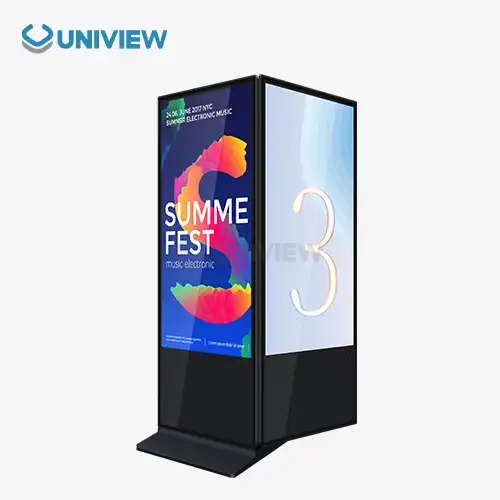
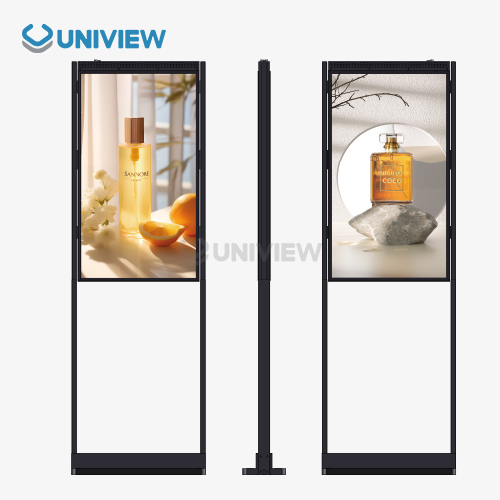
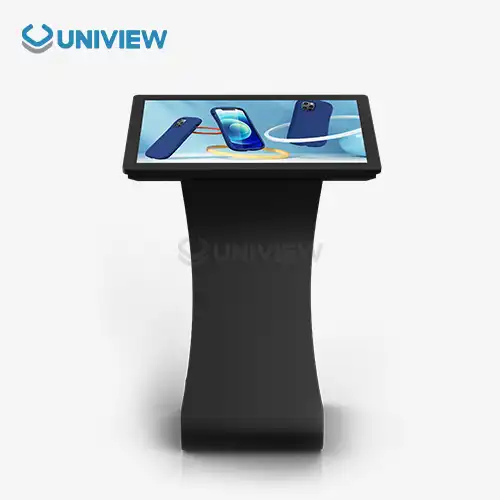
To make sure they are safe around electricity, compatible with electromagnetism, and eco-friendly, floor-standing digital signs have to follow a lot of safety rules, like UL 2089, IEC 62368-1, FCC Part 15, CE marking, and RoHS. These regulations for floor standing digital signage display cover all aspects from ensuring structural stability and minimizing tip-over risks to temperature control and fire resistance. This makes sure that procurement managers who buy commercial display solutions for public, corporate, and retail settings follow these rules.
Introduction
More and more, free-standing digital signs are important for communicating and getting people interested in brands in stores, offices, transportation hubs, and hotels. These freestanding units can be placed and used in a lot of different ways, but they are used in public spaces, so they need to follow all safety rules.
Making sure these displays meet strict safety standards protects the people who use them, lowers liability risk, and protects big procurement investments. The rules about electrical safety, building strength, electromagnetic compatibility, and environmental impact change a lot from market to market around the world.
This all-in-one guide talks about the important safety rules for these displays, how to follow them, technical features that help with conformity, and important purchasing decisions that lower risk. Business-to-business buyers and compliance managers will learn useful information about how to choose and keep up-to-date digital signs that are compliant and perform well, even as rules change.
Understanding the Regulatory Landscape for Floor Standing Digital Signage Displays
The rules for standalone digital displays are made by a variety of global and regional certification groups. Each group makes its own safety rules and ways to make sure they are followed. It is very important for procurement teams that are in charge of deployments or compliance duties across several jurisdictions to know these rules.
Global Certification Bodies and Standards
In the United States, safety rules are set by Underwriters Laboratories (UL). UL 2089 is specifically about safety for audio/video equipment and signage displays. This standard looks for electrical safety, fire resistance, and mechanical hazards. In Europe, a CE mark means that a product follows EU rules, like the Electromagnetic Compatibility (EMC) and Low Voltage Directives (LVD), and also follows RoHS by not having any harmful materials.
The Federal Communications Commission (FCC) for floor standing digital signage display establishes regulations regarding electromagnetic emissions to ensure the proper functioning of communication systems. People all over the world use the IEC's safety guidelines. The Asia-Pacific region has extra licenses like CCC (China Compulsory Certification), and Japan has PSE (Product Safety Electrical Appliance).
Changes in compliance in different areas
To stress electrical safety and fire prevention, North American markets follow NFPA (National Fire Protection Association) guidelines. These are very important for shows in business buildings. With rules for Waste Electrical and Electronic Equipment (WEEE) and rules for energy savings needed under Energy-related Products (ErP), doing things the European way puts the focus on the environment.
These differences mean that markets must follow the rules. This can be done by carefully picking suppliers and checking paperwork. It is the job of procurement teams to make choices about whether or not displays need to be certified in more than one market or just one. This depends on how the displays will be used.
Core Safety Standards Governing Floor Standing Digital Signage Displays
A wide range of safety standards work together to make sure that electrical, mechanical, and environmental risks are fully protected. These rules deal with the special problems that come up when using freestanding displays in public spaces.
Rules for Electrical Safety
IEC 62368-1 is the new standard for the safety of audio and video equipment. It is based on IEC 60950-1, but is more up to date. This standard looks at hazard-based safety engineering. It focuses on energy sources that could hurt people, like electricity, which can shock people, start fires, and hurt people mechanically. To comply, you need to make sure that proper grounding systems and overcurrent protection are in place and that high-voltage parts are kept away from other parts.
UL 2089 specifically talks about digital signage applications and sets standards for thermal management, power supply isolation, and protection against electrical faults. The standard requires that surge protection and safe disconnection for maintenance are possible.
The strength and stability of the structure in mechanical terms
EN 60950-22 checks physical stability to avoid tip-over incidents, which is very important for units that stand on the floor in areas with a lot of traffic. Force application testing that simulates accidental contact, seismic activity simulation, and load distribution analysis are all parts of the test. Anti-tip mechanisms, weighted bases, and anchoring provisions must meet certain levels of stability.
Wind resistance ratings become very important for things that are installed outside, and testing standards check how well the structure holds up under different types of weather. When display enclosures are subjected to certain wind loads, they can't lose their stability or ability to protect their components.
Electromagnetic Compatibility Guidelines
FCC Part 15 controls electromagnetic emissions so that radio communications and other electronic devices can work without being interrupted. Class A standards apply to businesses, while Class B standards apply to homes. Compliance testing checks emissions that are conducted and radiated across certain frequency ranges.
CE EMC guidelines make sure that displays in Europe don't give off or receive too much electromagnetic energy. This becomes very important when there is a lot of electronic equipment around.
How Floor Standing Digital Signage Displays Meet and Maintain Safety Standards?
As part of their ongoing work to meet safety standards for all stages of a product's life, manufacturers use broad planning and regular upkeep. These methods meet the standards for first certification, and they will keep people safe in the long run.
Rule-Following Design Engineering
Selecting flame-retardant materials for floor standing digital signage display ensures compliance with fire resistance regulations, with enclosure components meeting specific UL flammability ratings. To avoid overheating that could hurt safety or performance, thermal management systems use effective temperature monitoring, heat dissipation, and automatic shutdowns.
Surge protection circuits guard against short bursts of electricity while keeping things running smoothly. Power supply designs have multiple layers of protection against short circuits, overcurrent, and overvoltage. Grounding systems make sure that electromagnetic compatibility and safe electrical operation are both in place.
Safety of Software and Security of Operations
People who aren't allowed to access a system can make it unsafe, but firmware security protocols keep people out. As long as regular security updates are done, new bugs will be fixed and remote management will stay possible for large-scale deployments. Access control features keep people who aren't supposed to be there from changing settings that could have an impact on safety systems.
Remote monitoring lets you do maintenance before things go wrong by keeping an eye on the temperature, power usage, and operational settings. Automated alerts tell operators when they need to check on conditions before they impact safety or compliance.
Rules for Maintenance to Keep Long-Term Compliance
Regular inspections of the structure, connections, and environmental seal show that they are in good working order. Cleaning protocols protect coatings and seals from damage while making sure that there is enough air flow and heat dissipation. Software updates keep your device safe and make sure it keeps working right as new threats come up.
Regularly updating your records shows that you always follow the rules for insurance and regulatory audits. Maintenance logs, calibration records, and incident reports are good ways to show that you take care of your equipment and are proactive about lowering risks.
Comparing Safety Compliance: Floor Standing vs. Wall Mounted Digital Signage
Freestanding displays are different from wall-mounted units when it comes to safety issues. They need extra safety measures and special ways of testing them. Understanding these differences helps procurement managers choose the right things for the right jobs.
Tip-Over Prevention and Stability
Wall-mounted displays only need to make sure that the mounting bracket is strong, but floor-standing units need to be tested for stability in many different ways, including applying force from different angles. Anti-tip mechanisms are required for public freestanding units, which often need to have bases with weight, points to be anchored to, or feet to stabilize them.
It is very different when it comes to earthquakes. Displays that stand on their own need to be safely attached in areas where earthquakes happen often, and systems that reduce motion are needed. Instead of relying on base stability, wall-mounted units move seismic forces to structural mounting points.
Compliance with Accessibility and User Interaction
The ADA (Americans with Disabilities Act) says that interactive floor displays must be able to be reached, viewed, and controlled by people of all abilities. The pressure and touch screen responsiveness make it easier for people with different physical abilities to use.
Child safety is very important for freestanding units. These units need to have rounded edges, safe cable management, and materials that don't have any harmful chemicals. The features that let you change the height must stay stable no matter how much they are changed.
Procurement Considerations for Compliant Floor Standing Digital Signage Displays
When procurement strategies are done right, they go beyond just checking compliance. They also include long-term support, maintenance needs, and thinking about the total cost of ownership. Making smart procurement choices lowers risk and increases the value of operations.
Supplier Certification Papers and Verification
Detailed test reports from accredited laboratories for floor standing digital signage displays demonstrate compliance with safety standards. Electrical safety testing, electromagnetic compatibility verification, environmental compliance certificates, and mechanical stability analysis should all be done and documented. ISO 9001 and other supplier quality management certifications show that you can keep your system compliant.
Claims about following the rules are more believable when they are verified by independent testing laboratories. Annual compliance checks and surveillance testing show that you are still committed to safety standards. Supply chain openness makes sure that the parts meet the rules.
Customization and Compliance Preservation
It is especially important to check safety compliance again when doing custom configurations that affect how well the structure, thermal management, or electrical systems work. When people work together on a design, they can be sure that all changes are still fully compliant and don't affect safety.
Change management procedures keep track of changes and how they affect the ability to get certified. Updates to the paperwork show that the current setup is compliant. This helps with both regulatory audits and insurance needs.
Warranty Coverage and Support for the Lifecycle
Long-term protection against changes in the law and parts that don't work is offered by extended warranty programs that cover issues related to compliance. Professional maintenance services keep safety levels high and make sure that certifications stay valid.
Training local technicians helps them keep up with the correct safety procedures. The availability of technical support reduces downtime and makes sure that repairs keep the same safety standards.
Uniview Commercial's Commitment to Safety Compliance Excellence
Uniview Commercial is a trusted company that provides free-standing digital signs that go beyond tough safety standards used around the world. Our broad method for compliance includes strict testing, certified ways of making things, and ongoing support that makes procurement managers around the world worry-free.
High-Level Safety Engineering
Our factories are ISO 9001 certified, which means that safety compliance is done in a systematic way during the whole production process. Before products are shipped from our facilities, our testing team makes sure that all of them meet the standards set by UL, CE, FCC, and RoHS. Each display goes through a full check for electromagnetic compatibility, structural integrity, and electrical safety.
Thermal management systems that use reliable heat dissipation technology stay at a safe temperature even when they're in difficult settings. Environmental simulation testing shows that safety systems can keep working when they are exposed to bright light, very hot and cold temperatures, and changes in humidity.
Worldwide Help and Compliance
Our products meet the requirements of many markets around the world, which helps with international use while keeping safety standards the same. All of the papers needed for regulatory approval are in the comprehensive documentation package. These include compliance declarations, test reports, and all of the required certificates.
We are in over 100 countries, and we offer localized support that understands how to follow the rules in each area. With our 24-hour global response support, you can be sure that you'll get technical help when you need it. Plus, our comprehensive warranty coverage protects you in case you need to comply with something for three to five years.
Conclusion
Floor standing digital signage display cannot cause harm to people. This is a very important way to go above and beyond what the law says in order to protect your investment. When procurement professionals set up displays in stores, they need to be able to deal with UL, CE, FCC, and IEC standards in a careful way.
If you know the differences between electromagnetic compatibility, electrical safety, and mechanical stability, you can make good choices that find a balance between following the rules and meeting your operational needs. Users should be safe around freestanding displays, which should not fall over or get damaged.
Good procurement methods make sure that suppliers are real, keep detailed records, and build long-term support relationships that help equipment stay compliant over time. When procurement managers work with certified makers who always put safety first, they can use digital signs that protect users, lower their liability, and work well in any business.
FAQ
Q: For digital signs that are put on the floor in businesses, which safety ratings matter the most?
A: UL 2089 is the most important electrical safety certification in the US. IEC 62368-1 is for international electrical safety, CE marking is for compliance in Europe, and FCC Part 15 is for electromagnetic compatibility. Also, EN 60950-22 and RoHS are safety standards that protect people and the environment by preventing harmful materials and accidents that come from tipping over.
Q: How often do you need to make sure that floor-standing displays are still safe?
A: As long as visual checks are done each month, the structure should be sound, and everything should be working right. A full safety check should be done every year or after a big environmental event. You should install software security updates right away. As for professional maintenance, the company will usually say to do it every 6 to 12 months, but it depends on how and where the software is used.
Q: What kind of problems can uncertified screens cause at work?
A: Using displays that aren't certified could make you legally responsible for electrical issues, fires, and things that fall over. People can lose their insurance, get fined for breaking the rules, and have their businesses shut down. Also, displays that don't comply can cause electromagnetic interference that can damage other electronics. Also, the equipment will be less reliable and more costly to fix if it is poorly made.
Partner with Uniview Commercial for Certified Digital Signage Excellence
Uniview Commercial provides the best digital signage displays on the market that meet the highest safety standards around the world. Their displays also offer great performance and dependability. You can be sure that your investment will pay off in the long term and follow all rules. This is possible because of our approved ways of making things, thorough testing, and support teams around the world.
As a trusted maker of floor-standing digital signage displays, we know how important it is for businesses to follow safety rules. Our knowledgeable team offers personalized advice, ongoing technical support, and detailed compliance paperwork to make sure your displays meet all regulatory standards while also providing great picture quality.
See how high-quality digital signs can help your business. Email us at sales@univiewlcdisplay.com to talk about your needs and find out how our approved products can help you communicate better while keeping safety in mind. Let us help you make amazing visual experiences that follow safety rules around the world and help your business in a measurable way.
References
1. International Electrotechnical Commission. "IEC 62368-1:2018 Audio/video, information and communication technology equipment - Part 1: Safety requirements." IEC Standards, 2018.
2. Underwriters Laboratories. "UL 2089 Standard for Health/Wellness Devices and Systems." UL Standards & Engagement, 2019.
3. European Committee for Electrotechnical Standardization. "EN 60950-22:2006 Information technology equipment - Safety - Part 22: Equipment to be installed outdoors." CENELEC Standards, 2006.
4. Federal Communications Commission. "Title 47 CFR Part 15 - Radio Frequency Devices." Code of Federal Regulations, 2020.
5. European Parliament and Council. "Directive 2011/65/EU on the restriction of the use of certain hazardous substances in electrical and electronic equipment (RoHS)." Official Journal of the European Union, 2011.
6. National Fire Protection Association. "NFPA 70: National Electrical Code." NFPA Standards, 2020.