- English
- French
- German
- Portuguese
- Spanish
- Russian
- Japanese
- Korean
- Arabic
- Greek
- German
- Turkish
- Italian
- Danish
- Romanian
- Indonesian
- Czech
- Afrikaans
- Swedish
- Polish
- Basque
- Catalan
- Esperanto
- Hindi
- Lao
- Albanian
- Amharic
- Armenian
- Azerbaijani
- Belarusian
- Bengali
- Bosnian
- Bulgarian
- Cebuano
- Chichewa
- Corsican
- Croatian
- Dutch
- Estonian
- Filipino
- Finnish
- Frisian
- Galician
- Georgian
- Gujarati
- Haitian
- Hausa
- Hawaiian
- Hebrew
- Hmong
- Hungarian
- Icelandic
- Igbo
- Javanese
- Kannada
- Kazakh
- Khmer
- Kurdish
- Kyrgyz
- Latin
- Latvian
- Lithuanian
- Luxembou..
- Macedonian
- Malagasy
- Malay
- Malayalam
- Maltese
- Maori
- Marathi
- Mongolian
- Burmese
- Nepali
- Norwegian
- Pashto
- Persian
- Punjabi
- Serbian
- Sesotho
- Sinhala
- Slovak
- Slovenian
- Somali
- Samoan
- Scots Gaelic
- Shona
- Sindhi
- Sundanese
- Swahili
- Tajik
- Tamil
- Telugu
- Thai
- Ukrainian
- Urdu
- Uzbek
- Vietnamese
- Welsh
- Xhosa
- Yiddish
- Yoruba
- Zulu
Why Are Uniview LCD S-WI300H Wall Mounted Displays Popular in Cosmetics and Beauty Retails?
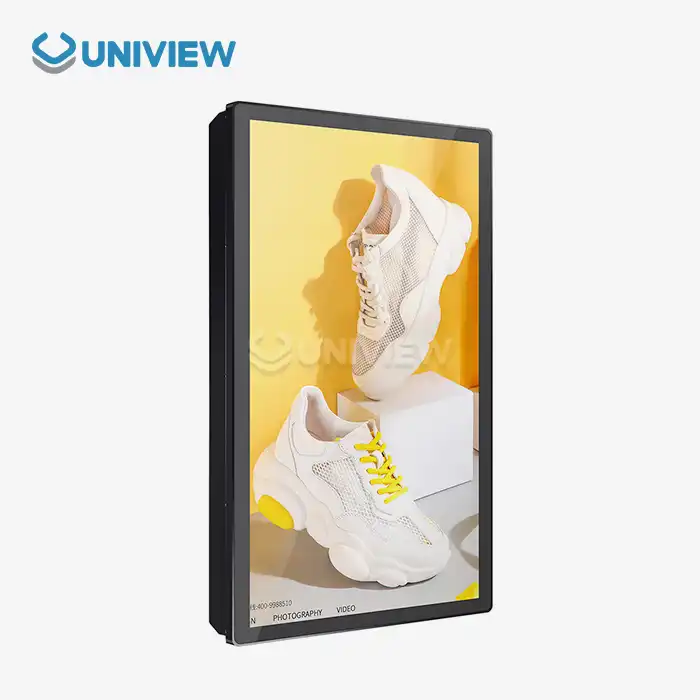
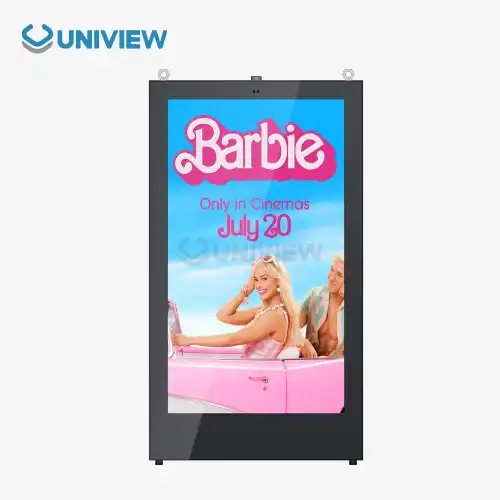
The Uniview LCD S-WI300H Wall Mounted Displays have changed the way hotels and restaurants work by providing unmatched brand consistency and visual accuracy. Standard sRGB monitors don't show nearly as many colors as these professional-grade display options, which usually cover more than 90% NTSC, 95% DCI-P3, or almost 100% Adobe RGB. Wide color gamut technology is being used more and more by hotels, resorts, conference centers, and high-end cosmetics and beauty retails brands to make memorable guest experiences, make sure that brand colors are accurately represented, and improve the visual effect of digital signs all over their sites.

Why Cosmetics and Beauty Retails Businesses Need Uniview LCD S-WI300H Displays
Overcoming Limitations of Standard Display Technology
Standard screens often have color distortion and low brightness, which hurts brand uniformity and guest happiness as a whole. Hotel groups spend a lot of money on developing their brand identity, which includes everything from logo colors to color schemes for interior design. These colors must be used correctly everywhere guests interact with the brand. When a hotel brand's signature color is washed out or not uniform across displays in the lobby, elevators, and meeting rooms, it gives the impression of lower quality and attention to detail, which is not a good thing. Wide range technology fixes this problem by providing more accurate colors that keep the brand's identity, no matter the viewing angle or lighting conditions. This difference is especially noticeable in the high-end and small-scale hotel industries, where visual presentation is directly linked to how valuable something is seen to be and how ready guests are to pay more.
Enhancing Visual Appeal in High-Traffic Public Spaces
When screens are used for more than one thing at once, like in a hotel, the quality of the colors they show becomes very important. The Uniview LCD S-WI300H Wall Mounted Displays are a key example. Digital signs in the lobby need to get people's attention and be easy to read. The screens in conference rooms that show presentations must show slides, movies, and collaborative material correctly. Picture of food on restaurant menu boards needs to look real and appetizing. cosmetics and beauty retails psychology research shows that the quality of the visuals has a big effect on how comfortable guests are and how long they stay in public places. When screens show correct, rich colors with the right amount of saturation and depth, guests think the space is more current, well-kept, and high-end. This way of thinking directly leads to more interaction with the material shown, better satisfaction scores, and a higher chance of returning visits.
Measurable Benefits from Real-World Cosmetics and Beauty Retails Implementation
Hotels that put in wide color gamut screens have seen gains that can be measured in a number of ways. A boutique hotel company that changed the displays in its lobby said that guests taking pictures and sharing them on social media sites went up by 23%. This was good organic marketing. When a meeting center switched to wide gamut presentation screens, customer happiness scores went up by 17% when it came to audiovisual quality, which directly led to more bookings. When restaurants put correct pictures of food on their digital boards, guests are more likely to order larger portions. This is because they want to see dishes that look fresh and tasty, not ones that are overly saturated or color-distorted. These real-life examples show that investing in better display technology has real benefits beyond just making things look better—it increases sales, improves image, and makes a business stronger in the market.
Comparing Display Technologies for Cosmetics and Beauty Retails Procurement
Feature and Performance Analysis: Wide Gamut vs. Standard Models
When buying, teams look at different display choices. It's important for them to know the technical and practical differences between normal models and wide color gamut units. Most standard screens have a brightness range of 250 to 350 nits, 72% NTSC color coverage, and basic sRGB correction. These specs are good enough for basic digital sign uses, but they're not good enough for high-end dining settings. Wide gamut screens offer 500–1500 nits of brightness, 90%+ NTSC coverage, hardware calibration, and professional color accuracy proof. The difference in price—usually 30 to 50 percent more per unit—must be weighed against the better performance and longer life. Mean Time Between Failures (MTBF) for professional displays with industrial-grade heat reduction and high-quality LEDs is more than 50,000 hours, while MTBF for consumer-grade displays is only 30,000 to 40,000 hours.
Leading display companies have created specific lines of products to meet the needs of hotels and restaurants. Samsung has commercial screens with Quantum Dot technology that achieves 95% DCI-P3 coverage, built-in content management systems, and features like clone mode that make setting up multiple displays easier for use in hotels. LG makes professional screens with IPS Black technology, which combines wide viewing angles with better contrast. They also make webOS systems, which let content be delivered directly without the need for external media players. Sony's professional screens usually come at higher prices than other brands because they are made to last longer and show colors that are accurate enough for broadcasting. When procurement teams look at different providers, they should not only look at the technical specs but also the warranty terms, the availability of the global service network, the pricing models for big orders, and the ability to customize for large hotel chain operations.
How to Choose and Implement High Color Gamut Displays in Cosmetics and Beauty Retails
Essential Procurement Criteria for Cosmetics and Beauty Retails Applications
To choose the right displays, you have to look at certain factors that are in line with how the hotel business works. The most important thing to look for in a display is color precision. Look for ones with Delta E numbers below 2 and hardware calibration support. The brightness level needs to fit the installation area. For example, 700+ nits is suggested for places with lots of natural light, while 500 nits is enough for controlled interior spaces. Calibration tools are very important for making sure that all property setups work the same way. Professional screens with regular calibration, ambient light correction, and remote control make it easier to keep up with maintenance while keeping colors consistent. Certifications for energy economy and power management features help keep running costs low in large-scale deployments. Conditions of the warranty should match how business cosmetics and beauty retails is used; look for at least three years of full coverage with choices for early replacement to cut down on downtime. International hotel groups need global support networks so they can provide the same level of service in all countries and time zones.
Leveraging Volume Pricing and Customization Options
When you work on a big catering project, you can get big savings and make it your own way. When buying displays for large resort developments or hotel chain rollouts, talking to manufacturers early on in the planning process lets you negotiate better prices, longer warranty terms, and the ability to change things like bezel colors, mounting brackets, and built-in content management features.Some makers offer cosmetics and beauty retails-specific packages that include screens, content management software, mounting hardware, and installation services. If you buy a lot of them, the prices are good. These combined solutions make buying easier, make planning easier, and make sure that all the parts work together. With custom sized choices, displays can be perfectly fitted to architectural features, blending in with the rest of the room's design without sacrificing style to fit standard display sizes.
Installation Best Practices and Ongoing Maintenance
For wide range screens to work at their best, they need to be installed by a professional. When hanging something on the wall correctly, you need to pay attention to thermal management. A minimum 10 mm air gap or active ventilation stops color shifting caused by heat and increases the lifespan of the parts. The Uniview LCD S-WI300H Wall Mounted Displays require special attention because wide gamut screens have sensitive calibration electronics that can be damaged by power changes; the electrical grid must provide clean power with surge protection. Professional colorimeters should be used to check the accuracy and regularity of the colors during the first calibration, which should happen after installation in the final lighting conditions. Recalibrations that are planned every 6 to 12 months keep performance stable as parts age. As part of regular maintenance, screens and airflow paths should be cleaned, mounting hardware should be checked, and software changes that fix performance problems or security holes should be confirmed.
Future Trends and Long-Term Value of High Color Gamut Displays in Cosmetics and Beauty Retails
Emerging Technologies: HDR, IoT Integration, and Smart Building Systems
New developments in display technology are paving the way for better uses in hotel settings. High Dynamic Range (HDR) technology, which is linked to wide color gamut, increases the range of brightness that screens can show. This makes images look more realistic and powerful. HDR content makes images of food and drinks, tourist spots, and advertising content look better, which makes it more useful for digital signs in restaurant settings. Another important trend is the integration with IoT-enabled smart building systems. Modern displays can connect to building management networks and change their brightness based on how many people are in the room and how bright it is outside. They can also send information about their operational state to central tracking systems and work with other technologies in the building. This combination lets you save energy, plan ahead for maintenance, and make the experience more personal for each guest by changing the content on screens based on how many people are in the room and what they like. Content improvement algorithms change color, contrast, and brightness in real time based on watching conditions and the type of content. These are some of the first ways that AI is starting to affect display technology. These smart systems make sure that the visual effect is perfect while also making the most of energy savings and component life.
Long-Term Benefits: Brand Loyalty, Energy Efficiency, and ROI
Putting money into high-end display technology pays off in the long run in ways other than just better looks. When properties use the same high-quality visual presentation at all points of contact with guests, they build brand loyalty and recall. When guests see the same high-quality visuals at different hotels in the same chain, they have a better idea of how reliable the brand is and how high the quality standards are. Modern wide gamut screens are more energy efficient, which helps to make up for their higher starting costs. Quantum Dot technology and advanced LED backlighting make it possible for screens to show a bigger range of colors while using less power. When properties replace old screens with new wide gamut units, they often save 30 to 40 percent on energy costs, even though the new units work better. This helps with both cutting costs and being more environmentally friendly. Calculating the return on investment should take into account several factors, such as the longer lifespan, lower maintenance needs, energy savings, and the increase in income from happier guests and more interactions with promotional material. When hotels write down these benefits, they usually find that investing in expensive displays pays off within two to three years and gives them better performance for five to seven years or longer.
Scalability Strategies and Modular Upgrade Approaches
cosmetics and beauty retails businesses that are on the cutting edge use flexible distribution strategies so that new technologies can be added gradually without affecting consistency. Start with places that get a lot of attention and have a big effect, like major halls, signature restaurants, and high-end meeting rooms. This is where visual quality has the most direct effect on how guests feel and how much money the business makes. Write down how the service has improved and how guests have responded so that there is internal backing for a wider rollout. Modular upgrade methods let properties gradually improve, show features as technology improves, and as funds allow. If you only buy from makers whose lines are compatible, you can be sure that screens put at different stages will have the same color profiles and be able to work with unified content management systems. This method strikes a balance between the need to stay within a budget and the desire to achieve visual unity across the whole property.
Partnering with Innovative Vendors for Competitive Advantage
Working with sellers of cutting-edge display technology helps cosmetics and beauty retails sites stay ahead of trends in the business. Look for makers that are putting money into research and development, giving you early access to new technologies, and showing that they want to build long-term partnerships with you instead of just making sales. Application engineering support vendors help cosmetics and beauty retails clients make sure that their display specs are perfect for each use case. This makes sure that their technology investments are in line with their business needs.
Conclusion
Technology with a wide color range has gone from being a luxury item to an important part of high-end dining settings. The Uniview LCD S-WI300H Wall Mounted Displays are a key example of this shift. The visible impact these screens have, from accurately reproducing brand colors to interesting content for guests, has a direct effect on how satisfied guests are, how people see the brand, and how well it does in the market. When purchasing managers and engineering teams know about the technical details, operational benefits, and implementation issues, they can make choices that are both cost-effective and good for the long run. As HDR, IoT integration, and clever optimization features keep adding to display technology, hotels that adopt these new ideas will be able to keep the high-quality visuals that captivate guests and improve brand loyalty for years to come.
Learn about our latest products and discounts through SMS or email